What is Functional Wellness? Definition, Trends & Market Opportunities

Key Takeaways:
- Functional wellness is a proactive approach to health that focuses on optimizing how the body functions, not just treating illness.
- Consumers are driving demand for functional foods, supplements, and personal care that deliver targeted health benefits like energy, focus, and gut support.
- Brands can tap into this trend by creating private label functional products that meet growing demand for clean, purpose-driven wellness solutions.
What is Functional Wellness?
Functional wellness is a fast-growing movement that blends lifestyle, nutrition, and personalized care to promote long-term health, energy, and disease prevention. Unlike traditional healthcare, which often focuses on treating illness, functional wellness aims to optimize how the body functions physically, mentally, and emotionally, before problems arise.
This holistic, proactive approach is influencing consumer behavior and reshaping entire industries, from food and beverage to personal care and supplements. For brands and retailers, functional wellness presents massive opportunities to develop and source innovative private label products that meet growing demand for health-boosting benefits.
Understanding Functional Wellness
At its core, functional wellness is about helping the body work better, not just in one area, but as a whole. It combines aspects of functional medicine, which looks at root causes of disease, with wellness practices like sleep hygiene, stress management, fitness, and nutrition. Consumers embracing functional wellness don’t just want to look healthy - they want to feel energized, focused, balanced, and resilient.
Popular goals in the functional wellness space include:
- Boosting immunity
- Improving gut health
- Supporting brain function and focus
- Balancing hormones
- Enhancing energy and recovery
- Promoting better sleep
- Managing stress and mood
These goals are addressed through a mix of lifestyle habits and products, especially functional foods, supplements, and personal care items that go beyond basic use to offer specific health benefits.
Functional Wellness vs. Traditional Wellness
While “wellness” is a broad term covering fitness, self-care, and healthy living, functional wellness is more targeted. Traditional wellness might involve going to the gym and eating balanced meals. Functional wellness might involve using a protein bar with adaptogens to reduce cortisol after a workout, or a face serum with calming botanicals to support stress recovery.
It’s the difference between general health and purpose-driven health and consumers are willing to pay more for products that deliver functional outcomes.
Examples of Functional Wellness Products
The rise of functional wellness is transforming what consumers expect from everyday products. Shoppers no longer want items that serve a single purpose - they want multifunctional solutions that support their overall well-being. This growing demand is giving rise to a wide range of innovative products across categories like food, supplements, skincare, and even technology.
Functional Foods and Beverages
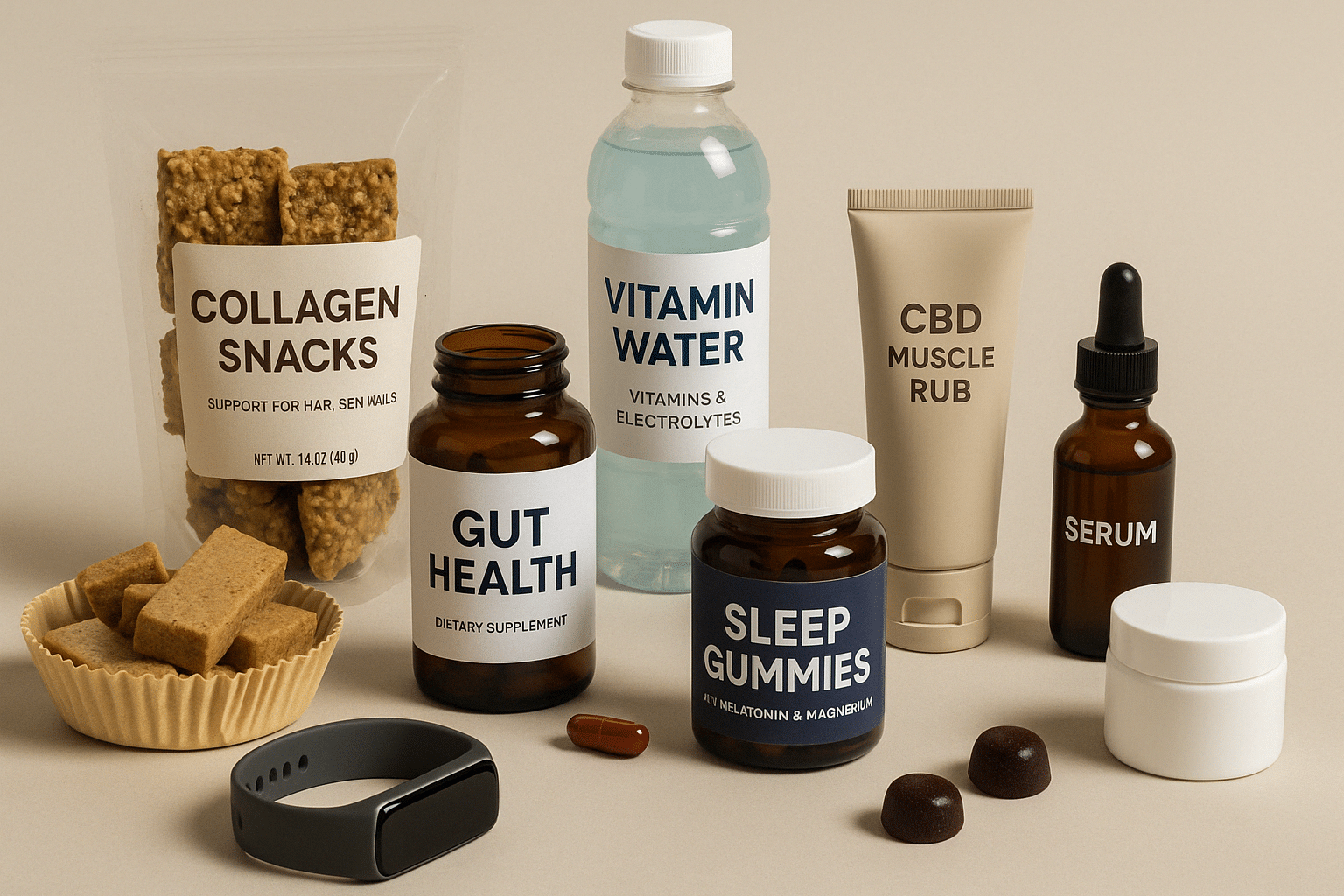
Functional foods are one of the fastest-growing segments within wellness. These are everyday snacks and drinks enhanced with additional health benefits. Popular ingredients include vitamins, minerals, probiotics, superfoods, fiber, and adaptogens. For example, vitamin-infused waters support hydration and immunity, while protein bars may be fortified with nootropics or plant extracts to improve focus and cognitive performance. Collagen-based snacks are also trending, offering skin, joint, and hair support from the inside out. These products appeal to health-conscious consumers who want convenient nutrition that aligns with their goals.
Condition-Targeted Supplements
Supplements are no longer one-size-fits-all. Functional wellness supplements are now designed to address specific health concerns such as stress, sleep, digestion, focus, and energy. Products like sleep gummies with melatonin and magnesium help regulate circadian rhythms, while mood-boosting capsules may contain ingredients like ashwagandha or L-theanine. Gut health blends with prebiotics and probiotics are also in high demand, as more consumers recognize the link between digestive health and overall wellness. Personalized supplement regimens, based on quizzes, DNA, or lifestyle data, are gaining traction and driving innovation in this space.
Skincare and Personal Care with Functional Benefits
Beauty products are evolving from purely aesthetic to deeply functional. Today’s skincare buyers are seeking formulations that not only improve appearance but also enhance well-being. For instance, magnesium body sprays help relieve muscle tension and support relaxation, while CBD-infused creams offer anti-inflammatory and calming effects. Hormone-friendly skincare lines are also emerging, designed for different stages of life such as menopause or postpartum. These products reflect the growing overlap between topical care and internal wellness, reinforcing the mind-body connection.
Beauty-From-Within Products
Nutricosmetics, also known as "ingestible beauty", sit at the intersection of functional wellness and the beauty industry. These products include collagen powders, hyaluronic acid capsules, and antioxidant-rich gummies that support healthy skin, hair, and nails from the inside. Often marketed with anti-aging, hydration, or glow-enhancing benefits, beauty-from-within products appeal to consumers looking for holistic routines that combine internal and external care. They’re especially popular with Gen Z and millennial shoppers who value simplicity and multitasking.
Health Tech and Wellness Tracking
Technology is playing a growing role in functional wellness. Wearable devices and mobile apps allow users to track vital health metrics like sleep quality, heart rate variability, hydration levels, and stress. Some platforms integrate with supplements or personalized nutrition plans to optimize performance and recovery. These tools empower consumers to take control of their wellness journeys and make data-driven decisions opening up new product opportunities for brands looking to combine digital experiences with physical health products.
Who Is the Functional Wellness Consumer?
The functional wellness consumer is proactive, well-informed, and ingredient-conscious. This audience spans multiple generations, but is especially strong among:
- Millennials and Gen Z, who are digital natives and deeply engaged with wellness content online.
- Health-conscious parents, who prioritize preventive wellness for their families.
- Active lifestyle consumers, who want recovery and performance-focused nutrition and care.
- Busy professionals, seeking solutions for stress, energy, and mental clarity.
They shop both online and in-store, often looking for transparency, clean ingredients, and scientifically backed claims. Packaging that communicates function clearly (e.g., "Focus", "Calm", "Immunity") can be a key differentiator.
Market Opportunities for Brands and Retailers
The global functional wellness market is undergoing growth, with rising demand across sectors like functional foods, beverages, dietary supplements, skincare, and personal care. Consumers are no longer content with products that serve a single purpose - they’re actively seeking out solutions that support long-term health, energy, mental clarity, sleep, and emotional balance.
As preventive health becomes a lifestyle rather than a reactive measure, both emerging startups and established retailers have a prime opportunity to expand their product portfolios and differentiate in the market. Whether you're launching a wellness brand from scratch or adding functional SKUs to an existing line, the time to act is now.
Here are several key strategies brands can use to tap into the functional wellness boom:
Launch Private Label Functional Products
One of the most accessible and profitable ways to enter the market is through private label functional products. Retailers and entrepreneurs can partner with private label manufacturers to create ready-to-launch items in categories like adaptogenic snacks, immunity-boosting supplements, mood-enhancing drinks, or clean skincare.
Private label not only reduces the time and cost to market compared to custom R&D but also allows for full brand ownership and creative control. By choosing the right manufacturing partners (like those available on Wonnda), businesses can launch high-quality wellness products that reflect their unique brand story with better margins and speed.
How Wonnda Helps Brands Succeed in the Functional Wellness Market
Wonnda connects brands and retailers with top-tier private label and contract manufacturers - many of whom specialize in functional wellness products. Whether you’re looking for a custom-formulated sleep supplement, a gut-friendly snack, or natural skincare with stress-relieving properties, Wonnda helps you bring your ideas to life faster and more efficiently.
From sourcing ingredients to managing communication with manufacturers, our platform simplifies the product development process, so you can focus on building your brand.
Target Niche Wellness Needs with Precision
Generic “health” no longer resonates with savvy wellness consumers. Today’s shoppers are looking for targeted solutions that address their personal concerns, whether it's hormonal balance, gut health, energy levels, sleep quality, or stress management. This creates valuable white space for brands that serve niche markets, such as perimenopausal women, biohackers, high-performance athletes, or vegan lifestyle followers. These niche communities tend to be highly engaged, loyal, and vocal making them ideal for word-of-mouth growth and long-term brand building.
Combine Categories to Offer Multifunctional Benefits
Consumers love products that do more with less. Combining multiple functional benefits into a single product not only increases perceived value but also fits modern lifestyles. Think protein bars with nootropics for focus, face creams with adaptogens for stress relief, or kombucha drinks infused with collagen and probiotics. These category-blending innovations appeal to busy consumers looking to streamline their wellness routines. For brands, this approach creates differentiation in crowded categories while opening up cross-selling opportunities across wellness verticals.
Focus on Clean, Transparent, and Science-Backed Formulations
Today’s wellness shoppers are ingredient-savvy, skeptical of empty marketing claims, and quick to research products online. Transparency is no longer optional - it’s expected. Brands must prioritize clean labels, recognizable ingredients, and clear benefits. It’s also important to explain the why behind your formulations: What does ashwagandha do? Why is magnesium important for sleep? Scientific validation, third-party testing, and certifications (e.g., vegan, organic, non-GMO) can further build trust and improve product discoverability on shelves and search engines alike.
Use Digital Tools to Personalize the Customer Experience
Personalization is becoming a cornerstone of the functional wellness experience. Consumers don’t want generic recommendations, they want products tailored to their lifestyle, body, and goals. Digital tools like quizzes, wellness assessments, and subscription models make it easier to offer personalized product journeys, particularly for DTC brands. Brands can also create curated bundles (e.g., “Focus Kit,” “Hormone Harmony Box”) or use CRM data to deliver intelligent upsells and cross-sells. Pairing physical products with digital wellness content or habit-tracking apps can also boost retention and engagement.
The Future of Functional Wellness
Functional wellness isn’t just a trend - it’s a long-term shift in how consumers approach health. As awareness grows, we’ll see continued innovation across product categories, better integration between lifestyle and nutrition, and more demand for customized, results-driven solutions.
Brands that embrace this change, and offer real value through functional benefits, will be best positioned to thrive in the next generation of wellness.
Related articles
GLP-1 Companion: What It Is, Examples and Why It Matters for Brands
10+ Top Supplement Trends in 2026 (Exclusive Wonnda Data)

PPWR Regulation: What EU Brands Must Do by 2030
White Label Mushroom Coffee: The 2026 Sourcing Guide for Brands
Made in USA Cookware: Why More Brands Are Reshoring Production

10+ Best European Supplement Brands in 2026

10+ Best German Supplement Brands in 2026

Top 5 D2C Trends to Watch for in 2026