White Label Mushroom Coffee: The 2026 Sourcing Guide for Brands

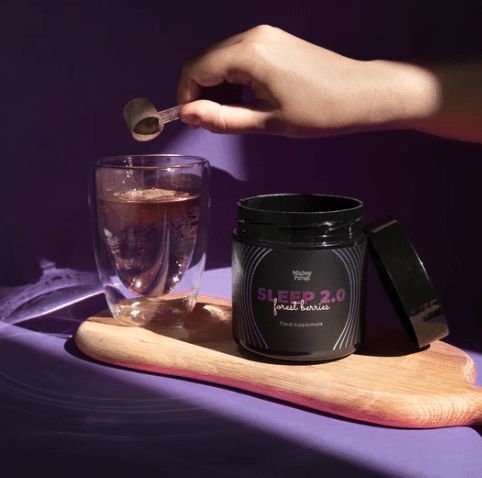
Mushroom coffee has crossed from niche biohacker corner into mainstream functional beverage, and the next wave of category growth is being built by smaller brands using white label and private label manufacturing. This guide is built for the operators planning that next wave: founders, retail buyers, and product managers who need to launch a credible mushroom coffee SKU without standing up extraction equipment or running a roastery.
Key Takeaways
- The global mushroom coffee market reached USD 3.08 billion in 2026, growing about 6.5% annually, with adaptogenic beverage searches up 501% year over year on Yelp.
- White label gives you fast time to shelf using an existing formula. Private label lets you customize ratios, ingredients, and flavor, but takes longer and costs more.
- Beta-glucan content (ideally 20 to 30%+ from fruiting body extracts) is the single most important quality marker. It separates real mushroom coffee from grain mycelium fillers.
- EU Novel Food rules treat lion's mane and chaga differently depending on whether they are sold as food supplements or general food and beverage. This affects how you can label and market your product in Europe.
- Realistic 2026 MOQs: 500 to 2,000 units for instant sachets, 5,000 to 10,000+ units for cost efficiency at scale. Lead times: 6 to 14 weeks for first production.
- Choose your manufacturer based on extraction quality, certifications (Organic, ISO 22000, BRCGS, FSSC 22000), format flexibility, and proven beta-glucan testing.
What is white label mushroom coffee
White label mushroom coffee is a pre-formulated mushroom coffee product manufactured at scale by a contract manufacturer and made available to brands for rebranding under their own label. The manufacturer owns the formula. You select an existing recipe from their portfolio, attach your branding, choose your packaging, and ship.
It sits at one end of a spectrum:
- White label: standardized formula, you brand it.
- Private label: customized formula built for your brand, you brand it.
- Contract manufacturing: you bring the recipe and IP, the manufacturer produces to your spec.
Most "white label" manufacturers in the mushroom coffee space actually offer a hybrid: a base formula library plus a degree of customization on mushroom blend, sweetness, caffeine level, and packaging. The cleanest mental model is this: the closer to "out of the box," the cheaper and faster. The more custom, the more time, cost, and minimum order volume you commit to.
White label vs private label vs contract manufacturing
| Dimension | White Label | Private Label | Contract Manufacturing |
|---|---|---|---|
| Formula ownership | Manufacturer | Manufacturer (customized for brand) | Brand |
| Customization | Logo, packaging, sometimes flavor | Ingredients, ratios, flavor, packaging | Full IP and recipe |
| Typical MOQ | 500 to 2,000 units | 2,000 to 10,000 units | 5,000+ units |
| Lead time | 4 to 8 weeks | 8 to 14 weeks | 10 to 20+ weeks |
| Development cost | Low | Medium (€2k to €10k formulation fees) | High (proprietary R&D) |
| Time to first shipment | Fast | Medium | Slow |
| Differentiation | Low | Medium to high | High |
| Best for | First SKU, validation, fast launch | Brands ready to scale | Established brands with R&D |
For most first-time brands, white label is the right answer to test demand. Then convert winning SKUs to private label once you understand consumer preference.
The 2026 market opportunity
Mushroom coffee is no longer a niche. Specific data points worth anchoring to:
- Global mushroom coffee market: USD 3.08 billion in 2026, projected to reach USD 3.82 billion by 2030 at a 5.6% CAGR.
- Yelp Food & Drink Trends 2025 reported a 501% increase in searches for "mushroom drinks," one of the strongest year-over-year category lifts in functional beverages.
- 61.6% of consumers actively choose food and drinks that support energy and focus, putting mushroom coffee squarely in the everyday functional basket.
- North America still holds roughly 29% of revenue, but Europe is the fastest growing region as nearshoring, clean label trends, and adaptogen awareness mature.
Where the growth is coming from:
- Consumers reducing or replacing high caffeine coffee for gentler energy
- Wellness and biohacking audiences expanding into mass retail
- Specialty cafés adopting mushroom coffee as a menu item
- Functional D2C brands extending their range (supplement brands launching a coffee SKU)
- Private label retail programs adding their own functional coffee line
For an emerging brand, the strategic implication is that 2026 is still a window where smaller players can carve out positioning around clean formulation, sustainability, regional sourcing, or a specific functional benefit (focus, calm, immunity, gut). Pure caffeine replacement positioning is crowded. Targeted benefit positioning is not.
Core mushroom ingredients and what they deliver
A useful mushroom coffee blend uses one to four functional mushrooms. Each has a different functional positioning and a different regulatory status. The most common:
1. Lion's Mane (Hericium erinaceus)
Positioning: focus, cognition, mental clarity. Most-requested mushroom in coffee blends. Consumer-friendly story. EU Novel Food status: fruiting body and aqueous extract powder are not novel and are permitted in food supplements. Mycelium powder requires authorization.
2. Chaga (Inonotus obliquus)
Positioning: antioxidant, immune support, general wellness. Distinctive earthy flavor, blends well with coffee. EU Novel Food status: fruiting body and water/ethanol extracts are not novel in food supplements. For use in general foods and beverages, you typically need novel food authorization or careful product categorization.
3. Reishi (Ganoderma lucidum)
Positioning: calm, stress reduction, sleep support. Adds slight bitterness. Often paired with decaf coffee or evening blends.
4. Cordyceps (Cordyceps militaris)
Positioning: physical energy, endurance, athletic performance. Often used in pre-workout coffee blends or "energy" SKUs.
5. Turkey Tail (Trametes versicolor)
Positioning: immunity, gut health, beta-glucan rich. Less common in coffee but increasing.
6. Maitake (Grifola frondosa)
Positioning: metabolic health. Niche, often in premium wellness SKUs.
Most successful mushroom coffee SKUs use a curated blend of two to four mushrooms tied to a clear consumer benefit, not a 10-mushroom kitchen-sink approach. Cleaner story, easier to defend on dosage and quality.
Formats you can launch
White label and private label mushroom coffee is available in several formats. Each has different MOQs, capital requirements, and shelf positioning.
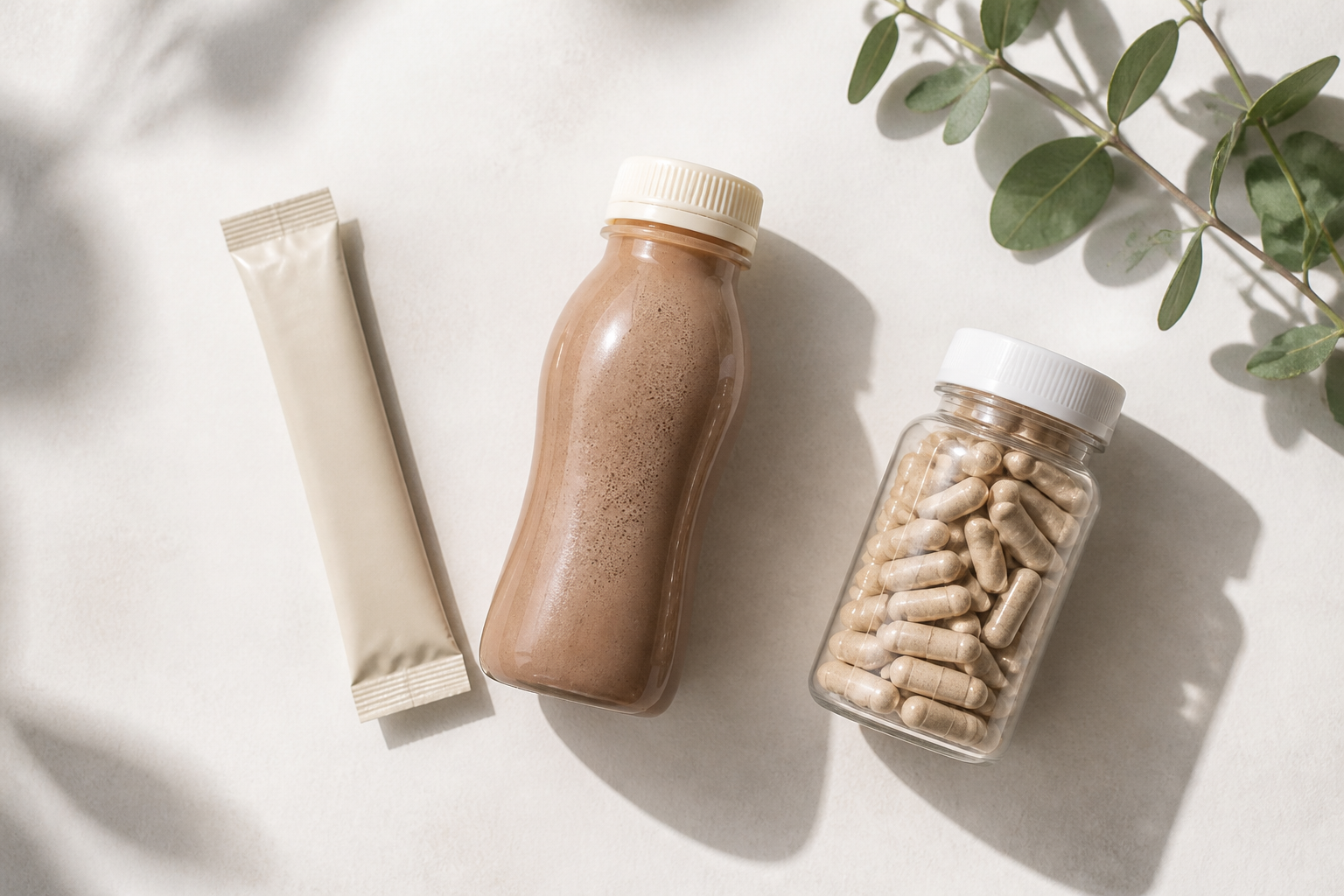
1. Instant single-serve sachets
The dominant format. Powder mix of instant coffee, mushroom extracts, and optional functional add-ins (MCT, cocoa, sweetener). Easy to brand, low MOQ, strong margins. Most beginner-friendly format.
2. Bulk instant powder (jars, tins, pouches)
Same formulation, larger packaging. Better for direct to consumer subscriptions and refill economics.
3. Ground coffee with mushroom extract
Standard ground coffee blended with spray-dried mushroom extract. Maintains the full coffee ritual. Slightly higher complexity in formulation due to extract dispersion and dosage consistency.
4. Coffee capsules and pods (Nespresso, Dolce Gusto, ESE)
High margin, retail ready, but with significant capital outlay for packaging tooling. Strong fit for premium positioning. MOQs typically 10,000+ pods.
5. Ready to drink (RTD) mushroom coffee
Canned, bottled, or boxed. Cold brew, lattes, oat-based. Highest complexity, highest opportunity in mainstream retail and food service. MOQs from 5,000+ units, lead times 12+ weeks.
6. Capsules and tablets (mushroom coffee extract)
Hybrid with the supplement category. Useful for adjacent SKUs but not a pure coffee experience.
Choose your format based on the channel you plan to win first. D2C-first brands typically start with sachets or bulk powder. Retail-first brands plan for capsules, ground, or RTD from day one.
Formulation quality: what actually matters
This is where most mushroom coffee brands quietly cut corners, and where buyers, regulators, and clued-in consumers can tell the difference.
Fruiting body vs mycelium on grain
Mushroom extracts come from either the fruiting body (the visible mushroom) or the mycelium (the root-like network grown on a grain substrate). The two are not equivalent:
- Fruiting body extracts: 20 to 30%+ beta-glucans, full secondary metabolite profile (triterpenes, ergosterol).
- Mycelium on grain: typically 5 to 7% beta-glucans, often diluted with the grain substrate, with significantly lower secondary metabolite content.
A 2020 Journal of Fungi analysis found fruiting bodies contained 3 to 5x more beta-glucans than mycelium-on-grain products. For mushroom coffee, this matters because beta-glucans are the primary bioactive driver. If your product says "lion's mane" but uses cheap mycelium-on-grain, you are paying for a substrate, not a functional ingredient.
Beta-glucan content
Ask every prospective manufacturer for a Certificate of Analysis (COA) showing beta-glucan content per mushroom species. Premium extracts deliver 30 to 40% beta-glucans. Mid-tier should be 20 to 30%. Anything under 10% should be a red flag.
Extraction method
Dual extraction (hot water + alcohol) is the gold standard. Hot water pulls beta-glucans (water-soluble). Alcohol pulls triterpenes (water-insoluble). Skipping either method misses half the bioactive profile. Cheap suppliers often use single-method or simulated extracts.
Third-party testing
Look for third-party lab verification of:
- Beta-glucan content per species
- Heavy metals (especially relevant for chaga, which bioaccumulates)
- Microbial load
- Pesticide residues
- Identity testing (DNA verification of mushroom species)
Ingredient transparency
Premium mushroom coffee brands disclose mushroom species, plant part (fruiting body vs mycelium), extract ratio (e.g., 10:1), and dosage per serving. If a manufacturer cannot or will not, walk away.
EU and US regulatory landscape
This section will save you painful surprises later.
EU: Novel Food Regulation (2015/2283)
Any food or ingredient not consumed to a significant degree in the EU before May 15, 1997, is a novel food and requires authorization before sale. Functional mushrooms sit in a complex zone:
- Lion's mane: fruiting body and aqueous extract are not novel (in food supplements). Dehydrated mycelium powder is novel and requires authorization.
- Chaga: fruiting body and water/ethanol extracts are not novel in food supplements. For general foods and beverages, including coffee, authorization is typically required.
- Reishi, cordyceps: status varies by part and extract form. Check the EU Novel Food Catalogue per ingredient.
The implication for mushroom coffee:
- Selling as a food supplement: fewer restrictions, but additional labeling rules (dosage, warnings, regulated health claims).
- Selling as a general food or beverage: heavier compliance burden, possible novel food filings, restricted ingredient choices.
A common operator move is to position the product as a food supplement in markets with strict novel food enforcement (Finland, Germany), and as a general food in markets with more permissive interpretation. Decide your primary market early because it shapes formulation and labeling.
US: FDA and FTC
In the US, mushroom coffee is generally treated as a conventional food or dietary supplement depending on positioning. Key checkpoints:
- cGMP compliance for the manufacturing facility
- FDA registration (food facility registration)
- Truthful, non-misleading marketing claims (FTC)
- Structure/function claims allowed for supplements with disclaimers
- No drug claims (cannot say "cures," "treats," "prevents disease")
Certifications that travel well
Regardless of market, certain certifications signal quality and unlock retail channels:
- Organic (USDA Organic, EU Organic)
- ISO 22000, FSSC 22000, BRCGS for food safety
- Non-GMO Project Verified
- Vegan and plant-based certifications
- Kosher and Halal (depending on target audience)
Ask manufacturers for the certifications attached to the specific facility and line where your product will be produced, not just the parent company.
MOQs and lead times: realistic expectations
Numbers vary by manufacturer, format, and how much you customize, but a realistic 2026 baseline looks like this:
| Format | Emerging MOQ | Scale MOQ | First-order lead time |
|---|---|---|---|
| Instant sachets | 500 to 2,000 units | 10,000+ | 6 to 10 weeks |
| Bulk instant powder | 500 to 1,500 units | 5,000+ | 6 to 10 weeks |
| Ground coffee + extract | 1,000 to 3,000 units | 10,000+ | 8 to 12 weeks |
| Coffee capsules/pods | 5,000 to 10,000 pods | 50,000+ | 10 to 14 weeks |
| RTD beverages | 3,000 to 10,000 cans/bottles | 25,000+ | 12 to 16 weeks |
| Capsules/tablets | 1,000 to 3,000 bottles | 10,000+ | 8 to 12 weeks |
Lead time drivers, in order of impact:
- Packaging procurement (often the longest lead item)
- Ingredient availability (specific mushroom extracts can have 4 to 8 week lead times)
- Formulation development and pilot runs (for private label)
- Compliance and labeling reviews
- Production scheduling
If a manufacturer quotes a much shorter lead time than this, ask hard questions about packaging and ingredient sourcing. If they quote much longer, ask what's expandable.
Cost structure and pricing
A rough cost-of-goods breakdown for a typical 30-sachet box of instant mushroom coffee at moderate scale (5,000+ unit run):
- Mushroom extracts: 25 to 40% of COGS (single biggest driver, varies wildly by source quality)
- Instant coffee base: 10 to 15%
- Functional add-ins (MCT, cocoa, sweetener, adaptogens): 5 to 15%
- Packaging (sachets + box): 20 to 30%
- Manufacturing and co-packing fee: 10 to 20%
- QC, COA, third-party testing: 2 to 5%
Premium private label mushroom coffee retails at €30 to €60 per 30-serving box. At a healthy margin, target a landed unit cost of €5 to €10 for that SKU. Direct-to-consumer brands typically run 60 to 75% gross margin. Retail brands 40 to 55% after retailer margin.
How to choose a manufacturer: decision framework
Use this short framework when evaluating prospective white label or private label partners.
1. Quality of extracts
- Fruiting body vs mycelium on grain (verified by COA)
- Beta-glucan content per species (target 20 to 30%+)
- Dual extraction method
- Third-party testing visibility
2. Format and format depth
- Does the manufacturer cover the format you need?
- Can they offer multiple formats as you expand the range?
- Co-packing relationships if they don't do all in-house
3. Customization range
- Can you adjust mushroom blend, ratio, sweetener, flavor?
- Can you bring your own ingredient (a specific coffee origin, your own MCT)?
- Are formulation fees disclosed up front?
4. Certifications and compliance
- Organic, ISO 22000, BRCGS, FSSC 22000
- Novel food experience for your target market
- Country-of-origin labeling support
- Allergen separation
5. Capacity and reliability
- Minimum and maximum run sizes
- Lead times for repeat orders (often much shorter than first run)
- References from similar-sized brands
6. Packaging and logistics
- In-house packaging or third-party (affects cost and timing)
- Pallet and container freight options
- Warehousing or 3PL integration
7. Geography and route to shelf
- For EU brands: prioritize EU-based or nearshored manufacturers for shorter lead times, lower freight cost, novel food familiarity.
- For US brands: prioritize US-based cGMP-certified facilities for compliance simplicity.
- For global brands: a manufacturer with multi-region facilities or experience exporting to your target markets.
8. Transparency
- Willing to share ingredient sourcing
- Provides COAs upon request
- Open communication, named account manager
Ready to compare verified manufacturers? Browse Wonnda's vetted mushroom coffee manufacturers or post your requirements to get matched directly.
Common mistakes when launching a mushroom coffee brand
The most expensive lessons come from skipping due diligence on these:
1. Buying on price, not on beta-glucans
The cheapest mushroom extracts are almost always mycelium-on-grain. Your product won't deliver the functional effect, and reviewers will eventually notice.
2. Ignoring novel food rules
Brands that build EU launches without checking novel food status for their specific mushroom forms can be forced into reformulation or product withdrawal after the fact. Verify before you commit to packaging.
3. Over-customizing on the first run
Custom flavor profiles, custom packaging shapes, and bespoke ingredient blends compound risk on a first SKU. Start with the manufacturer's proven formula or a light private label customization, then iterate based on real sell-through data.
4. Underestimating packaging lead times
Sachet film, box printing, and custom-shaped containers can have 8 to 12 week lead times alone. Many launch delays trace back here, not to the formulation.
5. Skimping on third-party testing
A single batch failing heavy metals testing post-launch can destroy a brand. Require COAs on every production run, not just the first.
6. Vague consumer claims
"Boosts immunity" or "supports cognition" without disclaimers can trigger regulator attention in the EU, UK, and US. Use approved claim structures from the start.
7. Overstacking the formula
"Lion's mane, chaga, reishi, cordyceps, turkey tail, ashwagandha, ginseng, MCT, collagen" looks impressive on the label and dilutes every active ingredient to a sub-effective dose. Pick a focused benefit and deliver it well.
8. Sourcing from a single supplier without a second source
First-source manufacturers can have capacity issues, quality drift, or business interruptions. Build a second-source shortlist before you need it.
How to source white label mushroom coffee through Wonnda
Wonnda is a B2B sourcing platform for private label and contract manufacturing across supplements, beauty, food and beverage, and packaging. For mushroom coffee specifically, the workflow looks like this:
- Post your requirement. Define format (sachets, ground, capsules, pods, RTD), volume, target markets, mushrooms required, certifications needed, and budget range. Structured request templates reduce back-and-forth.
- Get matched with verified manufacturers. Wonnda's supply base includes European and US-first private label and contract manufacturers, with quality and certification information surfaced up front.
- Compare proposals side by side. Use the project workspace to review pricing, MOQs, lead times, and COAs from multiple suppliers in one place.
- Run a pilot and place a first order. Sample, validate, lock in your formula, and move to production.
- Manage the relationship through Wonnda's workflow tools. Keep tenders, samples, and supplier communication structured rather than scattered across email threads.
This is faster than cold outreach via trade show directories, more transparent than Alibaba, and more curated than searching LinkedIn.
Frequently Asked Questions
What is white label mushroom coffee?
White label mushroom coffee is a pre-formulated coffee product blended with functional mushroom extracts such as lion's mane, chaga, reishi, or cordyceps, manufactured at scale by a contract manufacturer, and sold to brands for rebranding under their own label.
What is the difference between white label and private label mushroom coffee?
White label uses the manufacturer's existing formula. You add your branding. Private label customizes the formula for your brand, including ingredient ratios, flavor, and packaging. White label is faster and cheaper. Private label gives you stronger differentiation.
What is the minimum order quantity for white label mushroom coffee?
For instant sachets and bulk powder, MOQs commonly start at 500 to 2,000 units. Coffee capsules typically start at 5,000 to 10,000 pods. RTD formats start at 3,000 to 10,000 units. Some manufacturers offer trial runs as low as 100 to 500 units.
How long does it take to launch a white label mushroom coffee brand?
First production typically takes 6 to 14 weeks depending on format, packaging complexity, and customization. Reorders are usually 3 to 6 weeks. Plan 12+ weeks from manufacturer selection to shelf-ready stock.
Are mushroom coffees legal to sell in the EU?
Yes, when formulated within EU Novel Food rules. Lion's mane and chaga fruiting body extracts are permitted in food supplements without novel food authorization. Selling them in general food and beverage categories may require additional approvals. Check the EU Novel Food Catalogue for each ingredient and form.
What mushrooms should I use in my coffee?
Choose based on positioning: lion's mane for focus, cordyceps for energy, chaga for antioxidant and immune support, reishi for calm. Most successful mushroom coffee SKUs use two to four mushrooms tied to a clear benefit, not a long list of every mushroom available.
How do I verify the quality of a mushroom coffee manufacturer?
Ask for Certificates of Analysis showing beta-glucan content per species, third-party heavy metals and microbial testing, fruiting body vs mycelium documentation, and facility certifications (Organic, ISO 22000, BRCGS, FSSC 22000). Confirm dual extraction and ingredient transparency.
Can I sell mushroom coffee on Amazon and major retail?
Yes. Amazon and most retailers require facility certifications, allergen labeling, valid claims, and clean COAs. Working with a manufacturer experienced in your channel reduces compliance friction.
How much does it cost to start a white label mushroom coffee brand?
At minimum, expect €5,000 to €15,000 for a small first run of instant sachets, including product, packaging, COAs, and shipping. Add €2,000 to €10,000 for any private label formulation work, and €5,000 to €20,000 for branding, photography, and launch marketing.
Where can I find verified mushroom coffee manufacturers?
Through B2B sourcing platforms that verify suppliers, like Wonnda, where you can post your requirements and get matched with private label and contract mushroom coffee manufacturers in Europe and the US.
Related articles
GLP-1 Companion: What It Is, Examples and Why It Matters for Brands
10+ Top Supplement Trends in 2026 (Exclusive Wonnda Data)
PPWR Regulation: What EU Brands Must Do by 2030
Made in USA Cookware: Why More Brands Are Reshoring Production
10+ Best European Supplement Brands in 2026

10+ Best German Supplement Brands in 2026

Top 5 D2C Trends to Watch for in 2026
10 Best German Skincare Brands Everyone Should Know