
Private Label Probiotics Manufacturers & Suppliers
Wonnda is the best place to find private label probiotics manufacturers. Sourcing requires careful consideration of formats such as capsules, powders, liquids, or gummies, each impacting the stability of live strains. Key sourcing variables include specific strain types, CFU guarantees at shelf life, and encapsulation technologies designed to protect organisms from degradation. Brands often need to consider various material forks, including prebiotics for symbiotic formulations, or specific packaging for moisture and oxygen barrier properties. Shelf-life considerations, proper storage, and certifications like GMP are crucial in this sensitive category.
- Probiotic dietary supplement market — global value, projected to reach 14.72 billion USD by 2030
- 9.71 billion USD
- Probiotic dietary supplement CAGR — driven by rising consumer awareness of gut health and immunity
- 7.1%
- Largest regional market — highest revenue share of the probiotic dietary supplement market
- Asia Pacific, 44.0%
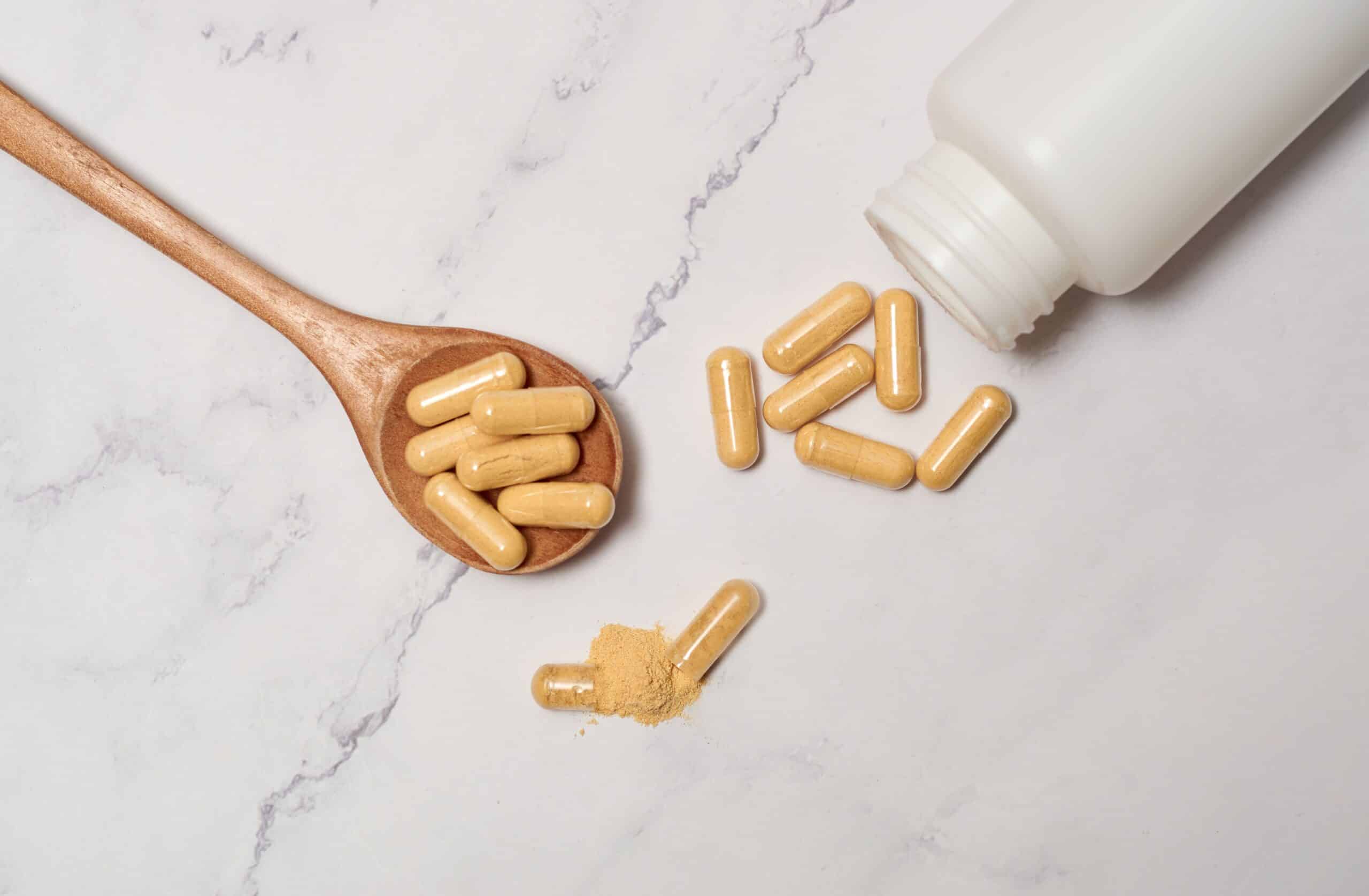
10+ Top private label probiotics manufacturers
Wonnda works with the best private label probiotics manufacturers. Here is a list of trusted suppliers from our network.
- Featured
 Private LabelContract Manufacturing
As an innovative EU private label manufacturer for supplements, ERA Scientifico crafts clinically supported, premium food supplements designed to help you elevate your brand.
- Country
- Latvia
- MOQ
- Lead time
- Featured

NorVita
4.7Private LabelContract ManufacturingInnovative Liquid Supplements Manufacturer From Estonia
- Country
- Estonia
- MOQ
- Lead time
- Featured
 Contract ManufacturingPrivate LabelWhite Label
Lithuanian private label manufacturer of supplement tablets, capsules and liposomals
- Country
- Lithuania
- MOQ
- From 1,000 bottles; 9,000 units in blisters; 300,000 units for bulk tablets and capsules.
- Lead time
- 6-8 weeks custom; 3-4 weeks repeat
- FeaturedCOContract ManufacturingPrivate LabelWhite Label
Belgian private label manufacturer of functional shakes and nutraceuticals
- Country
- Belgium
- MOQ
- From 100 units for powders in jars or stand-up pouches; 1,000 units for gummies; 3,000 units for size 00 capsules.
- Lead time
- About 2 weeks
- Featured
 Private LabelContract Manufacturing
Expert Manufacturer of Natural Cosmetics and Wellness Products
- Country
- Slovakia
- MOQ
- Lead time
- Featured
 Private LabelContract Manufacturing
Premium Organic Plant-Based Nutritional Solutions
- Country
- Belgium
- MOQ
- Lead time
- Featured

ANilab
4.9Private LabelContract ManufacturingEuropean Private Label Manufacturer of Mushroom Coffee, Adaptogen Beverages & Natural Supplements
- Country
- Slovakia
- MOQ
- 500 units
- Lead time
- On request
 Private LabelContract Manufacturing
Elevate Your Brand with Tailored Premium Product Solutions
- Country
- USA
- MOQ
- Lead time
 Private LabelContract Manufacturing
Leading Manufacturer of Plant-Based Dietary Supplements for Humans and Pets
- Country
- France
- MOQ
- Lead time
 Private LabelContract Manufacturing
Leading Pharmaceutical Company
- Country
- Turkey
- MOQ
- Lead time
Compare MOQs and lead times
Quick side-by-side of the shortlist. Missing values shown as a dash.
| Supplier | Location | Types | MOQ | Lead time |
|---|---|---|---|---|
| ERA Scientifico | Latvia | PL · CM | ||
| NorVita | Estonia | PL · CM | ||
| Futures Nutrition | Lithuania | CM · PL · White Label | From 1,000 bottles; 9,000 units in blisters; 300,000 units for bulk tablets and capsules. | 6-8 weeks custom; 3-4 weeks repeat |
| Cosmogroup | Belgium | CM · PL · White Label | From 100 units for powders in jars or stand-up pouches; 1,000 units for gummies; 3,000 units for size 00 capsules. | About 2 weeks |
| GreenPharm s. r. o. | Slovakia | PL · CM | ||
| Lombardia Vita | Belgium | PL · CM | ||
| ANilab | Slovakia | PL · CM | 500 units | On request |
| GP Labs | USA | PL · CM | ||
| FLORALPINA SAS | France | PL · CM | ||
| Ledapharma | Turkey | PL · CM |
Buyer criteria
- CFU guaranteed at expiry, not at manufacture
The decisive question in probiotics is when the stated CFU is guaranteed. A count valid only at the moment of manufacture can fall far below label by the time a customer takes the last capsule. Insist the manufacturer guarantees the label CFU through to the printed expiry, backed by stability data, and confirm the overage they formulate to achieve it. This single distinction separates credible probiotic partners from the rest.
- Named, deposited clinical strains
Verify the exact strain codes, not just the species, and confirm they are deposited strains with documentation behind any benefit you intend to imply. Generic species names without strain identifiers cannot support defensible claims and often hide poorly characterized cultures. Ask for the strain provenance, the culture supplier, and the clinical or stability dossier, since the strain is what your positioning and your premium rest on.
- Real-time stability data for your format
Accelerated studies are useful but real-time stability in your actual capsule, stick and packaging is what proves shelf life. Ask for stability data on the same strains, blend, format and packaging you intend to sell, held at realistic storage temperatures. A guarantee unsupported by format-specific data is a hope, and probiotics degrade differently in a foil stick than in a desiccated bottle.
- Humidity and temperature control in production
Probiotic viability collapses with moisture and heat, so confirm the manufacturer blends and fills in humidity- and temperature-controlled environments and holds culture under cold chain. Ask about the room conditions during encapsulation and how bulk culture is stored. A house that handles probiotics like ordinary powder will deliver a product that tests low before it ever leaves the warehouse.
- Moisture-protective packaging capability
The packaging is part of the potency system. Confirm the manufacturer can supply moisture-barrier capsules, desiccant-fitted bottles or foil blister and stick formats appropriate to your strains. Ask which packaging the stability data was generated in, because a guarantee made in a sealed blister does not transfer to a loosely capped bottle. Packaging mismatched to the strain shortens real shelf life regardless of the printed date.
- Strain licensing and supply security
If you use a branded clinical strain, confirm the manufacturer has a secure supply agreement and that licensing terms, minimum purchases and any territory restrictions are clear. Branded strains carry premiums and procurement lead times, and a gap in supply can stall reorders. Understand whether you or the manufacturer holds the strain relationship, since that determines who controls continuity of your hero ingredient.
- Acid resistance and delivery validation
Many strains are sensitive to stomach acid, so if you claim survival to the gut, confirm how it is achieved and validated, whether through inherently robust strains, microencapsulation, or a delayed-release capsule with disintegration data. Ask for evidence rather than a generic survivability statement, because an acid-sensitive strain in a standard capsule may deliver far fewer live cells to the intestine than the label implies.
Red flags
- CFU stated only at time of manufacture
A label or spec that guarantees CFU at manufacture rather than at expiry is the clearest warning in this category. It lets the count be technically true on day one while the product degrades well below claim before the customer finishes the bottle. If a manufacturer will not guarantee potency through the printed expiry with stability data behind it, the number on the label is close to meaningless.
- Species named without strain identifiers
If the blend is described only by species, such as Bifidobacterium lactis with no strain code, you cannot verify provenance, clinical backing or stability. Generic cultures are cheap and undifferentiated, and any benefit you imply becomes indefensible. Demand the deposited strain identifiers and their documentation, because a probiotic without named strains is a commodity dressed up as a clinical product.
- No stability data, only an assumed shelf life
A printed 18 or 24 month expiry with no real-time or accelerated stability study behind it is guesswork with live organisms that demonstrably die over time. Different strains, blends and packaging decay at very different rates. A manufacturer that assigns shelf life without format-specific stability data cannot support the CFU guarantee, and you inherit every potency complaint that follows.
- Probiotics handled like ordinary powder
If blending and filling happen in uncontrolled humidity and heat, or bulk culture sits at ambient temperature, the viable count drops before the product is even packed. Ask directly about room conditions and cold-chain storage. A house without environmental controls for probiotics may quote attractively, but the live count you pay for will not survive to the customer.
- Packaging that does not match the stability claim
A potency guarantee generated in a foil blister does not hold in a loosely capped bottle, and a hygroscopic strain in non-barrier packaging loses viability fast. If the manufacturer cannot tell you which packaging the stability data was produced in, or pushes cheaper packaging than the data supports, the printed shelf life is unreliable and your product will under-deliver in the field.
- No viable-count CoA per batch
If certificates of analysis do not report the live CFU per lot against label claim, you cannot prove the product contains the organisms it promises. In a category sold entirely on a number that you cannot see, missing per-batch viable-count testing is disqualifying. Total-count or total-organism figures that mix live and dead cells are not acceptable substitutes for a viable count.
Manufacturing process
- 01
Strain selection and culture procurement
The brand fixes the exact deposited strains by their alphanumeric codes, and the manufacturer procures freeze-dried culture concentrate to a specification for guaranteed CFU per gram, identity and purity. Branded clinical strains carry licensing terms and their own lead time. Incoming culture is tested for viable count and contamination, because the whole product is only as good as the live cell count received.
- 02
Potency overage calculation
Because live cells die over shelf life, the manufacturer formulates an overage above the label claim so the product still meets its stated CFU at expiry, not just at manufacture. The overage size depends on strain robustness, packaging, and storage assumptions, and rests on stability data. Getting this wrong means either an under-potent product at end of life or wasted expensive culture.
- 03
Blending under controlled humidity
Freeze-dried cultures are blended with carriers, prebiotic fibers and flow agents in a low-humidity, temperature-controlled room, since moisture and heat kill probiotic cells. Blend uniformity is critical so every capsule or stick carries the labeled multi-strain ratio. Humidity is monitored throughout, because even brief exposure to ambient moisture can sharply reduce the viable count before filling.
- 04
Encapsulation or stick filling
The blend is filled into capsules (often moisture-barrier pullulan or HPMC), into stick packs, or into sachets, on lines kept cool and dry. Gentle handling matters because mechanical and thermal stress reduce viability. Some products add a delayed-release or enteric capsule to protect acid-sensitive strains through the stomach, which is validated separately rather than assumed.
- 05
Protective packaging and desiccation
Finished units are packed into moisture-protective formats: desiccant-fitted bottles, aluminum blister packs, or foil-lined stick packs. Oxygen and moisture barriers extend viability, and the packaging choice is part of the stability claim, not a cosmetic decision. A high-count blend in a poorly sealed bottle will lose potency long before the printed expiry date.
- 06
Viable count and stability testing
QC verifies the live CFU of finished product against the label, screens for microbiological contamination, and runs real-time and accelerated stability studies that track viability over the claimed shelf life. The stability program is what justifies both the printed expiry and the end-of-life CFU guarantee, and it is the single most important data set a probiotic manufacturer can provide.
- 07
Cold-chain and storage control
Bulk culture and finished product are held at controlled, often refrigerated, temperatures, and shipping is planned to limit heat exposure. Strains marketed as shelf-stable still degrade faster when warm. The manufacturer documents storage conditions and may specify cold-chain transport for sensitive strains, since uncontrolled warehouse heat is a common, invisible cause of potency loss.
- 08
Labeling, lot coding and CoA
Units are labeled with the strain identities, the guaranteed CFU and the basis of that guarantee (at manufacture versus at expiry), storage instructions, lot code and expiry. A per-batch certificate of analysis documents the viable count and identity. Lot codes trace finished product back to the specific culture lots, supporting any potency investigation or recall.
Understanding probiotics private-label manufacturing
Strain Selection and Sourcing
Probiotic supplements deliver live microorganisms, measured in colony-forming units (CFU), which must remain viable from production to consumption. Unlike stable powders or oils, probiotics are living cells that decay over time. The sourcing discipline focuses on protecting CFU count through manufacturing, packaging, shipping, and shelf life to ensure efficacy at the customer's end.
The primary decision in probiotic formulation is strain selection, not species. Clinical evidence is attached to specific deposited strains identified by alphanumeric codes. The strain determines the studied benefit, stability, and defensible claims. Multi-strain blends are common for general gut health, while targeted single or dual strains support specific positioning like women's health, immune support, or IBS.
Strain choice also impacts cost. Well-documented branded strains have licensing premiums and minimum purchase commitments. Generic strains are less expensive but often poorly characterized and undifferentiated.
Manufacturing Locations and Market Trends
Probiotic contract manufacturing in Europe is concentrated in Germany, Italy, Denmark, and the Netherlands. Denmark and the Netherlands have a strong heritage in dairy fermentation and culture production. Italy specializes in capsule and stick-pack finishing.
The global probiotic dietary supplement market was valued at approximately 9.71 billion USD in 2024 and is projected to reach 14.72 billion USD by 2030, with a CAGR of about 7.1 percent (Grand View Research). Culture supply and finishing capacity are expanding. However, manufacturers that guarantee stability often implement cautious overages and longer lead times. Expect 8 to 16 weeks for a custom formula, with longer lead times if a branded strain requires its own procurement schedule.
MOQs and Cost Drivers
Minimum Order Quantities (MOQs) for probiotics are higher than for standard capsules due to strain blending, the necessary overage to account for decay, and protective packaging. A custom multi-strain capsule typically has a MOQ of 5,000 to 15,000 units per SKU. Relabeled stock blends may have lower MOQs.
Cost is primarily driven by:
- The strains themselves and their guaranteed CFU (high-count branded blends can significantly impact the bill of materials).
- The overage added to ensure end-of-shelf-life potency.
- The protective shell and packaging (e.g., pullulan capsules, blister packs, or desiccated bottles).
- Encapsulation or stick filling processes.
Brands should prioritize guaranteed potency at expiry and the underlying cold-chain and stability data when qualifying a partner, as a probiotic that is ineffective upon arrival can lead to refunds and erode consumer trust.
Target Market and Differentiation
Private label probiotic buyers are predominantly gut-health and women's-health D2C brands, practitioner and clinic ranges requiring named clinical strains, retailer health lines, and increasingly, mainstream wellness and beauty brands expanding into the microbiome sector.
Differentiation in the probiotic market is achieved through:
- Strain provenance and clinical backing.
- Guaranteed end-of-life CFU rather than at-manufacture count.
- Shelf-stability without refrigeration.
- Convenient formats such as single-serve sticks.
How private label works for probiotics
Probiotic private label is a blending and stabilization business built around a fragile raw material: live, freeze-dried microbial culture. The brand selects the strains by their deposited identifiers, sets the guaranteed CFU and the format, and decides the positioning, while the manufacturer procures culture to specification, calculates the potency overage, blends under controlled humidity, fills, and packages to protect viability. Unlike most supplements, the core challenge is not formulation taste or compression behavior but keeping cells alive from the line to the last dose a customer takes.
The briefing sequence reflects that. Strain selection comes first because it sets the clinical story, the stability behavior and the cost, followed by the CFU target and the decision on whether the count is guaranteed at manufacture or at expiry. Only then do format and packaging get chosen, because both are part of the potency system rather than cosmetic finishing. A brand that fixes a price point or a pretty bottle before settling strains and the end-of-life guarantee usually has to unwind those choices once stability reality intervenes.
What separates premium from commodity probiotics
On the shelf two probiotic bottles can show similar CFU numbers and cost very different amounts. The difference is in three things the consumer cannot see: whether the strains are named clinical strains or generic cultures, whether the CFU is guaranteed at expiry or only at manufacture, and whether the packaging and stability program actually protect viability through shelf life. A commodity product uses cheap species-only cultures, prints a big at-manufacture number, and packs in non-barrier bottles. A premium product specifies documented strains, guarantees end-of-life potency with real-time stability data, and uses moisture-protective packaging.
The end-of-life CFU guarantee is the integrity line of this category. Because live cells die over time, under-formulating the overage is the easiest invisible way to cut cost, and the customer only discovers it as a product that does not work. Brands that guarantee potency at expiry and back it with stability data earn the repeat purchase that gut-health positioning depends on, while commodity products that fade before the printed date churn customers who conclude probiotics do nothing.
Sourcing geography for probiotic manufacturing
European probiotic manufacturing draws on regions with deep fermentation and culture heritage. Denmark and the Netherlands are central to culture production and stabilization, Germany is strong on high-certification finishing and clinical-grade formulation, and Italy adds capsule and stick-pack finishing capability. The culture concentrate itself often originates from a small number of large global culture suppliers, regardless of where the finished product is blended and filled, which is why strain provenance and supply security matter independently of the finishing location.
For EU brands, blending and filling within Europe simplifies regulatory documentation, shortens lead times, and allows audits and cold-chain control, while branded clinical strains may carry their own territory and licensing terms set by the strain owner. The geography decision also affects cold-chain integrity: a shorter supply chain with controlled storage protects viability, whereas long, warm transit routes silently erode the live count you paid to formulate in.
Cost structure breakdown
The probiotic cost stack is led by the culture and the overage, not by the encapsulation. A high-count blend of documented strains, plus the extra culture formulated in to meet the end-of-life guarantee, can dominate the bill of materials, followed by protective packaging, the shell or stick, and finally filling and QC.
- Strains and guaranteed CFU: the dominant cost, driven by strain provenance, branding and the count you guarantee through expiry.
- Potency overage: the extra culture formulated above label claim to survive shelf-life decay, a real and often overlooked cost.
- Protective packaging: moisture-barrier capsules, desiccant bottles, foil blisters and stick packs that defend viability.
- Filling and shell: encapsulation or stick filling under controlled conditions, a small per-unit cost above modest volumes.
- QC and stability: viable-count assay, microbiological testing and the real-time stability program behind the shelf life.
Sourcing discipline means scrutinizing the strains, the overage and the stability program, where real potency and real money live, rather than negotiating the encapsulation fee while ignoring whether the product survives to the customer.
Compliance and certification landscape
Probiotic supplements sit under food-supplement regulation in the EU, which governs permitted organisms, labeling and claims, with notification requirements that vary by member state. The term probiotic itself is restricted in some EU markets as an implied health claim, so labeling must be handled carefully and only authorized claims may appear. Manufacturers should hold GMP and food-safety certification such as ISO 22000, and the certification scope should explicitly cover live-culture products, since handling live organisms demands controls beyond ordinary powder blending.
Strain identity and safety are central to compliance: the deposited strain identifiers underpin both claims and traceability, and manufacturers should test incoming culture and finished product for identity, viable count and contamination. For branded clinical strains, the strain owner's documentation supports the evidence base. A manufacturer experienced in your target markets will flag claim restrictions, the probiotic naming issue, and the storage and stability evidence required before they become a relabeling or enforcement problem.
Trends shaping the probiotic category
The probiotic market is moving from generic gut-health blends toward targeted, strain-specific positioning. Women's intimate and urinary health, infant and children's formulas, skin-microbiome beauty products, mood and the gut-brain axis, and metabolic and weight-management strains are all carving out distinct segments, each demanding the documented clinical strains that support a specific claim. For a private label brand, this means the opportunity increasingly lies in a focused, evidence-backed product for a defined audience rather than a broad multi-strain blend competing on CFU count alone.
Format and convenience are the other major shift. Shelf-stable strains that survive without refrigeration have widened distribution, single-serve sticks and chewables appeal to consumers who dislike capsules, and synbiotic products that pair strains with prebiotic fibers are growing. Spore-forming strains, which are inherently more robust through heat and stomach acid, are gaining attention precisely because they ease the stability burden that defines the category. At the same time, transparency expectations are rising: informed buyers increasingly look for named strains, end-of-life CFU guarantees and third-party verification, which rewards brands that build on genuine clinical and stability rigor rather than marketing claims. A blender that can deliver targeted strains, convenient formats and the documentation to back them is positioned for where the category is heading.
Industry insights
Frequently asked questions
Should my probiotic guarantee CFU at manufacture or at expiry?+
Why does the specific strain matter more than the species?+
Do my probiotics need to be refrigerated?+
What MOQ should I expect for a custom probiotic formula?+
How do I make sure acid-sensitive strains survive the stomach?+
What is a meaningful CFU count for a probiotic supplement?+
Can I add prebiotics or make a synbiotic product?+
How is potency proven before I sell the product?+
Explore adjacent product types
Get a vetted shortlist of probiotics suppliers in 48 hours.
Post a brief on Wonnda. Free, no commitment. We match you with vetted manufacturers that fit your MOQ, format and market.