10+ Best BigBuy Alternatives in 2026


If you built your store on dropshipping, BigBuy likely crossed your radar. BigBuy is a European dropshipping and wholesale distributor that aggregates products, stock data, and logistics. It can help a store go live fast. The trade off is thin margins, limited product differentiation, and little control over quality or customer experience.
Modern brand founders are moving away from low margin reselling toward private label and contract manufacturing in Europe. The goal is simple. Own the product, the margin, and the customer relationship. This guide shows where BigBuy fits, what holds dropshipping back, and which European sourcing platforms help you build a durable brand.
The limits of dropshipping for brand builders
Dropshipping is a starting point, not a moat. Common pain points include:
Low margins that get squeezed by ads and shipping costs
Lack of product differentiation and brand equity
Inconsistent quality control and returns headaches
Stock volatility and lead time uncertainty
Weak defensibility against copycat sellers
If you want pricing power, predictable quality, and supply chain control, private label or white label production in the European Union is the natural next step.
Private label vs. dropshipping, and where white label fits
Private label means you own the brand and control the product specifications, from formulation to packaging. You work directly with a manufacturer through a contract manufacturing model. This gives you better gross margins, the ability to iterate, and leverage over your supply chain.
White label sits between dropshipping and fully custom private label. You put your brand on a manufacturer’s ready formula or product, often with limited customization. This reduces development time and cost while giving more control than generic dropshipping.
Key differences:
Control of quality and materials: Private label gives deeper control. White label offers preset quality with limited changes. Dropshipping offers no control.
MOQs and speed: White label usually has lower minimum order quantities than custom private label, which often requires higher MOQs for unique formulations, custom packaging, or molds.
Brand equity: Private label and white label both build equity. Dropshipping does not.
Compliance and quality in Europe
Producing in the EU places you closer to high standards and regulated supply chains. For cosmetics and personal care, reputable European manufacturers follow ISO 22716 and Good Manufacturing Practice, often referred to as GMP. These quality frameworks are central to compliance, traceability, and repeatable product quality.
Lead times you should plan for
Plan your roadmap around realistic production timelines. Average lead times for European private label production range from 4 to 12 weeks, depending on complexity, materials availability, and packaging choices. White label often sits at the shorter end because the formula and bill of materials already exist.
Top BigBuy alternatives for European sourcing
You have several paths that move you away from generic dropshipping and toward brand ownership. The options below cover end to end sourcing software, directories, and specialized networks.
1. Europages, the broad B2B directory
Europages is a business directory with over 3 million listed companies. You can find factories, distributors, and service providers across many categories and countries.
Strengths: Scale and breadth. You can source a long list of potential partners quickly.
Trade offs: It is a directory, not an end to end sourcing platform. Vetting, communication, samples, and compliance checks are DIY.
Who it is for: Teams ready to run their own supplier due diligence and supplier negotiations, and who want to cast a very wide net.
2. Wonnda, the private label and white label sourcing platform
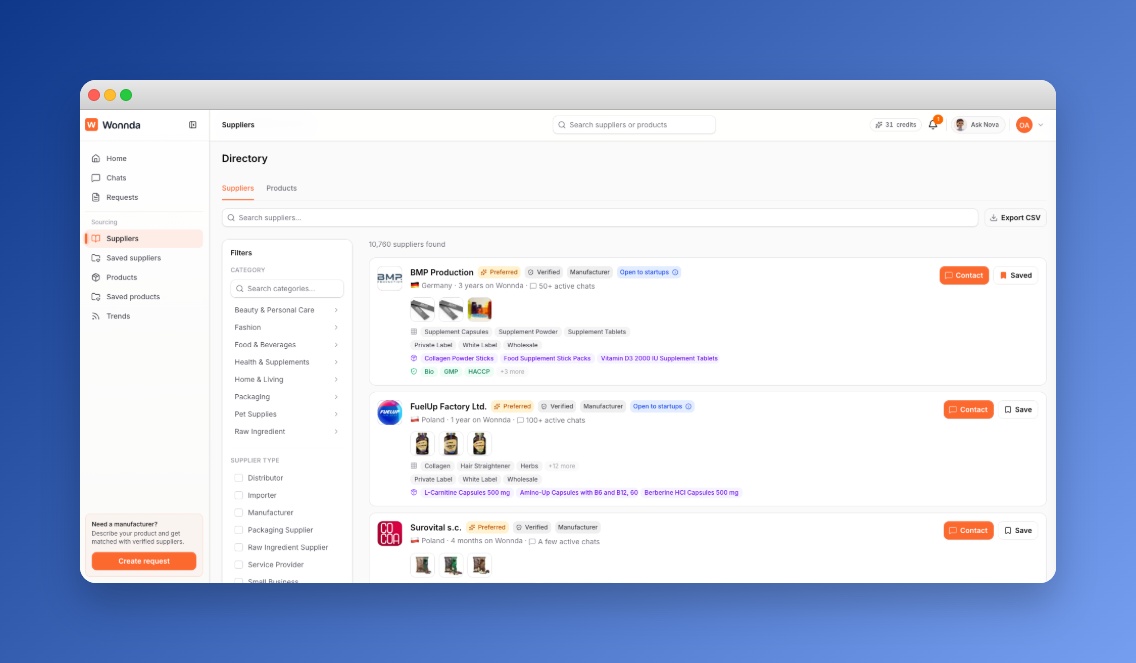
Wonnda connects consumer brands with vetted European manufacturers for private label, white label, and contract manufacturing. It focuses on Made in Europe quality and shorter shipping routes, which help margin and customer experience.
Vetted EU manufacturers: Avoid guesswork and reduce supplier risk through curation.
Matching at scale: Wonnda reports an 80% match rate between brands and vetted European manufacturers, which speeds up supplier discovery and reduces sourcing time.
Private label and white label: Start with white label to validate, then move into custom private label as you grow.
European focus: Nearshoring in the EU improves logistics predictability and supports sustainable supply chain management.
Who it is for: Founders who want to own product specs, negotiate MOQs, and build a long term supplier network under a contract manufacturing model.
When to choose it: You want more than a directory. You prefer a structured path to samples, quotations, and production, with suppliers that already understand European compliance.
3. Foursource for apparel and textiles
Foursource is a digital sourcing network for the global apparel industry. It helps fashion brands and sourcing teams connect with garment manufacturers, material suppliers, and compliance partners.
Strengths: Category depth for apparel, textile expertise, and a global network.
Trade offs: It is purpose built for fashion. If you sell beauty, food, or home, you will need other channels.
Who it is for: Apparel and textile brands that want to professionalize vendor discovery, including nearshoring options in Europe.
4. Supliful for supplements validation
Supliful provides on demand supplement dropshipping with FDA compliant facilities. It can be a quick way to test which formulations resonate before you invest in larger MOQs.
Strengths: Speed to market, catalog of supplement formats, and compliance posture aligned with FDA requirements.
Trade offs: Still dropshipping. Margins and brand control are limited compared to private label production with a European manufacturer.
Who it is for: Early stage founders validating supplement demand. Once you see traction, move to private label in Europe to improve margin, packaging control, and supply chain visibility.
5. Zentrada for EU wholesale and some dropshipping
Zentrada is a European wholesale marketplace for consumer goods that aggregates offers from EU-based suppliers. Some partners provide dropshipping options.
Strengths: EU supplier base, ready stock, and shorter intra-EU delivery routes.
Trade offs: Focuses on reselling existing brands. Limited product differentiation and brand control compared to private label.
Who it is for: Retailers that want to source wholesale or select dropship items from within Europe.
6. Syncee for EU-focused dropshipping catalogs
Syncee is a product sourcing and data feed platform that connects stores with suppliers, including many in the EU.
Strengths: Access to EU suppliers, automated product data and inventory sync, ecommerce integrations.
Trade offs: It is still dropshipping. Margins and control remain limited versus private label production.
Who it is for: Merchants that want to add EU-based dropship products quickly while they validate demand.
7. Ankorstore, a European wholesale marketplace
Ankorstore connects retailers with European brands across multiple categories for wholesale purchasing.
Strengths: Curated European brands, purchasing tools, and payment options geared to retailers.
Trade offs: Wholesale marketplace, not dropshipping or private label manufacturing.
Who it is for: Retailers seeking differentiated inventory from European brands without running manufacturer sourcing.
8. Orderchamp for cross-border wholesale in Europe
Orderchamp is a European B2B marketplace that enables retailers to buy across categories from regional brands.
Strengths: Broad catalog of European brands and localized ordering experience.
Trade offs: Not designed for private label or contract manufacturing.
Who it is for: Retailers restocking multi-category assortments from European suppliers.
9. Printful for EU print-on-demand
Printful offers white label print-on-demand with fulfillment locations that serve Europe.
Strengths: No inventory risk, white label branding, faster delivery to European customers through regional fulfillment.
Trade offs: Limited to print-on-demand categories and lower margins than private label at scale.
Who it is for: Brands testing apparel and merchandise quickly before investing in custom production.
10. Gelato for localized print-on-demand in Europe
Gelato operates a network of local print partners, including across Europe, to produce and ship on demand.
Strengths: Localized production reduces shipping distance and lead times, white label outputs.
Trade offs: Focused on print categories rather than full private label manufacturing.
Who it is for: Brands that need on-demand printed products with broad European coverage.
Directory vs. end to end sourcing software
The platform you choose will shape your time to market and risk profile. Here is how the approaches differ.
Discovery quality: Directories list many suppliers, which maximizes options but places vetting on you. Sourcing software that vets manufacturers aims to deliver fewer, better matches that fit your category and compliance needs.
Supplier verification: Directories rely on profile self reporting. Vetted platforms verify capabilities and often screen for quality certifications relevant to the European Union.
Workflow coverage: Directories help you find names. End to end platforms reduce friction across briefs, sampling, and quoting by standardizing requests and creating alignment with suppliers from the start.
Communication: Direct outreach works but can be slow. Centralized messaging inside a sourcing platform reduces context loss and improves response quality.
Compliance support: In regulated categories such as cosmetics, look for partners who understand ISO 22716 and GMP requirements and can guide documentation.
If you have bandwidth for manual vetting, a directory like Europages can work. If you want a faster path to production with curated partners, a platform like Wonnda is a stronger fit.
What it takes to launch private label in Europe
Shifting from dropshipping to private label changes your operating model. Plan for the following inputs and trade offs.
Product definition: Clarify your target customer, claims, materials, and packaging. The clearer the brief, the stronger the supplier match.
MOQs: White label usually starts with lower MOQs because the product already exists and only needs branding. Custom private label typically requires higher MOQs, especially when you introduce custom tooling, new packaging formats, or novel formulations.
Lead times: Expect 4 to 12 weeks in Europe depending on category, raw materials lead times, and packaging availability. Samples and stability testing, where relevant, add time upfront but reduce rework later.
Cost structure: You trade lower unit costs at volume for inventory risk. Better margins come from owning more of the value chain.
Quality and compliance: For cosmetics, prioritize manufacturers that follow ISO 22716 and GMP. For food or supplements, confirm category specific standards and documentation. Compliance under EU regulations is mandatory and supports long term brand trust.
Supply chain management: Nearshoring to the EU simplifies logistics planning, reduces transit time variability, and helps you react faster to demand shifts.
A practical roadmap to switch from dropshipping to private label
Validate your category and positioning
Identify your hero product, differentiation, and price point. Use lightweight methods to confirm demand such as limited test runs or pre order interest.
Decide on white label or private label for your first release
White label gets you to market faster with lower MOQs and simpler compliance.
Private label gives you full control over formulation and packaging once you have proof of demand.
Shortlist European manufacturers
Use a vetted platform like Wonnda to get high quality matches fast. Alternatively, use Europages for broad discovery, then run your own due diligence.
For apparel, add Foursource to find textile focused suppliers.
For supplements validation, consider Supliful for early tests, then move to an EU private label partner for scale.
Run sampling and quotes
Share a clear brief with target specs, packaging, volume expectations, and timelines.
Compare quotes across MOQs to understand cost breaks and your working capital needs.
Confirm compliance and documentation
For cosmetics, request evidence of ISO 22716 and GMP aligned practices. For other categories, align on EU regulatory requirements early.
Place a pilot order
Start with a quantity that balances risk and learning speed. Measure unit economics, customer feedback, returns rate, and operational fit.
Scale with a supply plan
Lock in lead times, reorder points, and a packaging forecast. Keep production in Europe where sensible to shorten shipping routes and reduce carbon and transit volatility.
Why European manufacturing strengthens brand and margin
Quality and trust: European regulatory frameworks and quality systems support consistent products and credible claims.
Faster logistics: Shorter shipping routes reduce stockouts and free up cash tied in transit.
Differentiation: Customization options in private label help you own your niche and defend pricing.
Resilience: Local and regional supplier ecosystems improve supply chain management and responsiveness to demand spikes.
Choosing the right BigBuy alternative for your category
Beauty and personal care: Favor manufacturers with ISO 22716 and GMP aligned operations. Private label or white label through a vetted EU partner reduces regulatory friction.
Fashion and apparel: Use Foursource to map garment capabilities, then shortlist nearshore partners for speed and flexibility.
Supplements and wellness: Use Supliful to test demand quickly if you are early. For defensible margins and packaging control, move to private label with an EU manufacturer.
Home, food, and lifestyle: A vetted European manufacturing network via Wonnda helps you source across multiple categories while keeping logistics close.
Bottom line
BigBuy alternatives that focus on high margin brand building, Made in Europe quality, and shorter shipping routes will outperform generic dropshipping over time. If you want control over quality, supply chain management, and customer experience, private label or white label production in Europe is the path forward.
Wonnda connects you with vetted European manufacturers and delivers an 80% match rate between brands and suppliers. Use it to replace guesswork with a structured sourcing process, then scale with confidence on your own terms.
Frequently asked
What is the best BigBuy alternative for building a brand in Europe?
If your goal is private label or white label production with vetted European partners, Wonnda is a strong choice. It focuses on Made in Europe manufacturing and reports an 80% match rate between brands and vetted suppliers. For broad discovery without curation, Europages is useful. For apparel, consider Foursource. For early supplements validation, Supliful can help.
How long does European private label production take?
Average lead times for European private label production range from 4 to 12 weeks. Complexity, raw materials, and packaging availability drive the exact timeline. White label products usually move faster because the base product already exists.
What certifications should cosmetics manufacturers in Europe have?
Look for ISO 22716 and Good Manufacturing Practice, also known as GMP. These frameworks guide quality systems, traceability, and consistent production. They are widely used by reputable European cosmetics manufacturers.
Are MOQs lower for white label than for custom private label?
Yes. White label typically starts with lower MOQs since you brand an existing product. Custom private label usually requires higher MOQs to cover custom formulations, packaging components, or tooling.
Is private label more profitable than dropshipping?
Private label can deliver higher gross margins because you control product specifications, negotiate production costs, and own the brand. It requires inventory planning and supplier relationships, but it builds equity and pricing power that dropshipping does not provide.
Can I test supplements quickly without committing to high MOQs?
Yes. Supliful offers on demand supplement dropshipping with FDA compliant facilities, which helps you validate demand fast. Once you see traction, move to a European private label partner to improve margins and packaging control.
Related articles
15 Best European Alibaba Alternatives (2026)
15+ Top European B2B Marketplaces in 2026 - Ultimate Guide

11 Best Procurement Platforms in 2026
12 Best Thomasnet Alternatives for B2B Sourcing in 2026
Why is everything made in China? The real reasons behind the factory of the world

Top 5 Product Sourcing Platforms for Brands in 2026
How to Find the Best Wholesale Suppliers For Your Brand or Retail Business (2026)

White Label vs. Private Label vs. Wholesale: Biggest Differences In 2026