
12 Best Thomasnet Alternatives for B2B Sourcing in 2026

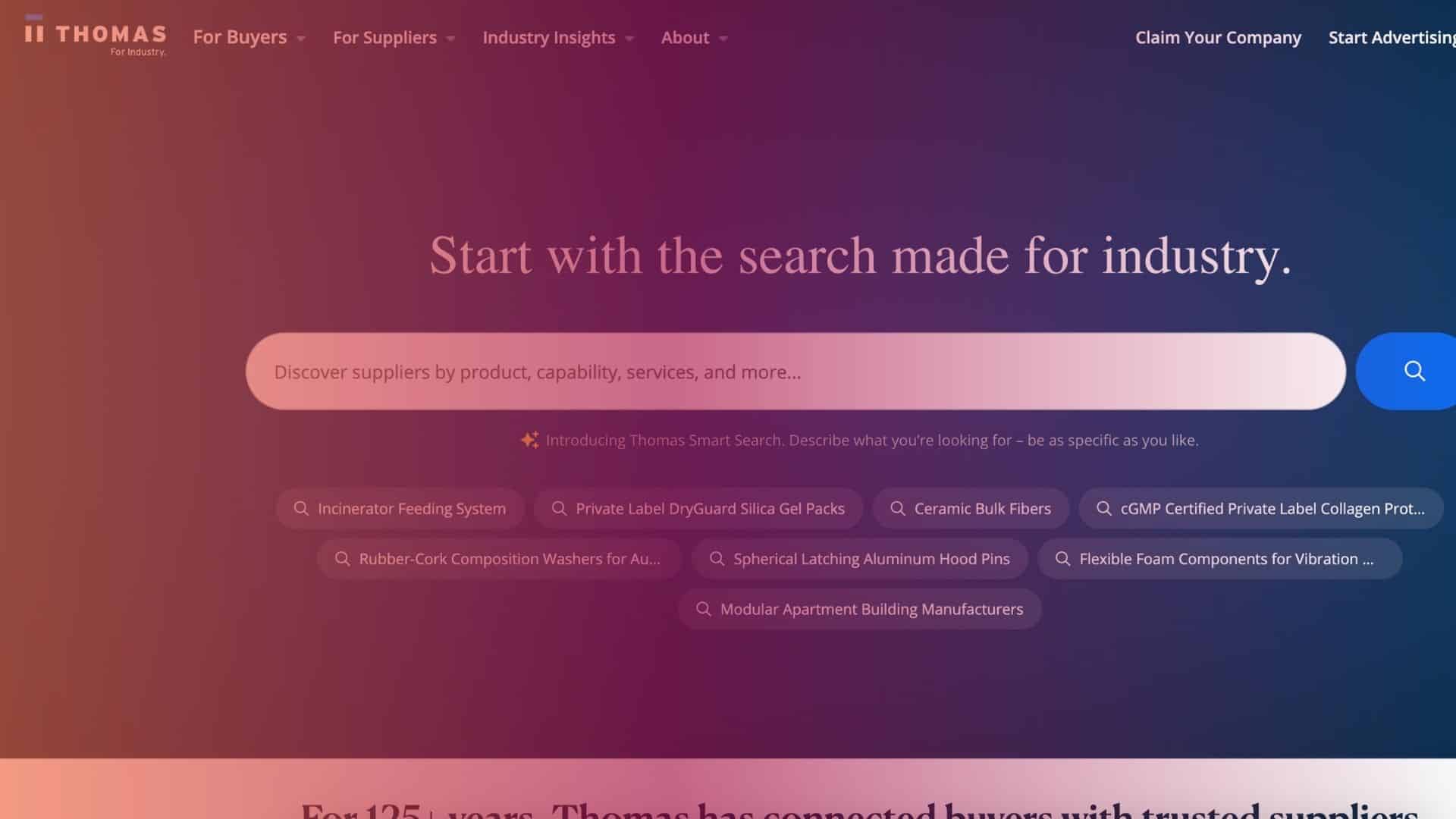
Thomasnet has been the default industrial supplier directory in the US for decades, but it is no longer the best fit for every sourcing job. Brands today need verified suppliers, faster discovery, and a workflow that goes beyond static directory listings, especially outside the industrial category.
This guide compares 12 Thomasnet alternatives for buyers sourcing private label products, contract manufacturing, packaging, ingredients, and components. Each one is evaluated on supply base, category fit, verification, workflow, and best-use scenario, so you can pick the right platform for your project rather than the most famous one.
Key Takeaways
- Thomasnet is strong for US industrial and MRO sourcing, but weaker for consumer brands sourcing private label, contract manufacturing, and packaging.
- The best Thomasnet alternative depends on category, region, and whether you need a directory or an end-to-end workflow.
- Wonnda is the top alternative for brands sourcing private label and contract manufacturers in Europe and the US, with verified suppliers and a built-in project workflow.
- Alibaba, Made-in-China, and Global Sources lead for Asia-based sourcing at scale, with trade-offs around verification, MOQs, and lead times.
- Kompass, Europages, and IndustryNet are strong regional directories for Europe and North America.
- For modern consumer brands, platforms with verification, structured requests, and project management beat static directories on both speed and supplier quality.
Why Look Beyond Thomasnet
Thomasnet (now Thomasnet.com, owned by Xometry) is a US-focused directory of industrial suppliers, OEMs, and distributors. It is useful for MRO, custom parts, fabrication, and industrial components, and it offers RFQ tools, CAD file sharing, and buyer guides.
Where it starts to fall short:
- Category fit. If you are sourcing skincare, supplements, food, beverages, packaging, or branded consumer goods, Thomasnet’s supplier base is thin. It was built for industrial buyers, not consumer brand founders or retail buyers.
- Geography. Thomasnet’s strength is US-based industrial suppliers. Brands sourcing in Europe, the UK, or globally often need a different tool.
- Workflow. Thomasnet is still largely a directory plus RFQ form. Modern buyers expect structured requirements, matchmaking, verified profiles, and project management in one place.
- Verification depth. Directory listings vary in data quality. For consumer categories, buyers want clearer signals on capabilities, certifications, and track record before reaching out.
If any of these matter for your project, one of the 12 alternatives below is probably a better fit.
How We Evaluated These Thomasnet Alternatives
Each platform in this list is scored against five practical criteria:
- Supply base fit: which categories and regions are actually well-covered.
- Verification and quality: how suppliers are vetted, profiles enriched, and risk flagged.
- Workflow depth: whether the platform stops at discovery or supports RFQs, tenders, and project management.
- Buyer experience: speed of discovery, clarity of profiles, quality of matches.
- Best-fit buyer: who should actually use it (startup vs enterprise, industrial vs consumer, regional vs global).
The 12 Best Thomasnet Alternatives
1. Wonnda
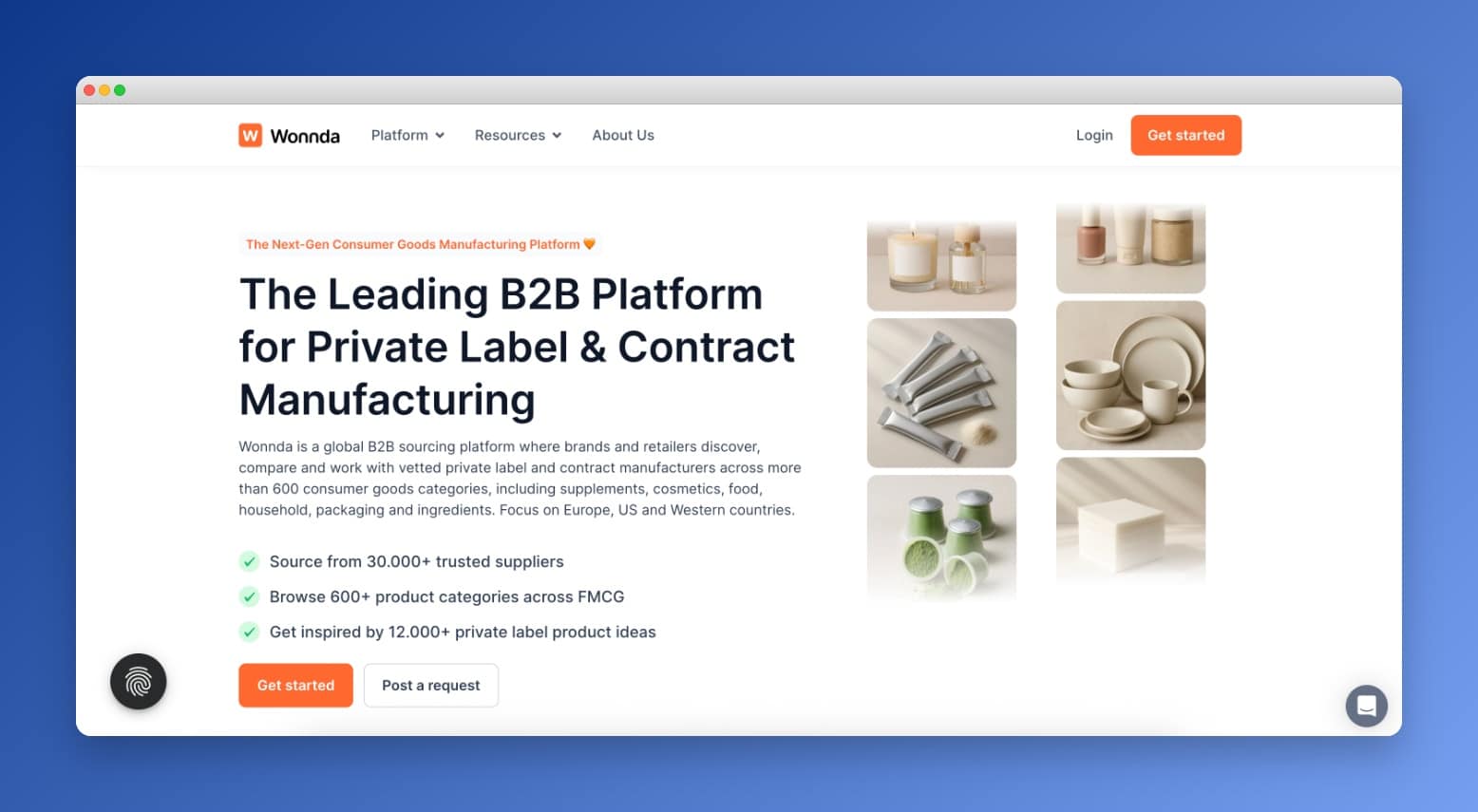
Best for: Consumer brands and retailers sourcing private label, contract manufacturing, packaging, and ingredients in Europe and the US.
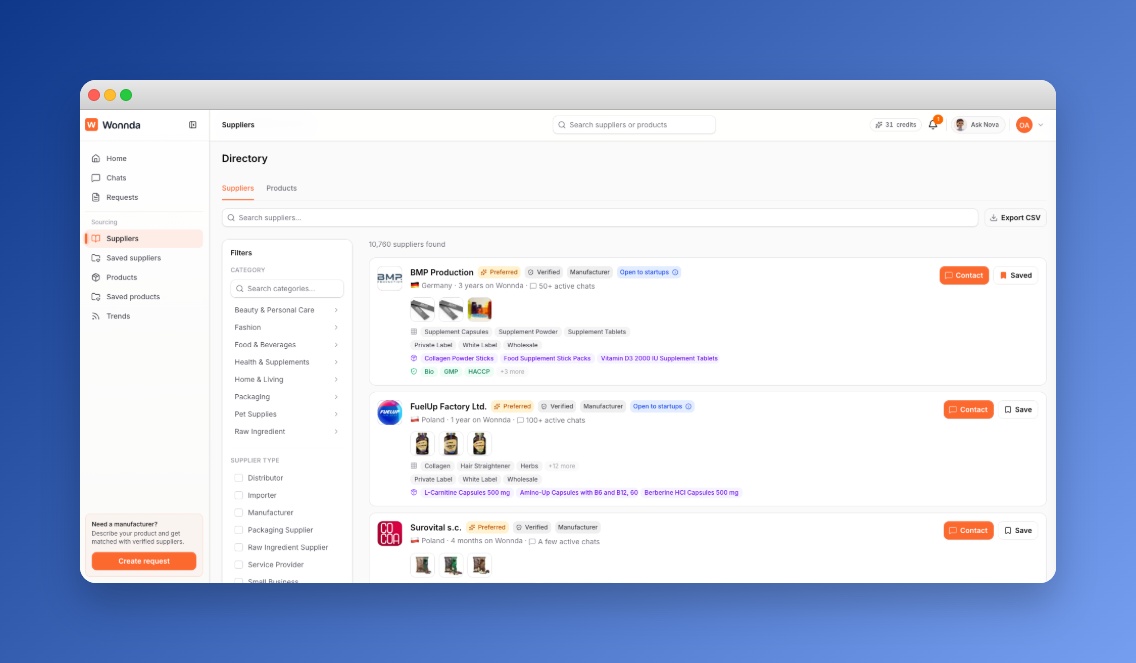
Wonnda is a B2B sourcing platform that connects brands and retailers with verified private label and contract manufacturers, packaging suppliers, ingredient suppliers, and service partners. It covers supplements, beauty and personal care, food and beverage, packaging, ingredients, and lifestyle categories, with a Europe and US-first supplier base and selective global suppliers.
Where Wonnda stands out against Thomasnet: it is built specifically for consumer brand sourcing, not industrial parts. Profiles include capabilities, MOQs, certifications, and category focus. Buyers can post structured requirements and get matched with suitable manufacturers, then move into a project workflow for tenders, briefs, samples, and supplier management.
Key strengths
- Verified manufacturers and suppliers focused on consumer categories
- Europe and US-first supply base for nearshoring, speed, and compliance
- Structured buyer requests produce better matches than open-ended RFQs
- End-to-end workflow from discovery to project (not just a directory)
- Dedicated supplier profiles and storefront tools for qualified inbound
Consider if: You are a D2C brand, CPG company, retailer, sourcing or product manager looking for private label or contract manufacturers and want verified supplier shortlists faster than cold outreach allows.
2. Alibaba.com
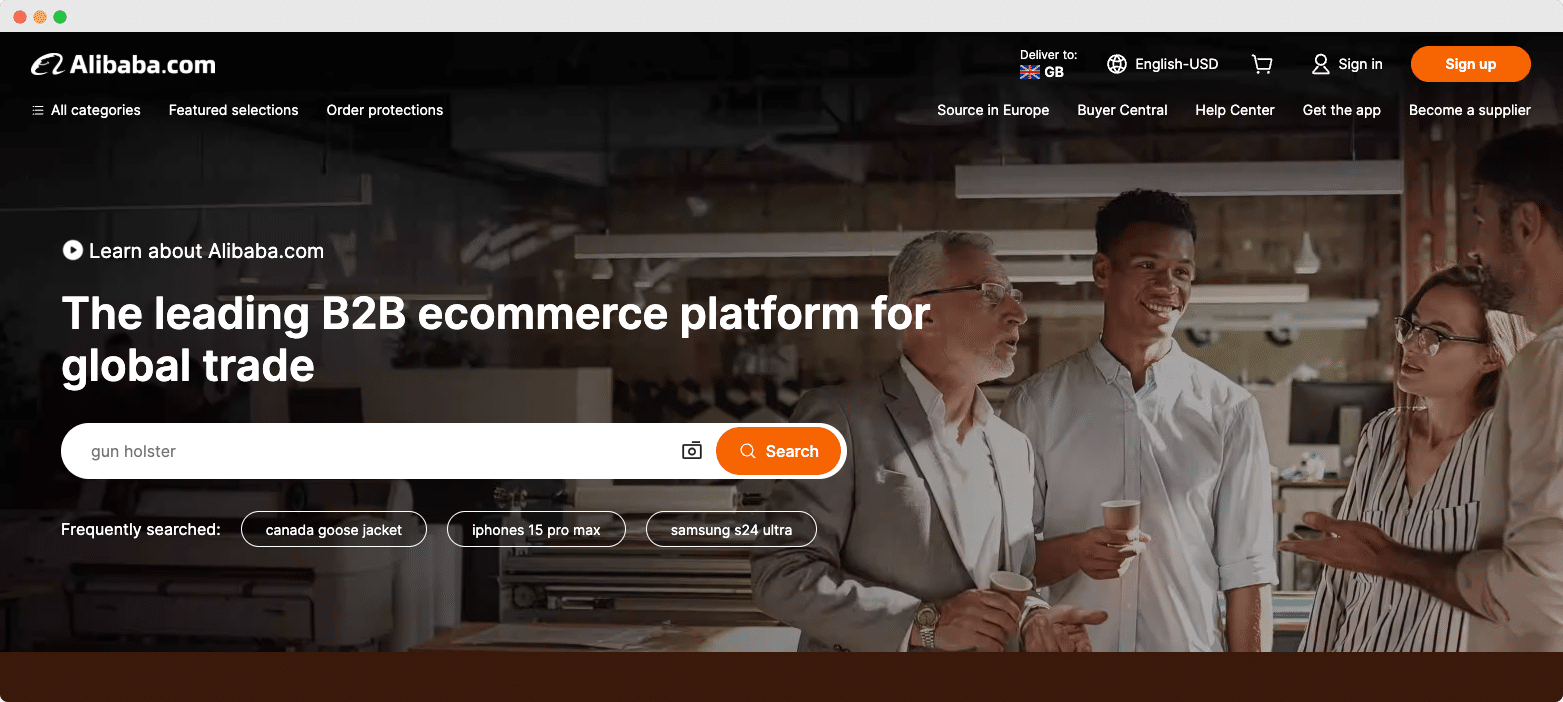
Best for: Global sourcing at scale, especially from Asia, when MOQs and lead times are flexible.
Alibaba is the largest B2B marketplace in the world, with millions of suppliers mostly in China and Southeast Asia. It covers every imaginable category, from electronics and apparel to supplements and packaging.
Compared to Thomasnet, Alibaba is vastly broader in category and geography, but the trade-off is verification. Alibaba offers "Verified Supplier" and "Gold Supplier" tiers, along with Trade Assurance, but buyers still need to do their own due diligence, factory audits, and sample validation. Lead times include ocean freight unless you use nearer suppliers.
Key strengths
- Enormous selection across nearly every B2B category
- Transparent pricing starting points, sample ordering, Trade Assurance
- Good for high-volume, cost-sensitive sourcing once supplier quality is validated
- Strong for commodity and off-the-shelf products
Consider if: You have the bandwidth to vet suppliers, accept longer lead times, and source at scale.
3. Co-manufacturing.com
Best for: Fast supplier discovery in supplements and cosmetics, with a focus on European and US co-manufacturers and lower-friction project kickoffs.
Co-manufacturing.com is a specialized sourcing platform focused on connecting brands with private label and contract manufacturers, particularly in supplements, functional food, and cosmetics. Unlike broad marketplaces, it is structured around standardized product formats (e.g. capsules, powders, gummies, skincare SKUs), allowing brands to quickly browse ready-to-produce concepts or submit a targeted request.
The platform acts as a front-end discovery layer: brands can either explore pre-defined product categories or submit an RFQ, which is then distributed to a curated supplier network. Suppliers can review and claim leads, creating a more controlled matching process compared to open marketplaces.
Compared to Alibaba, the scope is narrower but significantly more curated, with a stronger emphasis on compliance, certifications, and Western manufacturing standards. Compared to directories like Thomasnet, it is leaner and geared toward initiating actual sourcing projects rather than just supplier research.
Key strengths
- Focused on high-demand verticals like supplements, functional food, and beauty for EU and USA
- Structured product discovery (by delivery form, ingredients, formats) reduces sourcing friction
- Curated supplier network with stronger alignment to EU/US compliance expectations
- RFQ distribution model increases response quality and relevance
- Faster path from idea to supplier conversations compared to generic directories
Consider if: You want a more guided and efficient sourcing process in regulated consumer goods categories, prioritize vetted Western manufacturers, and prefer structured product entry points over open-ended supplier search.
4. Made-in-China.com
Best for: China-focused sourcing with a slightly more curated experience than Alibaba.
Made-in-China.com is one of the largest Chinese B2B platforms, covering industrial goods, consumer products, machinery, and components. It positions itself as a slightly more industrial, manufacturer-oriented alternative to Alibaba, with "Audited Supplier" programs and detailed company profiles.
For buyers evaluating a China-based supplier pool against Thomasnet’s mostly US base, Made-in-China is a practical second window into the same global supply chain that Thomasnet hints at but does not cover directly.
Key strengths
- Strong focus on manufacturers, less trading-company noise than many expect
- Audited supplier programs with third-party verification
- Wide category coverage, strong in machinery, electronics, and components
Consider if: You want a second source to benchmark against Alibaba or are looking specifically for Chinese manufacturers.
5. Global Sources
Best for: Asia-based sourcing of electronics, hardware, and consumer goods, with stronger vetting than most Asian marketplaces.
Global Sources has roots in export trade shows and maintains a reputation for higher-quality supplier vetting than its scale peers. It is particularly strong in consumer electronics, hardware, home, gifts, and fashion accessories.
For brands that felt Thomasnet did not have the right consumer-goods manufacturers, Global Sources can be useful for finished goods, accessories, and hardware-adjacent categories.
Key strengths
- Verified suppliers with trade show and export history
- Strong in electronics, hardware, fashion, and home
- Detailed product listings and supplier capability data
Consider if: You are sourcing consumer electronics, hardware, or fashion accessories from Asia and want better baseline vetting than a pure open marketplace.
6. Kompass
Best for: Pan-European and global business directory use, particularly for research and supplier discovery across industries.
Kompass is a long-standing B2B directory covering millions of companies across Europe, North America, Asia, and beyond. It is more of a structured business directory than a transactional marketplace, with rich firmographic data: turnover, employee count, activities, executives, and classifications.
It is a useful Thomasnet alternative for buyers doing supplier discovery in Europe or for market research before outreach.
Key strengths
- Wide geographic and industry coverage
- Rich firmographic data for supplier qualification
- Strong for research-led sourcing and market mapping
Consider if: You want a European-flavored business directory with solid company data, and you are comfortable handling outreach outside the platform.
7. Europages
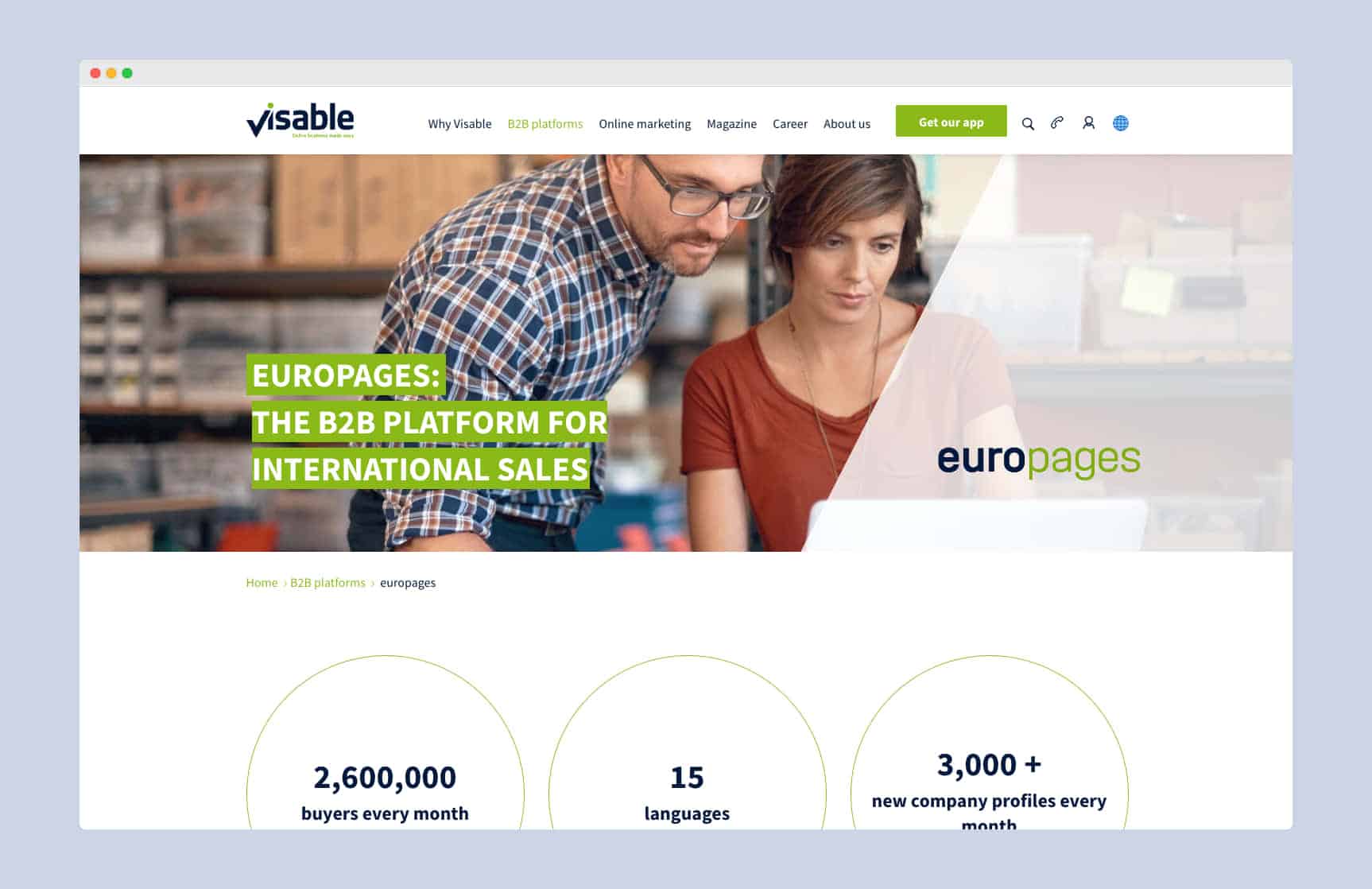
Best for: European B2B supplier discovery, particularly for mid-market manufacturers and distributors.
Europages is a European B2B directory with more than 3 million listed companies, indexed by product and activity. It offers category browsing, search, and basic lead forms.
For buyers focused on Europe who find Thomasnet too US-centric, Europages is a natural alternative for baseline discovery, especially in manufacturing, wholesale, and distribution.
Key strengths
- Strong European coverage across manufacturing and wholesale
- Simple category taxonomy
- Free baseline access for buyers
Consider if: You want a lightweight European directory to complement a deeper tool like Wonnda or Kompass.
8. IndustryNet
Best for: US and North American industrial supplier discovery as a direct Thomasnet substitute.
IndustryNet is a US-focused industrial marketplace and directory covering manufacturers, distributors, and service providers across thousands of categories. It offers free supplier listings and a clean category structure.
It is the most direct like-for-like alternative to Thomasnet for buyers sourcing industrial parts, machinery, MRO, and related services in North America.
Key strengths
- Strong US industrial coverage
- Free to use for buyers
- Clear category taxonomy for engineers and procurement teams
Consider if: You want a free, US-industrial Thomasnet substitute for baseline sourcing and benchmarking.
9. IndiaMART
Best for: Sourcing from India across industrial, consumer, and specialty categories.
IndiaMART is the largest online B2B marketplace in India, with millions of listed suppliers across virtually every category. It is particularly strong for chemicals, textiles, garments, machinery, packaging, and specialty ingredients where Indian suppliers are globally competitive.
As Thomasnet alternatives go, IndiaMART opens up a supply pool that US and European directories rarely cover well.
Key strengths
- Deep coverage of Indian manufacturers and exporters
- Strong in textiles, chemicals, machinery, packaging, and ingredients
- Competitive pricing for many categories
Consider if: You are open to India-based sourcing and want a second non-China Asian supply base.
10. Maker’s Row
Best for: US-based apparel, leather, and soft goods brands sourcing domestic manufacturers.
Maker’s Row is a US-focused marketplace for factories in apparel, accessories, home textiles, and leather goods. It was built for emerging consumer brands and indie designers who want to manufacture in the US.
Where Thomasnet is thin on soft-goods consumer categories, Maker’s Row is built around them, making it a valuable niche alternative.
Key strengths
- US manufacturer focus for apparel, accessories, and home goods
- Built for small and mid-sized consumer brands
- Category taxonomy tailored to soft goods
Consider if: You are a US apparel, home, or accessories brand looking to manufacture domestically.
11. MFG (MFG.com)
Best for: Custom manufacturing, machining, fabrication, and engineered parts sourcing.
MFG is a platform for custom manufacturing sourcing: CNC machining, injection molding, casting, stamping, sheet metal, and similar engineered-parts work. Buyers post RFQs with specs and drawings, and vetted manufacturers bid on the job.
For buyers who use Thomasnet primarily for custom-parts RFQs, MFG is a focused alternative with a more transactional model.
Key strengths
- Quote-based workflow for engineered parts
- Vetted manufacturing base across machining, molding, and fabrication
- Strong fit for prototyping and low-to-mid volume production runs
Consider if: Your sourcing is dominated by custom engineered parts rather than finished consumer goods.
12. Sourcify
Best for: Brands that want a managed sourcing layer on top of Asian manufacturing.
Sourcify combines a sourcing platform with managed services: supplier vetting, production management, quality inspections, and logistics. It is not a pure marketplace. It sits closer to a sourcing agency model with software.
For buyers who would use Thomasnet to find suppliers but still want hand-holding through production, Sourcify plugs that gap, particularly for Asia-based manufacturing.
Key strengths
- Managed sourcing and production management
- Helpful for first-time importers and scaling brands
- Combines supplier access with quality control and logistics
Consider if: You want more than a directory and are willing to pay for a managed layer.
13. Faire.com
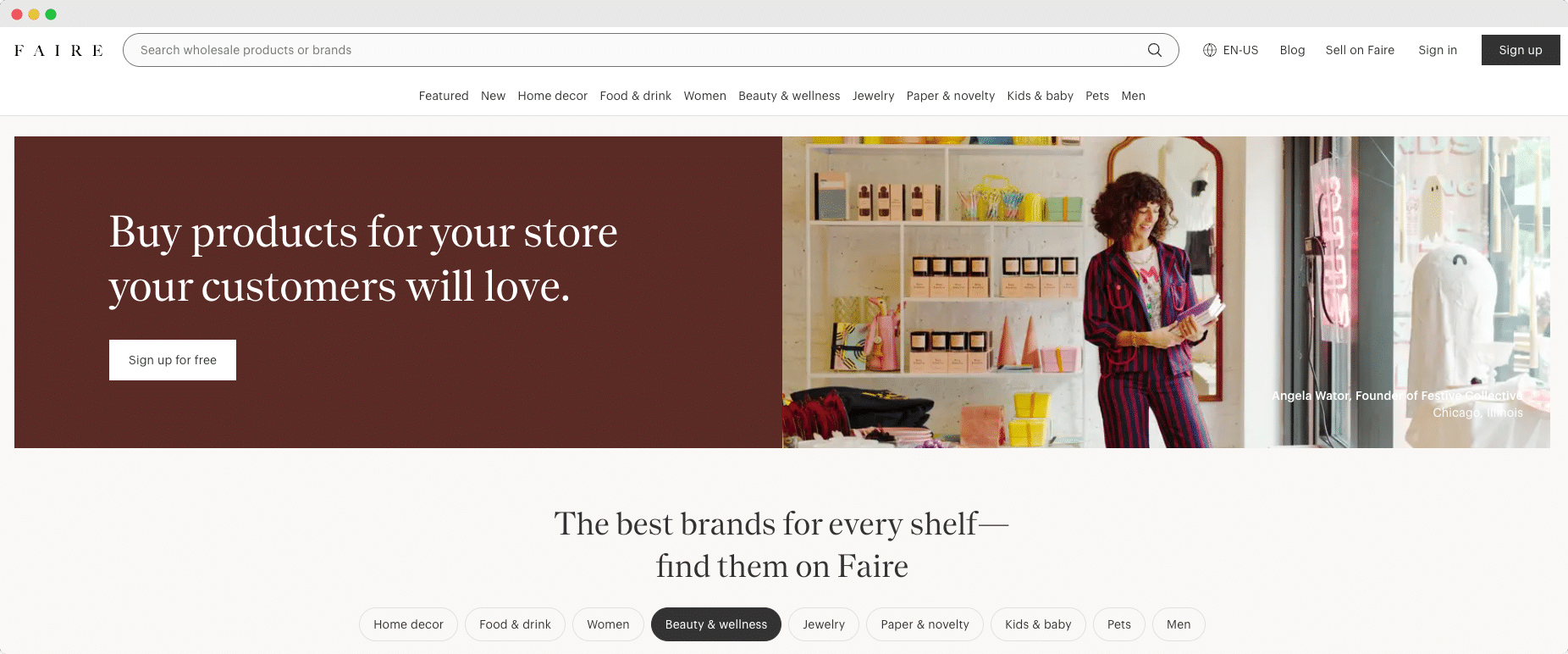
Best for: Wholesale consumer goods buyers who want to browse and transact online.
Faire.com is a wholesale B2B marketplace. It leans toward finished consumer goods: home, beauty, food, gifts, and apparel, with suppliers mostly in the US, EU and Canada.
Where Thomasnet is industrial and RFQ-heavy, Faire.com is catalog-and-transaction oriented. It is less of a manufacturing sourcing tool, more of a wholesale discovery platform, but a relevant alternative for retailers sourcing ready-made products rather than private label.
Key strengths
- Transactional wholesale model
- Focus on finished consumer goods
- Useful for small retailers filling shelves with third-party brands
Consider if: You are a small retailer sourcing branded products wholesale, not a brand building private label.
Thomasnet Alternatives Summary Table
| Platform | Best for | Primary region | Model |
|---|---|---|---|
| Wonnda | Private label and contract manufacturing for consumer brands | Europe and US | Marketplace + workflow |
| Alibaba | Global scale sourcing | Asia, global | Marketplace |
| Co-Manufacturing.com | Private label and co-manufacturer sourcing for beauty, supplements and other CPG verticals | Europe, USA | RFP platform, Marketplace |
| Made-in-China | China-focused manufacturer sourcing | China | Marketplace |
| Global Sources | Electronics, hardware, consumer goods | Asia | Marketplace |
| Kompass | Supplier research and market mapping | Global, Europe-strong | Directory |
| Europages | European supplier discovery | Europe | Directory |
| IndustryNet | US industrial alternative to Thomasnet | US, North America | Directory |
| IndiaMART | India sourcing | India | Marketplace |
| Maker’s Row | US apparel and soft goods manufacturers | US | Directory |
| MFG | Custom parts and engineered manufacturing | Global | RFQ platform |
| Sourcify | Managed sourcing for Asian manufacturing | Asia | Platform + services |
| Faire.com | Wholesale consumer goods | US, Canada | Wholesale marketplace |
How to Choose the Right Thomasnet Alternative
Picking the right platform is a function of four decisions:
- Category. Industrial parts and MRO still lean toward Thomasnet-style directories (IndustryNet, MFG). Consumer categories (supplements, beauty, food, packaging) lean toward Wonnda and Asia-focused marketplaces.
- Region. Europe-first sourcing points to Wonnda, Kompass, or Europages. US-industrial points to IndustryNet. Asia-first points to Alibaba, Made-in-China, Global Sources, IndiaMART.
- Model. Do you need a directory for research, a marketplace to transact, or a workflow to manage projects end-to-end? Directories are fine for casual discovery. For active sourcing, a workflow platform cuts lead time dramatically.
- Verification depth. For high-stakes categories (supplements, food, cosmetics, medical), insist on platforms with real supplier verification, clear capability data, and compliance signals rather than open listings.
A practical pattern: use Wonnda as the primary tool for consumer brand sourcing in Europe and the US, then layer in a regional or specialty platform (IndustryNet, MFG, IndiaMART) for anything that falls outside that supply base.
Common Mistakes When Replacing Thomasnet
- Treating every platform as equivalent. A wholesale marketplace like Faire.com and a manufacturer marketplace like Wonnda solve different problems. Mixing them up wastes weeks.
- Ignoring verification. Free directory listings vary wildly in data quality. For regulated or safety-sensitive categories, verified supplier profiles and documented compliance should be non-negotiable.
- Relying only on open-ended RFQs. Suppliers respond better to structured, specific briefs (volumes, format, certifications, timeline). Platforms that force structure produce faster, better matches.
- Not building a second source. Single-sourcing is still a major risk factor. Use alternatives to benchmark pricing and build a second-source shortlist even if the incumbent is working.
- Over-indexing on one region. The best supply base usually mixes nearshore (Europe or US) with selective global suppliers. Picking platforms that match this mix gives you options when conditions change.
Wonnda vs Thomasnet at a Glance
| Dimension | Thomasnet | Wonnda |
|---|---|---|
| Primary category | Industrial, MRO, custom parts | Private label, contract manufacturing, packaging, ingredients |
| Supply base | US-focused | Europe and US-first, selective global |
| Verification | Directory-style listings | Verified manufacturers and suppliers |
| Workflow | Directory + RFQ forms | Discovery, matchmaking, tenders, projects |
| Best-fit buyer | Industrial procurement, engineers | Consumer brand founders, retail buyers, product managers |
FAQs
Is there a free alternative to Thomasnet?
Yes. IndustryNet, Europages, Kompass (baseline), and IndiaMART offer free buyer access. For consumer brand sourcing, Wonnda also offers free access to browse verified manufacturers and submit structured requirements.
What is the best Thomasnet alternative for consumer brands?
Wonnda is the strongest alternative for consumer brands sourcing private label, contract manufacturing, packaging, or ingredients. It focuses on verified manufacturers in Europe and the US across supplements, beauty, food and beverage, packaging, and lifestyle.
Is Thomasnet still relevant?
Thomasnet remains very relevant for US industrial sourcing, MRO, and custom parts, especially after its acquisition by Xometry. For consumer categories, private label, or European sourcing, dedicated platforms like Wonnda produce better matches faster.
How is Wonnda different from Alibaba?
Alibaba is a global marketplace dominated by Asian suppliers across every category. Wonnda is a curated, verified B2B sourcing platform focused on private label and contract manufacturing in Europe and the US, with a workflow layer for tenders, projects, and supplier management.
What should I look for in a B2B sourcing platform?
Look for verified supplier profiles, a supply base that matches your category and region, a workflow that supports structured requirements and project management, and transparent signals on capabilities, certifications, and MOQs.
Can I use more than one Thomasnet alternative at the same time?
Yes, and most mature sourcing teams do. A common stack combines Wonnda for consumer brand sourcing in Europe and the US, IndustryNet or MFG for US industrial parts, and Alibaba or Made-in-China for global scale sourcing.
Related articles
15 Best European Alibaba Alternatives (2026)

10+ Best BigBuy Alternatives in 2026

15+ Top European B2B Marketplaces in 2026 - Ultimate Guide

11 Best Procurement Platforms in 2026
Why is everything made in China? The real reasons behind the factory of the world

Top 5 Product Sourcing Platforms for Brands in 2026
How to Find the Best Wholesale Suppliers For Your Brand or Retail Business (2026)

White Label vs. Private Label vs. Wholesale: Biggest Differences In 2026