
10+ Best European Packaging Suppliers in 2026

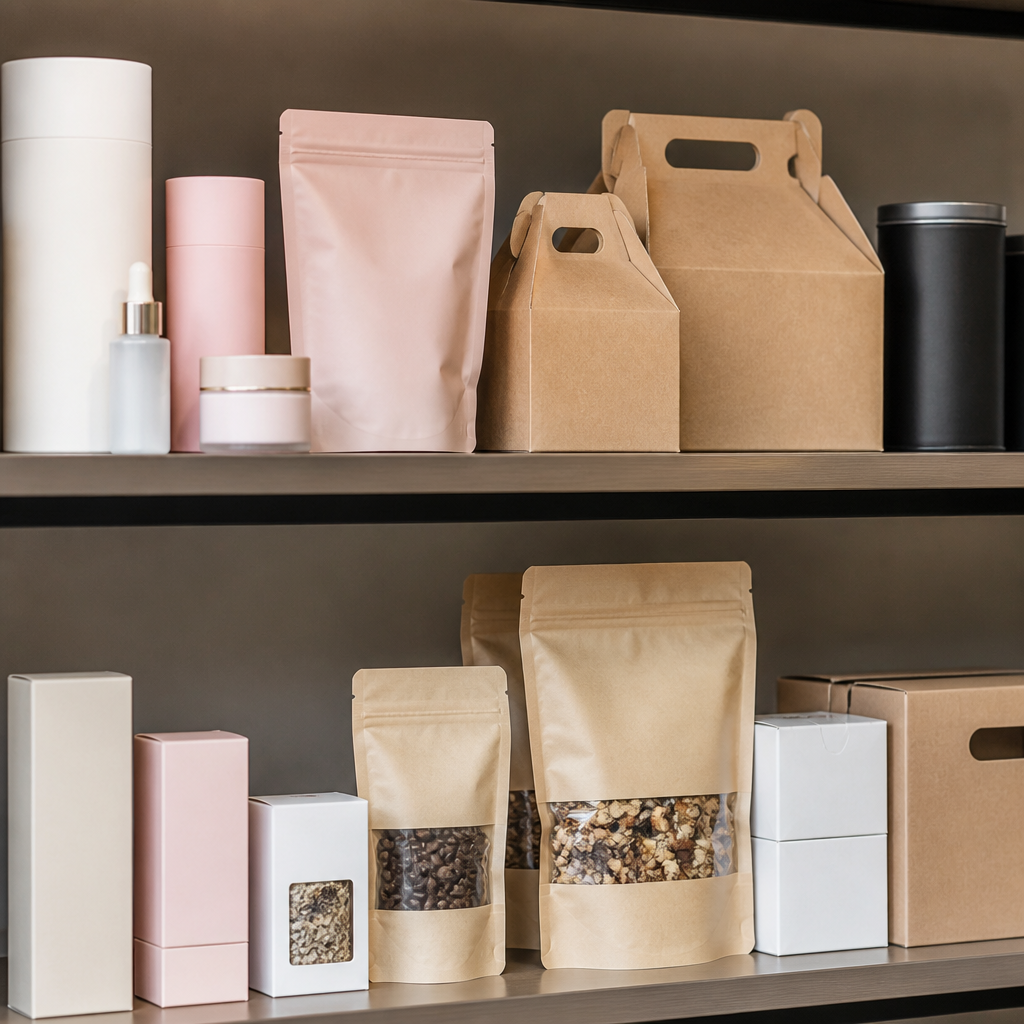
Sourcing from European packaging suppliers gives consumer brands access to shorter lead times, lower minimum order quantities (MOQs), and strict compliance with EU environmental directives and new regulations such as PPWR. Localized supply chains reduce freight costs and eliminate import duties. This guide breaks down the different types of packaging manufacturers in Europe, key cost drivers, and the best packaging suppliers for 2026.
Key Takeaways for Sourcing Packaging in Europe
Understanding the European packaging market requires evaluating supplier capabilities against your specific product requirements.
Regulatory compliance: European suppliers strictly adhere to the EU Packaging and Packaging Waste Directive (PPWD), simplifying market entry for brands.
Average MOQs: Custom packaging typically starts between 1,000 and 5,000 units. Standard off-the-shelf items are available from 500 units.
Lead times: Production cycles range from 3 to 6 weeks. Sourcing locally cuts transit times by up to 70% compared to Asian suppliers.
Material focus: The market heavily favors Post-Consumer Recycled (PCR) materials and mono-materials to ensure easier end-of-life recycling.
Types of Packaging Suppliers in Europe
Packaging manufacturers usually specialize in specific materials or production stages. Brands often need to source from multiple suppliers to complete a single retail-ready product.
Primary Packaging Manufacturers
Primary packaging holds the actual product directly. This category includes glass jars, aluminum tubes, plastic bottles, and airless pumps. Suppliers in this sector focus heavily on material compatibility, barrier properties, and hygiene standards. Brands in cosmetics and food require primary packaging that prevents oxidation and external contamination.
Secondary Packaging Specialists
Secondary packaging groups primary units together or provides an outer branding layer. Examples include folding cartons, sleeve labels, and presentation boxes. These suppliers specialize in printing techniques, die-cutting, and finishes like embossing or soft-touch lamination. Paperboard and corrugated cardboard are the dominant materials used by these factories.
Tertiary and Transit Packaging Providers
Tertiary packaging protects products during bulk shipping and e-commerce fulfillment. E-commerce mailers, kraft boxes, pallet wraps, and void fill fall into this category. European transit packaging suppliers focus on lightweight, crush-resistant corrugated structures that optimize shipping space and reduce dimensional weight charges.
Sustainable and Bio-based Packaging Innovators
A growing segment of European manufacturers produces packaging from alternative natural materials. This includes mushroom mycelium, seaweed extracts, molded pulp, and bioplastics like PLA. These suppliers cater to brands requiring compostable or fully biodegradable packaging solutions to meet corporate sustainability targets.
Top European Packaging Suppliers for 2026
We compiled a list of the most reliable packaging manufacturers in Europe based on quality, production capacity, and compliance.
1. Packversum
Top German packaging supplier for primary packaging, secondary packagin, labels and flexible formats
- Location
- 88299 Leutkirch im Allgäu
- MOQ
- Starting at only 1 unit
- Lead time
- 5-15 days
- Capabilities
- Packaging
- Product focus
- Adhesive labels, folding cartons, multilayer labels, pouches, flexible packaging
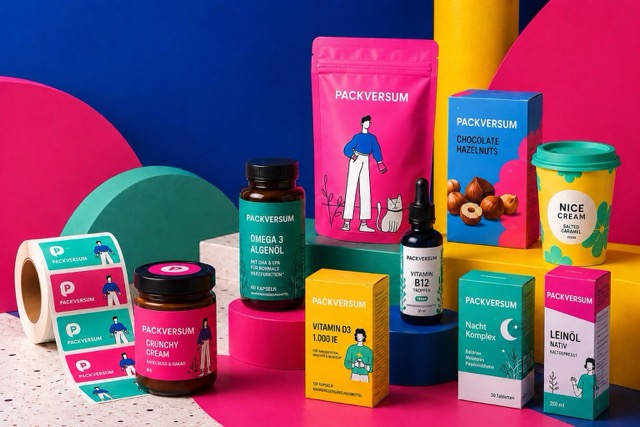
Packversum, based in Leutkirch im Allgäu, Germany, specializes in printed packaging solutions for the food, hospitality, and pet-related sectors. They provide both primary and secondary packaging, adhesive labels, folding cartons, multilayer labels, and flexible packaging. The company is featured in this article for its comprehensive approach to packaging, offering consulting, approval coordination, and delivery through a single point of contact.
Packversum offers adhesive labels, folding cartons, multilayer labels, pouches, sachets, films, and flexible packaging. They support order sizes from small runs to million-unit volumes, with MOQs starting at 1 unit for primary packaging, secondary packaging, and labels, all with lead times of 5-15 days. Their services include packaging form and material selection, tailored folding carton specifications, and application-specific flexible packaging development. They also provide sustainability documentation support, specifically for PPWR.
- Multilayer labels for multilingual content and legal markings
- Centralized approval workflow with status and version visibility
- Direct delivery after production and approval
This supplier is suitable for food and beverage brands, hospitality businesses, and pet food suppliers requiring custom printed packaging. They are particularly well-suited for brands needing labels, cartons, and pouches from one contact, or those with multilingual or regulatory content requirements.
Best for: Food and beverage brands, hospitality, and pet food suppliers needing custom printed labels, cartons, and flexible packaging.
2. Etiteks
Leading woven label, care label, and packaging manufacturer from Istanbul with 40+ years of experience, exporting to 60+ countries.
- Location
- Turkey
- MOQ
- Project-dependent; high-volume capacity across all product lines
- Capabilities
- Private Label, Contract Manufacturing
- Product focus
- Woven labels, printed care labels, swing tags, secondary packaging, sustainable labels
- Trust score
- 4.8
Etiteks manufactures woven labels, printed care labels, swing tags, and secondary packaging from four production facilities in Istanbul, Turkey. With over 40 years of experience, the supplier exports to more than 60 countries, providing essential garment trims for brands globally.
Etiteks offers a monthly output of 40 million units. Product categories include woven brand labels, printed care labels, swing tags, and secondary packaging such as branded boxes, bags, tissue paper, and stickers. The company is the first certified organic label producer in Turkey and actively seeks certifications like GOTS, GRS, OCS, RCS, Oeko-Tex, Sedex, and FSC from its suppliers. Lead times range from 4 to 10 days, depending on product type and order volume.
The supplier is well-suited for brands requiring a single source for garment trims and packaging with a focus on compliance and sustainability. Etiteks accommodates high-volume orders across all product lines.
Best for: Brands requiring a single source for garment trims and packaging with a focus on compliance and sustainability
Certifications: Featured Supplier
3. PLASTIC CONCEPTS SRL
Comprehensive Packaging Solutions for Various Industries
- Location
- Romania
- Capabilities
- Private Label, Contract Manufacturing
- Trust score
- 4.7
Plastic Concepts SRL offers a complete range of packaging solutions and quality products designed for industries including Cosmetic, Health & Beauty, Personal Care, Health Care, Food, and others. Specializing in packaging items, they provide clients with a diverse range of products such as lotion pumps, trigger sprayers, mist sprayers, plastic caps, foam and cream pumps, and more. Their services also encompass the design and manufacture of plastic injection molds and molded parts for the international cosmetic product markets.
Certifications: Featured Supplier
4. Berlin Packaging
The World's Largest Hybrid Container and Packaging Supplier
- Capabilities
- Wholesale
- Product focus
- Bottles, Jars, Cans, Drums, Closures, Dispensing systems
Berlin Packaging is a wholesale supplier of plastic, glass, and metal containers, closures, and dispensing systems. It operates globally, providing a comprehensive range of packaging solutions. This supplier is included in a list of European packaging suppliers due to its extensive global network and ability to serve European markets with diverse packaging needs.
Berlin Packaging offers wholesale bottles, jars, cans, drums, closures, and dispensing systems. The company holds ISO 9001 certification. With over 1,700 global suppliers, 100 locations worldwide, and more than 50,000 SKUs, Berlin Packaging focuses on packaging manufacturing and distribution.
Best for: Brands seeking a global wholesale supplier for plastic, glass, and metal packaging components.
Certifications: ISO 9001
5. HK Koch Cosmetic Packaging
High-end Cosmetic packaging supplier from Germany
- Location
- Germany
- Capabilities
- Private Label, Contract Manufacturing, Wholesale
Hermann Koch is a German manufacturer specializing in quality packaging solutions for cosmetics, pharmaceuticals, and food industries. They offer a wide range of packaging options, from bottles and jars to closures, with a focus on precision, sustainability, and innovation.
6. Packhelp
Sustainable Private Label Paper Bags
- Location
- Germany
- Capabilities
- Private Label, Contract Manufacturing
Packhelp offers eco-friendly private label paper bags, providing customizable, durable, and recyclable packaging solutions for retail, e-commerce, and food service brands. With a strong focus on sustainability and design flexibility, they help businesses create quality, branded paper bags that align with their brand identity.
7. Unopack
High-Quality Private Label Paper Bags
- Location
- Germany
- Capabilities
- Private Label, Contract Manufacturing
Unopack specializes in customizable private label paper bags, offering eco-friendly and durable packaging solutions for retail, food service, and e-commerce. With a focus on sustainability and premium materials, they provide custom designs, branding, and quality printing to help businesses enhance their packaging.
8. HC Packaging
Best-in-class cosmetics packaging supplier
- Capabilities
- Private Label, Contract Manufacturing
HC Packaging is a global provider of sustainable and innovative packaging solutions for cosmetics, personal care, and food industries. With a strong focus on eco-friendly materials and custom designs, they help brands reduce their environmental impact without compromising on quality.

9. HK Müller
Injection-molded plastic packaging manufacturer
- Capabilities
- Private Label, Contract Manufacturing, Wholesale
HK Müller is a German-based producer of injection-molded plastic packaging, offering solutions for the cosmetics, food, and pharmaceutical sectors. They focus on quality, sustainable plastic packaging with customizable designs and a commitment to eco-friendly practices.
10. Rebhan
German manufacturer and supplier for high-end cosmetics packaging
- Capabilities
- Private Label, Contract Manufacturing, Wholesale
Rebhan is a specialist in high-end plastic packaging for the cosmetics, pharmaceutical, and personal care industries. Their focus is on luxury design, customization, and sustainability, providing premium packaging that stands out on the shelves.
11. Wiegand-Glas
Comprehensive Services From a Single Source
- Location
- Germany
- Capabilities
- Private Label, Contract Manufacturing
Wiegand-Glas is one of Germany's top four container glass manufacturers, producing over five million glass containers daily across its three plants in Steinbach am Wald (Bavaria), Großbreitenbach, and Schleusingen (Thuringia). The company offers a wide range of glass containers in various colors and shapes, with volumes ranging from 200 ml to 2,000 ml, catering to the beverage and food industries.
European Packaging Suppliers Compared
| Supplier | Location | MOQ | Lead time | Capabilities |
|---|---|---|---|---|
| Packversum | 88299 Leutkirch im Allgäu | Starting at only 1 unit | 5-15 days | Packaging |
| Etiteks | Turkey | Project-dependent; high-volume capacity across all product lines | - | Private Label, Contract Manufacturing |
| PLASTIC CONCEPTS SRL | Romania | - | - | Private Label, Contract Manufacturing |
| Berlin Packaging | - | - | - | Wholesale |
| HK Koch Cosmetic Packaging | Germany | - | - | Private Label, Contract Manufacturing, Wholesale |
| Packhelp | Germany | - | - | Private Label, Contract Manufacturing |
| Unopack | Germany | - | - | Private Label, Contract Manufacturing |
| HC Packaging | - | - | - | Private Label, Contract Manufacturing |
| HK Müller | - | - | - | Private Label, Contract Manufacturing, Wholesale |
| Rebhan | - | - | - | Private Label, Contract Manufacturing, Wholesale |
| Wiegand-Glas | Germany | - | - | Private Label, Contract Manufacturing |
Comparing European Packaging Manufacturing Hubs
Production hubs across Europe offer different structural advantages. Understanding regional specializations helps sourcing managers target the right countries for specific packaging needs.
Western Europe
Countries like Germany, France, and Italy dominate the premium packaging market. Italian suppliers lead in luxury glass and high-end cosmetic packaging. German manufacturers excel in precision engineering, producing highly reliable plastic dispensers and pumps. French suppliers are heavily integrated into the luxury beauty supply chain. Sourcing from Western Europe guarantees high quality but often comes with higher unit costs and tooling fees.
Eastern and Central Europe
Poland, the Czech Republic, and Romania act as high-volume production hubs for standard packaging. Poland is a major exporter of corrugated cardboard and folding cartons, offering lower labor costs while maintaining strict EU regulatory compliance. The Czech Republic holds strong traditions in glass manufacturing, providing cost-effective alternatives for beverage and skincare brands.
Southern Europe
Spain and Portugal present strong capabilities in sustainable materials. Portugal leads in cork-based packaging, often used for premium spirits and natural cosmetics. Spanish manufacturers hold high capacity for rigid plastics and recycled materials. Both countries offer competitive pricing compared to Northern European counterparts.
Comparing Packaging Materials
Different materials offer varying benefits regarding cost, barrier properties, and recyclability. Sourcing professionals must weigh these factors against product requirements.
Material | Best For | Recyclability | Cost Profile |
|---|---|---|---|
Glass | Premium skincare, spirits, perfumes | Highly recyclable, heavy to ship | High setup, high unit cost |
PET Plastic | Beverages, lotions, shampoos | Widely recycled, accepts PCR | Low setup, low unit cost |
Aluminum | Creams, aerosols, dry food | Infinitely recyclable, lightweight | Medium setup, medium unit cost |
Corrugated Cardboard | Shipping boxes, heavy retail goods | Easily recycled, compostable | Low setup, low unit cost |
Key Factors When Sourcing Packaging in Europe
Choosing the right packaging partner requires evaluating more than just the product catalog. Supply chain stability depends on aligning production parameters with your inventory planning.
Minimum Order Quantities (MOQs)
MOQs determine the upfront capital required for a production run. Custom molds for glass or complex plastics often require MOQs exceeding 10,000 units due to high setup times. Standard catalog items customized only with labels or screen printing offer lower barriers, typically between 500 and 2,000 units. Brands should negotiate tiered pricing models to understand unit costs at scale.
Lead Times and Supply Chain Resilience
European packaging suppliers typically quote 3 to 6 weeks for standard production and up to 10 weeks for custom-tooled items. While unit costs might be marginally higher than Asian options, domestic sourcing eliminates ocean freight delays, port congestion, and customs holds. Brands can operate with leaner inventory models, reducing warehouse costs.
European Packaging Certifications
Certifications validate material origins and production safety. Sourcing professionals must request documentation directly from the manufacturer before placing orders.
FSC (Forest Stewardship Council): Ensures paper and cardboard originate from responsibly managed forests.
ISO 9001: Standardizes quality management systems across production lines.
BRCGS (Brand Reputation Compliance Global Standards): Critical for primary packaging in food and cosmetics, ensuring high hygiene standards.
ISCC (International Sustainability and Carbon Certification): Verifies the traceability of recycled and bio-based materials throughout the supply chain.
Main Cost Drivers in Custom Packaging
Understanding cost structures helps brands engineer packaging that fits their unit economics. Several variables dictate the final price per unit.
Tooling and Setup Costs
Custom shapes require bespoke tooling. Injection molding tools for plastic caps or blow molds for custom bottles cost thousands of euros. Die-cut plates for folding cartons are cheaper, usually costing a few hundred euros. Brands launching their first product often use stock shapes to bypass these initial capital expenditures.
Material Grades and Weights
Thicker materials cost more. A 400 GSM (grams per square meter) folding carton provides a premium feel but increases unit cost compared to a standard 250 GSM board. Similarly, 100% PCR plastics command a premium over virgin plastics due to the complex sorting and cleaning processes required during recycling.
Printing and Finishings
Printing techniques add complexity to production. CMYK offset printing is standard for high-volume paper packaging. Additional finishes compound the cost. Hot foil stamping, spot UV coating, embossing, and matte lamination require separate machine passes. Each pass adds setup time, machine time, and waste.
How to Brief a Packaging Manufacturer
A precise briefing prevents costly sampling errors. Brands must provide a comprehensive Tech Pack when requesting a quote (RFQ) from a European packaging supplier.
A professional packaging Tech Pack includes:
Dielines: Accurate 2D vector files showing exact dimensions, fold lines, and bleed margins.
Material specifications: Exact material type, weight (GSM for paper, thickness for plastics), and required certifications.
Artwork files: High-resolution vector files with Pantone (PMS) color codes clearly called out.
Physical tolerances: Acceptable variations in weight, dimension, and color matching.
Testing requirements: Drop tests, leak tests, or material compatibility tests needed prior to mass production.
Clear technical communication reduces the sampling phase from months to weeks. Always request a physical prototype before approving full production runs.
Sustainable Packaging Trends Shaping 2026
The regulatory environment in Europe forces brands to rethink packaging life cycles. The EU Packaging and Packaging Waste Directive sets strict targets for recyclability, reuse, and waste reduction.
Monomaterial Constructions
Historically, packaging mixed materials, like a paper tube with a plastic inner lining and an aluminum base. These mixed items are nearly impossible to recycle. European suppliers now engineer monomaterial packaging, where the entire item consists of a single polymer like PP or PET. This ensures the packaging enters standard recycling streams without manual separation.
Post-Consumer Recycled (PCR) Content
Virgin plastic taxes in countries like the UK and Spain make recycled materials economically necessary. Manufacturers incorporate high percentages of PCR content into bottles, tubes, and mailers. Sourcing teams must verify the source of PCR materials and check for structural integrity, as recycled polymers can sometimes be more brittle than virgin equivalents.
Refillable Systems
Brands adopt refillable models to lower secondary purchase costs and reduce waste. European suppliers produce durable, premium outer cases designed to last years, paired with lightweight, low-plastic refill pods. This model reduces shipping weights and packaging waste for repeat customers.
Finding the Right European Packaging Supplier on Wonnda
Identifying reliable packaging manufacturers takes time. Manual searches yield outdated catalogs and unresponsive factories. Wonnda connects consumer brands directly with vetted European suppliers and private label manufacturers.
Through the platform, sourcing managers can filter suppliers by material capabilities, minimum order quantities, and specific certifications. Brands can launch RFQs, compare quotes, and manage the entire sampling process in one centralized workspace. Using a dedicated B2B sourcing platform accelerates the time to market and ensures compliance with European production standards.
Frequently asked
What is the average MOQ for custom packaging in Europe?
Minimum Order Quantities (MOQs) for custom packaging in Europe typically range from 1,000 to 5,000 units depending on the material. Standard off-the-shelf items customized with a simple label can be sourced starting at 500 units.
How long does it take to manufacture packaging in Europe?
Standard production lead times for packaging in Europe range from 3 to 6 weeks. If custom tooling or molds are required, the initial lead time extends to 8 or 10 weeks.
What is a monomaterial in packaging?
Monomaterial packaging consists entirely of a single material type, such as 100% PET plastic or 100% aluminum. This design ensures the product can be easily processed by local recycling facilities without requiring consumers to disassemble it.
How do I verify a packaging supplier's sustainability claims?
Request official certification documents directly from the supplier before production begins. Look for recognized standards such as FSC for paper products and ISCC for recycled plastics.
What is the difference between primary and secondary packaging?
Primary packaging is the container that holds the product directly, such as a glass jar or plastic tube. Secondary packaging is the outer box or carton used for branding and grouping the primary items together on a retail shelf.
Related articles
10+ Best Doypack Suppliers in Europe (2026 List)
Stainless Steel Cookware Manufacturing: Materials, Processes, and What Buyers Should Know
Best Care Label Manufacturers and Wash Label Suppliers (2026)
10+ Best Woven Label Manufacturers in Europe and Turkey (2026)
The Complete Guide to Sustainable Textile Labels and Certifications (2026)
Clothing Label Requirements in Europe: What Fashion Brands Must Include (2026)
Best Sustainable Label Manufacturers for Eco-Conscious Brands (2026)
10+ Best Sustainable Packaging Suppliers in Europe (2026 Update)