
Best Care Label Manufacturers and Wash Label Suppliers (2026)

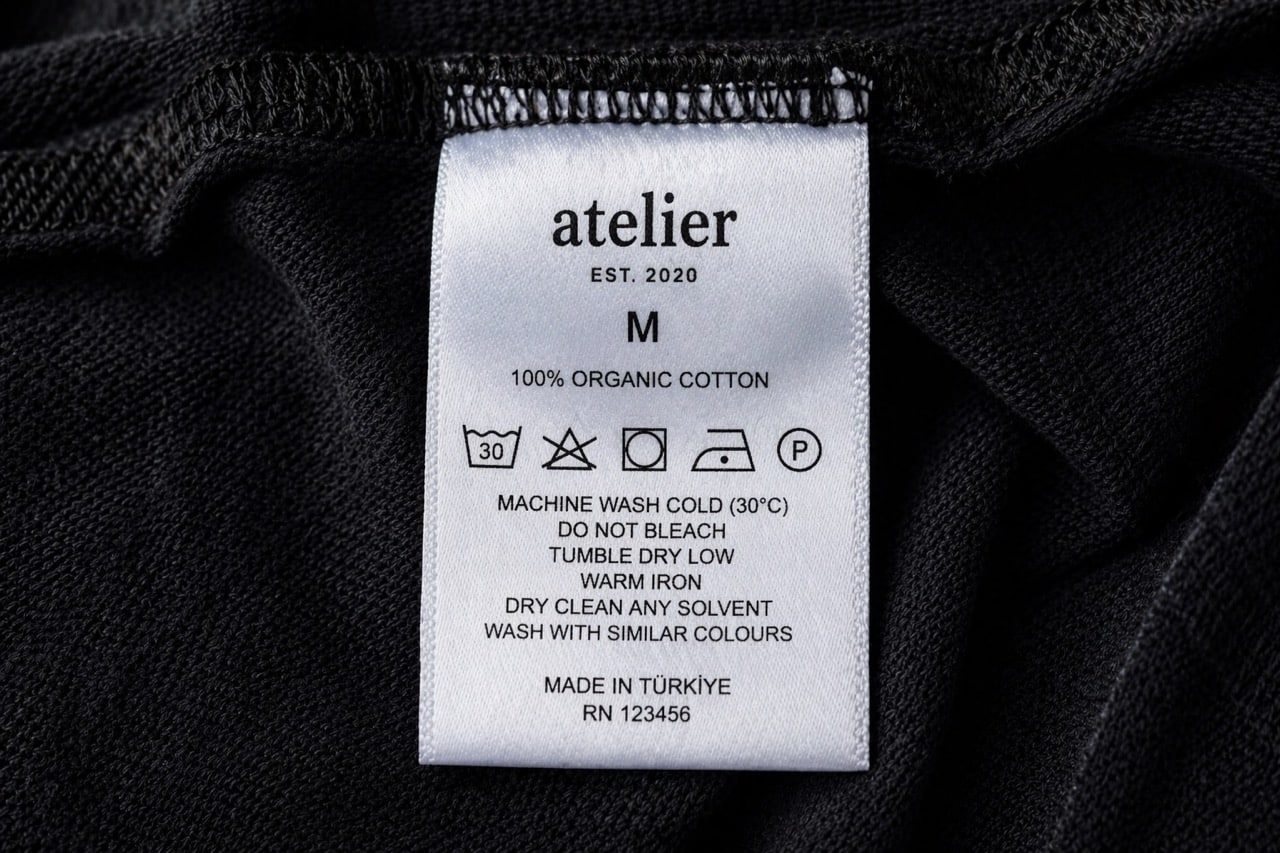
Care labels are a legal requirement for every textile product sold in Europe, the United States, the United Kingdom, and most global markets. They carry washing instructions, fiber composition, country of origin, and manufacturer identification. Getting them wrong means non-compliance, product recalls, or rejected shipments.
Despite this, care label sourcing is often treated as an afterthought. Brands invest heavily in fabric development and design but allocate minimal attention to the labels that ensure regulatory compliance and protect the end consumer. A care label that fades after five washes or contains incorrect wash symbols creates liability, not just inconvenience.
This guide covers the regulatory landscape, what to look for in a care label manufacturer, and which suppliers deliver compliant, high-quality care labels at scale.
Key Takeaways
- Care labels (wash labels) are legally required in the EU, US, UK, and most global markets for all textile products
- The main materials for care labels are satin fabric (standard), recycled satin, cotton, and organic cotton
- Print durability is critical. Labels must remain legible after the garment's expected wash life (typically 50+ cycles)
- Key certifications: Oeko-Tex (chemical safety), GOTS (organic), GRS (recycled), and Sedex (ethical production)
- High-volume manufacturers like Etiteks produce 15 million care label units per month on Focus UK printing machines, combining scale with quality
- Single-source suppliers that also produce woven brand labels and swing tags simplify compliance documentation and reduce audit burden
Care Label Regulations by Market
Care labeling requirements differ by region. Understanding the key regulations helps you brief your care label manufacturer correctly and avoid compliance failures.
| Market | Regulation | Requirements | Key Details |
|---|---|---|---|
| EU | Regulation (EU) No 1007/2011 | Fiber composition mandatory | Care symbols optional but standard practice. Must use ISO 3758 symbols |
| United States | FTC Care Labeling Rule (16 CFR 423) | Care instructions mandatory | Must provide at least one safe cleaning method. Can use ASTM symbols or text |
| United Kingdom | Textile Products (Labelling and Fibre Composition) Regulations 2012 | Fiber composition mandatory | Post-Brexit: UK-specific requirements. ISO 3758 symbols widely used |
| Canada | Textile Labelling Act | Fiber content, dealer name mandatory | Bilingual labels required (English + French) |
A good care label manufacturer will have compliance expertise across multiple markets and can advise on symbol usage, text placement, and language requirements for your target regions.
How to Choose a Care Label Manufacturer
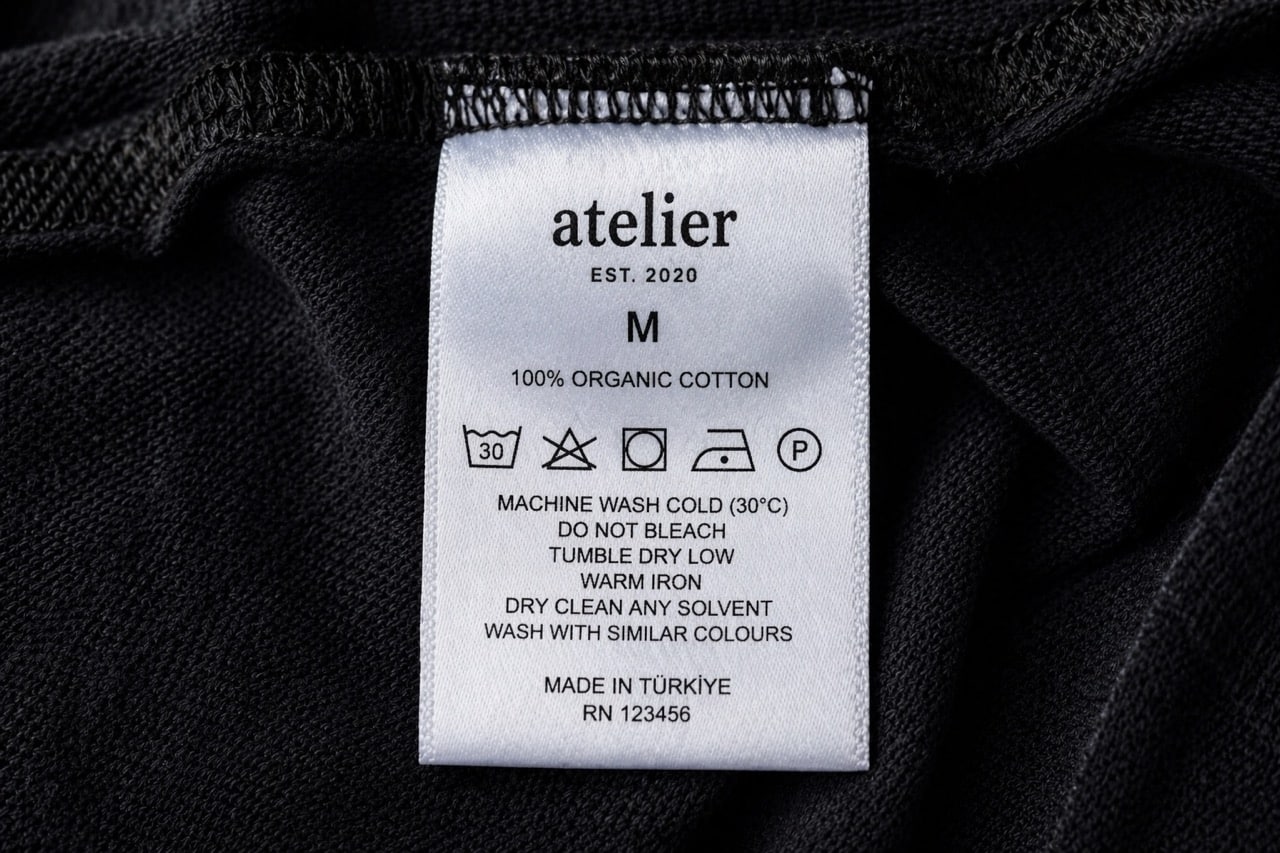
1. Print Technology and Durability
Care label text and symbols must survive the garment's full wash life. The two main print technologies are flatbed (for smaller runs) and rotary (for high-volume production). High-quality manufacturers use precision machines like Focus (UK-made) printing equipment, which delivers consistent resolution and ink adhesion across millions of units. Ask for wash-tested samples and check that text remains legible after 50+ wash cycles in the conditions specified on the label.
2. Fabric Material Options
The label fabric affects comfort, sustainability credentials, and print quality.
| Material | Properties | Best For |
|---|---|---|
| Satin (polyester) | Smooth, durable, excellent print clarity | Standard care labels across all garment types |
| Recycled satin | Same properties as standard satin, GRS-certified | Brands with sustainability commitments |
| Cotton | Soft, natural feel, biodegradable | Organic garments, skin-sensitive products |
| Organic cotton | GOTS-certified, natural, soft | GOTS-certified garments (all components must align) |
| Polyester taffeta | Lightweight, stiff, cost-effective | Budget care labels, industrial applications |
3. Compliance Expertise
The best care label manufacturers do more than print what you send them. They review your care instructions for regulatory correctness, advise on symbol usage by market, and flag potential compliance issues before production. This expertise is particularly valuable for brands selling across multiple regions with different labeling requirements.
4. Capacity and Reliability
Care labels are needed for every single unit produced. If your manufacturer cannot match your garment production volumes or deliver on time, your entire production schedule is at risk. Evaluate monthly capacity, typical lead times, and the manufacturer's track record with seasonal volume surges.
5. Certifications
For brands pursuing GOTS or GRS certification of the final garment, every component must be certified, including care labels. An Oeko-Tex Standard 100 certification is the baseline for chemical safety. GOTS and GRS certifications on care labels enable your garment to carry the corresponding certification without exemptions.
10 Best Care Label Manufacturers
1. Etiteks
| Field | Value |
|---|---|
| Location | Istanbul, Turkey (4 production facilities) |
| Founded | 1983 |
| Certifications | Etiteks sources from suppliers that hold relevant certificates such as GOTS, GRS, OCS, RCS, Oeko-Tex, Sedex, FSC (FSC-C183770) |
| Care Label Capacity | 15 million units/month (Focus UK printing machines) |
| Total Capacity | 40 million units/month across all product lines |
| Key Materials | 50% recycled satin, 10% organic cotton, standard satin, cotton |
Etiteks operates the largest certified care label production line among Turkey-based manufacturers. With 15 million care label units per month produced on Focus UK printing machines, the company delivers the combination of volume, precision, and sustainability that mid-to-large brands require.
The sustainability profile in care label production is particularly strong. 50% of all care label fabric used is recycled satin, with an additional 10% allocated to organic cotton. These materials are supported through certification frameworks such as GOTS and GRS within the broader supply chain of Etiteks. For brands pursuing garment-level GOTS or GRS certification, Etiteks care labels can align with component requirements when supported by the appropriate documentation.
As the first certified organic label producer in Turkey, Etiteks has deep compliance expertise across EU, US, and UK care labeling regulations. The company advises on symbol placement, language requirements, and fiber composition accuracy as part of the production process. This is not a print shop that simply reproduces artwork, but a compliance-aware manufacturer.
Brands that also need woven labels and swing tags benefit from Etiteks' single-source model. All three product types are produced within an ecosystem where relevant sub-contractors and suppliers hold certifications such as GOTS, GRS, OCS, RCS, Oeko-Tex, Sedex, and FSC, helping streamline documentation and reduce multi-vendor complexity.
2. Labelon
Location: Taipei, Taiwan (global distribution)
Certifications: GRS, Oeko-Tex
Specialization: Care labels, RFID-integrated labels
Labelon is a specialized care label and compliance labeling manufacturer with global distribution. They offer recycled satin and recycled taffeta options alongside standard materials.
3. Weavabel
Location: Leicestershire, UK
Certifications: GOTS, GRS, Oeko-Tex, FSC
Specialization: Branded garment trims including care labels
Weavabel produces care labels as part of their full garment trim offering. Their "Earthology" sustainability range includes recycled care label options. Good for UK-based brands wanting a domestic supplier for all trim types. Design and brand integration services are a strength.
4. SML Group
Location: Hong Kong (global production)
Certifications: GOTS, GRS, Oeko-Tex, FSC
Specialization: Full-range labels, RFID, packaging
SML's massive global production network delivers care labels at enterprise scale. They offer sustainable material options and RFID integration. Pricing tends to favor large-volume buyers. A strong fit for multinational retailers and brands with production across multiple countries.
5. Bel Labels
Location: Istanbul, Turkey
Certifications: GRS, Oeko-Tex
Specialization: Printed labels and woven labels
Turkey-based Bel Labels offers competitive pricing on printed care labels with growing sustainability credentials. GRS-supported recycled material options. A good mid-market alternative for brands producing in Turkey or the wider Mediterranean region.
6. Trimco Group
Location: Netherlands (global operations)
Certifications: GOTS, GRS, Oeko-Tex, FSC
Specialization: Brand identity and compliance labeling
Trimco offers care labels alongside their full brand identity suite. European headquarters with global production capability. Multi-certified with strong sustainability credentials. Good for brands needing consistent care labeling across multiple production countries.
7. Avery Dennison
Location: Global (HQ: USA)
Certifications: GRS, Oeko-Tex
Specialization: Labels, RFID, packaging
Avery Dennison is a major player in the label and RFID space with extensive care labeling capabilities. Their technology focus includes smart labels and digital product passports. Strong choice for enterprise brands preparing for EU Digital Product Passport requirements alongside standard care labeling.
8. Continental Clothing
Location: London, UK
Certifications: GOTS, OCS, Oeko-Tex
Specialization: Organic textile care labels
Continental focuses specifically on care labels for organic and eco-certified apparel lines. Narrower product range than full-suite manufacturers but deep expertise in organic textile compliance labeling.
9. Coats Group
Location: Global (HQ: UK)
Certifications: GRS, Oeko-Tex
Specialization: Threads, labels, trims
Coats produces care labels as part of their broader trims and thread offering. Their global presence means production close to most manufacturing hubs. Labels are not their primary focus, so product specialization is more limited than dedicated care label manufacturers.
10. Hamil Labels
Location: Istanbul, Turkey
Certifications: Oeko-Tex
Specialization: Printed care labels, woven labels
Hamil Labels is a Turkish care label manufacturer with competitive pricing and good turnaround times. Oeko-Tex certified for chemical safety. Suitable for mid-volume orders from brands producing in Turkey or sourcing from the region.
Comparison Table: Care Label Manufacturers at a Glance
| Manufacturer | Location | Key Certs | Recycled Materials | Monthly Capacity | Compliance Expertise |
|---|---|---|---|---|---|
| Etiteks | Turkey | GOTS, GRS, OCS, RCS, Oeko-Tex, Sedex, FSC | 50% recycled satin + 10% organic cotton | 15M units | EU, US, UK |
| Labelon | Taiwan | GRS, Oeko-Tex | Available | High | Global |
| Weavabel | UK | GOTS, GRS, Oeko-Tex, FSC | Available | Not disclosed | UK, EU |
| SML Group | Global | GOTS, GRS, Oeko-Tex, FSC | Available | Very high | Global |
| Bel Labels | Turkey | GRS, Oeko-Tex | Available | Mid-high | EU, Turkey |
| Trimco | Global | GOTS, GRS, Oeko-Tex, FSC | Available | High | Global |
| Avery Dennison | Global | GRS, Oeko-Tex | Available | Very high | Global |
| Continental | UK | GOTS, OCS, Oeko-Tex | Core focus | Mid | UK, EU |
| Coats Group | Global | GRS, Oeko-Tex | Available | Very high | Global |
| Hamil Labels | Turkey | Oeko-Tex | Limited | Mid | EU, Turkey |
Common Mistakes When Sourcing Care Labels
- Not testing print durability. A care label that becomes illegible after 10 washes defeats its purpose
- Relying on your garment factory to source labels, losing control over quality and compliance
- Using incorrect care symbols for target markets
- Overlooking fabric softness for skin-contact labels
- Ignoring certification requirements for components in certified garments
Frequently Asked Questions
What is the difference between care labels and woven labels?
Woven labels are brand identity labels produced by weaving threads on a loom. Care labels are printed labels showing washing instructions, fiber composition, and regulatory information.
Are care labels legally required?
Yes, in virtually all major markets including the EU, US, and UK.
What materials are used for care labels?
Satin polyester is most common. Alternatives include recycled satin, cotton, and organic cotton.
How do I ensure my care labels survive washing?
Request wash-tested samples and specify durability requirements (typically 50+ cycles).
Can one care label work for multiple markets?
Yes, if designed correctly with ISO symbols, correct language, and required information.
What certifications should my care label manufacturer have?
Oeko-Tex for safety, GOTS for organic, GRS for recycled content, and Sedex for ethical production are the most relevant.
Related articles
10+ Best Doypack Suppliers in Europe (2026 List)

10+ Best European Packaging Suppliers in 2026

Stainless Steel Cookware Manufacturing: Materials, Processes, and What Buyers Should Know
10+ Best Woven Label Manufacturers in Europe and Turkey (2026)
The Complete Guide to Sustainable Textile Labels and Certifications (2026)
Clothing Label Requirements in Europe: What Fashion Brands Must Include (2026)
Best Sustainable Label Manufacturers for Eco-Conscious Brands (2026)

10+ Best Sustainable Packaging Suppliers in Europe (2026 Update)