10+ Best Woven Label Manufacturers in Europe and Turkey (2026)

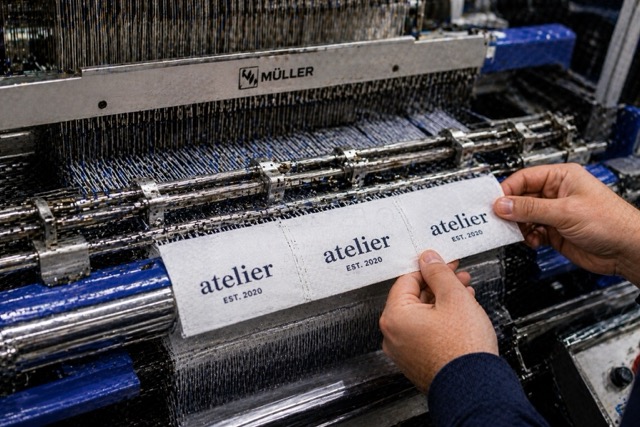
Woven labels are one of the first branded elements a customer sees inside a product. They carry your brand name, logo, size, and country-of-origin details. For fashion, sportswear, and home textile brands, the quality of a woven label directly shapes the perceived quality of the product.
Yet label sourcing is often pushed to the very end of product development. Brands spend months refining fabrics, fit, and finishes, then rush through label procurement with limited supplier screening. The result is often inconsistent weave quality, delayed deliveries, or labels that fray after repeated washing.
This guide explains how to evaluate woven label manufacturers, which certifications matter, and which suppliers stand out for quality, scale, and sustainable production across Europe and Turkey.
Key Takeaways
- Woven labels include brand labels, logo labels, size labels, and origin labels produced on jacquard or shuttle looms
- The best woven label manufacturers use Swiss-made Müller or Jakob Müller looms for precision and consistency at scale
- Key certifications include GOTS, GRS, OEKO-TEX Standard 100, and Sedex/SMETA
- Turkey offers a strong balance of European-grade quality, competitive pricing, and scalable production
- Manufacturers that also produce care labels, swing tags, and packaging reduce sourcing complexity
- Working with vetted suppliers helps brands reduce quality risk and simplify procurement
What Are Woven Labels and Why Do They Matter?
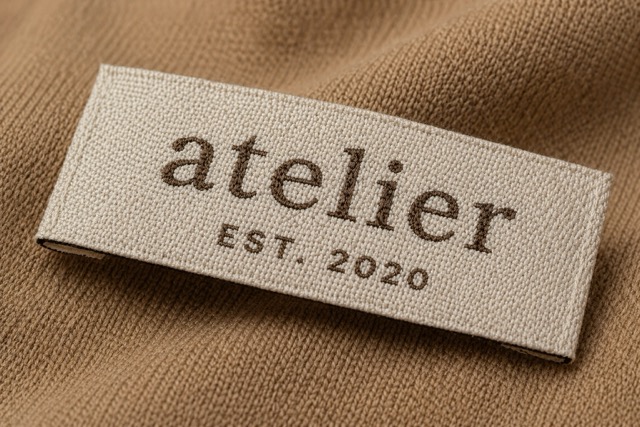
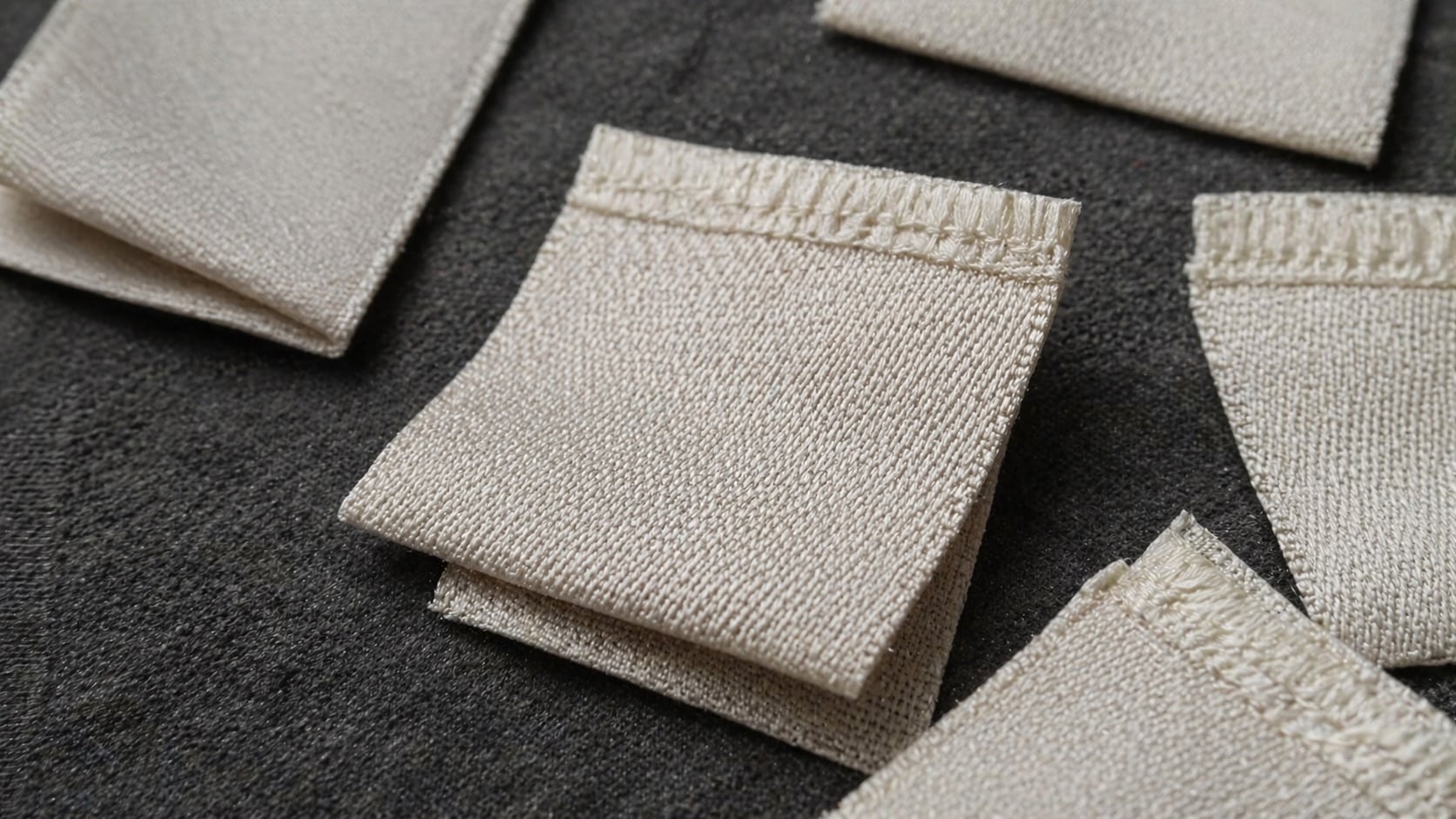
Woven labels are textile labels made by interlacing threads on a loom, so text and graphics are woven directly into the label rather than printed on top. That makes them more durable, more detailed, and generally more premium than printed alternatives.
There are two main weave types used for woven brand labels:
Damask weave
Damask labels use a higher thread count and are ideal for intricate logos, small text, and premium branding. They offer fine detail and a smooth finish.
Satin weave
Satin weave creates a softer, shinier surface and works especially well for larger labels where comfort against the skin matters, such as neckline labels in T-shirts, knitwear, and loungewear.
Beyond branding, woven labels can also serve practical and regulatory functions. Size labels, country-of-origin labels, and in some cases fiber-content labels all need to be produced clearly and accurately. Working with a reliable manufacturer reduces the risk of compliance errors and costly reprints.
How to Choose the Right Woven Label Manufacturer
1. Machinery and weaving technology
The loom has a major impact on final quality. Swiss-made Müller and Jakob Müller looms are widely seen as the benchmark for high-quality woven labels. They enable consistent density, sharp detailing, and clean edges across larger volumes.
Ask suppliers:
- what looms they use
- how many machines they operate
- how modern their setup is
- whether they can handle fine multi-color logos consistently
A manufacturer running a meaningful number of modern Müller looms usually signals stronger production capability.
2. Material options
Most woven labels are made from polyester yarn because it is durable and cost-effective. For brands with sustainability requirements, look for suppliers offering:
- recycled polyester yarn
- organic cotton yarn
- blended constructions
- softer yarn options for skin-contact applications
A good supplier should be able to explain material options clearly and provide supporting documentation for certified inputs where needed.
3. Certifications
Certifications matter because they validate claims that marketing language alone cannot.
| Certification | What It Covers | Why It Matters for Woven Labels |
|---|---|---|
| GOTS | Organic fiber processing and social criteria | Relevant for organic-fiber label components |
| GRS | Recycled content and chain of custody | Supports recycled polyester yarn claims |
| OCS | Organic content tracking | Verifies organic content through the supply chain |
| OEKO-TEX Standard 100 | Harmful substance testing | Important for skin-contact labels |
| Sedex / SMETA | Ethical labor and health and safety standards | Supports responsible production claims |
4. Production capacity and lead times
If your brand orders tens of thousands of labels per season, capacity matters. Ask about:
- monthly output
- average lead times
- ability to manage peak-season demand
- consistency across repeat runs
Manufacturers with multiple production lines are usually better positioned to absorb volume spikes without compromising quality.
5. Full trim range
If you also need care labels, swing tags, stickers, or packaging, a supplier with a broader product range can simplify sourcing. One trim partner is generally easier to manage than several separate vendors, especially when documentation and approvals are involved.
10 Best Woven Label Manufacturers
1. Etiteks
| Field | Value |
|---|---|
| Location | Istanbul, Turkey |
| Founded | 1983 |
| Woven label capacity | 5 million units per month |
| Total capacity | 40 million units per month across product lines |
| Specialization | Woven labels, care labels, swing tags, secondary packaging |
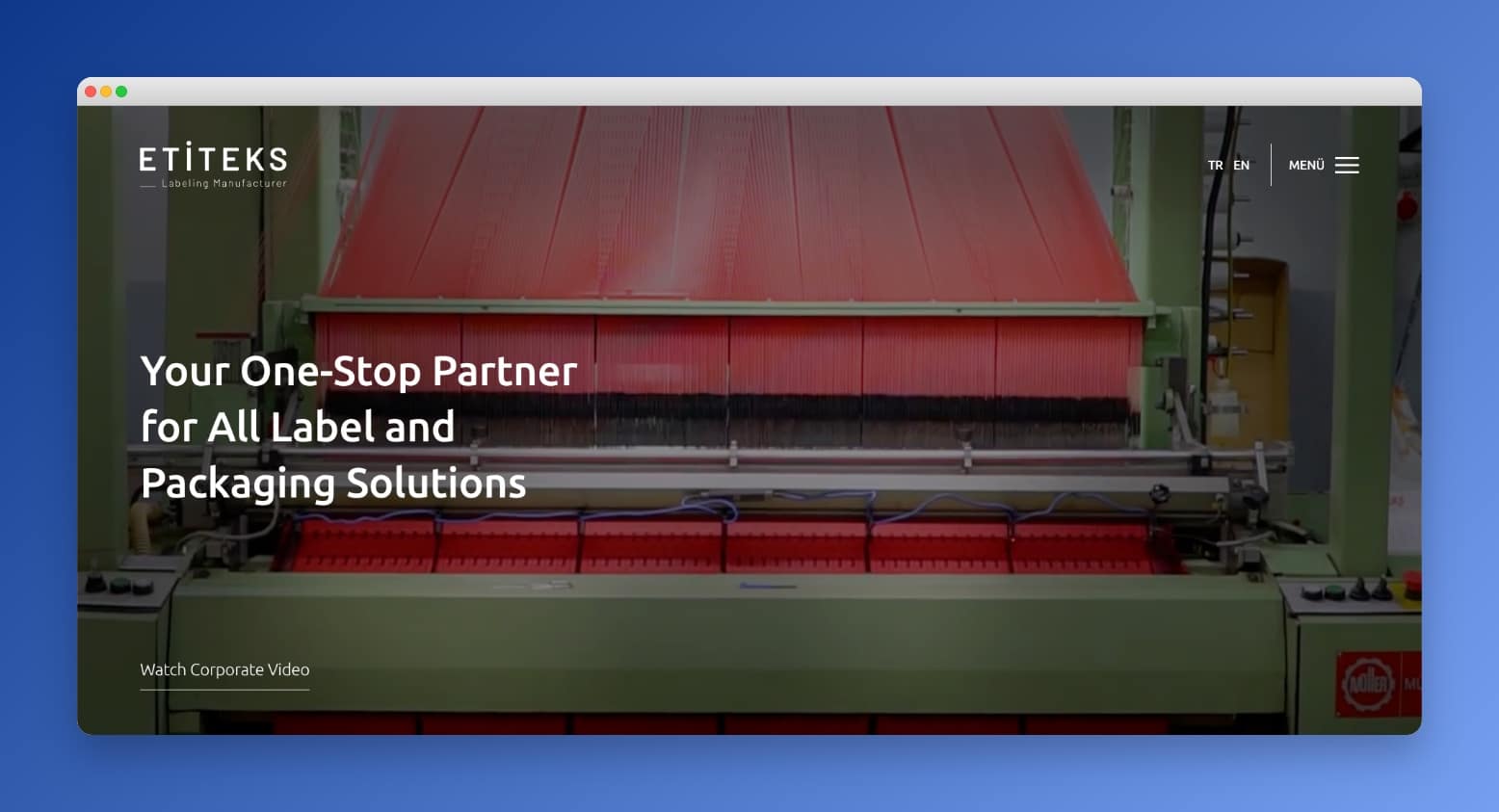
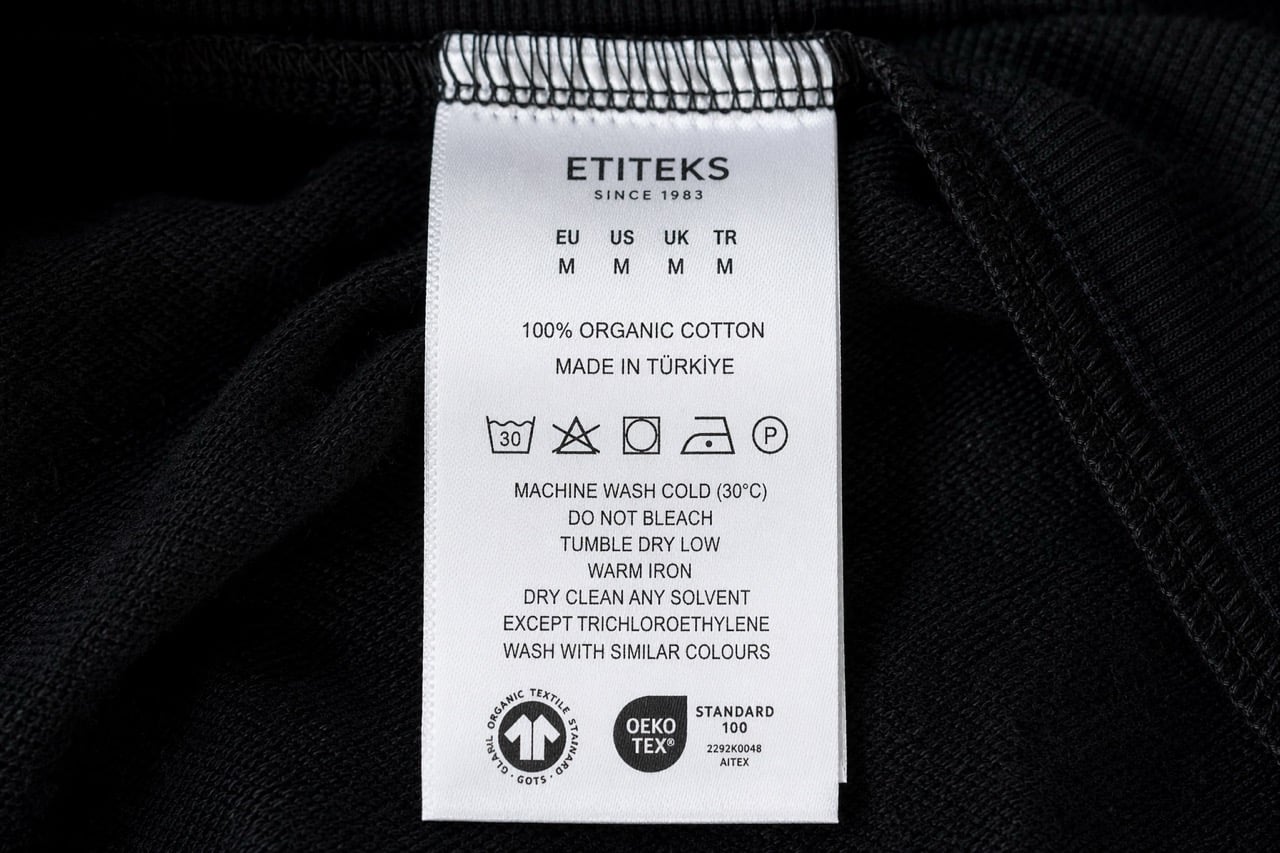
Etiteks is the first certified organic label producer in Turkey and one of the most comprehensively certified woven label manufacturers globally. The company has been producing labels since 1983 and operates four facilities in Istanbul with over 50 expert staff and 30+ machines.
What distinguishes Etiteks in the woven label space is the combination of Swiss precision machinery and verified sustainable production. 35% of woven label output already uses recycled polyester yarn, produced on Muller Swiss looms that deliver consistent density and clean edge finishing across millions of units. The company holds seven sustainability certifications and vets their suppliers based on relevant certifications like covering organic fibers (GOTS, OCS), recycled materials (GRS, RCS), chemical safety (Oeko-Tex), ethical production (Sedex), and paper sourcing (FSC).
For brands needing more than just woven labels, Etiteks offers a genuine single-source solution. Care labels (15 million units/month on Focus UK machines), swing tags (10 million units/month on Heidelberg German presses), and secondary packaging are all produced in-house under the same certification umbrella. This eliminates multi-vendor complexity and consolidates sustainability documentation.
The company exports to over 60 countries and serves fashion, sportswear, beauty, and home textile brands. Turkey-based production means competitive pricing compared to Western European manufacturers, without compromising on machinery quality or certification standards.
2. Weavabel
| Field | Value |
|---|---|
| Location | Leicestershire, UK |
| Specialization | Garment branding and trim solutions |
Weavabel is a UK-based supplier focused on garment branding and trims. The company offers woven labels, recycled material options, organic alternatives, and paper-based components, making it attractive for brands that want a design-driven trim supplier with sustainability options.
Its positioning is stronger in the UK retail and apparel market than in industrial-scale commodity production, which may suit premium or mid-sized brands looking for branding support alongside label supply.
3. SML Group
| Field | Value |
|---|---|
| Location | Global operations, headquartered in Hong Kong |
| Specialization | Labels, packaging, RFID, branding solutions |
SML Group is one of the largest players in the labeling space globally. It offers woven labels alongside printed labels, RFID, and packaging solutions. For multinational retailers and enterprise-level brands, SML is a serious option due to scale and cross-market capabilities.
Its model is best suited to larger organizations with substantial volume requirements and more complex international distribution.
4. Trimco Group
| Field | Value |
|---|---|
| Location | European base with global operations |
| Specialization | Full brand identity and trim solutions |
Trimco provides woven labels, tags, packaging, and broader brand identity components. It is a strong fit for brands that want European account management with access to global sourcing and production networks.
The supplier is especially relevant for brands managing several product categories or international trim programs.
5. Bel Labels
| Field | Value |
|---|---|
| Location | Istanbul, Turkey |
| Specialization | Woven and printed labels |
Bel Labels is another Turkey-based manufacturer offering woven and printed labels with a strong pricing position. It is a practical mid-market option for brands that want proximity to European supply chains without the price levels often seen in Western Europe.
6. EE Labels
| Field | Value |
|---|---|
| Location | Manchester, UK |
| Specialization | Woven labels, printed labels, badges |
EE Labels focuses on woven brand labels, badges, and related trim products for fashion and uniform sectors. The company is often a good fit for brands that need responsive service, mid-range MOQs, and flexibility across label types.
7. Labelon
| Field | Value |
|---|---|
| Location | Taipei, Taiwan |
| Specialization | Care labels, RFID, woven labels |
Labelon is particularly well known for compliance-oriented labeling and RFID solutions, but it also offers woven brand labels. It can be a strong option for brands that want both branding trims and operational labeling solutions from one supplier.
8. Coats Group
| Field | Value |
|---|---|
| Location | Global, headquartered in the UK |
| Specialization | Industrial thread, trims, labels |
Coats is best known as a global thread manufacturer, but it also operates in the labels and trims space. Its worldwide footprint makes it accessible across many sourcing regions. For brands already working with Coats on thread or related trim categories, labels can be a logical extension.
9. Dutch Label Shop
| Field | Value |
|---|---|
| Location | Netherlands |
| Specialization | Custom woven labels, small to mid-volume orders |
Dutch Label Shop is particularly attractive for smaller brands, startups, and designers who need custom woven labels without large industrial MOQs. Its online ordering model makes it accessible and simple to use, especially for early-stage brands and smaller collections.
10. Immago
| Field | Value |
|---|---|
| Location | UK |
| Specialization | Woven labels, swing tags, care labels |
Immago offers a broader trim mix for UK-focused brands that want a domestic supplier for woven labels, swing tags, and care labels. It is a relevant option for brands seeking full-service support without sourcing each trim type separately.
Comparison Table: Woven Label Manufacturers at a Glance
| Manufacturer | Location | Strength | Full Trim Suite |
|---|---|---|---|
| Etiteks | Turkey | Scale, broad trim range, strong sustainability positioning | Yes |
| Weavabel | UK | Branding-focused trim solutions | Yes |
| SML Group | Global | Enterprise scale, global reach | Yes |
| Trimco | Global | International account management, full brand support | Yes |
| Bel Labels | Turkey | Competitive pricing | Yes |
| EE Labels | UK | Mid-market flexibility | Partial |
| Labelon | Taiwan | Compliance labeling plus woven labels | Partial |
| Coats Group | Global | Global footprint, industrial scale | Partial |
| Dutch Label Shop | Netherlands | Low MOQ, startup-friendly | No |
| Immago | UK | Broad trim offering for UK market | Yes |
Common Mistakes When Sourcing Woven Labels
Choosing on price alone
The cheapest woven label can come with weak weave density, poor edge finishing, color inconsistency, or unreliable delivery. A lower unit price often creates higher total cost once returns, complaints, or replacements are factored in.
Not requesting physical samples
Digital mockups only show the design concept. Always request physical samples in the exact yarn, weave type, fold style, and size you intend to order. Test them through wash cycles before confirming production.
Using different vendors for each trim type
Managing separate suppliers for woven labels, care labels, and swing tags creates extra coordination, multiple shipments, and fragmented documentation. Brands often benefit from consolidating trim sourcing where possible.
Ignoring certification depth
A single certification may cover only one aspect, such as chemical safety. If your brand is working with organic or recycled product claims, you need to check that the relevant supplier ecosystem can support those requirements with proper documentation.
Underestimating lead times
Custom woven labels require loom setup, approvals, and sampling. Lead times often range from two to four weeks, and intricate designs can take longer. Label sourcing should start early in product development, not at the end.
Frequently Asked Questions
What are the most common woven label materials?
The most common materials are polyester yarn, recycled polyester yarn, cotton yarn, and organic cotton yarn. Polyester remains the default for durability and color clarity, while recycled polyester and organic cotton support sustainability-driven sourcing strategies.
What is the difference between damask and satin weave labels?
Damask weave uses a higher thread count and is better for fine detail and sharp text. Satin weave has a softer and smoother surface, making it more comfortable for skin-contact applications such as neckline labels.
How much do woven labels cost per unit?
Pricing depends on size, color count, material, fold type, and order volume. Standard woven labels are typically priced on a per-unit basis, with recycled and organic options usually carrying a moderate premium over conventional polyester.
What certifications should a woven label manufacturer support?
That depends on your product and claims, but the most relevant frameworks usually include OEKO-TEX Standard 100 for harmful substance testing, GOTS for organic-fiber applications, GRS for recycled content, and Sedex/SMETA for ethical production oversight.
Can woven labels be made with recycled content?
Yes. Many manufacturers offer woven labels made from recycled polyester yarn. When those claims matter commercially or from a compliance perspective, brands should request supporting documentation tied to the material and supply chain.
What is the typical MOQ for custom woven labels?
MOQs vary widely by supplier. Large-scale manufacturers often prefer higher volumes per design, while smaller or digitally enabled suppliers can sometimes support lower minimums. Brands with multiple SKUs should also ask whether total order volume across designs can be combined.
Related articles
10+ Best Doypack Suppliers in Europe (2026 List)
10+ Best European Packaging Suppliers in 2026
Stainless Steel Cookware Manufacturing: Materials, Processes, and What Buyers Should Know
Best Care Label Manufacturers and Wash Label Suppliers (2026)
The Complete Guide to Sustainable Textile Labels and Certifications (2026)
Clothing Label Requirements in Europe: What Fashion Brands Must Include (2026)
Best Sustainable Label Manufacturers for Eco-Conscious Brands (2026)
10+ Best Sustainable Packaging Suppliers in Europe (2026 Update)