
The Complete Guide to Sustainable Textile Labels and Certifications (2026)

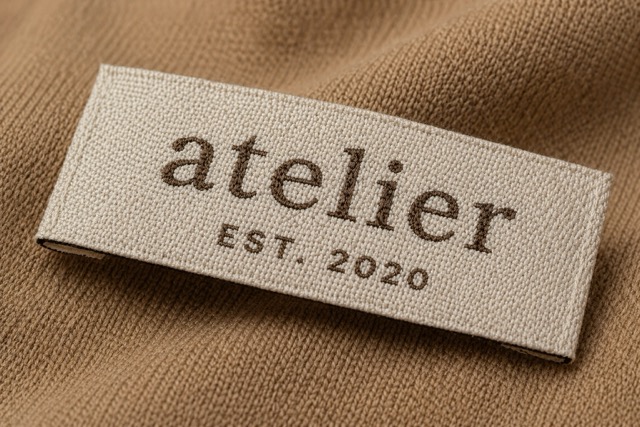
Sustainability claims in fashion have shifted from a marketing differentiator to a baseline expectation. Consumers, retailers, and regulators now examine every component of a product, including the labels sewn into it. A brand may use organic cotton fabric, but if it attaches a conventional polyester care label, that weakens the overall sustainability narrative. Increasingly, that inconsistency gets noticed.
The EU Strategy for Sustainable and Circular Textiles, the upcoming Digital Product Passport, and the Green Claims Directive all point in the same direction: brands need verifiable, documented sustainability credentials across the supply chain. Labels and trims are part of that requirement.
This guide explains what sustainable textile labels are, which certifications matter, what materials are available today, and how fashion brands can move from conventional to certified sustainable labels without disrupting production.
Key Takeaways
- Sustainable textile labels use verified recycled or organic materials instead of conventional virgin polyester or cotton
- The most relevant certifications for textile labels include GOTS, GRS, OCS, RCS, OEKO-TEX Standard 100, and FSC
- Recycled polyester yarn and recycled satin can deliver similar durability and performance to conventional materials, usually at a modest premium
- For GOTS- or GRS-certified garments, every relevant component, including labels, must align with the certification requirements to maintain product-level compliance
- The EU Green Claims Directive is expected to raise the bar for environmental marketing claims, making verified documentation more important
- Working with a manufacturer experienced in certified materials and multi-market requirements can reduce compliance risk and sourcing complexity
Why Labels Matter for Your Sustainability Strategy
The Component Problem
A garment’s sustainability profile is not assessed only by its main fabric. For certified products, auditors and certification bodies often review all relevant components, including threads, trims, and labels. If a brand is pursuing GOTS certification for an organic cotton T-shirt, for example, care labels and woven labels can become part of the compliance picture depending on the product structure and certification scope.
This is where many brands run into problems. Labels are frequently treated as a minor sourcing decision and addressed late in development. That creates risk. If a non-compliant component is discovered during an audit or pre-shipment review, the brand may need to replace trims, adjust documentation, or delay production.
The Regulatory Push
Several EU policy developments are reshaping how brands handle sustainability documentation:
EU Strategy for Sustainable and Circular Textiles
This policy framework aims to make textile products sold in the EU more durable, repairable, recyclable, and increasingly based on recycled fibers by 2030.
Digital Product Passport (DPP)
Starting with selected product categories, textiles are expected to face growing digital traceability requirements. This includes structured information on materials, sourcing, and sustainability-related data.
Green Claims Directive
Brands making environmental claims will increasingly need evidence to support them. General terms like “sustainable labels” or “eco trims” without documentation may become difficult to defend.
The Consumer Angle
Consumer awareness of greenwashing has increased. More buyers now pay attention to labels, packaging, and brand transparency, not just fabric composition. Certified label materials can serve as a visible proof point that supports a wider sustainability strategy.
Understanding Label Certifications
Not all certifications cover the same things. Some focus on organic content, some on recycled content, some on chemical safety, and others on responsible sourcing for paper-based materials.
GOTS (Global Organic Textile Standard)
| Detail | Value |
|---|---|
| Scope | Organic fiber processing, manufacturing, packaging, labeling, trading, and distribution |
| Relevance for labels | Relevant for labels made with organic fibers such as cotton |
| Organic requirement | Minimum 70% certified organic fibers for “made with organic,” 95% for “organic” |
| Social criteria | Yes, includes labor criteria |
| Verification | Annual inspection by an accredited certification body |
When it matters:
If your garment is certified to GOTS standards and uses natural-fiber labels, those components generally need to align with GOTS requirements as well.
GRS (Global Recycled Standard)
| Detail | Value |
|---|---|
| Scope | Recycled content verification, chain of custody, social and environmental practices |
| Relevance for labels | Relevant for recycled polyester yarn and recycled satin used in woven and care labels |
| Recycled content | Minimum 20% recycled content, with stricter thresholds for product claims |
| Chain of custody | Yes |
| Verification | Annual audit plus transaction certificates for shipments |
When it matters:
If you are making verified recycled-content claims for label materials or if the broader garment program is built around recycled inputs.
OCS (Organic Content Standard)
| Detail | Value |
|---|---|
| Scope | Organic material tracking through the supply chain |
| Relevance for labels | Verifies organic content in labels made with natural fibers |
| Difference from GOTS | Tracks organic content only, without the full processing and social criteria |
| Verification | Annual inspection plus transaction certificates |
When it matters:
When a brand wants verified organic fiber content without requiring the broader framework of GOTS.
RCS (Recycled Claim Standard)
| Detail | Value |
|---|---|
| Scope | Recycled content tracking through the supply chain |
| Relevance for labels | Verifies recycled content in label materials |
| Difference from GRS | Focuses on recycled content tracking, not full environmental or social processing criteria |
| Minimum recycled content | Lower threshold than GRS |
| Verification | Annual inspection plus transaction certificates |
When it matters:
When a brand needs verified recycled content claims but not the broader requirements associated with GRS.
OEKO-TEX Standard 100
| Detail | Value |
|---|---|
| Scope | Testing for harmful substances in textile products |
| Relevance for labels | Confirms that labels are tested for harmful substances |
| Testing | Includes substances such as azo dyes, formaldehyde, heavy metals, pesticides, and phthalates |
| Product classes | Multiple product classes depending on end use |
| Verification | Laboratory testing and certification renewal |
When it matters:
As a baseline for skin-contact labels such as neckline labels and care labels sewn into garments.
FSC (Forest Stewardship Council)
| Detail | Value |
|---|---|
| Scope | Responsible forest management and chain of custody for paper-based products |
| Relevance for labels | Relevant for swing tags, hang tags, inserts, and paper packaging |
| Chain of custody | Yes |
| Verification | Annual audit by an accredited certification body |
When it matters:
For all paper-based label components and packaging where responsible paper sourcing is part of the brand’s claim.
Certification Combinations: What Best-in-Class Looks Like
A supplier with one certification may satisfy a narrow requirement. A supplier network with multiple complementary certifications is often better equipped to support a wider sustainability program across different label types.
| Certification Count | What It Signals | Example |
|---|---|---|
| 1 | Basic compliance in one area | Chemical safety only |
| 2–3 | Growing sustainability alignment | Recycled labels plus certified paper tags |
| 5+ | Broad sustainability infrastructure | Organic, recycled, safe, and responsibly sourced materials across multiple product types |
For brands sourcing woven labels, care labels, and swing tags together, working with a production network whose sub-contractors and material suppliers hold relevant certifications such as GOTS, GRS, OCS, RCS, OEKO-TEX Standard 100, Sedex, and FSC can simplify the process substantially.
Sustainable Label Materials: What Is Available Today
Recycled Polyester Yarn for Woven Labels
Standard woven labels often use virgin polyester yarn. The sustainable alternative is recycled polyester yarn, typically sourced from recycled PET or polyester waste streams. In practice, recycled yarn can achieve similar durability, weaving precision, and appearance to conventional polyester.
Recycled Satin for Care Labels
Printed care labels are commonly made from satin polyester. Recycled satin provides a similar surface for printing and wash durability while supporting recycled-content claims when backed by the right certification and documentation.
Organic Cotton for Labels
For brands pursuing organic product claims, organic cotton labels can support a more consistent materials story. Organic cotton labels are also softer, which can be useful for babywear or products designed for sensitive skin.
Recycled and FSC-Certified Paper for Swing Tags
Paper-based components such as swing tags, hang tags, and inserts can be produced using recycled paper or FSC-certified paper stocks. These materials generally support standard printing and finishing techniques without major trade-offs.
Material Comparison
| Material | Used For | Common Certification | Quality vs. Conventional | Typical Premium |
|---|---|---|---|---|
| Recycled polyester yarn | Woven labels | GRS | Comparable | 5–10% |
| Recycled satin | Care labels | GRS | Comparable | 5–10% |
| Organic cotton yarn | Woven labels | GOTS | Softer, sometimes less color-vibrant | 10–20% |
| Organic cotton fabric | Care labels | GOTS | Softer, good print adhesion | 10–20% |
| Recycled or FSC-certified paper | Swing tags | FSC | Comparable | 5–10% |
| Virgin polyester | Woven/care labels | None required | Baseline | Baseline |
Supplier Highlight: Etiteks - How a Fully Certified Sustainable Label Manufacturer Operates in Practice
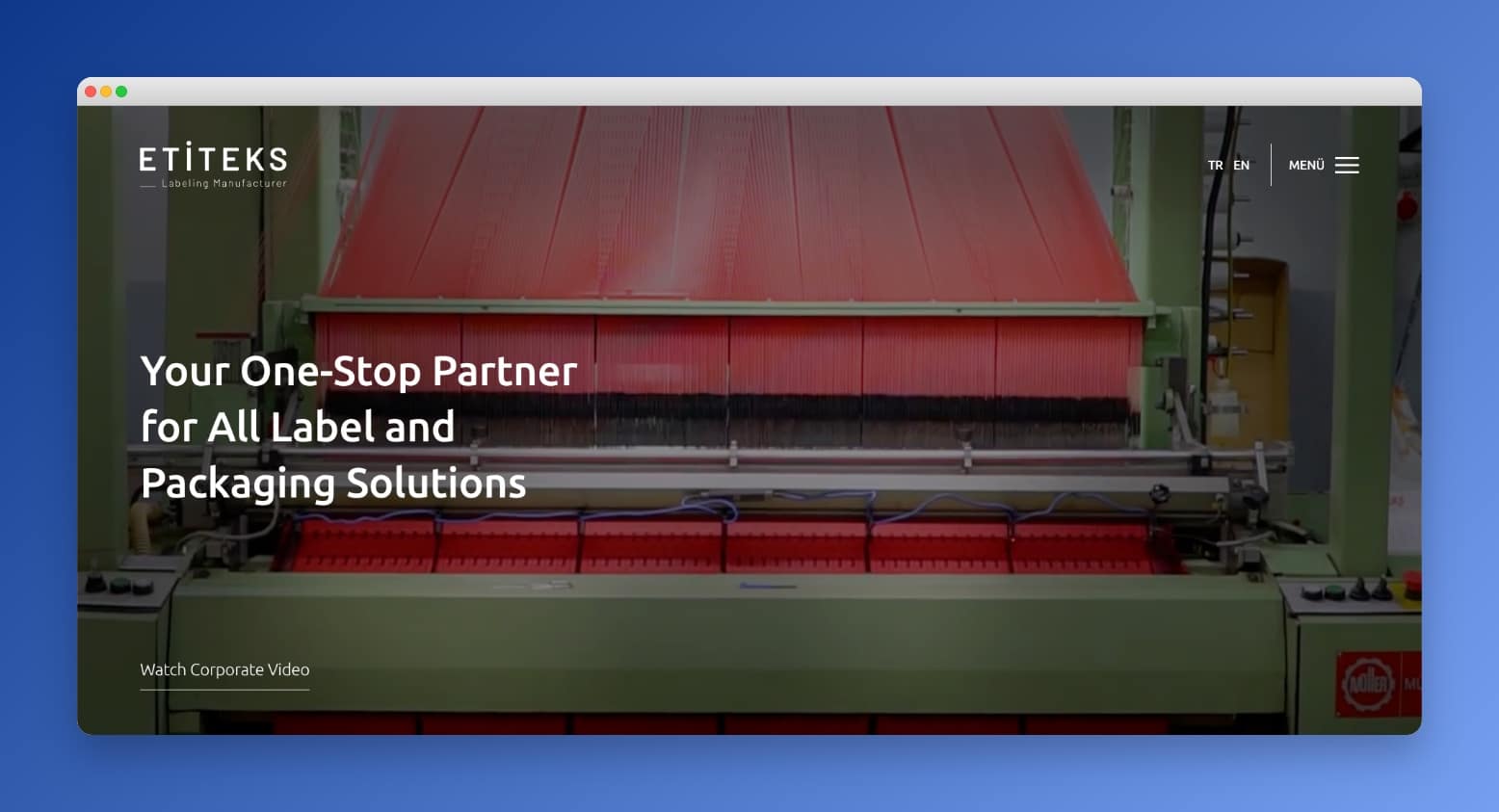
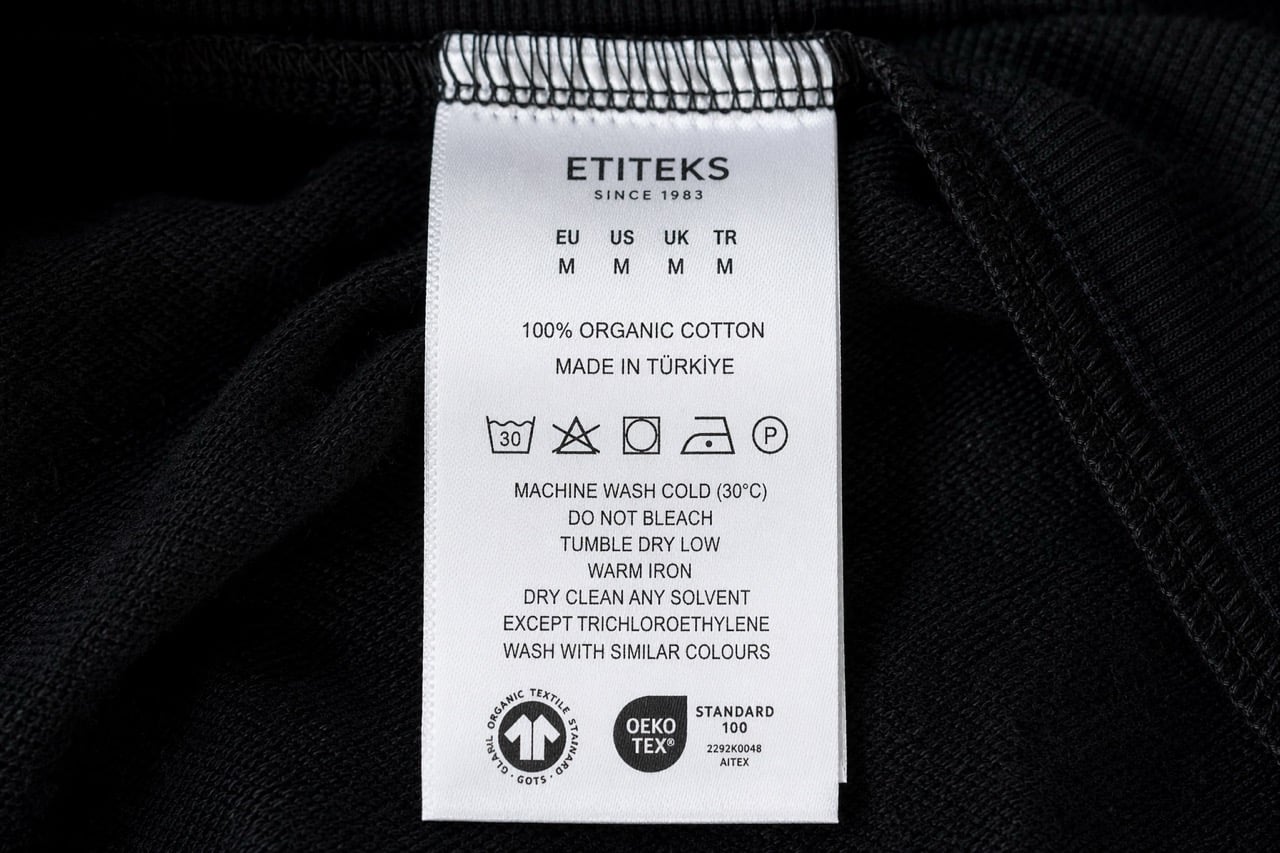
Understanding certifications and materials in theory is useful, but seeing how they come together in a real production environment makes the standard tangible. Etiteks, based in Istanbul, Turkey, is one of the most comprehensively certified label manufacturers serving the European market - and a practical case study for what "sustainable textile label production" looks like at scale.
A well-prepared label manufacturer like Etiteks, serving European brands, works with sub-contractors and suppliers that hold relevant certifications such as GOTS, GRS, OCS, RCS, OEKO-TEX Standard 100, Sedex, and FSC. That kind of ecosystem allows brands to source woven labels, care labels, and paper-based tags within a more structured compliance framework.
Example of a Broad Certification Setup
| Certification | Typical Relevance |
|---|---|
| GOTS | Organic-fiber label materials and processing requirements |
| GRS | Recycled polyester yarn and satin inputs |
| OCS | Organic fiber content tracking |
| RCS | Recycled material content tracking |
| OEKO-TEX Standard 100 | Harmful substance testing |
| Sedex / SMETA | Ethical and social compliance monitoring |
| FSC | Responsible paper sourcing for tags and packaging |
When the upstream suppliers and production partners behind label manufacturing hold these kinds of certifications, brands are in a better position to source certified woven labels, printed care labels, and paper tags without splitting volume across multiple vendors.
Sustainable Material Usage in Production
Depending on the manufacturer and sourcing model, sustainable production can include:
| Product Line | Sustainable Material | Use Case |
|---|---|---|
| Woven labels | Recycled polyester yarn | Supports recycled-content claims |
| Care labels | Recycled satin | Supports recycled-content programs |
| Care labels | Organic cotton | Supports organic-fiber programs |
| Swing tags | Recycled or FSC-certified paper | Supports paper sourcing claims |
A manufacturer that can run both conventional and certified materials on the same production setup gives brands more flexibility. It allows gradual transitions rather than forcing a full switch all at once.
Why This Matters for Brands
- A single sourcing partner can reduce documentation complexity
- Multi-certified upstream supply chains make audits easier to manage
- Transaction certificates can help substantiate claims for specific orders
- Brands can phase in sustainable materials without rebuilding their whole label supply base
- Output quality is typically driven more by machinery and process control than by whether the input is virgin or recycled
How to Transition to Sustainable Labels
Step 1: Audit Your Current Labels
List every label and trim type currently used across your product range. Note the material, supplier, and any existing certification or claim attached to each one.
Step 2: Prioritize by Impact
A phased approach is usually the most practical.
- Start with labels used on certified garments
- Then address consumer-facing labels such as brand labels and swing tags
- Finally move lower-visibility internal labels
Step 3: Consolidate Where Possible
The cleanest transition often comes from working with one manufacturer that can support multiple label types and provide access to certified material options through its supply chain.
Step 4: Update Specifications
Revise your tech packs and label specification sheets to clearly define:
- required material
- target certification
- documentation requirements
- whether transaction certificates are needed per shipment
Step 5: Communicate Precisely
Once your labels are backed by documentation, use precise language in brand communications.
Good claim:
“Our woven labels are made from GRS-certified recycled polyester yarn.”
Weak claim:
“Our labels are eco-friendly.”
The stronger version is specific, verifiable, and much easier to defend.
Common Mistakes in Sustainable Label Sourcing
Accepting logos without verification
A certification logo on a website or brochure is not enough. Brands should always verify certificate validity through the relevant certification body or approved documentation.
Using vague sustainability language
Not every “sustainable label” means the same thing. One supplier may mean chemical safety only. Another may mean verified recycled content plus audited social standards. Precision matters.
Forgetting transaction certificates
For standards like GOTS and GRS, transaction certificates can be critical. They connect a specific shipment to the certified claim.
Overlooking print compatibility
Organic cotton and polyester do not always behave the same in print applications. Always test care-label print durability before scaling production.
Underestimating the cost premium
Certified recycled and organic materials generally cost more than conventional options, but the increase is often modest on a per-garment basis.
Frequently Asked Questions
Do sustainable labels cost much more than conventional labels?
Usually not. In many cases, the premium is modest, especially when spread across garment unit economics.
Can recycled polyester woven labels match conventional quality?
Yes. Recycled polyester yarn can produce woven labels with similar durability, weave density, and appearance when sourced and processed correctly.
Do I need GOTS-certified labels for a GOTS-certified garment?
If relevant components contain natural fibers and fall within the certification scope, they generally need to align with the certification requirements. This should be confirmed with your certification body and supplier documentation.
What is a transaction certificate?
A transaction certificate is a document issued for a certified shipment that confirms the goods in that order meet the claimed standard. It is often required for audit trails and claim substantiation.
How should brands communicate sustainable labels to consumers?
Use exact, documented language. For example:
- “Woven labels made from GRS-certified recycled polyester”
- “Swing tags printed on FSC-certified paper”
- “Care labels produced with certified recycled satin”
Is OEKO-TEX Standard 100 enough for a sustainability claim?
No. OEKO-TEX Standard 100 is a chemical safety certification, not a full sustainability certification. It is valuable, but it does not verify recycled content, organic content, or broader environmental criteria.
Final Thoughts
Sustainable textile labels are no longer a niche detail. They are part of the product, part of the compliance picture, and part of how consumers judge a brand’s credibility.
For fashion brands selling in Europe, the direction is clear. Environmental claims need evidence. Supply chains need documentation. And every visible component, including labels, increasingly matters.
The brands that handle this well are the ones that treat labels not as an afterthought, but as a core part of product development, sourcing, and sustainability communication.
Related articles

10+ Best Doypack Suppliers in Europe (2026 List)

10+ Best European Packaging Suppliers in 2026

Stainless Steel Cookware Manufacturing: Materials, Processes, and What Buyers Should Know
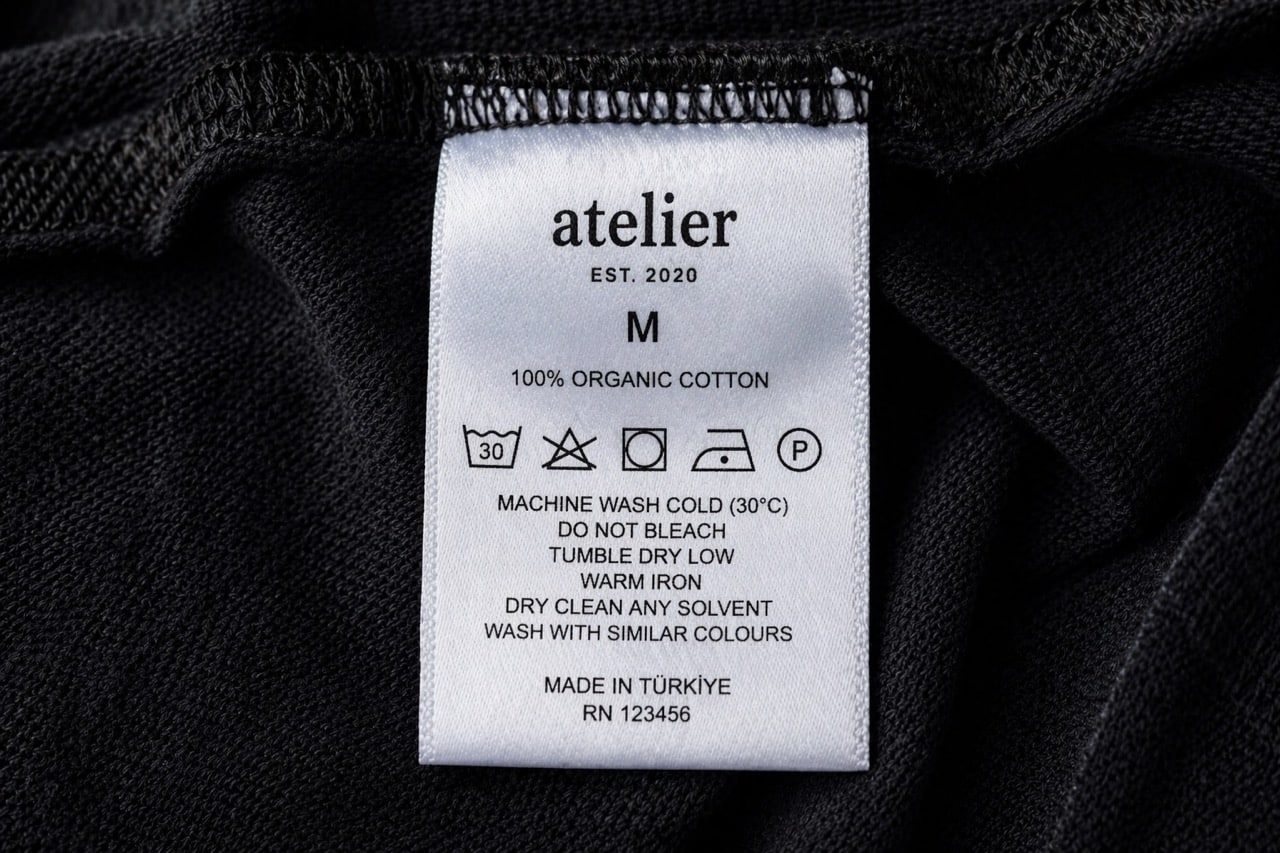
Best Care Label Manufacturers and Wash Label Suppliers (2026)
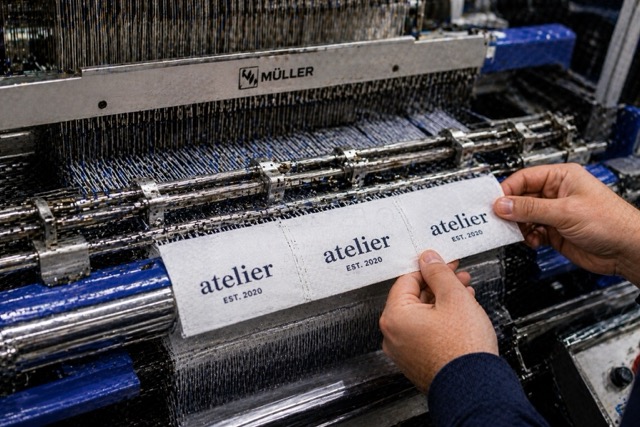
10+ Best Woven Label Manufacturers in Europe and Turkey (2026)
Clothing Label Requirements in Europe: What Fashion Brands Must Include (2026)
Best Sustainable Label Manufacturers for Eco-Conscious Brands (2026)

10+ Best Sustainable Packaging Suppliers in Europe (2026 Update)