10+ Best Food Contract Manufacturers For Your Brand

Key Takeaways
- Food contract manufacturers (also called co-manufacturers) allows food brands to outsource production to certified partners without owning a facility
- Co-manufacturing emphasizes collaboration in R&D, scaling, and production processes
- European manufacturers offer regulatory compliance, flexibility, and low MOQs, making them ideal for emerging brands
- U.S. manufacturers provide large-scale capabilities, diverse food category expertise, and strong regulatory experience (FDA, USDA)
- Differences exist between contract manufacturing, private label, and wholesale: contract offers custom production, private label uses ready-made formulas, wholesale is resale of existing products
- Choosing the right manufacturer involves checking certifications, production capabilities, flexibility, and R&D support
What is food contract manufacturing (and co-manufacturing)?
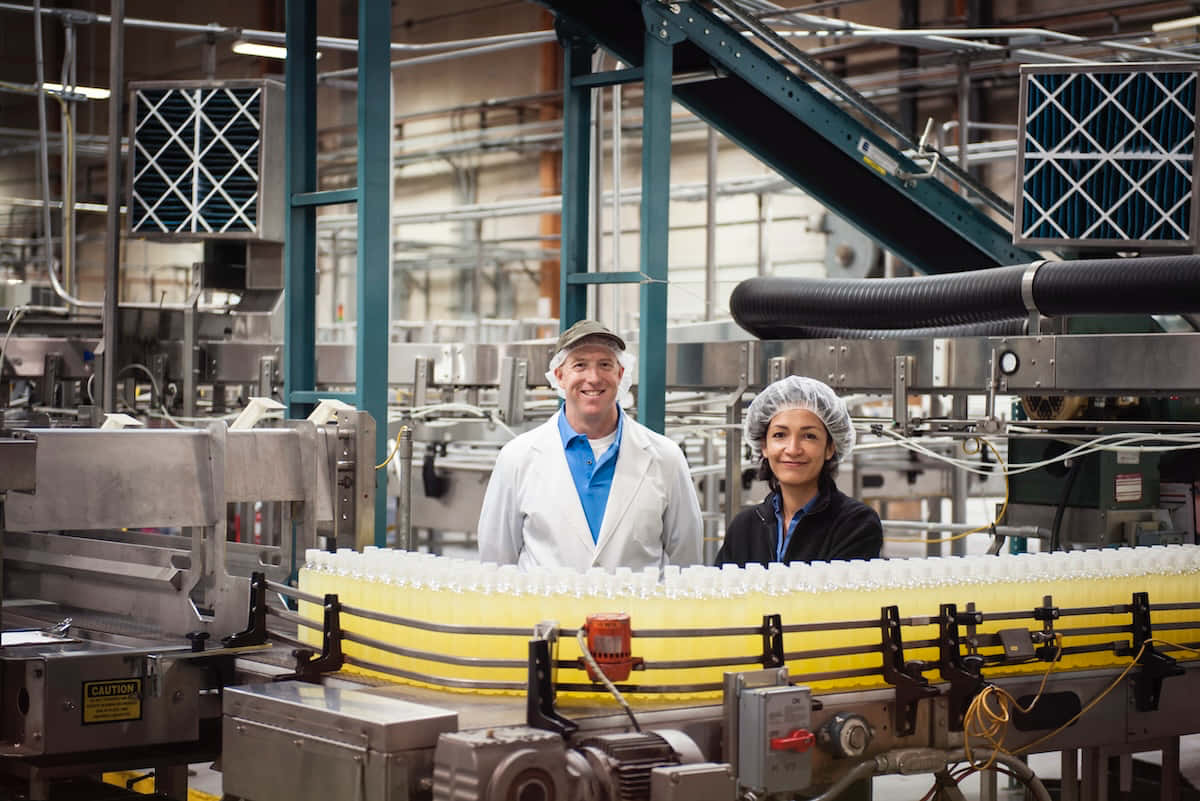
Food contract manufacturing, also referred to as co-manufacturing, is a process where a company outsources the production of food products to a specialized third-party manufacturer. These manufacturers work under contract to produce, package, and sometimes even develop food products on behalf of the brand owner. The term "co-manufacturing" is often used interchangeably with contract manufacturing, although it typically implies a more collaborative approach, with the manufacturer acting as a partner in product development and scale-up.
Food contract manufacturing market size
The global food contract manufacturing market is experiencing robust growth. The industry is currently valued at approximately USD 131.2 billion and is projected to reach around USD 274 billion by 2030, growing at a CAGR of 9.7% according to Grand View Research.
Regionally, Europe’s food contract manufacturing and packaging market is estimated at USD 104.5 billion in 2025, expected to rise to USD 167.5 billion by 2030 with a CAGR close to 9.9% according to mordorintelligence.com.
Meanwhile, North America’s market is forecast to grow at an 8.7% CAGR from 2023 to 2030, with the U.S. projected to exceed USD 44 billion by 2030 KBV research says. This strong expansion reflects increasing brand adoption of outsourcing, driven by demand for specialized products, innovation, and cost-effective scale.
Benefits of food contract manufacturing
Outsourcing to food contract manufacturers offers several advantages for brands and retailers.
- Access to advanced manufacturing facilities without capital investment
- Faster time-to-market with scalable production
- Regulatory compliance (HACCP, BRC, IFS certifications)
- Cost-effective production with reliable quality
- Access to R&D and innovation services
Food contract manufacturing vs. private label vs. wholesale
Understanding the differences helps brands and retailers choose the right model:
- Contract/co-manufacturing: Full ownership of recipe and brand; custom production by third-party
- Private label: Choose from pre-developed products and add your brand
- Wholesale: Buy finished products for resale, no production control - you sell the manufacturer's brand
How to choose the right food contract manufacturers
When selecting a manufacturer, consider:
- Certifications and compliance
- Production capacity and specialization
- R&D and product development support
- Minimum order quantities (MOQs)
- Location and logistics support
How to find food contract manufacturers
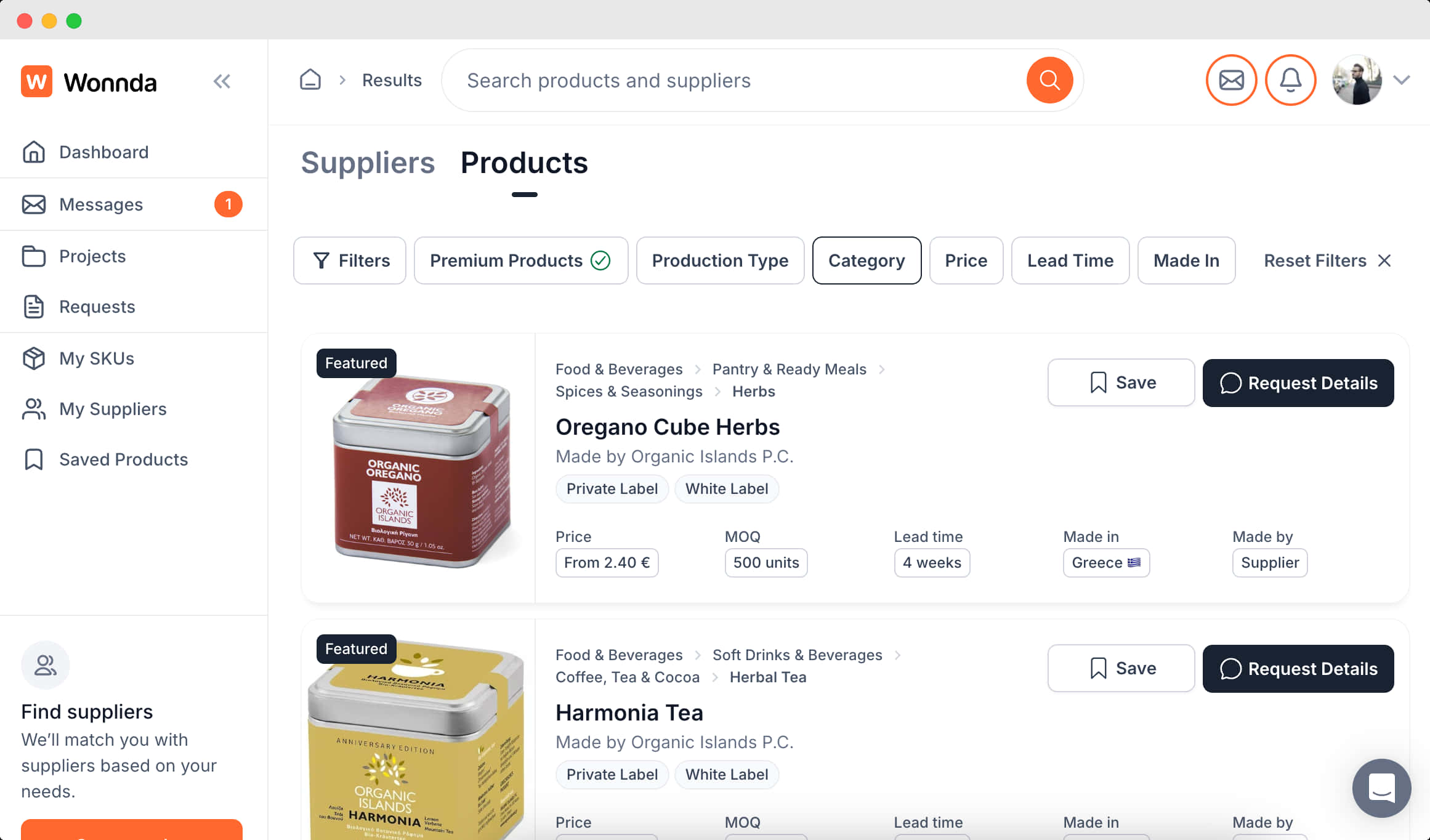
The most efficient and reliable way to find food contract manufacturers is by using a specialized B2B sourcing platform like Wonnda. Wonnda connects you with pre-vetted, certified food manufacturers, allowing you to manage your sourcing process digitally - from discovery to onboarding. With built-in filters, tender management, direct messaging, and document sharing, it eliminates the back-and-forth of traditional outreach and saves you weeks of research.
Define your product and production requirements
Start by clearly outlining what you need. Are you producing energy drinks, frozen ready meals, or gluten-free granola bars? Each category may require different equipment, certifications, and technical expertise. Also define your volume expectations, shelf-life goals, special ingredient needs, packaging formats, and whether you need help with R&D or only with production. This clarity will help narrow your search.
Use specialized sourcing platforms like Wonnda
Wonnda is designed specifically for food and consumer goods brands. It allows you to search by category, location, certifications (e.g. BRC, IFS, FDA), and production capabilities. Unlike generic directories, Wonnda ensures all listed manufacturers are verified and open for collaboration, making the process smoother and faster. Brands can request quotes, share product briefs, and manage onboarding—all on one platform.
Explore B2B directories and databases
If you’re exploring beyond platforms like Wonnda, you can also consult B2B directories such as Kompass (Europe-focused), Thomasnet (U.S.), or Greenbook. These platforms list thousands of manufacturers across categories, but they often require additional vetting. Look for keywords like “co-manufacturer”, “contract manufacturer”, or “private label food supplier” to find relevant listings.
Attend trade shows and industry expos
Trade fairs like PLMA, SIAL, and Anuga are major hubs for discovering contract manufacturers. These expos host hundreds of suppliers in food production, processing, and packaging. Visiting in person allows for deeper conversations, firsthand sample tasting, and relationship-building. It’s also a great way to stay on top of industry trends and innovation.
Search through industry associations
Many national and regional food manufacturing associations maintain directories or member lists. These include the Specialty Food Association (USA), German Food Industry Association (BVE), or the European Federation of Food Science and Technology. Membership often indicates a commitment to standards and industry best practices.
Leverage referrals and networking
Word-of-mouth still plays a powerful role in B2B sourcing. Talk to founders in similar niches, industry consultants, or packaging suppliers—they often have firsthand experience with manufacturers. LinkedIn groups and forums are also useful for crowdsourcing recommendations.
Contact and vet manufacturers directly
Once you’ve identified a shortlist, reach out to request detailed capability sheets, MOQs, sample timelines, and certifications. Prepare a brief describing your product needs and ask about R&D services, production flexibility, and past clients. Always request pilot runs or samples before scaling up, and use NDAs to protect proprietary information.
By following these steps—and especially by starting with Wonnda—you’ll streamline your search and set your product up for success with the right manufacturing partner.
Top 10 Food Contract Manufacturers in Europe
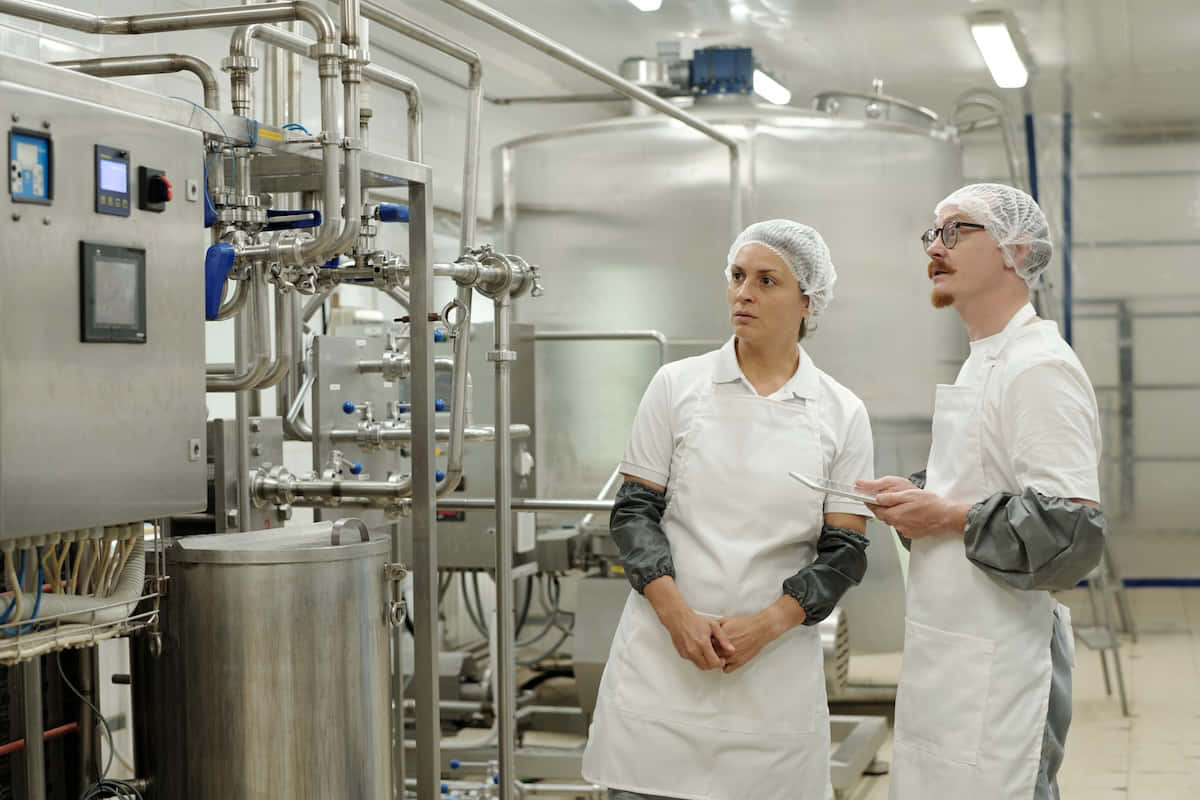
Haco Holding AG (Germany/Europe-wide)
Haco is a leading manufacturer for ambient foods, offering private label and contract manufacturing for snacks, dry mixes, and ready meals.
Agilery (Switzerland / pan-Europe)
Agilery connects food brands with vetted co-manufacturers across Europe, providing flexible production solutions with no MOQ. They manage supplier matching, negotiations, quality, and logistics.
Hearthside Europe (Germany-based)
A major co-manufacturer for bakery and snack products, offering end-to-end production services for major European brands.
Nikken Foods Co., Ltd. (European operations)
With operations in Europe, Nikken focuses on clean-label and umami-rich foods, including sauces and seasonings.
SK Food Group (UK/Europe)
This co-manufacturer specializes in chilled and frozen foods, offering turnkey solutions for convenience meals and sauces.
Cremica Food Industries (European exports)
Cremica is known for sauces, spreads, and bakery items, exporting products to European food service and retail sectors.
Romix Foods Ltd (UK)
A UK-based co-manufacturer producing ambient and shelf-stable foods for B2B and retail clients.
Alexir Co-Packers Ltd (UK)
Alexir offers food co-packing and manufacturing for snacks, dry goods, and innovative packaging formats.
SternMaid GmbH & Co. KG (Germany)
Specializing in powders and dry blends, SternMaid serves food, pharma, and supplement brands across Europe.
Comigel (France/Luxembourg)
A top frozen food manufacturer for private label and branded products in retail and foodservice.
Top 10 Food Contract Manufacturers in the U.S.
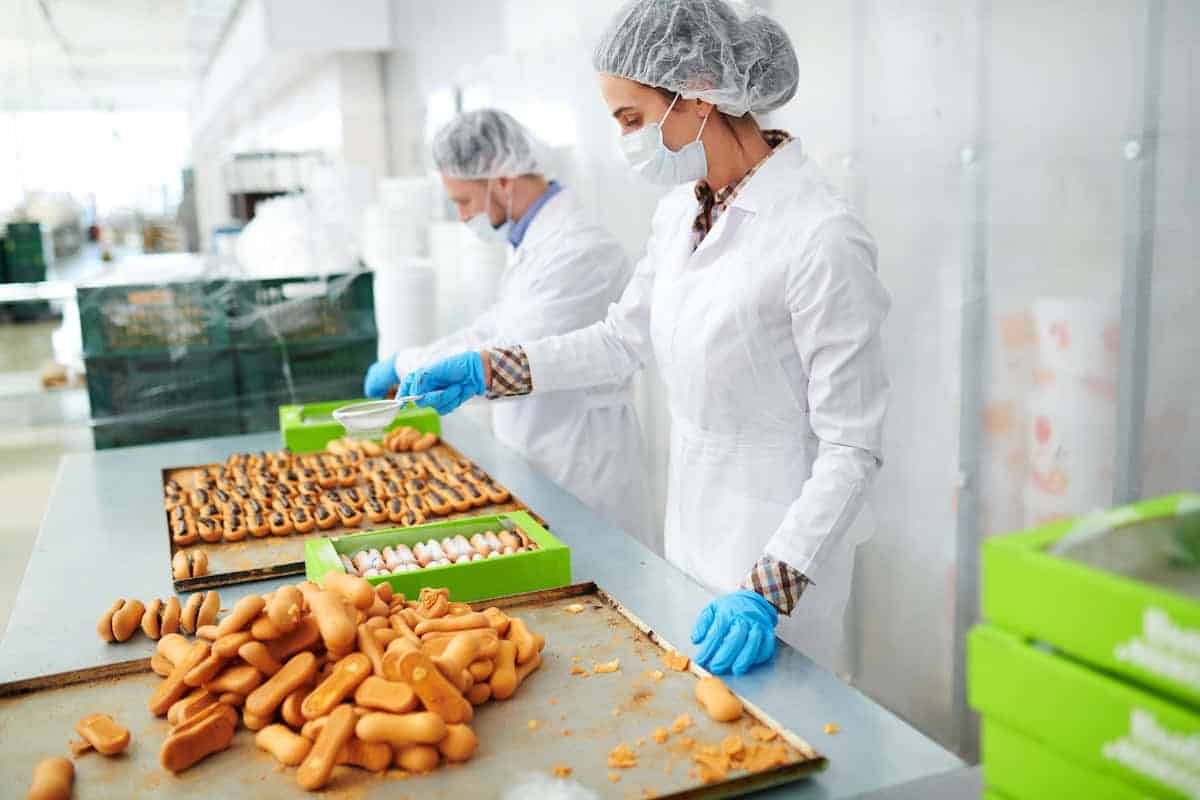
Monogram Foods (Memphis, TN)
A leader in meat snacks, bacon, appetizers, and bakery items with multiple production facilities across the country.
TreeHouse Foods (Illinois)
A top private label manufacturer that also offers contract manufacturing for sauces, dressings, snacks, and more.
Wyandot Snacks (Ohio)
Produces popped and extruded snacks with a focus on plant-based and better-for-you ingredients.
Bueno Foods (New Mexico)
Established in 1951, specializes in ethnic and frozen food manufacturing for co-manufacturing clients.
4C Foods Corp. (New York)
A midsize Brooklyn-based food manufacturer offering contract services in condiments, grains, and pantry staples.
Alle Processing Corp. (New York)
Founded in 1954, specializes in protein and meal prep foods for institutional and retail markets.
Roland Foods, LLC (New York)
A global supplier of specialty foods, also offering contract production for sauces, oils, and packaged goods.
Bluegrass Superior Foods (Kentucky)
Offers contract food production, focusing on prepared meals and frozen foods.
DiscoverFresh Foods (South Carolina)
Manufactures refrigerated and prepared foods for retail and foodservice, known for high-shelf-life technology.
Southeast Beverage and Bottling (Florida)
Specializes in bottling and beverage co-manufacturing with GMP-certified processes.
FAQs on Food Contract Manufacturing
What is the difference between co-manufacturing and contract manufacturing?
Co-manufacturing is often used to highlight a closer collaboration with the manufacturer. Both terms describe outsourced production, but co-manufacturing implies a more integrated partnership.
Can I launch a product via co-manufacturing without owning a factory?
Yes, that’s the key benefit of contract manufacturing. You focus on your brand, while your manufacturing partner handles production.
What are typical minimum order quantities?
MOQs vary. Some European partners like Agilery offer no MOQ, while large U.S. producers may require volumes of $50,000 or more.
Do manufacturers help with certification?
Most contract manufacturers hold relevant certifications and can guide you on labeling and compliance.
Is co-manufacturing suitable for startups?
Absolutely. Many startups use co-manufacturers to scale fast without infrastructure investments.
Food contract manufacturing examples
Food contract manufacturing spans a wide range of product types across categories such as snacks, beverages, dairy, bakery, frozen meals, sauces, and plant-based foods. For instance, a snack brand may partner with a co-manufacturer to produce baked granola bars. The brand provides its own recipe or works with the manufacturer’s R&D team to optimize the formula. The co-manufacturer then sources ingredients, handles mixing and baking, and packages the bars in branded wrappers—all while adhering to regulatory standards such as BRC or IFS.
In beverage manufacturing, co-manufacturers often handle everything from bottling cold-pressed juices to carbonating and canning functional drinks. The process includes blending precise ingredient mixes, pasteurization or aseptic filling, and labeling. A startup producing energy drinks, for example, could collaborate with a beverage manufacturers to develop a new formulation, run small test batches, and scale up to mass production once market traction is proven.
For frozen or chilled foods, manufacturers offer complex capabilities such as cooking, freezing, tray sealing, and distribution support. Ready-meal brands frequently use contract manufacturers to assemble meals with multiple components, ensuring consistent portioning, shelf life, and safety.
The bakery segment often includes co-manufacturing for bread, pastries, and gluten-free products. These facilities are equipped to manage allergen separation, precise dough handling, and packaging to preserve freshness.
In each case, food contract manufacturers allow brands to focus on marketing, sales, and product development, while the manufacturing partner ensures consistent quality and efficient production.
Conclusion
Food contract manufacturing offers an efficient, scalable solution for launching and expanding food brands in Europe and the U.S. Whether you're looking to create custom formulations or bring private-label products to market, working with a reliable contract manufacturer reduces risks and accelerates time-to-market.
Ready to source food contract manufacturers for your brand? Wonnda connects you with verified manufacturers and helps you manage your sourcing process end-to-end. Get started today on Wonnda.
Related articles
Best Clothing Manufacturers in Europe - 2026 Guide by Wonnda
10+ Best Beauty Manufacturers in the US (2026 List)

How to Find a Manufacturer for Your Product (2026 Guide)
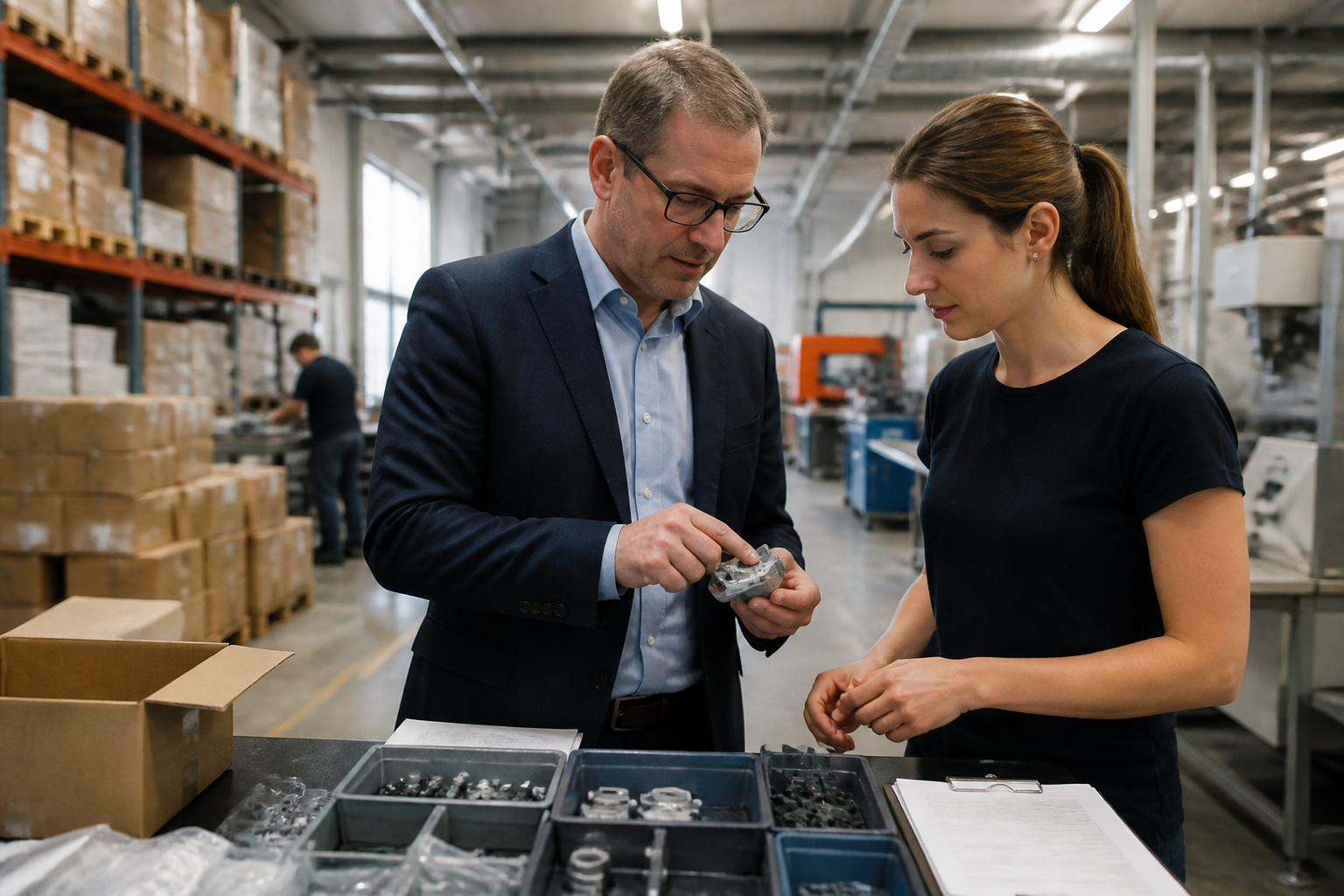
European Suppliers: How to find the best EU suppliers in 2026

10 Best European Sourcing Agencies To Find Suppliers & Launch Your Product
How to Start a Premium Private Label Cookware Brand: The Complete Guide
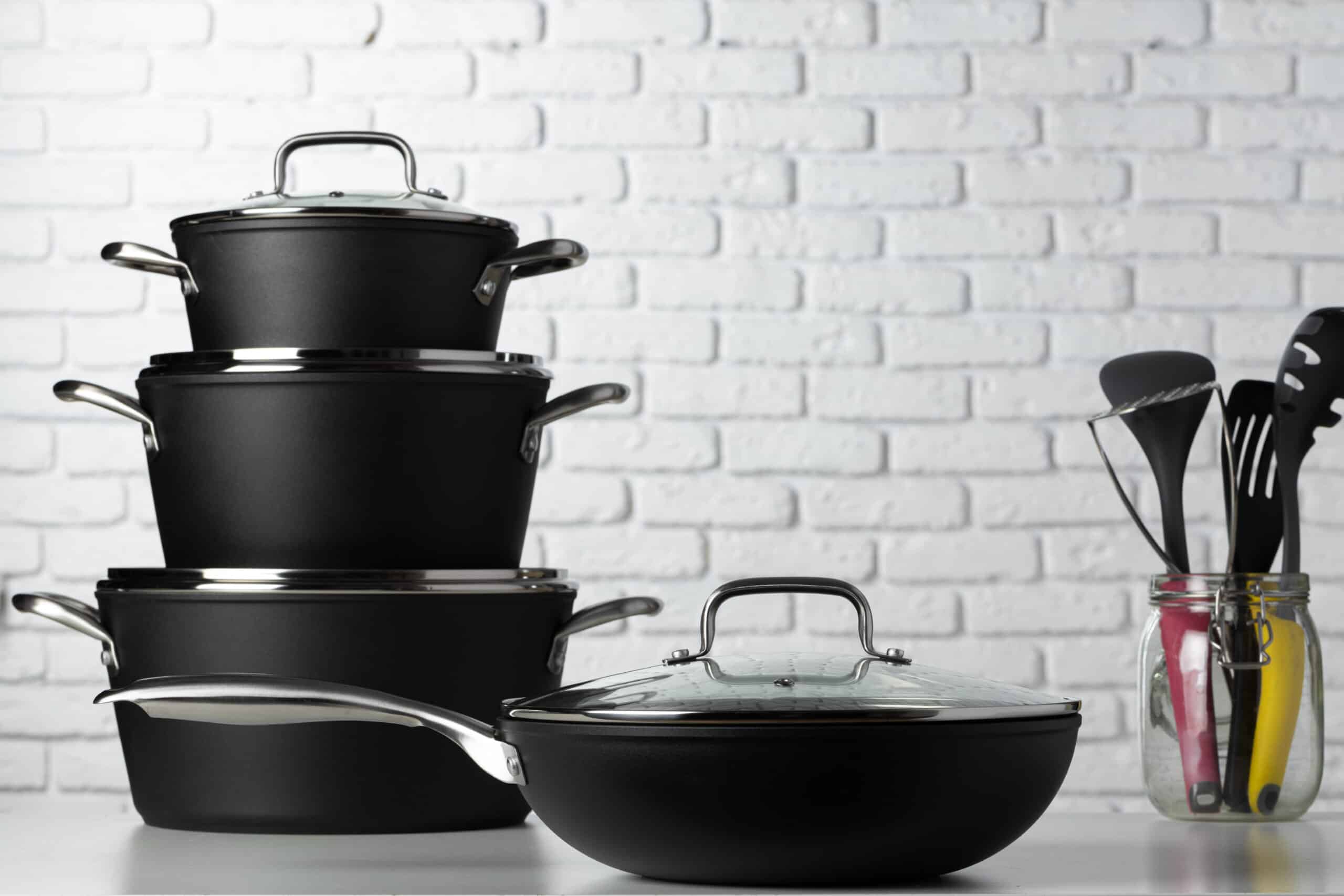
5+ Best Private Label Nonstick Cookware Manufacturers
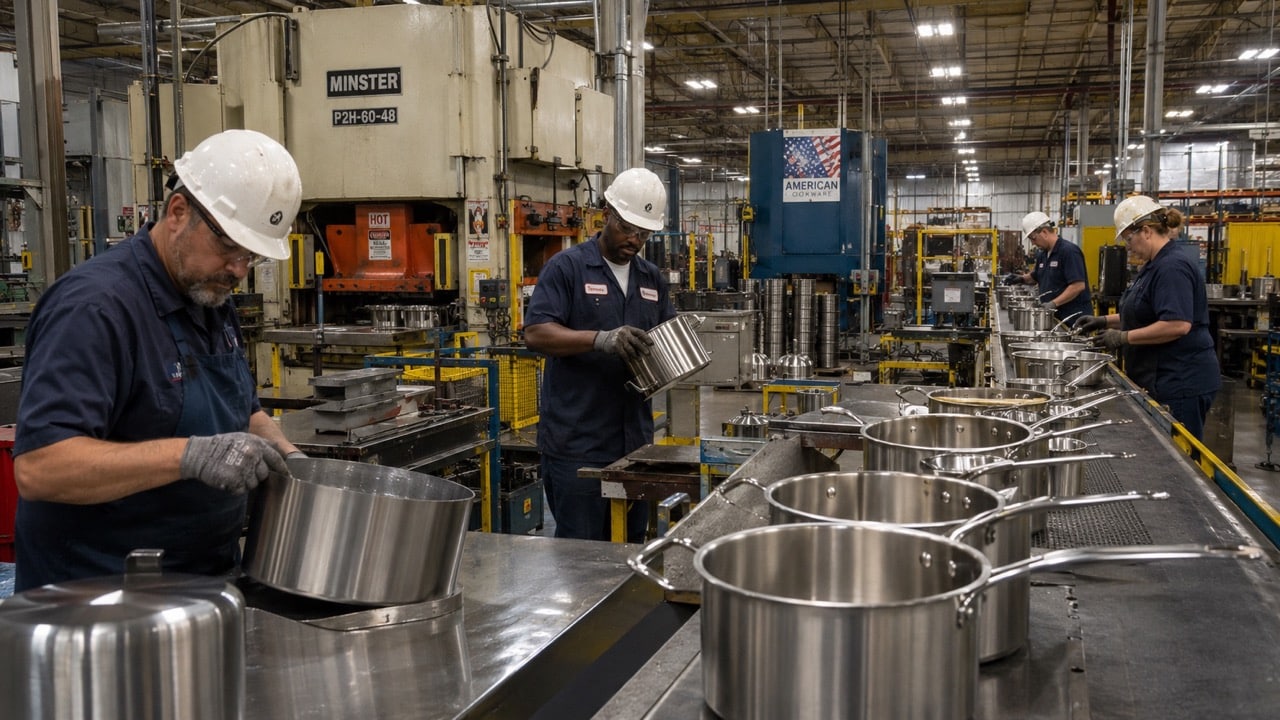
5+ Best Private Label Cookware Manufacturers in the USA (2026)