
Best private label spices manufacturers
Find vetted private label spices manufacturers on Wonnda. Sourcing options include single spices, both whole and ground, as well as custom spice blends and seasonings. Key considerations for brands include sterilization processes to ensure food safety and the co-packer's ability to maintain consistent color, aroma, and pungency across batches. Manufacturers often provide milling to specific grades and offer packaging in formats like jars or refill pouches.
- Vetted suppliers
- 20,000+
- Brands & buyers
- 25,000+
- EU-made
- 80%
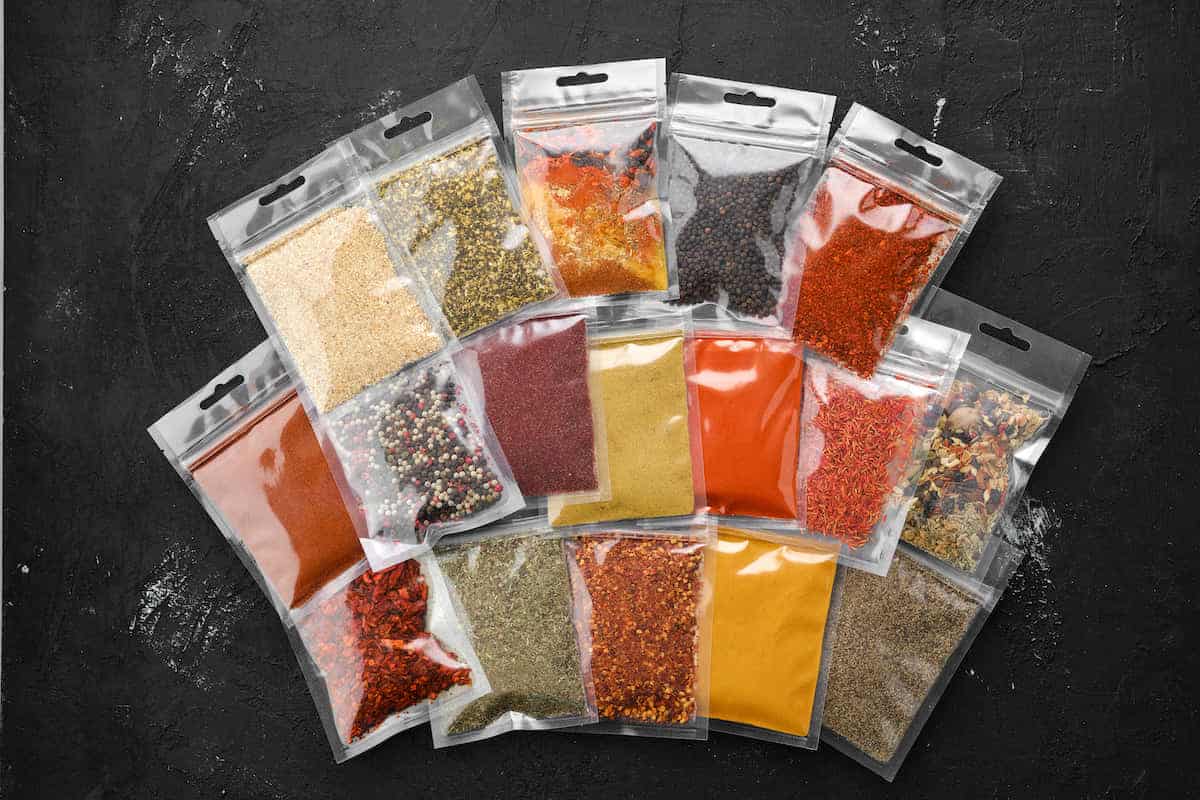
6+ Top private label spices manufacturers
Wonnda works with the best private label spices manufacturers. Here is a list of trusted suppliers from our network.
- Featured
 Private LabelWhite LabelWholesale
Czech private label supplier of dried fruit, nuts, plant proteins and superfoods
- Country
- Czech Republic
- MOQ
- MOQ depends on the product; 25 kg for raw materials for oil production.
- Lead time
- 3-8 weeks first run; 3-4 weeks repeat
 Private LabelContract Manufacturing
Greece-based manufacturer producing organic herbal teas, herbal delights blends, essential oils, available to brands sourcing spices.
- Country
- Greece
- MOQ
- Lead time
 Private LabelContract Manufacturing
Europe-based manufacturer producing individual spices, spice blends, herbs, available to brands sourcing spices.
- Country
- -
- MOQ
- Lead time
 Private LabelContract Manufacturing
Europe-based manufacturer producing instant coffees, cereal and fruit bars, soups, available to brands sourcing spices.
- Country
- -
- MOQ
- Lead time
 Private LabelContract Manufacturing
Europe-based manufacturer producing pretzels, crackers, cheese puffs, available to brands sourcing spices.
- Country
- -
- MOQ
- Lead time
 Private LabelContract Manufacturing
Europe-based manufacturer producing spice blends, herb blends, culinary herbs, available to brands sourcing spices.
- Country
- -
- MOQ
- Lead time
Compare MOQs and lead times
Quick side-by-side of the shortlist. Missing values shown as a dash.
| Supplier | Location | Types | MOQ | Lead time |
|---|---|---|---|---|
| Covitar | Czech Republic | PL · White Label · WS | MOQ depends on the product; 25 kg for raw materials for oil production. | 3-8 weeks first run; 3-4 weeks repeat |
| Organic Islands | Greece | PL · CM | ||
| Fridlin AG | - | PL · CM | ||
| Haco Group | - | PL · CM | ||
| OFC | - | PL · CM | ||
| British Pepper & Spice | - | PL · CM |
Buyer criteria
- Raw-spice sourcing and grade
The finished spice is only as good as the raw material, so confirm how the co-packer sources, grades, and tests incoming spice for origin, color, pungency, and contaminants. Ask about their supplier relationships and specifications. A co-packer buying cheap, variable, or unverified raw spice cannot deliver consistent color and aroma no matter how good the milling and packing.
- Sterilization method and validation
Spices need a validated sterilization step to control microbial contamination, so confirm the method used, ideally steam, and that it is validated to reduce the load while preserving flavor. Ask how they balance safety against aroma loss. A co-packer that cannot demonstrate a controlled sterilization process is exposing you to both food-safety risk and dull, over-treated spice.
- Batch-to-batch consistency
Spices come from variable harvests, so confirm the co-packer can hold color, aroma, heat, and particle size consistent across batches by blending and grading to a reference standard. Ask how they manage harvest variation. Inconsistency is immediately visible in color and noticeable in flavor, and a brand that delivers a different spice each time loses customer trust.
- Contaminant and adulteration control
Spices carry real risks of contaminants and economically motivated adulteration, such as added fillers, dyes, or cheaper spices passed off as premium. Confirm the co-packer tests for these, including for high-value spices. Ask what authenticity testing they run, since adulteration is a known and serious problem in the spice trade that can harm both your brand and consumers.
- Packaging protection and format
Spices lose color and aroma with exposure to light, air, and moisture, so confirm the packaging protects freshness and matches your format, whether jar, shaker, grinder, or refill pouch. Ask about anti-caking for free-flowing products. Glass jars carry significant cost and minimums, so verify the packaging choice fits both your positioning and your budget early.
Red flags
- No sterilization or unclear method
A co-packer that does not sterilize spices, or cannot clearly describe and validate the method, is exposing you to microbial contamination in an agricultural product that frequently carries it. Sterilization is a food-safety necessity, not an optional cost saving. Treat an absent or vague sterilization process as disqualifying, since the risk falls on your brand and your customers.
- Dull color or weak aroma on samples
Spices that arrive faded in color or weak in aroma signal poor raw material, over-aggressive sterilization, or stale stock. Color and aroma are how customers judge freshness and quality, and a dull spice undermines the product on sight and smell. If samples lack vibrancy, the problem reaches every jar, so do not accept assurances that fresh stock will look better.
- No adulteration or contaminant testing
Adulteration, adding fillers, dyes, or cheaper substitutes, is a well-documented problem in the spice trade, especially for high-value spices. A co-packer that does not test incoming spice for authenticity and contaminants cannot guarantee you are getting what you pay for or that the product is safe. Missing authenticity testing is a serious risk in this category regardless of price.
- Uneven blend across the jar
If a seasoning blend separates or delivers a different flavor from the top to the bottom of the jar, the co-packer has not blended to a uniform standard. An inconsistent blend gives customers an unpredictable taste and signals weak process control. Test blend uniformity on samples, since a blend that is not validated for uniformity will disappoint in use even if the recipe is good.
Manufacturing process
- 01
Raw spice sourcing and cleaning
Raw spices are sourced to a specification for origin, grade, color, and pungency, then cleaned to remove stones, dust, stems, and foreign matter. Incoming material is tested for contaminants and adulteration. Clean, well-graded raw spice is the foundation of the finished product, since milling and blending cannot fix poor-quality or contaminated input.
- 02
Sterilization
Spices, as agricultural products, can carry microbial contamination, so they are sterilized by steam treatment or another validated method to reduce the microbial load to safe levels. Steam sterilization is favored for preserving flavor compared with older chemical methods. The treatment is validated to ensure safety without driving off the volatile oils that carry the spice's aroma and flavor.
- 03
Milling and grading
Whole spices are milled to the target particle size, from coarse cracked to fine powder, often under temperature control so the heat of grinding does not volatilize the aromatic oils. The ground spice is graded for color and consistency. Particle size affects both flavor release and how the spice flows and disperses, so it is set deliberately to the product.
- 04
Blending
For seasoning blends, the individual spices, salt, and any carriers or anti-caking agents are weighed against the recipe and blended to a validated uniformity so every shake delivers the same flavor. Color and aroma are checked against a reference. Blending consistency is critical, since an uneven blend gives the customer a different taste from one part of the jar to another.
- 05
Filling and packaging
The spice or blend is filled into jars, shakers, grinders, or refill pouches, with fill weight controlled and the pack chosen to protect against light, moisture, and aroma loss. Anti-caking treatment keeps free-flowing products pouring. Packaging is sealed to preserve freshness, since spices lose color and aroma when exposed to air, light, and humidity.
- 06
QC, coding, and traceability
QC verifies microbiological limits, contaminant and adulteration testing, color, aroma, particle size, and fill weight, and confirms accurate allergen and labeling. Units are lot coded for traceability back to the raw spice lot. Per-batch certificates document the sterilization and contaminant results, which matter for both food safety and the integrity of any origin claim.
Understanding spices private-label manufacturing
Product Overview
Spices private label encompasses single spices (ground or whole) and blended seasonings. These are packed under a brand's name, ranging from black pepper, paprika, and cumin to curry powders, rubs, and signature seasoning mixes.
For brands, food safety and consistency are paramount. Spices are agricultural products prone to microbial contamination, necessitating a sterilization step. They must also maintain consistent color, aroma, and heat across batches despite variations in harvests.
The value of a spice co-packer lies in sourcing clean raw material, milling it to a consistent grade, and safely treating it without compromising volatile flavors. The category is divided by single spice versus blend, and by form.
Processing and Packaging
Single ground spices require clean sourcing, milling to a defined particle size, and grading for color and pungency. Blends are recipes where component ratios, salt levels, and anti-caking agents are adjusted for target flavor and free-flowing pour.
Whole spices bypass milling but still need cleaning and often sterilization. Packaging forms, such as jars, shakers, refill pouches, or grinders, dictate the packaging line and significantly contribute to cost, especially for glass spice jars.
Sourcing, MOQs, and Lead Times
Spice sourcing is global, with raw spices grown across India, Southeast Asia, Africa, and the Mediterranean. Cleaning, sterilization, milling, blending, and packing for the European market are handled by spice houses and co-packers in Europe, particularly in Germany, the Netherlands, and Eastern Europe.
Minimum Order Quantities (MOQs) for packed single spices or blends typically start in the low thousands of units. These are determined by blending batch sizes, filling runs, and jar or pouch minimums.
Lead times range from 6 to 12 weeks, largely influenced by raw spice sourcing and sterilization scheduling.
Cost and Quality Considerations
Cost is primarily driven by the raw spice itself. Premium origin spices and high-value items like saffron or vanilla are significantly more expensive than commodity pepper or paprika. Subsequent cost factors include sterilization and processing, packaging (jars or pouches), blending complexity, and labeling.
First-time brands often find that high-value spices can dominate the cost of a blend. Additionally, clean, low-microbial raw material with proper sterilization is more expensive than cheap, unsterilized spice. Cutting corners on sterilization is not advisable for food safety reasons.
Private label spice buyers include D2C and chef-led seasoning brands, retailer own-label spice ranges, specialty and ethnic food brands, and foodservice. These products are sold through grocery, specialty, and online channels.
Differentiation is achieved through origin and freshness, blend distinctiveness, organic credentials, grind quality, and packaging. When qualifying a co-packer, prioritizing their raw-spice sourcing and sterilization methods, their ability to maintain consistent color, aroma, and heat across harvests, and their control over contaminants and adulteration is more important than the headline price. A dull, weak, contaminated, or adulterated spice can damage a brand and, in severe cases, compromise food safety.
Frequently asked questions
Why do spices need to be sterilized?+
How is consistency maintained when spices come from variable harvests?+
What is spice adulteration and how do I protect against it?+
Does the grind or particle size of a spice matter?+
What MOQ and lead time should I expect for private label spices?+
How should spices be packaged to keep them fresh?+
Explore adjacent product types
Get a vetted shortlist of spices suppliers in 48 hours.
Post a brief on Wonnda. Free, no commitment. We match you with vetted manufacturers that fit your MOQ, format and market.