
Best private label biotin supplement manufacturers
Source private label biotin supplement suppliers through Wonnda. Biotin supplements are commonly offered in capsule or gummy formats, with a key sourcing consideration being the uniform distribution of microgram-scale active ingredients across thousands of units. Manufacturers must ensure consistent dosing for hair, skin, and nail formulations. Attention to micro-dose uniformity is critical, as the active biotin amount is tiny compared to the overall product weight. Certification for manufacturing processes that guarantee dosage accuracy is often a priority.
- Biotin supplement market — global value, projected to reach 10.60 billion USD by 2034
- 3.72 billion USD
- Biotin supplement CAGR — one of the faster-growing single-vitamin categories
- 11.04%
- Biotin supplement market by 2030 — alternative-firm projection for the biotin supplement market
- 6.5 billion USD
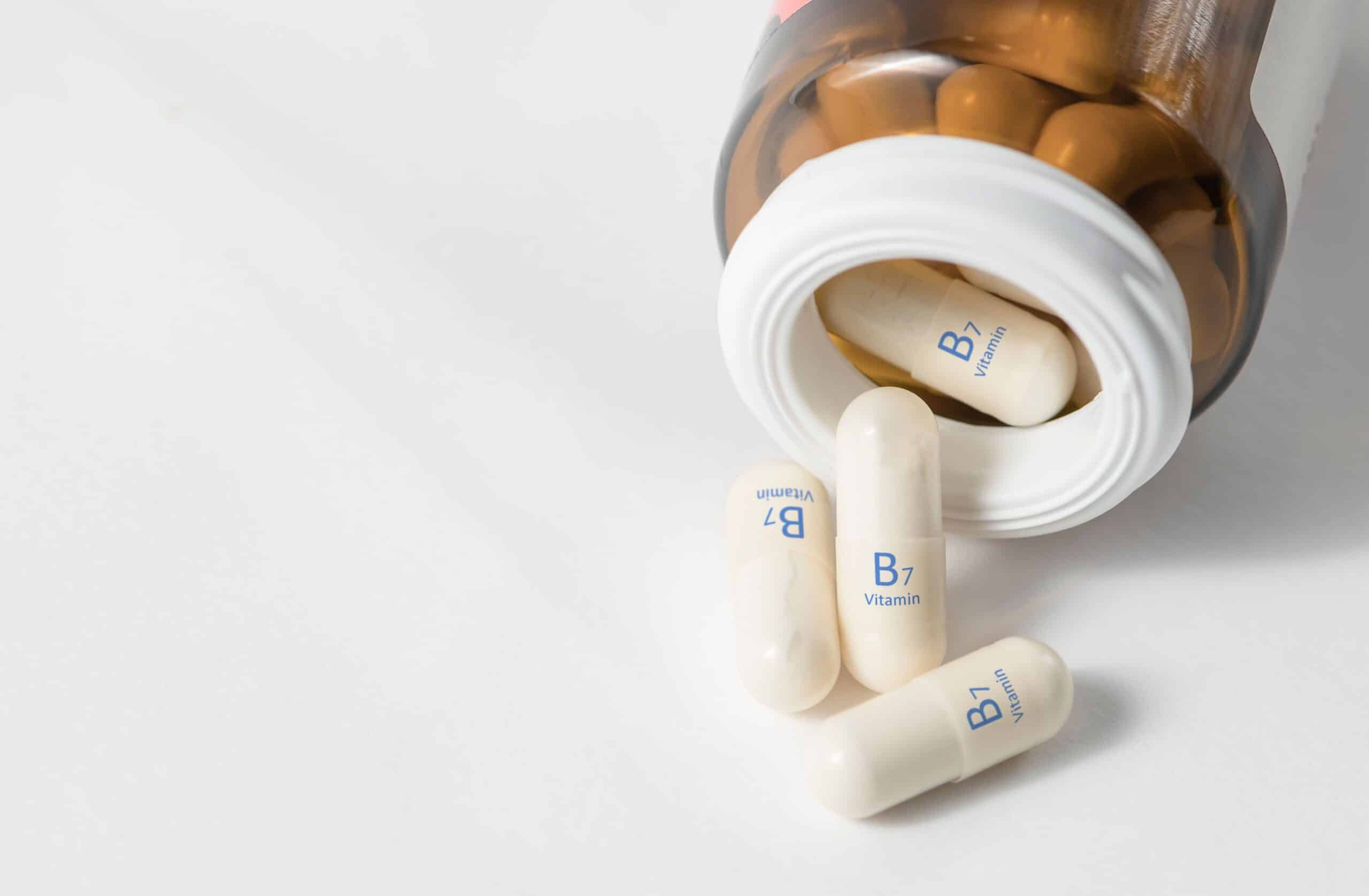
8+ Top private label biotin supplement manufacturers
Wonnda works with the best private label biotin supplement manufacturers. Here is a list of trusted suppliers from our network.
- Featured
Activ'Inside
4.7Private LabelContract ManufacturingFrance-based manufacturer producing powder supplements, tablets, gummies, available to brands sourcing biotin supplement.
- Country
- France
- MOQ
- 1000 units
- Lead time
- 8 weeks
- Featured
NorVita
4.7Private LabelContract ManufacturingEstonia-based manufacturer producing vitamin d3 spray, vitamin d3 baby spray, beauty collagen gel, available to brands sourcing biotin supplement.
- Country
- Estonia
- MOQ
- Lead time
- Featured
 Private LabelContract Manufacturing
Latvia-based manufacturer producing b-complex vitamin blends, mineral and vitamin blends, magnesium formulations, available to brands sourcing biotin supplement.
- Country
- Latvia
- MOQ
- Lead time
- Featured
 Private LabelWhite LabelContract Manufacturing
Hungary-based manufacturer producing powder supplements, animal supplements, vitamin supplements, available to brands sourcing biotin supplement.
- Country
- Hungary
- MOQ
- From 500 units for selected ready capsule formulas; 1,000 units for capsules, softgels and collagen products
- Lead time
- Featured
 Private LabelContract ManufacturingWholesale
Slovenia-based manufacturer with private label capability. European CDMO for food supplements, cosmetics, and pet food with patented BMT® microencapsulation technology and 30+ years of formulation ex
- Country
- Slovenia
- MOQ
- Contact for MOQs (project-dependent)
- Lead time
- 12 weeks
 Private LabelContract Manufacturing
USA-based manufacturer producing dietary supplements, pet supplements, pet grooming products, available to brands sourcing biotin supplement.
- Country
- USA
- MOQ
- Lead time
 Private LabelContract Manufacturing
Poland-based manufacturer producing classic energy drinks, bcaa beverages, fruit juices, available to brands sourcing biotin supplement.
- Country
- Poland
- MOQ
- Lead time
 Private LabelContract Manufacturing
Poland-based manufacturer producing hemp flower, hemp seed oil, cbd oil derivatives, available to brands sourcing biotin supplement.
- Country
- Poland
- MOQ
- Lead time
Compare MOQs and lead times
Quick side-by-side of the shortlist. Missing values shown as a dash.
| Supplier | Location | Types | MOQ | Lead time |
|---|---|---|---|---|
| Activ'Inside | France | PL · CM | 1000 units | 8 weeks |
| NorVita | Estonia | PL · CM | ||
| ERA Scientifico | Latvia | PL · CM | ||
| AYS Ltd. (All Your Solution) | Hungary | PL · White Label · CM · Packaging | From 500 units for selected ready capsule formulas; 1,000 units for capsules, softgels and collagen products | |
| Biostile Global | Slovenia | PL · CM · WS | Contact for MOQs (project-dependent) | 12 weeks |
| GP Labs | USA | PL · CM | ||
| Brandsparkle | Poland | PL · CM | ||
| HEMPOLAND sp. z o.o. | Poland | PL · CM |
Buyer criteria
- Micro-dose blend uniformity capability
The defining qualification for a biotin manufacturer is how it distributes a microgram-scale active evenly across hundreds of thousands of units. Ask specifically about the trituration or serial pre-blend method, how many dilution stages are used, and how uniformity is validated. A house that cannot describe a deliberate micro-dose strategy will produce a batch with hot spots, where some units are over-dosed and others under-dosed, failing label-claim testing on the very ingredient your brand is built around.
- Finished-product biotin assay against label claim
Confirm the manufacturer assays the actual biotin content of finished units against the label claim, sampled across the batch rather than once, since uniformity is the risk. A blend uniformity plan is only credible if proven by finished-product testing. Ask to see assay data demonstrating the dose holds across the run. Without it you cannot prove your micro-dose product delivers what the label says, which is the core compliance risk in this category.
- Gummy capability and vegan gelling, if relevant
If you want a gummy, which dominates the beauty-biotin segment, confirm the manufacturer runs gummy production in-house and, for vegan claims, uses a pectin or agar gelling system rather than gelatin. Gummies are a specialist confectionery-style process distinct from capsule filling, with their own uniformity challenge as the active must disperse through liquid gel. A capsule house that subcontracts gummies adds cost and removes your control over texture and dose accuracy.
- Co-active stack formulation
Biotin is rarely sold alone in beauty products, usually anchoring a hair-skin-nail stack with zinc, selenium, vitamin C or collagen. Confirm the manufacturer can formulate and evenly distribute multiple actives at very different inclusion scales simultaneously, and that each co-active is dosed to a meaningful, defensible level. Ask how uniformity is verified for both the trace biotin and the supporting actives, since a beauty stack that is fairy-dusted beyond the biotin misleads buyers.
- Clean-label and vegan substantiation
Beauty-from-within buyers often expect vegan, gelatin-free and clean-label products, so confirm the gelling agent, the absence of unwanted excipients, and any vegan or clean-label claims can be substantiated. For gummies, the difference between gelatin and a vegan pectin system is fundamental to the claim. Verify the formulation matches the positioning, since a vegan claim contradicted by a gelatin gummy or an undisclosed animal-derived ingredient is both a trust and a compliance failure.
- Gummy stability and texture control
Gummies degrade in texture and can lose actives or grow sticky if stability and moisture are not controlled, so confirm the manufacturer runs stability testing on the gummy format and packaging and controls moisture in production and packing. Ask for stability data on your actual product. A beauty gummy that clumps, hardens or sweats in the bottle fails the daily-use experience that drives reorder, regardless of how good the biotin assay looks on day one.
- GMP and certification scope for your format
Require current GMP and food-safety certification with a scope that explicitly covers your format, since gummy and capsule production are distinct processes. Confirm the certification covers confectionery-style gummy manufacturing if that is your format. Ask for representative assay and uniformity data rather than generic assurances. A certificate scoped only for capsules does not validate a gummy line, and format-process mismatch is a common gap behind quality failures.
Red flags
- No deliberate micro-dose uniformity method
If a manufacturer cannot describe a trituration or serial pre-blend strategy for distributing a microgram-scale active, it is likely throwing raw biotin into a large blender, which produces hot spots and wildly variable per-unit doses. This is the single most common failure in biotin manufacturing and it fails label-claim testing directly. A house without a clear micro-dose uniformity method should be ruled out, because uniformity is the entire technical challenge of the category.
- Biotin claim unproven by finished-product assay
A blend uniformity plan that is never verified by assaying finished units against the label claim is an assertion, not evidence. Because the dose is so small, uniformity must be proven across the batch with finished-product testing, not assumed. A manufacturer that does not assay the actual biotin content of finished units, sampled across the run, cannot prove your product delivers the dose it claims, and you inherit the label-claim failure.
- Gummy subcontracted or vegan claim on a gelatin base
A capsule-focused house that subcontracts gummies removes your control over texture, uniformity and dose accuracy and adds cost. Worse, a vegan or vegetarian claim on a product made with a gelatin gel base is false. Confirm gummy production is in-house and that the gelling system matches your claim, since gummies dominate beauty biotin and a vegan claim contradicted by gelatin is both a trust failure and a compliance exposure.
- Fairy-dusted hair-skin-nail co-actives
A beauty stack that lists zinc, selenium, collagen or vitamin C at token levels too low to matter inflates the panel without delivering function, leaning on the biotin alone while implying a fuller formula. Ask for the actual inclusion levels of every co-active. A hair-skin-nail product dressed up with trace supporting actives misleads beauty buyers who choose it for the stack, and invites claim scrutiny on the ingredients that are under-dosed.
- No gummy stability data
Gummies lose texture, sweat, clump or harden over shelf life if stability and moisture are not managed, and actives can degrade in the gel. A manufacturer that assigns a gummy shelf life with no stability data behind it is guessing on a format prone to texture failure. A beauty gummy that goes sticky or hard in the bottle fails the daily experience that drives reorder, so missing gummy stability data is a real risk, not a technicality.
- Certification scoped for the wrong format
A GMP or food-safety certificate scoped for capsule and tablet production does not validate a gummy line, which is a confectionery-style process with different controls. If a manufacturer offers gummies under a certification that covers only dry-blend formats, the quality system behind your product is not actually verified for what you are making. Confirm the certification scope matches your exact format, since this gap commonly hides behind an otherwise legitimate-looking certificate.
Manufacturing process
- 01
Dose definition and trituration planning
The brand fixes the biotin dose, commonly 5,000 or 10,000 micrograms, and the manufacturer plans how to distribute that trace quantity evenly across the batch. Because the active is microgram-scale in a milligram-scale unit, a trituration or pre-blend strategy is designed up front: the biotin is diluted into a carrier in controlled stages. This planning is the defining technical decision, since it determines whether every unit will meet the label claim.
- 02
Biotin procurement and verification
Pharmaceutical-grade biotin is procured to a specification for purity and potency and tested on receipt. The active is inexpensive and stable, so cost and supply are rarely limiting, but identity and potency verification still matter because the finished-product assay against label claim begins with a verified raw material. The grade and purity of the biotin are confirmed before it enters the uniformity-critical blending stages.
- 03
Trituration and serial pre-blending
The trace biotin is blended with a small amount of carrier, then that pre-blend is diluted into progressively larger quantities in stages, building up the full batch while keeping the active evenly dispersed. This serial dilution prevents hot spots where biotin concentrates in some units and is absent from others. The number of stages and the mixing validation at each step are what separate a uniform micro-dose batch from a non-compliant one.
- 04
Co-active blending
Supporting hair-skin-nail actives, zinc, selenium, vitamin C, collagen or others, are blended in to their own uniformity targets alongside the biotin. Some co-actives are bulk ingredients while others are also low-inclusion, so the blend must handle multiple ingredients at very different scales simultaneously. Blend uniformity is sampled top, middle and bottom to confirm both the trace biotin and the co-actives distribute evenly across the full batch.
- 05
Format production: capsule, tablet, or gummy
For capsules and tablets the uniform blend is encapsulated or compressed with in-process weight checks. For gummies, the biotin and co-actives are dosed into a cooked gel base (gelatin or a vegan pectin or agar system), deposited into molds, set, and demolded, which is a confectionery-style process with its own uniformity challenge since the active must distribute evenly through the liquid gel before setting. The format is matched to the brand's beauty positioning.
- 06
Gummy finishing or capsule polishing
Gummies are dried or cured to the target texture, then coated or sugar-sanded and tumbled to prevent sticking, while capsules and tablets are polished and metal-detected. Gummy texture, sweetness and the absence of stickiness drive the consumer experience that beauty buyers judge daily. Each format's finishing is tuned to deliver a product that looks and feels premium on a beauty shelf rather than like a clinical supplement.
- 07
Quality control and biotin assay
QC assays the biotin content of finished units against label claim, the critical test for a micro-dose product, along with co-active content, microbiological limits and, for gummies, moisture and texture. Because the dose is so small, uniformity is verified across the batch, not just on a single sample. Per-batch certificates of analysis document the biotin and co-active content, proving the label claim holds across the production run.
- 08
Packaging, labeling and lot coding
Units are bottled, blistered or pouched, labeled with the biotin dose, co-actives, any vegan or clean-label claims, lot code and expiry, then sealed and palletized. Gummies are packed to control moisture and prevent clumping. Lot codes trace finished product back to the biotin and co-active lots, supporting any uniformity or potency investigation, which matters precisely because the active is a trace ingredient.
Understanding biotin supplement private-label manufacturing
Manufacturing Challenges
Biotin supplements deliver a B-vitamin at a microgram-scale dose, while the capsule or gummy weighs hundreds of milligrams. This defines the primary manufacturing challenge: distributing a tiny quantity of active evenly across hundreds of thousands of units.
Manufacturers must use trituration or pre-blending, diluting the biotin into a carrier in stages. This avoids "hot spots" where some units are over-dosed and others under-dosed. Failure to do so leads to dose variation, which fails label-claim testing.
Market and Sourcing
Biotin finishing for the European market occurs in Germany, the Netherlands, Italy, Poland, and the UK. The biotin active is sourced from specialist vitamin producers globally.
The biotin supplement market was valued at approximately 3.72 billion USD in 2024 and is projected to reach about 10.60 billion USD by 2034, with an 11.04 percent CAGR (Precedence Research). This growth is driven by beauty-from-within and hair-health demand, particularly in gummy format.
MOQs and Lead Times
MOQs for biotin capsules or tablets can start at 3,000 to 10,000 units for a custom SKU. Gummies have higher MOQs due to their batch-cooking process. Lead times typically run for 6 to 12 weeks.
Cost drivers include:
- Format (gummies cost more than tablets or capsules)
- Co-actives such as zinc, selenium, collagen, or other hair-skin-nail ingredients
- Packaging
- Biotin itself, which is a minor line item
Differentiation and Quality
Private label biotin buyers are primarily beauty-from-within and hair-health D2C brands, general wellness brands, retailer beauty-supplement ranges, and gummy-led brands.
Differentiation points include:
- Format (gummy versus capsule)
- Supporting hair-skin-nail stack
- Clean-label and vegan positioning (gummies require a vegan gelling agent for vegan claims)
- Dose
Qualifying a partner on micro-dose blend uniformity, finished product assaying against the biotin label claim, and gummy capability is crucial. An inconsistent dose, regardless of attractive packaging, will not deliver an effective product.
How private label works for biotin supplements
Biotin private label is defined by a paradox: the hero ingredient is cheap and easy to buy, but delivering it accurately is technically demanding because the dose is microgram-scale in a milligram-scale unit. The brand sets the dose, the format, the supporting hair-skin-nail stack and the positioning, while the manufacturer's real work is distributing a trace quantity of biotin evenly across hundreds of thousands of units through trituration and serial pre-blending, then proving it with finished-product assay. Unlike a bulk-active product, the formulation challenge here is uniformity, not the active itself.
The briefing sequence reflects that. The dose and the micro-dose uniformity approach come first, because they determine whether the product can meet its label claim, followed by the format decision, capsule or gummy, which carries very different process and cost implications. The co-active stack and packaging follow. A brand that fixes a gummy format or a beauty stack before confirming the manufacturer can handle micro-dose uniformity and, for gummies, vegan gelling, often discovers the core capability is missing after committing.
What separates premium from commodity biotin
On a beauty shelf two biotin products can quote the same microgram dose and cost very differently, and the difference is in things the consumer cannot see: whether the micro-dose is genuinely uniform across the batch, whether the supporting stack is meaningfully dosed or fairy-dusted, and for gummies whether the texture, stability and vegan claim hold up. A commodity product leans on cheap biotin, an under-dosed stack, and a generic gummy with shaky uniformity. A premium product proves micro-dose uniformity with finished-product assay, doses its co-actives meaningfully, and delivers a gummy that stays good through shelf life.
Micro-dose uniformity is the quiet integrity line in biotin. Because the active is almost invisible in each unit, a manufacturer can produce a non-uniform batch that looks fine and fails label-claim testing, and the brand carries the risk. Brands that insist on a deliberate trituration method and finished-product assay deliver a consistent dose, while those that take uniformity on faith ship a product that may not contain what its label promises on the one ingredient it is built around.
Sourcing geography for biotin manufacturing
Biotin finishing for the European market is handled by capsule, tablet and gummy houses across Germany, the Netherlands, Italy, Poland and the UK, with gummy specialists concentrated where confectionery-style supplement production has developed. The biotin active itself comes from specialist vitamin producers globally and is inexpensive and widely available, so the finishing capability, especially micro-dose uniformity and gummy manufacturing, matters far more to sourcing than the origin of the active.
For EU brands, finishing within Europe simplifies regulatory documentation, shortens lead times, and supports clean-label and vegan positioning, while gummy capability in particular should be confirmed in-house rather than subcontracted. The geography decision for biotin is less about the commodity active and more about finding a finisher that genuinely runs the format you need, with the uniformity discipline and, for gummies, the vegan gelling experience your positioning requires.
Cost structure breakdown
The biotin cost stack is unusual because the active is a minor line item, so format and co-actives dominate. Gummy manufacturing costs more than dry-blend capsules or tablets, the hair-skin-nail stack can add meaningful cost, and packaging follows, with the biotin itself near the bottom of the bill of materials.
- Format: the main cost lever; gummies cost more than capsules and tablets and dominate the beauty segment.
- Co-actives: zinc, selenium, collagen, vitamin C and others, dosed to meaningful levels, often costing more than the biotin.
- Packaging: moisture-controlled packaging for gummies, plus bottles or blisters and artwork minimums.
- Processing and QC: trituration, uniformity validation and finished-product assay, which are the real technical cost of the category.
- Biotin active: a minor line item, cheap and widely available.
Sourcing discipline means recognizing that the active is almost free, so the real value and risk lie in micro-dose uniformity, an honestly dosed co-active stack, and a stable, well-made format, rather than in the biotin price itself.
Compliance and certification landscape
Biotin supplements sit under food-supplement regulation in the EU, which sets permitted forms, maximum levels and label-claim rules, with notification requirements that vary by member state. Authorized claims, such as biotin contributing to the maintenance of normal hair and skin, may be used only as permitted, which underpins the beauty positioning. Manufacturers should hold GMP and food-safety certification with a scope that explicitly covers the format produced, since gummy manufacturing is a confectionery-style process distinct from dry-blend capsules.
Micro-dose uniformity is effectively a compliance issue as well as a quality one, because the label claim must hold across the batch, and finished-product assay is the proof. Vegan, gelatin-free and clean-label claims must be substantiated by the formulation, particularly the gelling agent in gummies, and co-active claims must meet the authorized-claim rules. A manufacturer experienced in your target markets will flag maximum-level limits, claim constraints, the high-dose biotin lab-test interference note, and the documentation needed for vegan and beauty claims before they become a relabeling or enforcement problem.
Trends shaping the biotin category
Biotin's growth is driven almost entirely by beauty-from-within, and within that by the gummy format, which has reframed a clinical B-vitamin as an enjoyable daily beauty ritual aimed at a younger, social-media-influenced audience. Hair-growth and hair-health positioning leads, with skin and nail benefits close behind, and the category has moved decisively toward multi-ingredient beauty stacks rather than standalone biotin, since a fuller hair-skin-nail formula commands a higher price and a stronger story than a single vitamin.
That shift raises the importance of two capabilities: meaningful co-active dosing and credible gummy manufacturing. Brands increasingly differentiate on the quality and dose of the supporting stack, zinc, selenium, collagen, keratin and botanicals, rather than on biotin alone, which rewards a manufacturer that can formulate a transparent, well-dosed beauty blend. Vegan and clean-label positioning is also growing strongly in beauty, making plant-based gummy gelling systems and clean ingredient decks a competitive requirement rather than a nice-to-have. At the same time, sophisticated buyers have begun to question very high biotin doses and to value honesty about what the active actually does, which favors brands that build a genuine, well-formulated stack over those leaning on a large headline microgram number. A manufacturer with real micro-dose uniformity discipline, in-house vegan gummy capability and honest stack formulation is positioned for where beauty biotin is heading.
Industry insights
Frequently asked questions
Why is blend uniformity such a big deal for biotin?+
How do I know every gummy or capsule actually contains the labeled biotin?+
Should I make my biotin product a gummy or a capsule?+
Can I make a vegan biotin gummy?+
What co-actives are typically combined with biotin?+
What MOQ should I expect for a biotin product?+
Is a higher biotin dose like 10,000 mcg better than 5,000 mcg?+
Do biotin gummies have stability problems I should worry about?+
Explore adjacent product types
Get a vetted shortlist of biotin supplement suppliers in 48 hours.
Post a brief on Wonnda. Free, no commitment. We match you with vetted manufacturers that fit your MOQ, format and market.