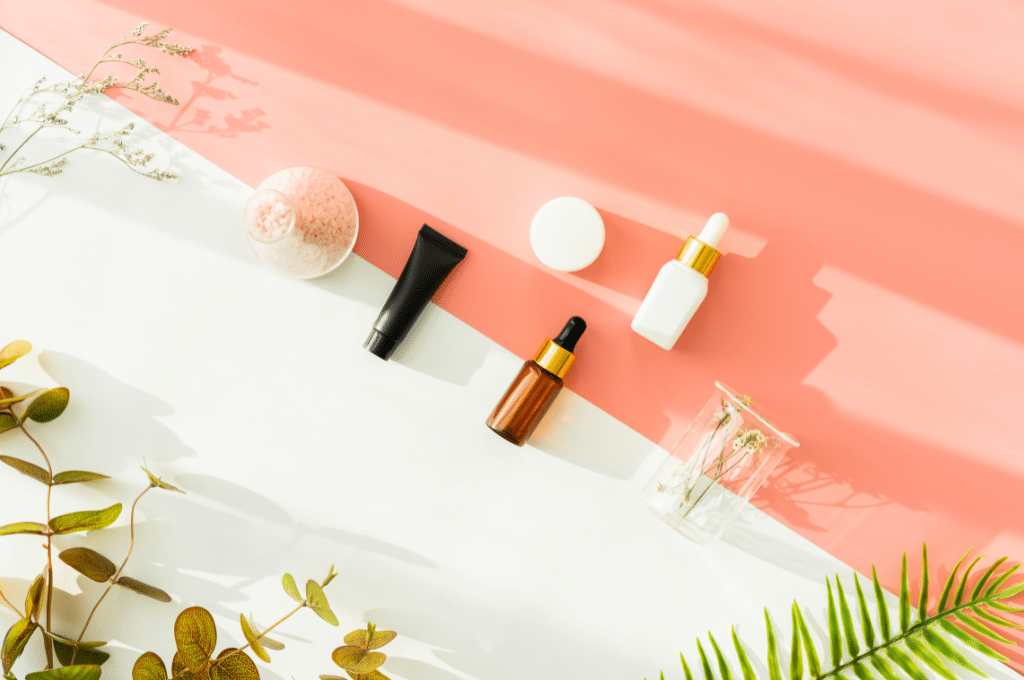
Top 10 Skincare Trends for 2027, Backed by Sourcing Data


We looked at what brands asked skincare manufacturers for on Wonnda in 2026 and checked those signals against market data and the EU rules that take effect in 2027. Below are the 10 skincare trends that matter for product development in 2027, plus the topics that are losing demand.
Key Takeaways
- Skincare is growing on Wonnda: the share of buyers sourcing skincare grew by more than a third in 2026 compared with 2025. Body care and sun care gained the most.
- Specific actives are rising: briefs for peptides, barrier ingredients and fragrance-free formulas grew, while generic "anti-aging", stand-alone "vegan" and hyaluronic acid briefs declined.
- PDRN reached the mass market: L'Oréal Paris, Dior, The Ordinary and Primark all launched PDRN products in 2026, mostly with plant-based or biotech PDRN.
- Certification is replacing "natural": briefs that require COSMOS, ECOCERT or NATRUE certification nearly doubled, while generic "natural" wording declined.
- Two EU deadlines fall in 2027: vitamin A limits fully apply from 1 May 2027, and rinse-off products must be free of intentionally added microplastics from 17 October 2027.
Methodology: How We Measured Skincare Demand on Wonnda
Wonnda is a B2B sourcing platform where brands and retailers post sourcing requests and search for private label and contract manufacturers. For this article, we compared anonymised sourcing requests and on-platform searches from 2026 with the same period in 2025.
How we counted:
- Buyers, not requests: each buyer company counts once per signal, so one brand sending the same brief to many manufacturers does not distort the result.
- Shares, not volumes: we compare the share of skincare buyers or searchers who mention a topic. We report relative changes only, never absolute numbers.
- Small niches are flagged: where a signal comes from a small base, we say so.
We then compared these signals with published market data from Circana, Mintel, Kearney and Cosmetics Business, and with EU regulation, because the rules decide which formulas and claims you can sell in the EU.
Fastest-Growing and Declining Skincare Categories on Wonnda (2026 vs. 2025)
The table below shows how the share of skincare buyers on Wonnda asking for each category, ingredient or requirement changed in 2026 compared with 2025. The data comes from anonymised sourcing requests and on-platform searches by brands and retailers on Wonnda, with each buyer company counted once.
| Category on Wonnda | Change in buyer share, 2026 vs. 2025 | What it means |
|---|---|---|
| Share of buyers sourcing skincare | Up by more than a third | Skincare makes up a larger part of private label launches |
| Body care within skincare | From just over 1 in 4 to more than 1 in 3 buyers | Body care is the fastest-growing skincare segment |
| Sun care within skincare | Share up by roughly a third | SPF is becoming a daily product |
| Peptides in skincare briefs | Up by about 70% | Peptides are the most requested active |
| Ceramides and barrier repair | Up by about 60% | Barrier claims are now mainstream |
| Fragrance-free briefs | Up by about 80% | Low-irritation formulas are a standard request |
| COSMOS, ECOCERT or NATRUE required | Nearly doubled | Buyers want verifiable natural claims |
| "Vegan" as a brief requirement | More than halved | Vegan alone no longer sets a product apart |
| Hyaluronic acid, topical collagen, retinoids | Down by a third to a half | Established actives need a new angle |
The 10 Skincare Trends for 2027
1. Body Care Adopts Face-Care Actives
Body care is the fastest-growing skincare segment on Wonnda. It went from just over one in four skincare buyers in 2025 to more than one in three in 2026, the biggest shift of any segment. Body lotions, body oils and body butters all gained.
Market data shows the same direction. Circana figures cited by Cosmetics Business put European body care value up 11% in the year to September 2026, with body serum sales up 16% in Europe and 27% in the UK. Firming products drive part of this: US searches for "body firming cream" rose 45% year on year, partly linked to skin quality concerns after GLP-1 weight loss.
For your sourcing:
- Expect briefs that bring face-grade actives (peptides, niacinamide, vitamin C, ceramides) into body formats.
- Larger fill sizes change the economics. Check active stability, preservation and cost per millilitre early.
- Firming and skin quality claims need substantiation, so plan testing into your timeline.
Related: body oil manufacturers, body butter manufacturers and our guide to GLP-1 companion products.
2. SPF Becomes a Daily Skincare Step
Sun care's share of skincare buyers on Wonnda grew by roughly a third, with briefs for both sunscreen and after-sun. Sun-related searches grew at a similar rate. Tinted SPF and SPF sticks appear in both briefs and searches.
Circana reports that prestige sun protection in the EU Big 5 grew 20% in value in Q1 2026, typically one of the least sunny periods of the year. Prestige facial sun care in Europe grew 26% in the 12 months to March 2026.
For your sourcing:
- SPF and UVA claims require standardised testing. In the EU, UVA protection should be at least one third of the labelled SPF.
- Testing adds time and cost, so plan a longer development timeline than for a standard moisturiser.
- Daily-use SPF is chosen on texture and finish. Describe the sensory profile in your brief as precisely as the protection level.
3. Peptides Become the Most Requested Active
The share of skincare buyers on Wonnda asking for peptides grew by about 70%, and peptide searches more than doubled as a share of all searches. Examples from 2026 briefs: gel moisturisers with multi-peptide complexes, peptide serums and peptide hand care ranges.
Cosmetics Business lists peptides among the established actives that brands are reformulating for 2026, and Trendalytics names peptides, PDRN and ectoin as biotech ingredients with strong adoption across skincare and body care.
For your sourcing:
- Name the peptide by INCI and the target concentration in your brief.
- Peptides are expensive raw materials. Calculate cost in use before you set the retail price.
- Ask the manufacturer for stability data and consider airless packaging for sensitive actives.
Related: face serum manufacturers.
4. Barrier Repair Goes Mainstream
Briefs mentioning ceramides or barrier repair grew by about 60% on Wonnda. Kearney's 2027 Beauty Outlook finds that consumers now set specific goals such as a stronger skin barrier and judge products on results over time. Searches for beta-glucan, a barrier-supporting polysaccharide, rose 51% according to Glimpse data cited by Cosmetics Business.
For your sourcing:
- Barrier formulas work best as a combination (ceramides, cholesterol and fatty acids) rather than a single ingredient.
- Strong exfoliating acids and barrier claims rarely fit in the same product.
- "Supports the skin barrier" is a claim. Measurements such as transepidermal water loss (TEWL) back it up.
Related: face cream manufacturers.
5. PDRN and Regenerative Actives Reach the Mass Market
PDRN was almost absent from skincare briefs on Wonnda in 2025. In 2026 it became a recurring request, from PDRN serums to hydrogel masks and combinations with NAD+. It is still a small niche, but the fastest-growing one in our data.
Cosmetics Business tracked 2026 PDRN launches from L'Oréal Paris, The Ordinary, Medik8, Clinique and Dior, plus a seven-product Primark range starting at £2.50. Most of them use plant-based or biotech PDRN instead of the original salmon-derived version. Mintel reports that PDRN launches have accelerated since 2024.
For your sourcing:
- Decide on the source early. Salmon-derived and plant or biotech PDRN differ in vegan positioning, supply and documentation.
- Keep claims modest. Dermatologists point out that the evidence for topical PDRN is weaker than for injectable skin boosters.
- PDRN products range from budget to luxury price points, so the ingredient name alone does not position your product. The full formula has to.
6. Fragrance-Free Formulas Gain Ground
Fragrance-free briefs grew by about 80% on Wonnda, while "sensitive skin" as a target audience appears less often. Brands now specify the formula instead of naming a skin type.
EU labelling rules add another reason. Regulation (EU) 2023/1545 requires 56 additional fragrance allergens to be named individually on the label (82 in total) above 0.001% in leave-on and 0.01% in rinse-off products. New products need the extended labelling since 31 July 2026, and products already on the market may be sold until 31 July 2028.
For your sourcing:
- Fragrance-free simplifies labels and lowers allergen risk, but the base scent of your raw materials becomes noticeable. Test the sensory profile early.
- If you keep fragrance, ask your manufacturer and fragrance supplier for an allergen declaration under the new list.
7. Certified Natural Replaces Generic "Natural"
The share of skincare briefs requiring COSMOS, ECOCERT or NATRUE certification nearly doubled on Wonnda. At the same time, generic "natural" or "organic" wording dropped by about a quarter, and "vegan" as a brief requirement more than halved.
Buyers want standards they can verify and print on pack. Vegan is now expected and no longer sets a product apart.
For your sourcing:
- Certified natural products need a certified manufacturing site. Ask for the facility certificate before you discuss formulas.
- Certification limits your choice of preservatives and some actives. Align claims and formula before development starts.
- Budget time and cost for certifying the finished product.
Related: clean beauty brands and products and German skincare brands.
8. Measurable Claims Replace Generic Anti-Aging
Generic "anti-aging" wording in skincare briefs dropped by about 40% on Wonnda, while briefs naming a specific mechanism, such as barrier repair or peptides, grew. Established actives are under pressure too: hyaluronic acid, topical collagen and retinoids all appear less often in new briefs.
Kearney describes credible proof as "the price of entry" and finds that more than a third of consumers use clinical or aesthetic services monthly. Mintel reports that three quarters of US consumers want beauty brands to provide more scientific evidence. Cosmetics Business names products that support aesthetic treatments ("procedural skin care") as a 2026 trend.
For your sourcing:
- Define the claim first, then the test plan. EU claims must meet the common criteria of Regulation (EU) No 655/2013, including evidential support.
- Ask manufacturers whether they have efficacy data on existing base formulas. It can save you a full test round.
- For established actives like hyaluronic acid or vitamin C, differentiate on delivery (encapsulation, formats) rather than on percentage.
9. Patches and Targeted Formats
Patch-related searches on Wonnda nearly tripled as a share of all searches (from a small base), and pimple patches and functional skin patches appeared as request categories for the first time in 2026. Mintel sees microneedle formats growing in face and neck care, and Cosmetics Business tracks spicules, a marine-sponge ingredient marketed as "microneedling in a bottle".
For your sourcing:
- Hydrocolloid and microneedle patches need specialised production lines, and many skincare manufacturers do not offer them.
- Depending on the claim, some patches fall under medical device rules instead of cosmetics regulation. Clarify the regulatory route before you design the product.
Related: white label vitamin and wellness patches.
10. Ingestible Beauty Joins Skincare Ranges
The Whole Foods 2027 trend report, covered by Inc., names "beau-trition" (consumable skincare) as one of next year's biggest trends, with products like collagen jelly sticks, skin glaze gummies and drinkable sunscreen supplements. On Wonnda, some brands already brief topicals and ingestibles together, for example a collagen gummy next to a face serum. Collagen searches on Wonnda stayed stable, and many of them refer to ingestible formats such as powders, coffee and gummies.
For your sourcing:
- Ingestibles and cosmetics follow different rules (food supplement law and health claims vs. cosmetics regulation) and usually need different manufacturers.
- One brand story can cover both, but plan for two supply chains.
Related: top supplement trends.
Trends Losing Demand in 2027
Based on Wonnda sourcing data, these topics lost share in 2026:
- Hyaluronic acid as the main active: down by about a third in skincare briefs.
- Topical collagen: about half as present in briefs as in 2025. Collagen demand is shifting to ingestibles.
- Retinoids: down by about 40% in briefs, which also reflects the new EU vitamin A limits.
- "Vegan" as the main claim: more than halved. Buyers still expect it, but it no longer differentiates.
- Sheet masks and eye pads: face masks lost share within skincare, and eye pad requests almost disappeared.
- Beef tallow: searches roughly doubled from a small base, but the share of buyers posting tallow briefs went down. Interest has not turned into sourcing at scale. If you still plan a tallow line, see our guide to private label beef tallow manufacturers in Europe.
EU Compliance Calendar for Skincare Brands (2026 to 2027)
These EU rule changes affect skincare formulas, labelling and packaging. Dates come from the official EU regulations named in the table.
| Date | Rule | What changes |
|---|---|---|
| Since 12 August 2026 | PPWR, Regulation (EU) 2025/40 | The new EU packaging regulation applies. Recyclability and labelling requirements phase in over the next years. |
| Since 31 July 2026 | Regulation (EU) 2023/1545 | New products need the extended fragrance allergen labelling. Older stock may be sold until 31 July 2028. |
| 1 May 2027 | Regulation (EU) 2024/996 | Products with vitamin A (retinol, retinyl acetate, retinyl palmitate) above the limits can no longer be sold: max. 0.3% retinol equivalent in face, hand and other products, 0.05% in body lotions. |
| 17 October 2027 | Regulation (EU) 2023/2055 | Rinse-off products with intentionally added microplastics can no longer be placed on the market. Leave-on products follow in October 2029, make-up and lip products in October 2035. |
For more detail, see our guides to the EU Cosmetics Regulation and the PPWR.
How to Brief a Manufacturer for a 2027 Skincare Launch
- Name the active precisely: INCI name and target concentration, not only "with peptides" or "with PDRN".
- Define the claim before the formula: firming, barrier or SPF claims each need their own test plan.
- List required certifications: COSMOS, NATRUE, ECOCERT or vegan, and confirm the facility already holds them.
- Check EU compliance up front: vitamin A limits, fragrance allergen labelling and microplastics in rinse-off products.
- Agree on packaging early: airless for sensitive actives, and materials that work under the PPWR.
- Plan realistic timelines: testing (especially SPF) and certification add time to development.
To compare manufacturers that already produce these formats, post your requirements on Wonnda and get matched with suitable private label skincare manufacturers in Europe, or read our step-by-step guide on how to start a skincare line.
FAQ: Skincare Trends 2027
What are the biggest skincare trends for 2027?
The biggest skincare trends for 2027 are body care with face-grade actives, daily SPF, peptides, barrier repair, PDRN and other regenerative actives, fragrance-free formulas, certified natural skincare, measurable claims, targeted patches and ingestible beauty. On Wonnda, body care and sun care gained the most share of skincare sourcing activity in 2026.
Which skincare ingredients are trending for 2027?
Peptides, ceramides and other barrier ingredients, PDRN (mostly plant-based or biotech-derived), beta-glucan and vitamin C in body care are gaining. Hyaluronic acid, topical collagen and retinoids appear less often in new sourcing briefs.
What is PDRN in skincare?
PDRN (polydeoxyribonucleotide) is made of DNA fragments, traditionally derived from salmon and now increasingly from plants or biotech processes. It became popular through Korean skin boosters and is now used in serums, creams and masks. The evidence for topical use is weaker than for injectables, so brands should keep claims modest.
What changes for retinol products in the EU in 2027?
From 1 May 2027, cosmetics with vitamin A above the limits of Regulation (EU) 2024/996 can no longer be sold in the EU. The maximum is 0.3% retinol equivalent in face, hand and other products and 0.05% in body lotions. New products have had to comply since 1 November 2025.
Is body care a growing skincare category?
Yes. Circana reports European body care value up 11% in the year to September 2026, and on Wonnda body care grew from just over a quarter to more than a third of skincare buyers.
How does Wonnda know what brands are sourcing?
Brands and retailers post sourcing requests and search for manufacturers on Wonnda. We analyse anonymised requests and searches, compare the same periods year on year, count each buyer company once and report relative changes only.
Related articles
GLP-1 Companion: What It Is, Examples and Why It Matters for Brands

Top 10 Supplement Trends for 2027, Backed by Sourcing Data

PPWR Regulation: What EU Brands Must Do by 2030
White Label Mushroom Coffee: The 2026 Sourcing Guide for Brands

Made in USA Cookware: Why More Brands Are Reshoring Production
10+ Best European Supplement Brands in 2026

10+ Best German Supplement Brands in 2026

Top 5 D2C Trends to Watch for in 2026