How To Find Private Label Skincare Manufacturers in 9 Steps

Key Takeaways:
Types of skincare manufacturers
- White label skincare: pre-made products, limited customization
- Private label skincare: customize ingredients, scents, textures
- Custom manufacturers: most flexible for unique formulations
Choosing the right manufacturing option
- Choose private label for faster market entry and lower upfront costs
- Minimum order quantities (MOQs) vary between products and suppliers, but smaller brands can negotiate with manufacturers
Selecting a manufacturer
- Consider experience, certifications, regulatory compliance, scale and flexibility, and financials
- Evaluate manufacturers through past projects and product samples
- Utilize tools like Wonnda to simplify manufacturer selection and connect with quality suppliers
White Label, Private Label, or Custom Manufacturing of Skincare Products – Understanding the Manufacturing Options
In the private label cosmetics industry, there are primarily three approaches to product manufacturing: white label, private label, and custom manufacturing. Many companies struggle to understand the difference between private label vs. white label, which impacts costs, lead times, customization options and minimum order quantities.
What is White Label Skincare?
White label skincare products are pre-made by manufacturers and can be branded only through the packaging—the formula stays the same and can be offered to other companies. This allows for the quickest market entry with low minimum order quantities.
What is Private Label Skincare?
Private label skincare products are usually based on a standard formula, but allow brands to customize ingredients, scents, and textures. Substantial changes to the base formula may require additional testing and compliance checks, adding to the time and cost. Manufacturers often handle these requirements and assess when further testing is needed.
Private Label Skincare or Custom Product Manufacturing?
Custom manufacturing involves creating a product from scratch, offering the highest degree of differentiation and brand ownership, but requires a significant investment of both time and money. To decide between private label and custom product manufacturing, consider the degree of customization your brand requires: private labels offer limited adaptability, while custom manufacturing allows for the development of an entirely new formula through rigorous research and testing.
How to Find the Best Private Label Skincare Manufacturer for Your Brand in 9 Steps
Finding a private label skincare manufacturing partner goes further than cost and delivery—it is about forming a long-term relationship that impacts your brand's reputation and requires alignment with your values and shared responsibility for product quality.
1. Use Digital Sourcing Platforms Like Wonnda
Researching the landscape of private label skincare manufacturers can be complex and time-consuming, but Wonnda simplifies the process by connecting you to the right partners for white label, private label, or contract manufacturing. With hundreds of vetted manufacturers, Wonnda caters to various needs—from small startups to established retailers. Choosing Wonnda reduces research times and provides an end-to-end solution for digitally sourcing products.
2. Understand the Manufacturer's Experience and Expertise
When selecting a cosmetic manufacturer, it’s crucial to find one that specializes in both the type of product form and the specific ingredients your brand requires, as the expertise varies substantially between the production of solid skincare and creams and liquids. Ensure your chosen partner has a proven track record not just in your specific product type but also in the ingredients that are crucial to your brand's uniqueness.
3. Check Supplier Quality
Manufacturing Certifications can be a reliable indicator of a manufacturer’s commitment to quality. Look for accreditations such as Good Manufacturing Practices (GMP), ISO Certifications, or ECOCERT for natural and organic certified products. The certification requirements can differ between conventional and natural cosmetics, so make sure the manufacturer's certifications align with your product type.
4. Understand Regulatory Compliance & Certifications
Understanding your target market is essential when assessing a manufacturer's capabilities in regulatory compliance capabilities, since working with a Chinese manufacturer may pose a risk due to potential non-compliance with EU standards. Conversely, European manufacturers may not be well-versed in complying with U.S. regulations. Nearshoring production to Europe is a sensible choice for skincare products, as European skincare manufacturers underlie one of the strictest cosmetic regulations in the world.
5. Understand Scale & Flexibility of Production
Your choice of manufacturer should be guided by your business stage—first-time founders may benefit from smaller manufacturers to ease scaling and lower initial costs. As your brand grows, you can evaluate transitioning to a larger private label skincare manufacturer. Established brands should ensure their chosen private label manufacturer has sufficient capacity to meet projected sales volumes without compromising quality or lead times.
6. Consider Your Financials
Being thorough in your financial planning will not only make the process of selecting a manufacturer smoother but also set a strong foundation for a fruitful, long-term partnership:
Be Clear About the Budget: Be transparent about your financial limitations to help find a manufacturer that fits your budget.
Understand Your Pricing Strategy: Know your target retail price and work backwards to understand your margins and target production price.
Price Transparency: Ensure you understand what the quoted price includes, such as whether packaging, market registration fees, or shipping are a part of the cost.
Financing Upfront: Before you even begin negotiations with a manufacturer, have a solid business case ready. This includes understanding your cash flow, projected sales, and other financial metrics that will be crucial for the partnership.
Investment and Inventory Financing: Depending on the scale of your project, you might need external investment or inventory financing. Wonnda collaborates with financing partners that can help fund your production, adding an extra layer of financial security and convenience.
7. Evaluate Manufacturer's Past Work
Before committing to any manufacturer, it's essential to evaluate their past work and capabilities by viewing their detailed profiles, accessing their certifications, and assessing their previous products—all available on Wonnda's centralized platform.
8. Order Samples
Sampling is a critical step in the selection process, allowing you to physically assess the quality, texture, and other essential aspects of your product. This is particularly crucial in the skincare industry for ensuring product efficacy, safety, and quality. On Wonnda, you can streamline this process by ordering samples directly from manufacturers, saving you time and allowing you to manage the evaluation step digitally.
9. Find the Right Packaging
Through its aesthetic and functionality, packaging plays a significant role in the success of a skincare product. You may also want to consider working with alternative suppliers for packaging, such as sustainable packaging suppliers, which can be found on Wonnda.
When choosing a manufacturer, inquire about their packaging options:
- Manufacturer's Catalog: Many manufacturers have their own packaging catalogs. Look through these to see if they align with your brand image and functional requirements.
- Packaging Constraints: Understand that manufacturers may have limitations when it comes to filling certain types of packaging. Make sure to clarify these constraints upfront.
- Primary vs. Secondary Packaging: Consider whether you'll need both primary and secondary packaging. Primary packaging directly houses the product, while secondary packaging serves as an additional layer for marketing and protection.
- Alternative Suppliers: If the manufacturer’s packaging options don't meet your needs, you can always look for alternative packaging suppliers. Wonnda provides a range of vetted suppliers for packaging, allowing you to find one that perfectly complements your product.
Brands in Europe must comply with EU Cosmetics Regulation, requiring thorough safety assessments and documentation, along with registration in the Cosmetic Products Notification Portal (CPNP). Additionally, brands planning to sell in the United States must also comply with the U.S. Food and Drug Administration (FDA) requirements. New ingredients not previously recognized as safe and effective require a submission of scientific proof to the FDA for review. Opting for custom product manufacturing provides greater control over product formulation, but requires thorough navigation of complex regulations in the EU and U.S.
Why Choose a Private Label Skincare Manufacturer?
Skincare private label manufacturing offers the dual benefit of low upfront costs and quick market entry. By partnering with an existing manufacturer, brands can leverage established infrastructures and expertise and avoid the complex and costly process of setting up a production line from scratch. Moreover, private label skincare manufacturing offers scalability and flexibility that's hard to match. As your brand grows, you can easily introduce new variations or expand your product line by capitalizing on the manufacturer’s existing capabilities.
This means you're not locked into a long, complex development process each time you want to respond to market trends or consumer demand. In addition, private label manufacturers often have established relationships with suppliers for ingredients and packaging, allowing for more cost-effective and reliable sourcing. This network of resources further accelerates your time-to-market and reduces operational hassles, freeing you to focus on other critical aspects of your business like marketing, sales, and customer engagement.
What Are The Minimum Order Quantities Of Private Label Skincare Manufacturers?
Minimum order quantities (MOQs) can vary significantly by product type, manufacturer capability, packaging complexity, ingredients, and target price. Many manufacturers require at least one palette for production to ensure cost-effectiveness. Larger orders could bring economies of scale, while smaller orders potentially result in higher per-unit costs. Balancing brand needs with manufacturer's MOQ requirements best ensures a sensible financial and operational partnership.
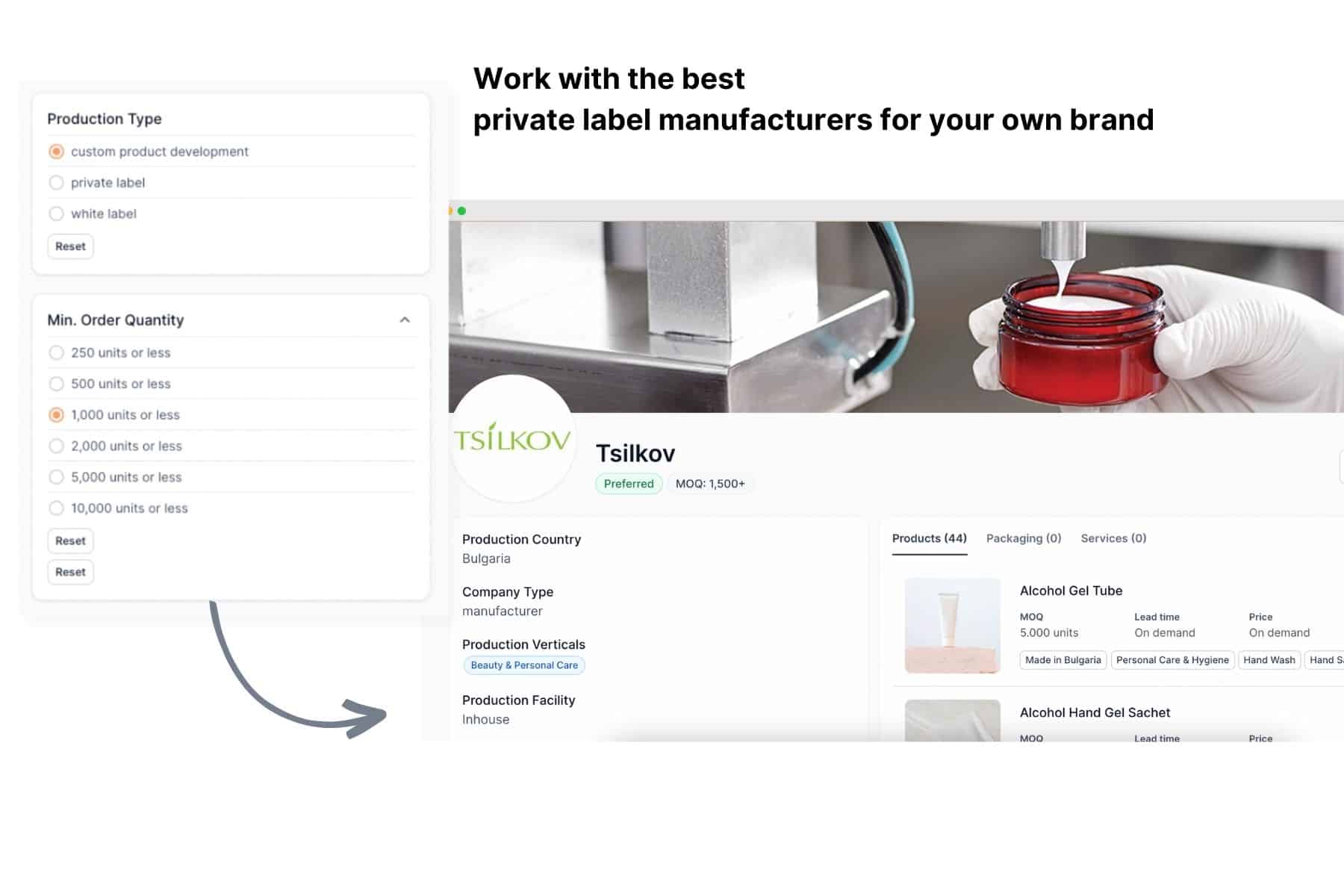
Private label manufacturers through Wonnda's platform
Using Wonnda vs. Traditional Ways of Sourcing Products & Suppliers
Platforms like Wonnda can significantly simplify your search for the right manufacturer by providing a curated list of vetted options and tools for managing sourcing activities and supplier management. Wonnda offers you a one-stop solution from initial discovery to product launch with the best private label skincare manufacturers.
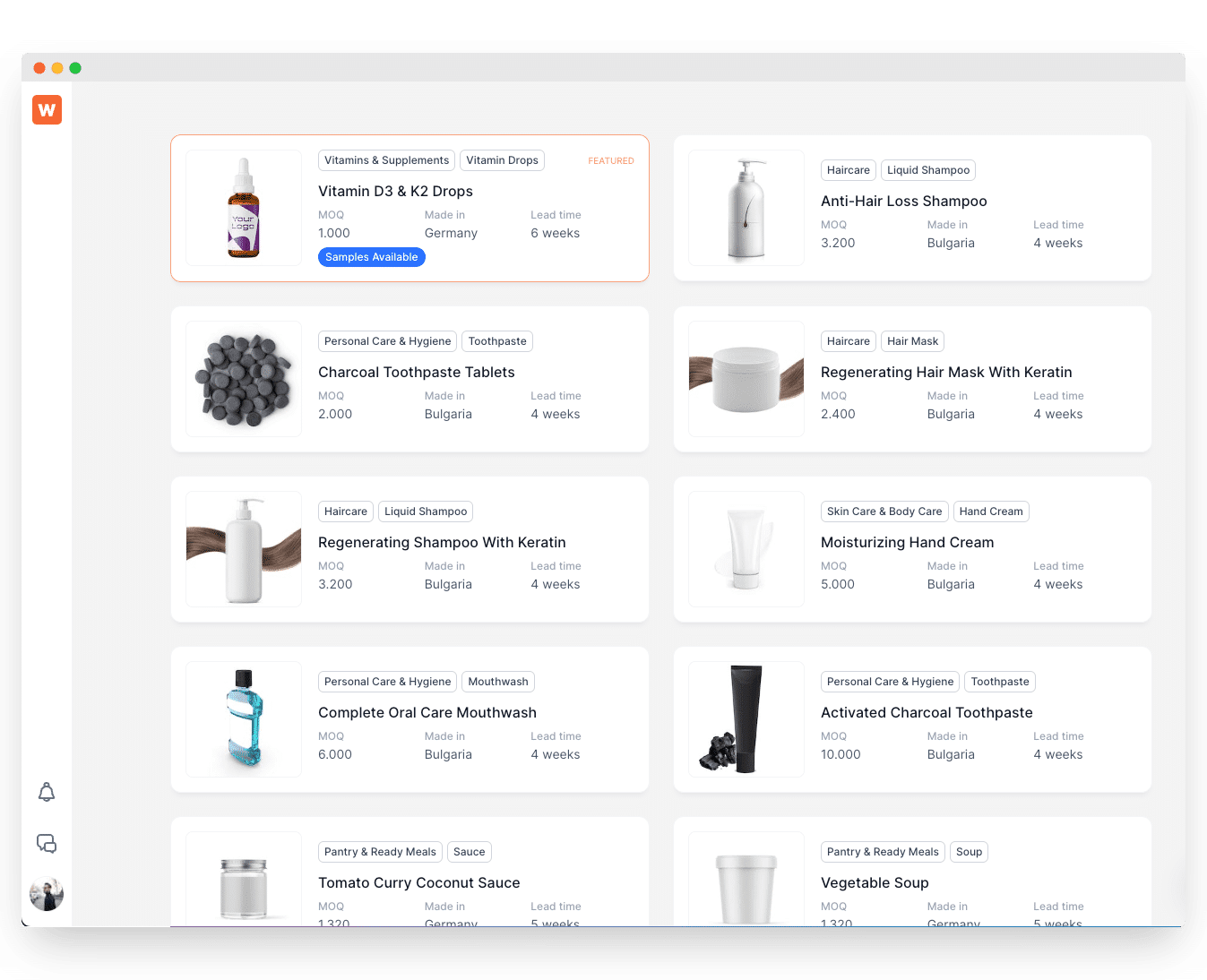
Sourcing products & suppliers with Wonnda
Here's why choosing Wonnda can offer a superior experience compared to traditional forms of sourcing:
- Efficiency: Wonnda streamlines sourcing by connecting you directly to vetted manufacturies, eliminating the long chain of intermediaries.
- Transparency: Traditional sourcing methods may lack transparency in pricing, lead times, and production capabilities, but Wonnda provides this information for more informed decision-making.
- Risk Mitigation: Vetting manufacturers in a traditional setup relies on word-of-mouth or costly inspection, while Wonnda offers a roster of pre-vetted manufacturers, reducing quality and compliance risks.
- One-Stop-Shop: Traditional methods require the separate management of sample ordering, regulatory compliance, and shopping, but Wonnda centralizes these activities into an end-to-end solution.
- Financial Support: Traditional sourcing methods usually lack financing options, while Wonnda collaborates with financing partners to offer flexible funding solutions for production.
Choosing Wonnda for your private label skincare manufacturing needs not only modernizes your sourcing activities but also offers a range of benefits that can give your brand a competitive edge.
Conclusion
Choosing the right private label skincare manufacturer is a multi-faceted process that requires thorough research, due diligence, and sometimes even a bit of trial and error. By following the steps outlined in this guide, you’re well on your way to establishing a productive, long-term partnership with a manufacturer that aligns with your brand’s needs and aspirations.
Related articles
Best Clothing Manufacturers in Europe - 2026 Guide by Wonnda
10+ Best Beauty Manufacturers in the US (2026 List)

How to Find a Manufacturer for Your Product (2026 Guide)

European Suppliers: How to find the best EU suppliers in 2026

10 Best European Sourcing Agencies To Find Suppliers & Launch Your Product
How to Start a Premium Private Label Cookware Brand: The Complete Guide
5+ Best Private Label Nonstick Cookware Manufacturers
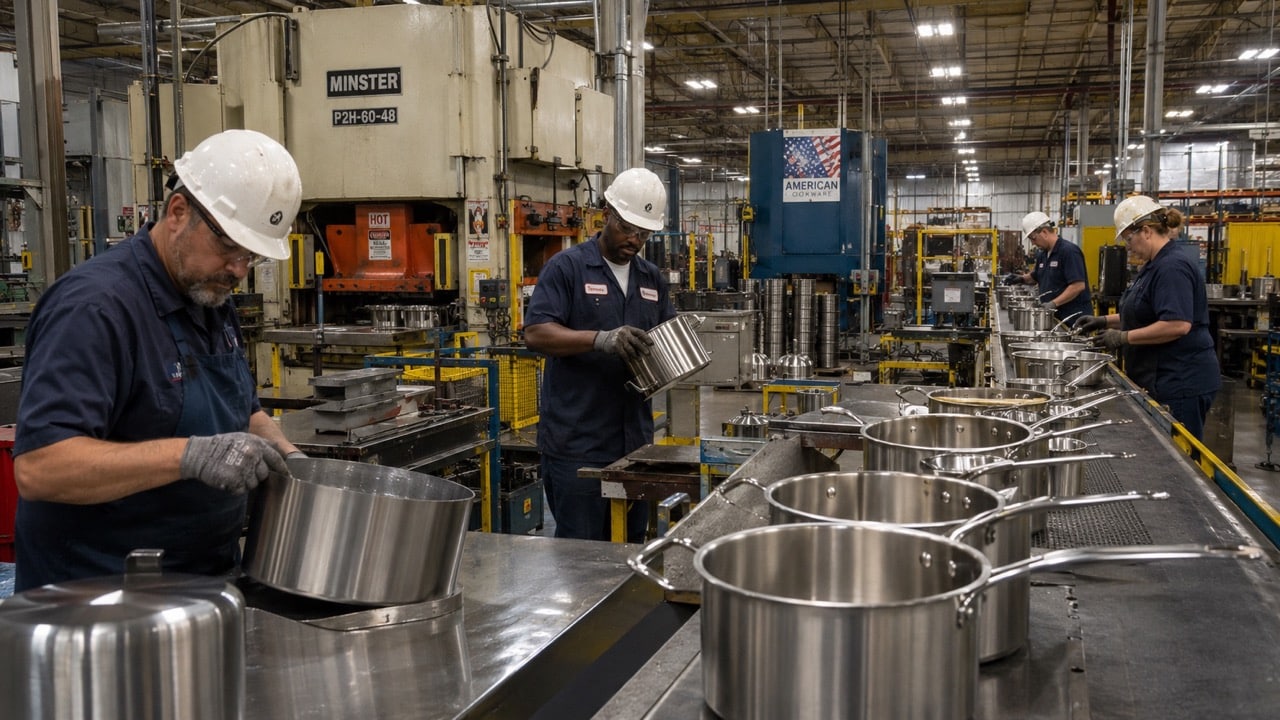
5+ Best Private Label Cookware Manufacturers in the USA (2026)