
Best private label ready-to-eat (rte) meals manufacturers
Find vetted private label ready-to-eat (rte) meals manufacturers on Wonnda. Sourcing in this category involves selecting from chilled, frozen, or ambient retort formats, each impacting preservation methods and shelf life. Key sourcing considerations include the integration of various components like proteins, starches, sauces, and vegetables, as well as validated cooking and assembly processes. Certifications such as BRCGS are important for ensuring food safety standards across different production methods and resulting lead times.
- Vetted suppliers
- 20,000+
- Brands & buyers
- 25,000+
- EU-made
- 80%
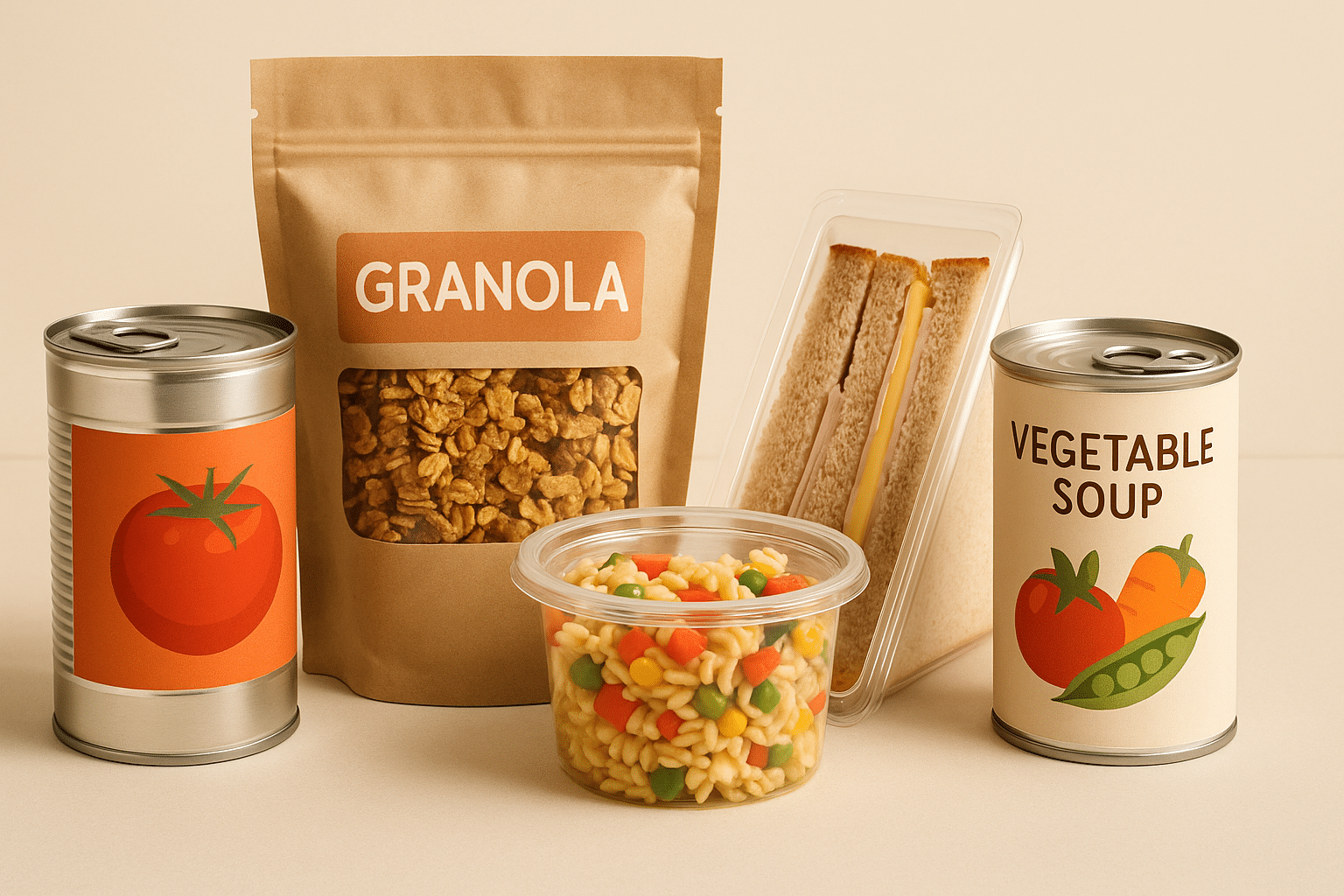
5+ Top private label ready-to-eat (rte) meals manufacturers
Wonnda works with the best private label ready-to-eat (rte) meals manufacturers. Here is a list of trusted suppliers from our network.

DMC Food
4.7Private LabelContract ManufacturingWholesaleIreland-based manufacturer producing chicken curry with brown rice, cheeseburger with fries and gherkins, sweet chilli chicken with wholewheat noodles, available to brands sourcing ready-to-eat (rte) meals.
- Country
- Ireland
- MOQ
- Lead time
 Private LabelContract Manufacturing
Europe-based manufacturer producing vegan sausages, veggie burgers, plant-based snacks, available to brands sourcing ready-to-eat (rte) meals.
- Country
- -
- MOQ
- Lead time
 Private LabelContract Manufacturing
Poland-based manufacturer producing classic energy drinks, bcaa beverages, fruit juices, available to brands sourcing ready-to-eat (rte) meals.
- Country
- Poland
- MOQ
- Lead time
 Private LabelContract Manufacturing
Spain-based manufacturer producing fresh oranges, fresh lemons, extra virgin olive oil, available to brands sourcing ready-to-eat (rte) meals.
- Country
- Spain
- MOQ
- Lead time
 Private LabelContract Manufacturing
Europe-based manufacturer producing cream cheese (from fresh milk), plant-based cream cheese, processed cheese, available to brands sourcing ready-to-eat (rte) meals.
- Country
- -
- MOQ
- Lead time
Compare MOQs and lead times
Quick side-by-side of the shortlist. Missing values shown as a dash.
| Supplier | Location | Types | MOQ | Lead time |
|---|---|---|---|---|
| DMC Food | Ireland | PL · CM · WS | ||
| Schouten Food | - | PL · CM | ||
| Brandsparkle | Poland | PL · CM | ||
| Fet a Soller S.L. | Spain | PL · CM | ||
| Lekkerkerker Food | - | PL · CM |
Buyer criteria
- Validated cook and shelf-life data
An RTE meal must be proven safe to its date, so require validated cook process data showing safe core temperatures and microbiological shelf-life testing for the exact recipe and pack. Use-by dates on chilled meals and shelf stability on retort meals rest on this science. A manufacturer that assigns a shelf life without recipe-specific validation is exposing you to the most serious food-safety risk in the category.
- Preservation format capability
Confirm the plant actually runs your chosen format, chilled cook-chill with MAP or HPP, frozen, or retort, at scale and with the matching validation, since most plants specialize in one or two. The format sets shelf life, cold-chain needs, and flavor. A frozen-meal plant cannot deliver a chilled MAP ready meal, so match the manufacturer to the route before recipe work.
- Allergen control across a complex deck
RTE meals carry many ingredients, often multiple allergens across sauces, proteins, and starches. Verify how the plant segregates allergens, cleans between products, and validates the absence of cross-contact for any free-from claim. With shared lines running diverse recipes, robust allergen management and accurate declarations are essential to avoid the mislabeling that drives recalls in this category.
- Nutritional and claim accuracy
The meal's nutritional panel and any high-protein, low-calorie, or organic claim must match the as-made product. Confirm the manufacturer calculates and verifies nutritionals against actual component weights and tests where needed. Fitness and functional meal brands depend on accurate macros, so a panel that drifts from the recipe undermines the brand promise and risks a labeling challenge.
- HACCP and retail certification
Require HACCP plus BRCGS or IFS at a standard retailers and large foodservice buyers accept, with the scope covering your meal type and processing route. These cover cook control, cold chain, metal detection, and allergen management. For organic add the matching certification. Confirm the certificate is current and audited for your exact product category before scaling volume.
Red flags
- Shelf life set without validation
A use-by or best-before date assigned without recipe-specific cook validation and microbiological shelf-life testing is a serious safety failure. RTE meals carry the highest food-safety stakes in private label food, and an under-processed or wrongly dated meal can cause illness and a major recall. Refuse any partner that treats shelf-life validation as optional or generic.
- No clear preservation route or cold-chain control
If the manufacturer is vague about whether the meal is chilled MAP, frozen, or retort, and cannot show temperature logs proving the cold chain or freeze, the safety basis is missing. Each route has a distinct safety regime. A plant that cannot evidence its processing and temperature control across the line is not a safe RTE partner regardless of recipe quality.
- Weak allergen segregation on shared lines
RTE plants run many recipes with many allergens, so a manufacturer that cannot demonstrate validated cleaning and segregation between products, or that is casual about cross-contact for free-from SKUs, is a mislabeling risk. Given the complex ingredient decks, allergen failures are a leading recall cause in ready meals. Treat weak allergen control as disqualifying.
- Nutritional panel that does not match the recipe
If the declared macros and calories do not reconcile with the actual component weights and recipe, the panel is unreliable, which is fatal for fitness and functional meal brands built on accurate protein and calorie figures. A manufacturer that cannot show how nutritionals were calculated and verified is guessing on the label, exposing you to claim challenges and customer distrust.
Manufacturing process
- 01
Recipe development and cook validation
The dish is developed to spec and the cook process is validated to ensure each component reaches a safe core temperature and the right texture. For chilled, frozen, and retort routes this validation differs and is documented as a critical control. Nutritional values are calculated and confirmed, since the recipe drives the label panel and any claims.
- 02
Ingredient preparation
Proteins are trimmed and portioned, vegetables washed and cut, starches like rice or pasta pre-cooked, and sauces batch-cooked to recipe. Each component is prepared to a controlled standard so the assembled meal is consistent. Incoming ingredients are inspected and allergen-segregated, since an RTE meal often carries a long and complex ingredient deck.
- 03
Cooking
Components are cooked by the validated method, grilling, braising, steaming, or sauce reduction, to the target core temperature and eating quality. Cook time and temperature are monitored as critical control points to guarantee microbiological safety. For some chilled meals, components are cooked then rapidly chilled before assembly to control bacterial growth.
- 04
Assembly and portioning
Cooked components are portioned into the tray or pouch by weight to hit the stated net weight and the nutritional panel. Layering and placement matter for appearance and even reheating. Automated and manual assembly are balanced against complexity, and component weights are checked so every meal matches the declared values.
- 05
Sealing and processing
Trays are sealed under modified atmosphere or lidded for chilled, blast-frozen for frozen, or retort-sterilized for ambient. The processing step is the safety-defining operation: MAP extends chilled life, freezing locks it, and retort sterilizes for shelf stability. Seal integrity is tested, since a failed seal compromises both safety and shelf life.
- 06
Chilling, freezing or cooling
Chilled meals are rapidly cooled to refrigeration temperature, frozen meals pass through blast freezers, and retort meals are cooled after sterilization. The speed and control of this step protects safety and quality. Temperature is logged throughout to prove the cold chain or freeze was achieved within the validated window.
- 07
Quality control and shelf-life verification
QC checks weight, appearance, seal integrity, and core temperature records, runs microbiological and shelf-life testing, and verifies allergen and nutritional accuracy. HACCP critical control points cover cook temperature and metal detection. Shelf-life validation underpins the use-by or best-before date. Certificates of analysis and allergen statements travel with each batch.
Understanding ready-to-eat (rte) meals private-label manufacturing
Preservation and Distribution Formats
Ready-to-eat (RTE) meals are pre-cooked dishes designed for rapid heating and serving. This category includes chilled ready meals, frozen entrees, ambient retort pouches and trays, and high-protein/functional meal-prep boxes. For private label brands, RTE meals represent a demanding category due to the complexity of preparing multiple components (sauce, protein, starch, vegetables), assembling them, and ensuring food safety for a defined shelf life.
- Chilled ready meals are cook-chill products, assembled and sealed under modified atmosphere or high-pressure processing. They have a short shelf life and require a cold chain.
- Frozen meals are blast-frozen, offering a long shelf life and flexible logistics, but necessitate freezer space throughout the supply chain.
- Ambient meals undergo retort sterilization in pouches or trays, providing a long shelf life without the need for refrigeration. This format is ideal for convenience and outdoor channels, but results in a distinct cooked-in flavor profile.
Each preservation route has specific food-safety protocols, equipment requirements, and shelf-life science. The chosen format is critical in determining the suitability of suppliers before any recipe development begins.
Manufacturing and Logistics
European RTE meal manufacturing is concentrated in the UK, Germany, the Netherlands, Belgium, Italy, and Poland. Production typically occurs in specialist plants dedicated to chilled, frozen, or retort processing, rather than facilities handling all three formats.
Minimum Order Quantities (MOQs) for custom recipes and packaging usually start at one production run. This often translates to several thousand to tens of thousands of units, depending on the production line. This is due to the significant setup costs associated with recipe development, cook validation, and tray or pouch tooling.
Lead times for a new recipe, including microbiological shelf-life validation, range from 10 to 16 weeks. Microbiological shelf-life validation is a process that cannot be expedited. Costs are primarily driven by the protein and other recipe ingredients, followed by the pack format and processing. Cold-chain or freezer logistics also contribute significantly to cost, as does labor due to the extensive assembly steps involved.
Quality and Certifications
Private label buyers of RTE meals include retailers with chilled and frozen ready-meal ranges, D2C meal-prep and fitness-nutrition brands, foodservice and travel caterers, and convenience/forecourt operators. The market is segmented into value comfort meals and premium offerings, such as high-protein, organic, or world-cuisine options.
Manufacturers should be evaluated based on their HACCP and BRCGS or IFS certifications. Validated cook and shelf-life data are essential, as is robust allergen control across complex ingredient decks and accurate nutritional information. RTE meals carry the highest food-safety stakes of any private label food product, and even a single under-processed batch can lead to a serious recall.
Frequently asked questions
Should I make my ready meals chilled, frozen, or ambient?+
How is shelf life determined for a ready meal?+
Can one manufacturer make chilled, frozen, and ambient meals?+
How do high-protein meal-prep brands guarantee accurate macros?+
What allergen risks apply to ready meals specifically?+
What MOQ and lead time should I expect for custom ready meals?+
Explore adjacent product types
Get a vetted shortlist of ready-to-eat (rte) meals suppliers in 48 hours.
Post a brief on Wonnda. Free, no commitment. We match you with vetted manufacturers that fit your MOQ, format and market.