
Best private label eggs manufacturers
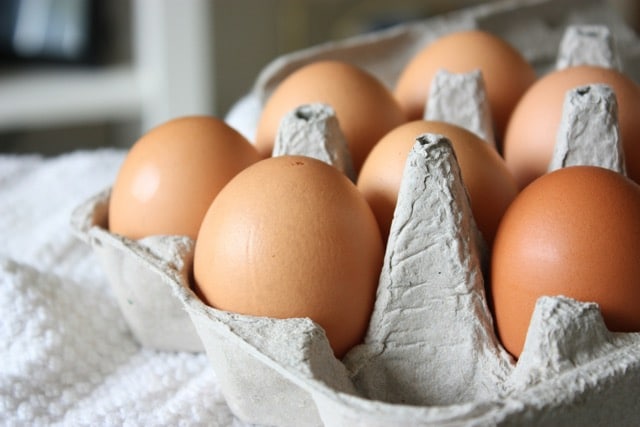
Wonnda is where brands find private label eggs manufacturers. Sourcing considerations diverge based on whether you are seeking graded shell eggs for retail or processed egg products. Shell egg programs focus on farming systems, grading specifications, and date coding, while processed egg products involve particular pasteurization, drying methods, and food safety protocols to produce liquid, frozen, or dried whole egg, whites, or yolks. Each product type requires distinct manufacturing expertise and operational setups.
- Vetted suppliers
- 20,000+
- Brands & buyers
- 25,000+
- EU-made
- 80%
9+ Top private label eggs manufacturers
Wonnda works with the best private label eggs manufacturers. Here is a list of trusted suppliers from our network.
- EZPrivate LabelContract Manufacturing
Austria-based manufacturer with private label capability. Austrian fresh egg cooperative and single point of contact for AMA-certified eggs from Austria.
- Country
- Austria
- MOQ
- 5,000+ packaging units
- Lead time
- COPrivate LabelContract Manufacturing
Germany-based manufacturer with private label capability. Sixth-generation family business with modern packing and egg-coloring facilities in NRW.
- Country
- Germany
- MOQ
- 5,000+ packaging units
- Lead time
- EIPrivate LabelContract Manufacturing
Germany-based manufacturer with private label capability. Leading European egg marketer and private label supplier with vertically integrated operations across Germany.
- Country
- Germany
- MOQ
- 10,000+ packaging units
- Lead time
- GNPrivate LabelContract Manufacturing
Austria-based manufacturer with private label capability. Modern Austrian egg packing station supplying food retail daily with AMA-certified eggs.
- Country
- Austria
- MOQ
- 3,000+ packaging units
- Lead time
- OVPrivate LabelContract Manufacturing
Poland-based manufacturer with private label capability. Polish family-owned egg company with 25+ years of experience, exporting to Germany and beyond.
- Country
- Poland
- MOQ
- 5,000+ packaging units
- Lead time
- EIPrivate LabelContract Manufacturing
Germany-based manufacturer with private label capability. Third-generation egg producer in NRW supplying Aldi with organic and free-range eggs.
- Country
- Germany
- MOQ
- 5,000+ packaging units
- Lead time
- FEPrivate LabelContract Manufacturing
Poland-based manufacturer with private label capability. One of Europe's largest egg producers: 10 million hens, 5.5 million eggs/day, 70% exported.
- Country
- Poland
- MOQ
- 10,000+ packaging units
- Lead time
- GUPrivate LabelContract Manufacturing
Germany-based manufacturer with private label capability. One of Germany's largest egg producers with 3 million laying hens across 60 partner farms.
- Country
- Germany
- MOQ
- 5,000+ packaging units
- Lead time
- BAPrivate LabelContract Manufacturing
Germany-based manufacturer with private label capability. Family-run egg producer near Ruhr area with 50+ years of experience in animal-friendly housing.
- Country
- Germany
- MOQ
- 3,000+ packaging units
- Lead time
Compare MOQs and lead times
Quick side-by-side of the shortlist. Missing values shown as a dash.
| Supplier | Location | Types | MOQ | Lead time |
|---|---|---|---|---|
| EZG Frischei | Austria | PL · CM | 5,000+ packaging units | |
| Columbus Frischei GmbH | Germany | PL · CM | 5,000+ packaging units | |
| Eifrisch-Vermarktung GmbH | Germany | PL · CM | 10,000+ packaging units | |
| Gnaser Frischei Produktions GmbH | Austria | PL · CM | 3,000+ packaging units | |
| Ovovita | Poland | PL · CM | 5,000+ packaging units | |
| Eierhof Hennes GmbH | Germany | PL · CM | 5,000+ packaging units | |
| Fermy Drobiu Wozniak | Poland | PL · CM | 10,000+ packaging units | |
| Gutshof-Ei GmbH | Germany | PL · CM | 5,000+ packaging units | |
| Baumeister Frischei GmbH | Germany | PL · CM | 3,000+ packaging units |
Buyer criteria
- Farming-system certification and producer-code traceability
The welfare claim is the heart of a retail egg program, so verify the supplier's organic, free-range, or barn certification and that every egg's producer code traces back to a specific farm under that system. Audit trails matter, since welfare claims are scrutinized by retailers and consumers. A supplier that cannot substantiate the system behind the code cannot back the claim you sell.
- Salmonella control and food safety
Eggs carry a real salmonella risk, so confirm the supplier runs flock vaccination and monitoring for shell eggs and validated pasteurization for egg products. Ask for the salmonella control program and testing records. A salmonella incident is both a serious public-health event and a major recall, so robust control is the single most important safety qualification in this category.
- Grading consistency and freshness
Retail eggs must be Class A, correctly sized, and reliably fresh on shelf, so verify the packing center's candling and grading accuracy and how date codes reflect true freshness. Inconsistent sizing or cracked eggs reaching the box undermine the range. Ask about breakage rates and how quickly eggs move from lay to pack, since freshness is what the consumer judges.
- Supply reliability and offtake terms
Eggs are perishable and laid daily, so a private label program needs steady weekly offtake and a supplier that can match supply to demand without surplus or shortage. Confirm the supplier's flock capacity, how they handle demand swings and flock cycles, and contingency for avian flu disruptions, which periodically tighten supply and are a recurring risk in this category.
- Processed-egg functionality (if applicable)
For liquid, frozen, or dried egg, the product must perform in the customer's application, whipping, binding, or emulsifying, after pasteurization and any drying. Confirm the supplier validates functionality, not just safety, and can supply whole, white, and yolk to your spec. Pasteurization and drying can affect performance, so functional consistency matters as much as microbiological safety for ingredient buyers.
Red flags
- Welfare claim without traceable producer codes
A free-range or organic claim that cannot be tied to specific farms via producer codes and certification is unsubstantiated and a serious mislabeling risk. Welfare is the claim consumers pay extra for and regulators and retailers audit. A supplier vague about the farming system behind the codes, or unable to provide certification, should not be trusted with a welfare-positioned range.
- Weak or undocumented salmonella control
Given the salmonella risk in eggs, a supplier without a documented flock vaccination and monitoring program for shell eggs, or validated pasteurization records for egg products, is exposing you to a serious safety and recall event. Salmonella control is non-negotiable. Treat missing or vague food-safety documentation as disqualifying regardless of price or supply convenience.
- Inconsistent grading or stale stock
If samples show variable sizing, cracked or dirty eggs in Class A packs, or date codes that do not reflect genuine freshness, the packing center is not controlling grading or rotation. Inconsistent quality and stale eggs reach the consumer fast in a perishable product and damage the range. A supplier casual about grading and freshness will undermine the shelf offer.
- No contingency for supply disruption
Egg supply is periodically squeezed by avian flu and flock cycles, so a supplier with no contingency planning or backup capacity can leave a private label range with empty shelves at short notice. If the supplier cannot explain how they manage flock cycles and disease disruptions, the reliability risk is high in a category where continuous availability is expected by retailers.
Manufacturing process
- 01
Farm production and welfare system
Hens are kept under a defined system, organic, free-range, barn, or enriched cage, that determines the egg's welfare claim and producer code. Feed, flock health, and salmonella vaccination programs are managed at the farm. The system is the foundation of the retail claim and is auditable back to the specific farm via the printed code.
- 02
Collection and transport to packing center
Eggs are collected, often automatically, and transported under controlled conditions to a packing center, usually close to the farms to protect freshness. Cold-chain and handling care reduce breakage and quality loss. Eggs are kept traceable to the laying flock throughout, which underpins the producer-code system printed on each egg.
- 03
Candling, grading and sizing
At the packing center eggs are candled to detect cracks, blood spots, and internal defects, then graded for quality (Class A for retail) and sized into weight bands (S, M, L, XL). Automated graders weigh and sort at high speed. Only sound, clean, Class A eggs go to retail packs; downgrades divert to processing.
- 04
Printing, packing and date coding
Each retail egg is laser- or ink-printed with the producer code identifying farming system and farm, then packed into boxes and date-coded with the best-before date. Packaging carries the welfare claim, size, and traceability. For processed egg, sound eggs instead move to breaking and pasteurization rather than retail packing.
- 05
Breaking and pasteurization (processed egg)
For liquid and dried egg products, eggs are broken, separated into whole, white, or yolk as needed, then pasteurized to a validated time and temperature that destroys salmonella while preserving functionality. Pasteurization is the critical safety step for egg products and is monitored as a control point, since under-processing leaves a serious pathogen risk.
- 06
Drying or freezing (processed egg)
Pasteurized liquid egg is either chilled for liquid sale, frozen, or spray-dried into egg powder for long shelf life and easy handling by bakeries and manufacturers. Drying concentrates the product and changes functionality, so process parameters are controlled to preserve whipping and binding performance that customers rely on.
- 07
Quality control and traceability
QC checks grade, size, shell integrity, and freshness for shell eggs, and runs salmonella and microbiological testing plus functionality checks for egg products. HACCP critical control points cover pasteurization and cold chain. Producer-code and lot traceability link every pack or batch back to the farm, supporting recall and welfare-claim verification.
Understanding eggs private-label manufacturing
Shell Eggs vs. Processed Egg Products
Private label egg products are split into two distinct categories: shell eggs for retail and processed egg products (liquid, frozen, or dried whole egg, white, and yolk) for bakeries, food manufacturers, and foodservice. A shell-egg program focuses on farming systems, grading, and date coding. Conversely, an egg-product program emphasizes pasteurization, drying, and food-safety processing.
These two businesses share their raw material, but little else operationally.
Shell Egg Sourcing and Specifications
For shell eggs, the primary decision revolves around the farming system. In the EU, this information - organic, free-range, barn, or enriched cage - is printed on each egg and its packaging, linked to a producer code for farm traceability. Welfare positioning is a key driver, with major retailers favoring cage-free and free-range options.
Standardized sizing (S, M, L, XL) and quality grading (Class A for retail) are applied. The choice between standard, free-range, and organic impacts both the product
Frequently asked questions
What do the egg producer codes actually mean?+
What is the difference between organic, free-range, and barn eggs for my range?+
How is salmonella controlled in eggs?+
When should I use liquid or dried egg instead of shell eggs?+
How do I keep an egg range in stock given supply disruptions?+
What MOQ and commercial terms apply to private label eggs?+
Explore adjacent product types
Get a vetted shortlist of eggs suppliers in 48 hours.
Post a brief on Wonnda. Free, no commitment. We match you with vetted manufacturers that fit your MOQ, format and market.