
Best private label laundry detergent manufacturers
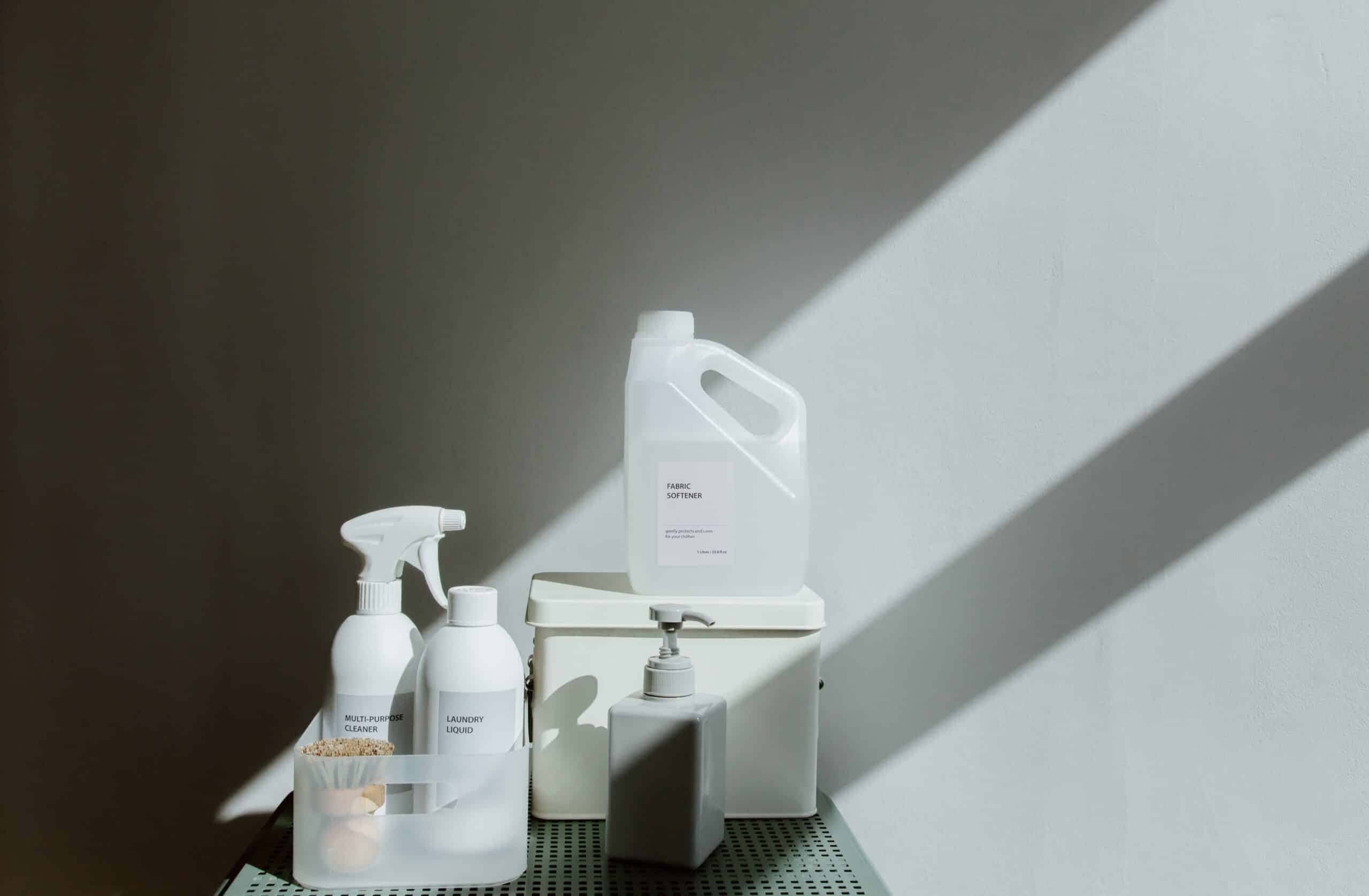
Wonnda is where brands find private label laundry detergent manufacturers. Products come in various formats, including liquid, powder, and convenient unit-dose pods. Key sourcing variables involve selecting the appropriate surfactant and builder balance, as well as the specific enzyme package to achieve desired cleaning performance. These choices directly impact the product's effectiveness on different stains and fabric types, and are crucial for customer satisfaction in this high-frequency category. Certifications for eco-friendly or sensitive skin formulations often influence material selection and manufacturing processes.
- Vetted suppliers
- 20,000+
- Brands & buyers
- 25,000+
- EU-made
- 80%
4+ Top private label laundry detergent manufacturers
Wonnda works with the best private label laundry detergent manufacturers. Here is a list of trusted suppliers from our network.
- Featured
 Private LabelContract Manufacturing
Czech Republic-based manufacturer producing laundry detergents, detergent concentrates, non-toxic cleaners, available to brands sourcing laundry detergent.
- Country
- Czech Republic
- MOQ
- Lead time
 Private LabelContract Manufacturing
Europe-based manufacturer producing liquid laundry detergents, fabric conditioners, household cleaners (liquids), available to brands sourcing laundry detergent.
- Country
- -
- MOQ
- Lead time
 Private LabelContract Manufacturing
Europe-based manufacturer producing ecowise cleaning tabs, tix grease remover, marine vessel cleaners, available to brands sourcing laundry detergent.
- Country
- -
- MOQ
- Lead time
 Private LabelContract Manufacturing
Europe-based manufacturer producing laundry detergents, laundry tablets, detergent auxiliaries, available to brands sourcing laundry detergent.
- Country
- -
- MOQ
- Lead time
Compare MOQs and lead times
Quick side-by-side of the shortlist. Missing values shown as a dash.
| Supplier | Location | Types | MOQ | Lead time |
|---|---|---|---|---|
| TERRA GAIA s.r.o. | Czech Republic | PL · CM | ||
| McBride | - | PL · CM | ||
| Clean Solutions Group | - | PL · CM | ||
| Incasa | - | PL · CM |
Buyer criteria
- Enzyme package depth
Ask which enzymes are included and at what level, since a multi-enzyme system removes far more stain types than a single protease. Confirm the enzymes are stabilised to stay active through shelf life. A vague or single-enzyme formula will underperform on real household stains, so treat the enzyme answer as the core performance check.
- Documented wash performance
Require evidence that the detergent actually cleans, such as wash-test results on standard soiled swatches covering grease, protein and particulate stains, plus whiteness and anti-redeposition data. Laundry is judged every load, so a manufacturer that cannot show performance data is asking you to launch a product on faith.
- Format capability
If you want pods or a concentrate, confirm the manufacturer runs that format in-house, since water-soluble film encapsulation needs dedicated lines and child-resistant packaging. A liquid-only filler cannot deliver pods without subcontracting, which adds cost and coordination, so match the partner to your intended format from the start.
- Skin and sensitivity positioning
For sensitive-skin or fragrance-free lines, confirm the formula omits or limits dyes, fragrances and allergens and that any dermatological claim is supportable. Verify residue and rinse-out performance, since poorly rinsing detergent leaves skin-irritating residue on fabric that undermines a gentle positioning.
- EU Detergents Regulation compliance
Confirm the manufacturer handles ingredient declaration, fragrance allergen labeling and the medical ingredient data sheet required by the EU Detergents Regulation, and child-resistant requirements for liquid pods. Non-compliant labeling cannot be sold, so this must be part of the service rather than left to the brand.
Red flags
- No wash-test evidence
If the manufacturer cannot show stain-removal or whiteness data, you have no proof the detergent works. Laundry buyers judge performance every cycle and switch fast. A partner that treats wash testing as optional is likely supplying a generic base that competes on price, not on the cleaning your label promises.
- Enzymes claimed but not stabilised
A label that advertises enzymes means little if they lose activity in the bottle. Ask how enzyme activity is preserved across shelf life and whether it is verified. Unstabilised enzymes in a poorly balanced formula deactivate before use, leaving a product that underperforms on exactly the stains it claims to remove.
- Pods without child-resistant packaging plan
Liquid laundry pods are a recognised ingestion hazard for children and carry strict packaging and labeling requirements. A manufacturer that does not raise child-resistant outer packaging and warning labeling for pods is unaware of or ignoring the rules, which is disqualifying for a format with real safety liability.
- Residue or rinse-out ignored
If the manufacturer cannot speak to rinse-out and residue performance, the detergent may leave film on fabric that greys colours and irritates skin. This is a frequent complaint driver, especially for sensitive-skin lines. Reject a partner that treats residue as an afterthought rather than a measured property of the formula.
Manufacturing process
- 01
Formulation and enzyme selection
The manufacturer sets the surfactant and builder base, then selects the enzyme package, protease, amylase, lipase and cellulase, to match the stains and fabrics the product targets. Enzyme dosing and the surrounding pH and stabiliser system are tuned so the enzymes stay active across shelf life and water temperatures.
- 02
Raw material weighing
Surfactants, builders, enzymes, optical brighteners, anti-redeposition polymers, fragrance and preservative are weighed to the batch record. Enzyme actives are handled carefully and added at the correct stage, since heat and extreme pH during compounding can deactivate them before the product even reaches the wash.
- 03
Compounding and blending
Ingredients are combined in a controlled sequence and temperature so the surfactants, builders and enzymes form a stable, homogeneous product. For powders, ingredients are mixed and sometimes spray-dried or agglomerated; for liquids, the batch is blended to a uniform, stable liquid checked for appearance and viscosity.
- 04
Enzyme stability and pH control
pH and any enzyme stabilisers are set so enzyme activity is preserved through storage. The batch is verified for the target pH and, where specified, enzyme activity is confirmed, since a detergent that loses enzyme activity in the bottle will underperform on protein and starch soils at the customer's machine.
- 05
Wash performance and quality testing
QC checks active matter, pH, viscosity or powder flow, and runs or references wash tests on standard soiled swatches to confirm stain removal and whiteness. Microbiological limits and stability samples are also checked so the product holds appearance and performance over its stated shelf life.
- 06
Filling or pod forming and packaging
Liquids fill into HDPE bottles, powders into cartons or pouches, and pods are dosed into water-soluble film chambers and sealed on dedicated lines. Products are then capped or sealed, labeled with mandatory ingredient and hazard data, and lot coded. Pods additionally require child-resistant outer packaging.
Understanding laundry detergent private-label manufacturing
Product Definition and Performance
Laundry detergent contains a surfactant and enzyme system that removes soil, body oils, and stains from fabric during the wash cycle. It is sold as liquid, powder, capsules, or unit-dose pods. For a private label brand, laundry is a high-frequency, high-loyalty category in the home.
Key decisions for product definition include the surfactant and builder balance, the enzyme package, and the format, which together determine performance and cost. A detergent that leaves residue, greys whites, or fails on common stains can result in customer loss.
Enzymes differentiate serious laundry detergents from basic cleaners:
- Proteases break down protein soils like blood and grass.
- Amylases tackle starch.
- Lipases handle fats and oils.
- Cellulases brighten cotton by removing micro-fibrils.
These work alongside the surfactant system, water-softening builders, and often optical brighteners and anti-redeposition polymers that prevent released soil from settling back onto fabric. Balancing enzymes with the correct pH and surfactants requires specialist knowledge, as enzymes are sensitive to formulation conditions and lose activity if the system is incorrect or unstable.
Manufacturing Locations and MOQs
Laundry detergent contract manufacturing for Europe is concentrated in Germany, Poland, Italy, Spain, and Turkey. Pod and unit-dose capacity is more specialised due to the need for dedicated lines for water-soluble film encapsulation.
Minimum Order Quantities (MOQs) for a custom liquid or powder typically start around 5,000 to 15,000 units per SKU. Pods generally have higher starting MOQs due to film tooling and dosing-machine setup.
Lead times run 8 to 12 weeks for a first run. This can be longer for a custom fragrance, a new pod chamber configuration, or a bespoke bottle.
Cost Drivers and Strategic Levers
Cost drivers, in rough order of impact, include the enzyme package (multi-enzyme systems cost more than enzyme-light formulas), the surfactant and builder actives, the format, the fragrance, and the packaging.
Pods and concentrates have higher conversion costs than dilute liquids. Format is the biggest strategic cost lever: a dilute liquid is inexpensive to make but ships water, while a concentrate or pod costs more per dose to produce but commands a premium and reduces freight costs.
Target Buyers and Quality Considerations
Private label laundry buyers include retailer own-label ranges, Direct-to-Consumer (D2C) and refill cleaning brands, sensitive-skin and eco-positioned startups, and contract laundry and hospitality suppliers.
The category is split between value tiers competing on price per wash and premium tiers selling on enzyme performance, dermatological gentleness, fragrance, or sustainability. Qualifying a manufacturer on enzyme formulation depth, wash-performance testing, and unit-dose capability (where relevant) is more important than the headline price, as laundry performance is judged load after load and a weak formula quickly leads to customer churn.
Frequently asked questions
Which enzymes should my laundry detergent contain?+
Should I make liquid, powder, or pods?+
How is laundry detergent performance actually tested?+
Why do laundry pods need special packaging?+
What MOQ should I expect for private label laundry detergent?+
How do I make a genuinely gentle, sensitive-skin laundry detergent?+
Explore adjacent product types
Get a vetted shortlist of laundry detergent suppliers in 48 hours.
Post a brief on Wonnda. Free, no commitment. We match you with vetted manufacturers that fit your MOQ, format and market.