
Best private label detergent manufacturers
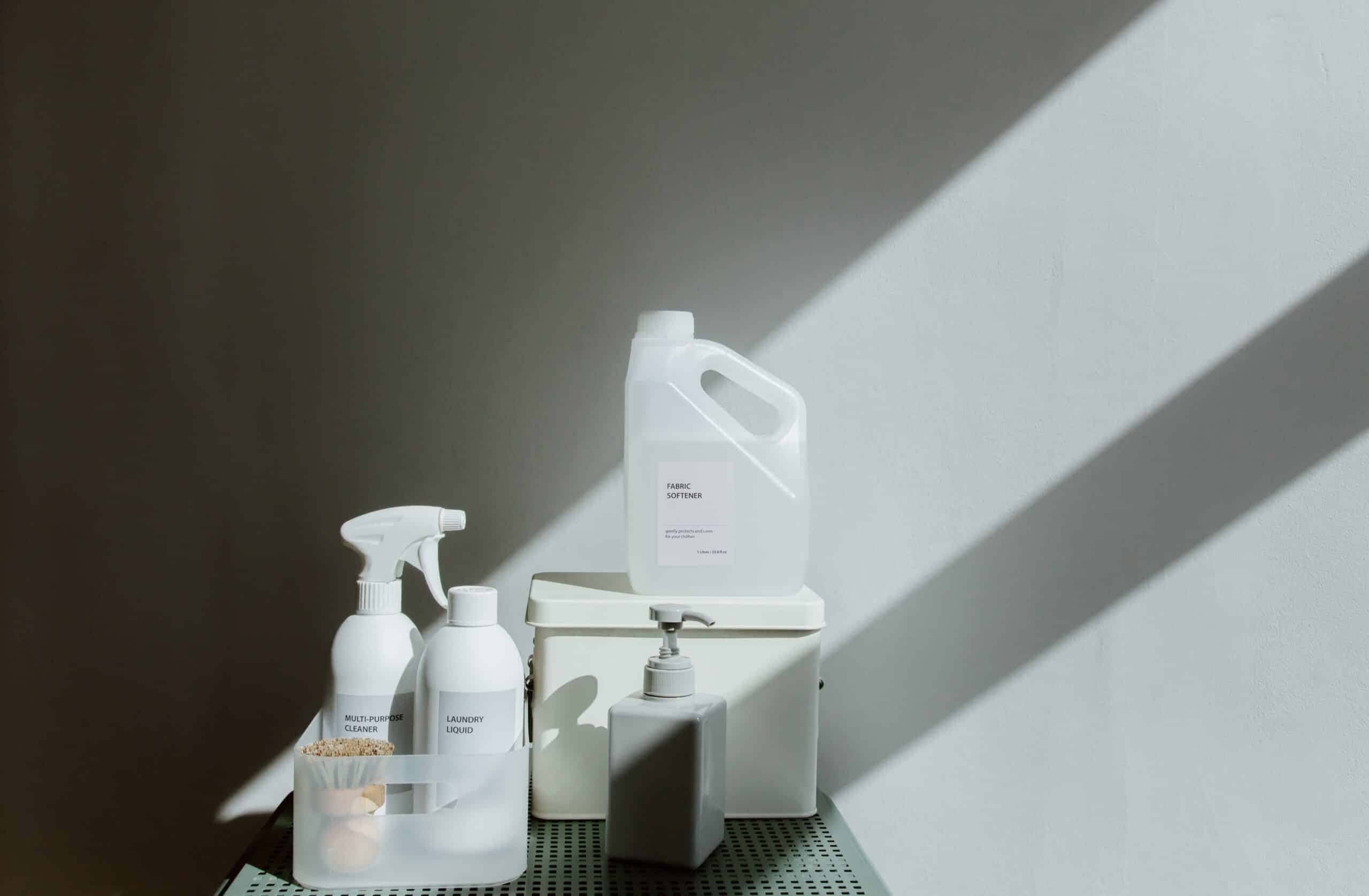
Wonnda connects brands with private label detergent manufacturers. Detergents encompass dishwashing liquids, hand soaps, all-purpose cleaners, and laundry formulations in both powder and liquid formats. Key sourcing considerations include concentration levels, the specific surfactant blend, and whether a conventional or plant-based formulation is desired. Manufacturers can quickly develop products once the surfactant system, builder package, and fragrance are finalized.
- Vetted suppliers
- 20,000+
- Brands & buyers
- 25,000+
- EU-made
- 80%
5+ Top private label detergent manufacturers
Wonnda works with the best private label detergent manufacturers. Here is a list of trusted suppliers from our network.
- Featured
 Private LabelContract Manufacturing
Czech Republic-based manufacturer producing laundry detergents, detergent concentrates, non-toxic cleaners, available to brands sourcing detergent.
- Country
- Czech Republic
- MOQ
- Lead time
 Private LabelContract Manufacturing
Europe-based manufacturer producing liquid laundry detergents, fabric conditioners, household cleaners (liquids), available to brands sourcing detergent.
- Country
- -
- MOQ
- Lead time
 Private LabelContract Manufacturing
Europe-based manufacturer producing probiotic multi-surface cleaner, probiotic drain maintainer, probiotic fabric freshener, available to brands sourcing detergent.
- Country
- -
- MOQ
- Lead time
 Private LabelContract Manufacturing
Europe-based manufacturer producing vehicle shampoos, parts washer solutions, traffic film removers, available to brands sourcing detergent.
- Country
- -
- MOQ
- Lead time
 Private LabelContract Manufacturing
Europe-based manufacturer producing ecowise cleaning tabs, tix grease remover, marine vessel cleaners, available to brands sourcing detergent.
- Country
- -
- MOQ
- Lead time
Compare MOQs and lead times
Quick side-by-side of the shortlist. Missing values shown as a dash.
| Supplier | Location | Types | MOQ | Lead time |
|---|---|---|---|---|
| TERRA GAIA s.r.o. | Czech Republic | PL · CM | ||
| McBride | - | PL · CM | ||
| Probiotic Group | - | PL · CM | ||
| Techtron | - | PL · CM | ||
| Clean Solutions Group | - | PL · CM |
Buyer criteria
- Surfactant transparency and active level
Ask which surfactants are used and at what active matter level, since two products that look identical can differ widely in cleaning power. A vague answer usually means a thin, water-heavy formula. Confirm the active level supports the performance your label implies before agreeing a price.
- Concentration strategy
Decide whether you want a standard dilution or a concentrate, because concentration affects unit cost, shipping, dosing and shelf claims. A manufacturer should advise on the trade-offs and prove the concentrate still pours and doses correctly, not just charge more for a denser fill.
- EU Detergents Regulation compliance
Detergents must declare specified ingredient classes and provide an ingredient data sheet for medical use. Confirm the manufacturer handles labeling under the EU Detergents Regulation, including fragrance allergen declaration, so your product can be sold legally without a post-production relabel.
- Fragrance and stability proof
Fragrance can destabilise a surfactant system or fade quickly. Ask for stability data showing the colour, scent and viscosity hold over the stated shelf life, and request samples aged at elevated temperature. A formula that separates or yellows on the shelf will generate complaints regardless of clean performance.
- Packaging and dosing fit
The bottle, closure and any dosing cap must match the product viscosity and use case. Confirm the manufacturer can supply or specify HDPE packaging and that the closure dispenses cleanly without dripping or clogging, since dosing convenience drives repeat purchase more than headline cleaning claims.
Red flags
- No active matter figure offered
If the manufacturer will not state the surfactant active matter level, you cannot judge cleaning power or value. Water-heavy formulas hide behind vague performance language. Treat refusal to disclose actives as a sign the product is diluted to a price rather than built to a specification.
- Labeling left to the brand
A manufacturer that does not handle EU Detergents Regulation declarations and fragrance allergen labeling is pushing compliance risk onto you. Detergent labeling is technical and legally required. A partner unfamiliar with these rules will produce stock you cannot legally sell without rework.
- No stability data
If no stability or accelerated ageing data is offered, the formula may separate, lose fragrance or thicken in distribution. This is common when a generic base is rushed to fill. Reject any partner that cannot show the product holds its appearance and performance across shelf life.
- One generic base for every client
Some fillers run a single house base and only change the colour and scent. Ask whether your surfactant system is built to your brief or pulled from stock. A shared base means a competitor sells the identical liquid and you have no control over performance or differentiation.
Manufacturing process
- 01
Surfactant system design
The manufacturer fixes the anionic, nonionic and amphoteric surfactant blend to hit the target cleaning performance and foam profile, then sets the builder and pH package. This system determines how the detergent handles grease versus particulate soil and whether it suits hard or soft water regions.
- 02
Raw material weighing and verification
Surfactants, builders, fragrance, preservative and any functional additive are weighed against the batch record, with incoming actives checked for active matter content. Concentration of the supplied surfactant varies by supplier, so the manufacturer adjusts the recipe to the actual active matter of each delivery.
- 03
Compounding and blending
Ingredients are added to a heated or ambient mixing vessel in a defined order, since adding surfactants and electrolytes out of sequence can cause gelling or phase separation. The batch is mixed to a homogeneous, clear or stable opaque liquid and checked for viscosity and appearance.
- 04
pH and viscosity adjustment
pH is trimmed with acid or alkali to the target range for performance and skin safety, and viscosity is set with thickener or electrolyte so the product pours and clings correctly. These properties are confirmed against specification before the batch is released to filling.
- 05
Quality control testing
QC checks active matter, pH, viscosity, density, colour, odour and microbiological limits where relevant. A stability sample is held to confirm the formula does not separate or discolour over its shelf life. The batch is released only once it meets the agreed specification.
- 06
Filling, capping and labeling
The detergent is filled into HDPE bottles by volume or weight, capped with the chosen closure, induction sealed where specified, then labeled with the mandatory ingredient and hazard information. Fill weight is checked continuously and lot codes are printed for traceability.
Understanding detergent private-label manufacturing
Formulation and Ingredients
Detergent is a broad category of surfactant-based cleaning chemistry that includes dishwashing liquid, hand soap, all-purpose cleaners, and systems for stripping soil from hard surfaces and fabrics. The core chemistry is mature, allowing for quick transitions from brief to filled bottle once the surfactant system, builder package, and fragrance are agreed upon. Key decisions for product formulation include concentration, surfactant blend, and whether to use a conventional or plant-derived formulation.
The surfactant system is central to any detergent. Anionic surfactants like LAS and SLES address grease and particulate soil. Nonionics, such as alcohol ethoxylates, handle oily soil with lower foam. Amphoterics, like betaines, are added for mildness and foam stability in skin-contact products. Builders soften water and boost performance. Other components include pH adjusters, preservatives, thickeners, and fragrance. Manufacturers balance this system to ensure the product cleans effectively, remains stable on the shelf, and meets skin-contact and environmental regulations.
Manufacturing and Logistics
Detergent contract manufacturing for the European market is primarily located in Germany, Poland, Italy, Spain, and the Benelux countries. There is strong fill-and-blend capacity in Eastern Europe for cost-competitive volume.
MOQs are determined by mixing-vessel size and filling line setup. A typical custom liquid detergent starts at approximately 3,000 to 10,000 units per SKU. Relabeling an existing stock formula can have lower minimums. Lead times generally run 6 to 10 weeks for a first production run, with longer times if a custom fragrance or new bottle mold is required. Powder and tablet formats have their own minimums, which are tied to compression and packaging tooling.
Cost and Differentiation
Cost is primarily driven by surfactant actives and their inclusion level. A concentrated formula uses more active per liter but reduces shipping volume. Other cost factors include fragrance, dyes or functional additives, packaging systems (HDPE bottle, closure, trigger, or pump), and the filling process.
Water is nearly free, making active concentration a significant cost lever. A 2x concentrate costs more per bottle to produce but reduces shipping and shelf space, leading retailers to increasingly favor it. Private label detergent buyers include D2C cleaning brands, retailer own-label ranges, hospitality and contract-cleaning suppliers, and refill and zero-waste startups. Channel mix ranges from grocery and drugstore shelves to subscription refill boxes.
The category is crowded and price-sensitive. Brands differentiate themselves through concentration, fragrance, sustainability credentials, and packaging format rather than raw cleaning power. Qualifying a manufacturer based on formulation flexibility, fragrance development, and EU Detergents Regulation compliance is more critical than pursuing the lowest per-liter quote.
Frequently asked questions
What surfactants are typically used in a private label detergent?+
Should I launch a standard detergent or a concentrate?+
What does the EU Detergents Regulation require on my label?+
How long does a first detergent production run take?+
Can the manufacturer match a competitor's detergent?+
What packaging works best for liquid detergent?+
Explore adjacent product types
Get a vetted shortlist of detergent suppliers in 48 hours.
Post a brief on Wonnda. Free, no commitment. We match you with vetted manufacturers that fit your MOQ, format and market.