
Best private label cleaning products manufacturers
Shortlist private label cleaning products suppliers on Wonnda. Sourcing for these items involves understanding diverse formats like HDPE bottles with trigger sprayers, and ensuring formulations are compliant with relevant detergents regulations. Key variables include the specific blend of surfactants, builders, and chelating agents, which directly impact cleaning efficacy and product stability. Considerations for formulation forks extend to eco-certifications or specific ingredient exclusions. Lead times are influenced by the complexity of the formulation and material availability.
- Global household cleaning products market — projected to grow at 6.4% CAGR through 2034
- 207.9 billion USD
- Market CAGR — driven by hygiene awareness and eco-friendly product demand
- 6.4%
- Europe market size — Europe holds over 30% of global cleaning product revenue
- 81.5 billion USD
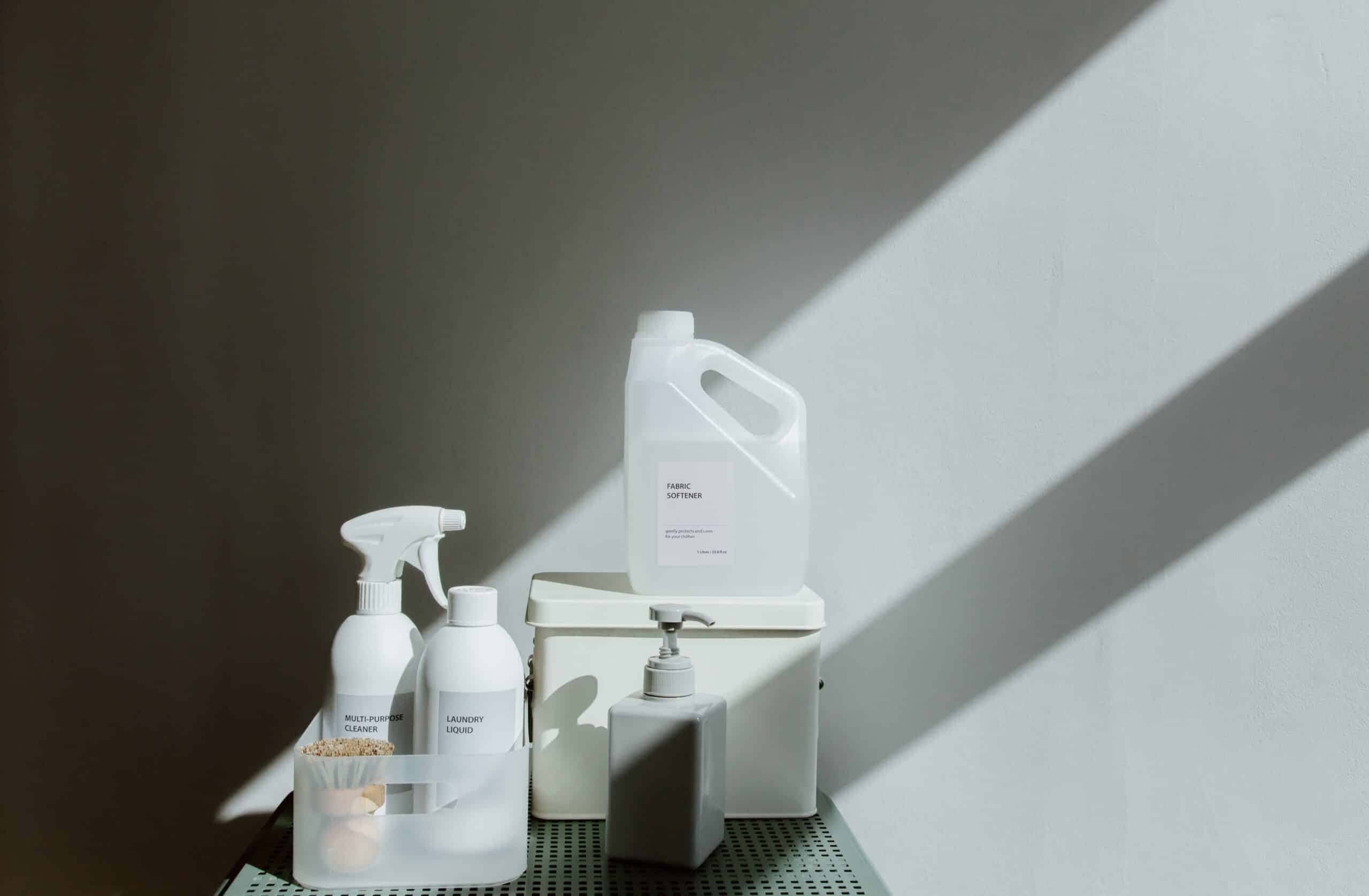
5+ Top private label cleaning products manufacturers
Wonnda works with the best private label cleaning products manufacturers. Here is a list of trusted suppliers from our network.
- Featured
 Private LabelContract Manufacturing
Czech Republic-based manufacturer producing laundry detergents, detergent concentrates, non-toxic cleaners, available to brands sourcing cleaning products.
- Country
- Czech Republic
- MOQ
- Lead time
 Private LabelContract Manufacturing
Europe-based manufacturer producing probiotic multi-surface cleaner, probiotic drain maintainer, probiotic fabric freshener, available to brands sourcing cleaning products.
- Country
- -
- MOQ
- Lead time
 Private LabelContract Manufacturing
Europe-based manufacturer producing ecowise cleaning tabs, tix grease remover, marine vessel cleaners, available to brands sourcing cleaning products.
- Country
- -
- MOQ
- Lead time
 Private LabelContract Manufacturing
Europe-based manufacturer producing liquid laundry detergents, fabric conditioners, household cleaners (liquids), available to brands sourcing cleaning products.
- Country
- -
- MOQ
- Lead time
 Private LabelContract Manufacturing
Europe-based manufacturer producing vehicle shampoos, parts washer solutions, traffic film removers, available to brands sourcing cleaning products.
- Country
- -
- MOQ
- Lead time
Compare MOQs and lead times
Quick side-by-side of the shortlist. Missing values shown as a dash.
| Supplier | Location | Types | MOQ | Lead time |
|---|---|---|---|---|
| TERRA GAIA s.r.o. | Czech Republic | PL · CM | ||
| Probiotic Group | - | PL · CM | ||
| Clean Solutions Group | - | PL · CM | ||
| McBride | - | PL · CM | ||
| Techtron | - | PL · CM |
Buyer criteria
- Formulation capability and efficacy proof
Confirm the formulator can build and prove a cleaner that performs against the soils you claim, not just blend a generic base. Ask for efficacy test results against representative soils and, for disinfectants, against the claimed organisms. A house that supplies an off-the-shelf base and labels it to your brand cannot substantiate differentiated performance claims, so verify they test efficacy rather than assuming the formula works because it looks and smells like a cleaner.
- Detergents Regulation compliance
Require compliance with the EU Detergents Regulation, which governs surfactant biodegradability, ingredient labeling, allergen declaration and the ingredient data sheet for the public. Ask how they handle these obligations. A formulator unfamiliar with the Detergents Regulation cannot put a compliant cleaning product on the EU market, so this is a baseline qualification, and it also signals whether they understand the biodegradability requirements that underpin any eco positioning.
- Biocidal Products Regulation for disinfectants
If your product disinfects or makes any antimicrobial claim, confirm the formulator understands the Biocidal Products Regulation and that the active substance and product are properly authorized for that claim. Disinfection claims are tightly controlled. A partner who will print kills 99.9 percent of germs without the underlying BPR authorization is exposing your brand to enforcement, so biocidal compliance capability is essential for any disinfectant, sanitizer or antibacterial line.
- Packaging and dispenser quality
Since packaging often exceeds the formula cost and the dispenser is what customers use, verify HDPE bottle quality, trigger sprayer or pump performance, chemical compatibility, and a leak-proof closure on production-representative samples. Trigger sprayers can be supply-constrained, so confirm availability and lead time. A clogging or dripping trigger is the top physical complaint on spray cleaners, so dispenser function is a hard requirement, not a detail to settle after the formula.
- Eco and natural claim substantiation
If you position on eco or natural, confirm the claims are backed by formulation and recognized standards rather than label language. Ask whether the product meets EU Ecolabel criteria, uses readily biodegradable plant-derived surfactants, or holds approvals such as ECARF for allergy-friendliness. Greenwashing is an enforcement target. A formulator who offers green claims without the biodegradability data or certification to support them puts your brand at risk of both consumer backlash and regulatory action.
- Concentration and dosing clarity
For concentrates and dilutables, confirm the dosing or dilution ratio delivers the claimed performance and that the guidance is clear and safe for the user. Ask for the in-use efficacy at the recommended dilution, not just the neat formula. An under-dosed dilution that fails to clean, or an unclear instruction that leads to misuse, undermines both performance and safety, so the dosing logic is part of the product and must be validated rather than assumed from the concentrate strength.
- CLP hazard classification and SDS
Require correct CLP hazard classification, pictograms, signal words and precautionary statements, plus a complete safety data sheet for every product. Cleaning chemicals carry genuine hazards, from corrosivity to skin and eye irritation. A formulator who cannot produce accurate SDS documents or apply the right CLP labeling is shipping non-compliant product, so confirm they treat hazard classification as a core deliverable, since incorrect labeling is both a safety and a legal failure.
Red flags
- Generic base relabeled as a unique formula
If the formulator simply relabels an off-the-shelf base with no efficacy testing for your claims, you cannot differentiate and cannot substantiate performance. Ask whether the formula is made to your specification and whether efficacy is tested against the soils you advertise. A house that treats every client's cleaner as the same base with a new label offers no real formulation, and a competitor will sell the identical product under another brand.
- Disinfection claims without BPR authorization
A formulator willing to print antimicrobial or disinfection claims without the Biocidal Products Regulation authorization for the active and product is exposing your brand to enforcement. Disinfection is one of the most tightly controlled claim areas in cleaning. Eagerness to add a kills germs claim without asking about authorization is a serious warning sign, since an unauthorized biocidal claim can trigger product withdrawal and penalties regardless of how well the cleaner performs.
- No efficacy data behind performance claims
Claims that a cleaner cuts grease, removes limescale or disinfects must rest on testing against representative soils or organisms. If the formulator offers no efficacy data and asks you to trust that the formula works, the claims are unsupported. In a category where performance is both regulated and quickly judged by users, unsubstantiated efficacy claims invite both complaints and enforcement, so missing test data behind a headline claim is disqualifying.
- Green claims with no biodegradability backing
Eco, natural and biodegradable claims that are not supported by formulation data or a recognized standard such as the EU Ecolabel are greenwashing, an active enforcement target in the EU. If the formulator cannot show readily biodegradable surfactants or relevant certification, treat the green positioning as unsubstantiated. Customers and regulators increasingly scrutinize these claims, so a partner who offers them casually without the data is setting up your brand for a backlash.
- Poor dispenser or incompatible packaging
Trigger sprayers that clog or drip, pumps that fail, or packaging the formula degrades or leaks through indicate the partner has not validated chemical compatibility and dispenser function. These are the most common physical failures in liquid cleaners and they reach every customer. A formulator who ships samples with dispenser problems, or cannot confirm bottle and trigger compatibility with the formula, will deliver a product that fails in use however good the chemistry is.
- Missing or inaccurate SDS and CLP labeling
Cleaning products carry real chemical hazards, so a formulator who cannot produce a complete, accurate safety data sheet and correct CLP hazard labeling is shipping non-compliant and potentially dangerous product. Incorrect classification, missing pictograms or absent precautionary statements are legal failures and safety risks. In a category sold by the liter into homes and workplaces, missing hazard documentation is disqualifying regardless of how competitive the per-liter price appears.
Manufacturing process
- 01
Formulation and surfactant system design
The formulator designs the surfactant blend (anionic, non-ionic, cationic or amphoteric, and bio-based options) for the target soil and surface, then adds builders, sequestrants, solvents, pH adjusters, preservatives, fragrance and dye. The system is balanced for cleaning power, stability and safety. This is where efficacy is built in, since the surfactant choice and active level determine whether the cleaner actually performs against the soils it claims to handle.
- 02
Format and concentration decision
The product is set as a ready-to-use spray, a concentrate, a dilutable, a powder or a tablet, which fixes the dosing and dilution logic. Concentrates reduce shipping and packaging per use but require clear dosing guidance to deliver the intended performance and stay safe. The format also dictates the filling line and the packaging, so it is locked early because it shapes both the formula strength and the unit economics.
- 03
Raw material verification and batch mixing
Raw materials are checked against specification and the batch is mixed in order, since surfactants, builders and additives must be added in the right sequence and temperature to dissolve and stay stable rather than separating or gelling. Mixing parameters are controlled per formula. A poorly sequenced batch can cloud, phase-separate or lose viscosity, so process control here protects both appearance and performance over shelf life.
- 04
pH, viscosity and stability adjustment
The batch is adjusted to target pH and viscosity, both of which affect cleaning, safety and how the product feels and pours or sprays. Stability is checked so the formula does not separate, lose actives or change color over time. For trigger sprays viscosity must be low enough to spray cleanly, while a thicker gel cleaner needs controlled viscosity to cling to vertical surfaces, so these parameters are tuned to the format.
- 05
Quality control and efficacy verification
QC tests pH, density, active surfactant content, appearance and microbiological stability, and for performance claims the cleaner is tested against representative soils. For disinfectant products, efficacy against the claimed organisms is verified to the relevant test standards. This step substantiates the claims that will appear on the label, since an efficacy or disinfection claim that fails testing is both a performance and a regulatory liability.
- 06
Filling into HDPE and dispenser assembly
The product is filled into HDPE bottles by volume, and the trigger sprayer, pump or closure is fitted and torqued for a leak-proof, functional seal. Dispenser performance is checked, since a trigger that clogs, drips or sprays unevenly is the most common physical complaint on a spray cleaner. Fill level and headspace are controlled, and chemical compatibility between the formula and the bottle and dispenser is confirmed.
- 07
CLP hazard labeling and regulatory documentation
Labels are applied with ingredient information per the Detergents Regulation, CLP hazard pictograms, signal words and precautionary statements, and the safety data sheet is prepared. For biocidal disinfectant products the relevant authorization and label claims are confirmed. Labeling must match the formula and the substantiated claims exactly, since cleaning products carry real chemical hazard and the documentation underpins legal sale.
- 08
Packing, lot coding and palletizing
Bottles are case-packed, lot-coded with batch and date for traceability, and palletized for distribution. Secondary packaging is engineered to prevent leaks and damage in transit, since liquid cleaners are heavy and a failed closure during shipping ruins a pallet. Documentation including the SDS and any biocidal authorization travels with the consignment to support retail and B2B compliance requirements.
Understanding cleaning products private-label manufacturing
Formulation and Product Types
Cleaning products are formulated chemistry sold by the liter. A surface cleaner, laundry detergent, dishwashing liquid, or bathroom spray is a system of surfactants, builders, chelating agents, solvents, pH adjusters, preservatives, fragrance, and dye. These components are balanced for effective cleaning, product stability, and safe use.
The core sourcing problem for a brand is that performance and compliance live in an unseen formulation. Cost is dominated by inexpensive raw materials and packaging. Therefore, verifying efficacy and regulatory fit is crucial, rather than chasing a low per-liter price.
Key decisions include product type and chemistry. Surfactant choice (anionic, non-ionic, cationic, amphoteric, or bio-based versions) affects cleaning power and skin mildness. Builders and sequestrants like citrates or phosphonates manage hard water.
Formats include ready-to-use trigger sprays, concentrated refills, dilutable concentrates, powders, or tablets, each with specific dosing and dilution logic. Concentration significantly impacts shipping weight and packaging per use, but requires clear dosing guidance.
Eco and natural positioning, plant-derived surfactants, readily biodegradable formulas, and certifications like the EU Ecolabel or ECARF allergy-friendly approval are major differentiators. These must be supported by formulation, not just label language.
Manufacturing Locations, MOQs, and Lead Times
Cleaning product contract manufacturing for Europe is concentrated in Germany, Poland, the Netherlands, Italy, and Spain. These regions have strong fill-and-formulate capabilities for liquids, sprays, and powders.
The global household cleaning products market was valued at approximately 207.9 billion USD in 2024 and is projected to grow at a 6.4 percent CAGR through 2034, with Europe being a major region. Germany is among the largest national markets.
MOQs for a custom liquid cleaner typically start around 1,000 to 5,000 liters, or a few thousand units. Relabeling stock formulas may have lower MOQs. Lead times range from 4 to 10 weeks, extending when biocidal registration or new fragrance allergen assessment is required.
Cost Drivers and Packaging
Cost is primarily driven by packaging, which often exceeds the formula cost for a ready-to-use product. This includes the HDPE bottle, trigger sprayer or pump, and closure. Following packaging, the surfactant system and active level, fragrance and dye, and filling contribute to cost.
Trigger sprayers are a significant and sometimes supply-constrained component. A sourcing manager who prioritizes per-liter formula cost over sprayer cost may misjudge the unit economics, as the dispensing hardware and bottle commonly cost more than the chemistry in a dilute spray.
Compliance and Quality Assurance
Private label cleaning buyers include retailer own-label ranges, eco and natural D2C brands, professional and contract cleaning suppliers, and hospitality and facilities programs. The channel mix heavily favors grocery, discount, and B2B distribution, while eco brands also utilize direct and specialist retail.
Efficacy claims and chemical safety are regulated and visible in use. Qualifying a partner on their formulation capability and compliance with regulations is critical. This includes the EU Detergents Regulation and, where applicable, the Biocidal Products Regulation. Substantiation of eco claims is also more important than headline price.
A cleaner that underperforms or carries a non-compliant biocidal claim can damage the brand and lead to enforcement actions.
How private label works for cleaning products
Private label cleaning is a formulate-and-fill business built on chemistry the customer never sees. A contract formulator designs or adapts a surfactant system with builders, solvents, preservatives, fragrance and dye, balances it for cleaning power, stability and safety, then fills it into bottles with the right dispenser. The brand briefs the product type, the performance and positioning, the format and any eco claims, and the formulator builds and proves the formula. Because the raw materials are inexpensive and the differentiation lives in efficacy, compliance and packaging, the value a good partner adds is a cleaner that genuinely performs and a regulatory file that holds up, not simply a low per-liter price.
The briefing sequence runs from product type and chemistry to format and concentration, then packaging and claims. Format matters early because a ready-to-use spray, a concentrate, a powder and a tablet imply different formula strengths, dosing logic and filling lines. A brand that fixes packaging and claims before the formula is proven can find the cleaner underperforms at the chosen dilution or that a disinfection claim triggers biocidal registration it did not plan for, so efficacy and compliance should lead the brief.
What separates premium from commodity cleaning products
Cleaning products separate on proven efficacy, substantiated positioning and dispenser quality rather than on appearance, since most look similar in the bottle. A commodity cleaner may be a generic base relabeled, with performance assumed rather than tested, vague green language unsupported by formulation, and a cheap trigger that clogs. A premium or differentiated cleaner is formulated and tested against real soils, backs any eco claim with biodegradability data or an Ecolabel-type standard, and uses a reliable dispenser, so it performs and the claims withstand scrutiny.
Substantiation is the integrity line in cleaning. Efficacy claims, disinfection claims and green claims are all regulated and all quickly judged in use, so the difference between a defensible product and a liability is whether the formulation and testing back the label. Brands that prove efficacy and substantiate positioning earn retail trust and repeat orders, while those relying on unsupported claims face complaints when the cleaner underperforms and enforcement when a regulator examines the label.
Category trends shaping the brief
The strongest current in the category is the move toward concentrated and refill formats. A concentrate, a dissolvable tablet or a powder ships without the water that makes a ready-to-use spray heavy, which cuts freight and plastic per dose and underpins the refill and reuse story that retailers increasingly demand. For a brand this is a formulation decision, not a marketing one, because a tablet or a high-active concentrate has to dissolve completely and clean at the diluted strength the consumer actually mixes, so the formula must be developed and tested at use concentration rather than in the bottle.
Plant-derived and readily biodegradable surfactants, fragrance-free and sensitive variants, and reduced-packaging delivery are the other live trends, and all three are formulation-led. A brand chasing a natural positioning should brief it as a performance and biodegradability target the formulator proves, not a label adjective, because the same regulators policing green claims will ask for the data. The brands that win the trend are those that let the formula carry the claim and reserve the packaging redesign for after the cleaner performs at dilution.
Sourcing geography for cleaning products
Cleaning product manufacturing for the European market concentrates in Germany, Poland, the Netherlands, Italy and Spain, with broad capacity for liquids, sprays, powders and tablets. Germany is both a major manufacturing base and the largest national market in Europe, while Poland offers competitive EU-compliant volume production. Raw materials such as surfactants are globally traded commodities, so the chemistry can be sourced widely, but formulating and filling within Europe keeps the regulatory file, the Detergents Regulation compliance and any biocidal authorization aligned with the target market.
For EU brands, producing within Europe simplifies the Detergents Regulation and CLP labeling, supports biocidal compliance for disinfectant lines, and shortens lead times on heavy, bulky liquid products where shipping cost matters. Europe holds over 30 percent of global cleaning product revenue (Cognitive Market Research), so the base of capable, compliant formulators is deep, and proximity makes the efficacy and stability validation that differentiated products require easier to manage. Because a pallet of ready-to-use liquid is mostly water by weight, the freight argument for nearshoring is stronger here than in almost any other category, and it pushes brands toward either local filling or a concentrate that travels light.
Cost structure breakdown
The cleaning product cost stack is unusual because for ready-to-use products the packaging frequently outweighs the chemistry. The rough order is the bottle and dispenser, the surfactant system and active level, fragrance and dye, then filling and labeling.
- Packaging and dispenser: the HDPE bottle, trigger sprayer or pump and closure, often the largest cost for a dilute ready-to-use cleaner, with triggers sometimes supply-constrained.
- Surfactant system and actives: the chemistry that drives cleaning, more significant in concentrates and high-active products.
- Fragrance and dye: a smaller but brand-defining cost, with allergen implications for labeling.
- Filling and QC: filling, dispenser assembly and efficacy and stability testing.
- Compliance: SDS, CLP labeling and, for disinfectants, biocidal authorization that adds cost and time.
Sourcing discipline means recognizing that for dilute sprays the dispenser and bottle carry the unit, so verifying their cost, function and supply alongside the formula matters more than shaving the per-liter chemistry price. It also means reading the trigger and pump as a quality and continuity risk rather than a commodity, because a sprayer that clogs or a closure that leaks reaches the customer directly and a supply gap on a specific trigger can halt a whole line. A brand that treats the dispenser as carefully as the chemistry avoids both the complaint and the stockout.
Compliance and certification landscape
Cleaning products sit under a dense regulatory framework in the EU. The Detergents Regulation governs surfactant biodegradability, ingredient and allergen labeling, and the ingredient data sheet. CLP requires hazard classification, pictograms, signal words and precautionary statements matched to the actual formula, with a safety data sheet available. The moment a product claims to disinfect or act against microorganisms, the Biocidal Products Regulation applies, requiring authorization of the active and product for that claim, which can materially extend timelines.
On top of mandatory compliance sit voluntary schemes that drive differentiation, such as the EU Ecolabel for environmental performance and ECARF for allergy-friendliness, both of which must be earned through formulation rather than asserted. Greenwashing is an active enforcement focus, so eco claims need biodegradability and standard-based backing. A formulator experienced in your markets will handle Detergents Regulation labeling, CLP classification and biocidal authorization where needed, and will substantiate green claims. Confirm that compliance and claim substantiation are treated as core deliverables, because in cleaning a non-compliant biocidal claim or an unsupported eco claim is a direct route to product withdrawal and reputational damage.
Industry insights
Frequently asked questions
What chemistry actually makes a cleaning product work?+
What does the EU Detergents Regulation require of my product?+
When does my cleaning product fall under biocidal rules?+
Should I sell a ready-to-use spray or a concentrate?+
Why does the bottle and trigger often cost more than the cleaner inside?+
How do I make a credible eco or natural cleaning claim?+
What MOQ and lead time should I expect for private label cleaning products?+
What hazard labeling do cleaning products need?+
Explore adjacent product types
Get a vetted shortlist of cleaning products suppliers in 48 hours.
Post a brief on Wonnda. Free, no commitment. We match you with vetted manufacturers that fit your MOQ, format and market.