
Best private label falafel manufacturers
Wonnda is where brands find private label falafel manufacturers. Sourcing decisions for falafel often involve choosing between chickpea or fava bean bases, impacting flavor and texture. Product formats range from raw-formed frozen for customer preparation, to par-fried frozen, or chilled ready-to-eat options. Key variables include custom spice blends and achieving the desired texture, ensuring a crisp exterior and moist interior for this naturally vegan, high-protein item.
- Vetted suppliers
- 20,000+
- Brands & buyers
- 25,000+
- EU-made
- 80%
5+ Top private label falafel manufacturers
Wonnda works with the best private label falafel manufacturers. Here is a list of trusted suppliers from our network.
 Private LabelContract Manufacturing
Europe-based manufacturer producing botanical extracts, high-bioavailability organic phytochemicals, plant-based vitamins and minerals, available to brands sourcing falafel.
- Country
- -
- MOQ
- Lead time
 Private LabelContract Manufacturing
Europe-based manufacturer producing veggie mince, ready-to-eat meals, jackfruit products, available to brands sourcing falafel.
- Country
- -
- MOQ
- Lead time
 Private LabelContract Manufacturing
Europe-based manufacturer with private label capability. Crafting Premium Plant-Based Foods with Innovation and Passion
- Country
- -
- MOQ
- Lead time
 Private LabelContract Manufacturing
Europe-based manufacturer producing vegan sausages, veggie burgers, plant-based snacks, available to brands sourcing falafel.
- Country
- -
- MOQ
- Lead time
 Private LabelContract Manufacturing
Europe-based manufacturer producing sa10 semi-automatic falafel machine, sad20 semi-automatic double falafel machine, falafel mix (premium, 75% chickpeas), available to brands sourcing falafel.
- Country
- -
- MOQ
- Lead time
Compare MOQs and lead times
Quick side-by-side of the shortlist. Missing values shown as a dash.
| Supplier | Location | Types | MOQ | Lead time |
|---|---|---|---|---|
| Botanic Food | - | PL · CM | ||
| Lotao | - | PL · CM | ||
| BeatRoot | - | PL · CM | ||
| Schouten Food | - | PL · CM | ||
| Pelle Food | - | PL · CM |
Buyer criteria
- Real soaked-bean base
Authentic texture comes from soaked, ground raw chickpeas or fava beans, not chickpea flour or rehydrated powder, so confirm what base the manufacturer uses. Ask directly and taste samples. A flour-based shortcut produces a denser, more uniform falafel that a discerning buyer recognizes as inferior, so the bean base is the key quality decision separating authentic product from a cheap imitation.
- Crisp-outside, moist-inside texture
The defining quality of falafel is a crisp crust over a moist, tender interior, and it must survive freezing and reheating. Test production-representative samples after the freeze-reheat cycle the consumer will use. A falafel that comes out dry, dense, or crumbly after reheating fails on texture regardless of flavor, so verify it under realistic conditions, not just freshly fried.
- Spice profile and seasoning balance
Flavor rests on a well-judged spice blend of cumin, coriander, garlic, and herbs, balanced and consistent batch to batch. Evaluate the seasoning on samples and confirm how the blend is controlled. A bland or unbalanced falafel disappoints against the authentic product customers know, so seasoning capability and consistency are core, especially if you want a distinctive signature blend.
- Vegan and allergen labeling
Falafel is naturally vegan, a selling point, so confirm the recipe and line keep it genuinely vegan and that allergens are labeled accurately, including gluten from any binder and sesame if used. Ask about cross-contact control. An accidental non-vegan ingredient or a missed allergen undermines the plant-based claim that is central to the product's retail positioning.
- Frozen cold-chain and format fit
Most falafel is frozen, so confirm blast-freezing, frozen storage, and temperature-controlled dispatch, and that the format, raw-formed, par-fried, or chilled, matches your channel. Ask what shelf life each format supports. A weak frozen chain or a format mismatch leads to dried-out product or short shelf life that does not fit how the customer wants to buy and use it.
Red flags
- Flour-based rather than soaked-bean
If the manufacturer builds falafel from chickpea flour or rehydrated powder rather than soaked, ground beans, the texture will be dense and uniform rather than authentic. Evasiveness about the base usually means a flour shortcut. For a brand competing on quality, a flour-based falafel is recognizable as inferior to anyone familiar with the real product.
- Dry or crumbly after reheating
If samples come out dry, dense, or falling apart once frozen and reheated the way a consumer will use them, the product fails on its defining texture. Testing only freshly fried samples hides this. A manufacturer whose falafel does not survive the freeze-reheat cycle as a crisp, moist product cannot deliver a quality frozen line.
- Bland or unbalanced seasoning
Falafel with weak or poorly balanced spicing disappoints against the authentic product. If samples taste flat or the seasoning varies between batches, the manufacturer lacks control over the spice blend that defines the flavor. Inconsistent or bland seasoning signals a generic process rather than a recipe made to a considered profile.
- Weak frozen handling
Since most falafel is frozen, a manufacturer that cannot demonstrate rapid blast-freezing and temperature-controlled frozen storage and dispatch will ship product that dries out or arrives with compromised texture. A break in the frozen chain is invisible until reheating, when the falafel comes out dry, so casual frozen handling is a real risk for the category.
Manufacturing process
- 01
Bean base preparation
Dried chickpeas or fava beans are soaked and ground raw to form the authentic base, rather than relying on chickpea flour or rehydrated powder, which give a denser result. The soak and grind set the characteristic texture. Any added onion, garlic, and herbs are prepared and incorporated at this stage for flavor and moisture.
- 02
Spice blending and mixing
Cumin, coriander, garlic, parsley or coriander leaf, and other spices are blended into the bean base to the target flavor profile, with salt and any binding agent. The spice balance defines the product's character, so it is dosed consistently. The mixture is rested or processed so it holds together for forming without becoming pasty.
- 03
Forming
The mixture is formed into balls or patties of consistent weight and shape using a forming machine, which controls portion size and surface. Even forming matters for uniform frying and reheating. Surface texture is managed so the falafel develops a good crust, since the contrast of crisp exterior and moist interior defines a quality product.
- 04
Frying or par-frying
For par-fried and ready-to-eat products, the formed falafel is fried in oil to develop the crust and cook the interior, fully or partially depending on format. Raw-formed frozen products skip this for the consumer to fry later. Oil quality and frying control determine color, crust, and oil pickup, which affect both taste and nutrition.
- 05
Freezing
Most products are blast-frozen, either raw-formed or after par-frying, to lock shape and texture and extend shelf life. Rapid freezing preserves the interior moisture and prevents the product drying out. The freezing step is matched to the format so the falafel reheats to a crisp exterior and moist interior rather than turning dry or dense.
- 06
Packing, allergen labeling, and cold storage
Falafel is packed for frozen or chilled retail, lot-coded, and labeled with vegan status and allergen declarations, including any gluten from binders and sesame if tahini or sesame is used. Frozen stock is held in cold storage and dispatched under temperature control to protect texture and safety to the shelf.
Understanding falafel private-label manufacturing
Product Overview
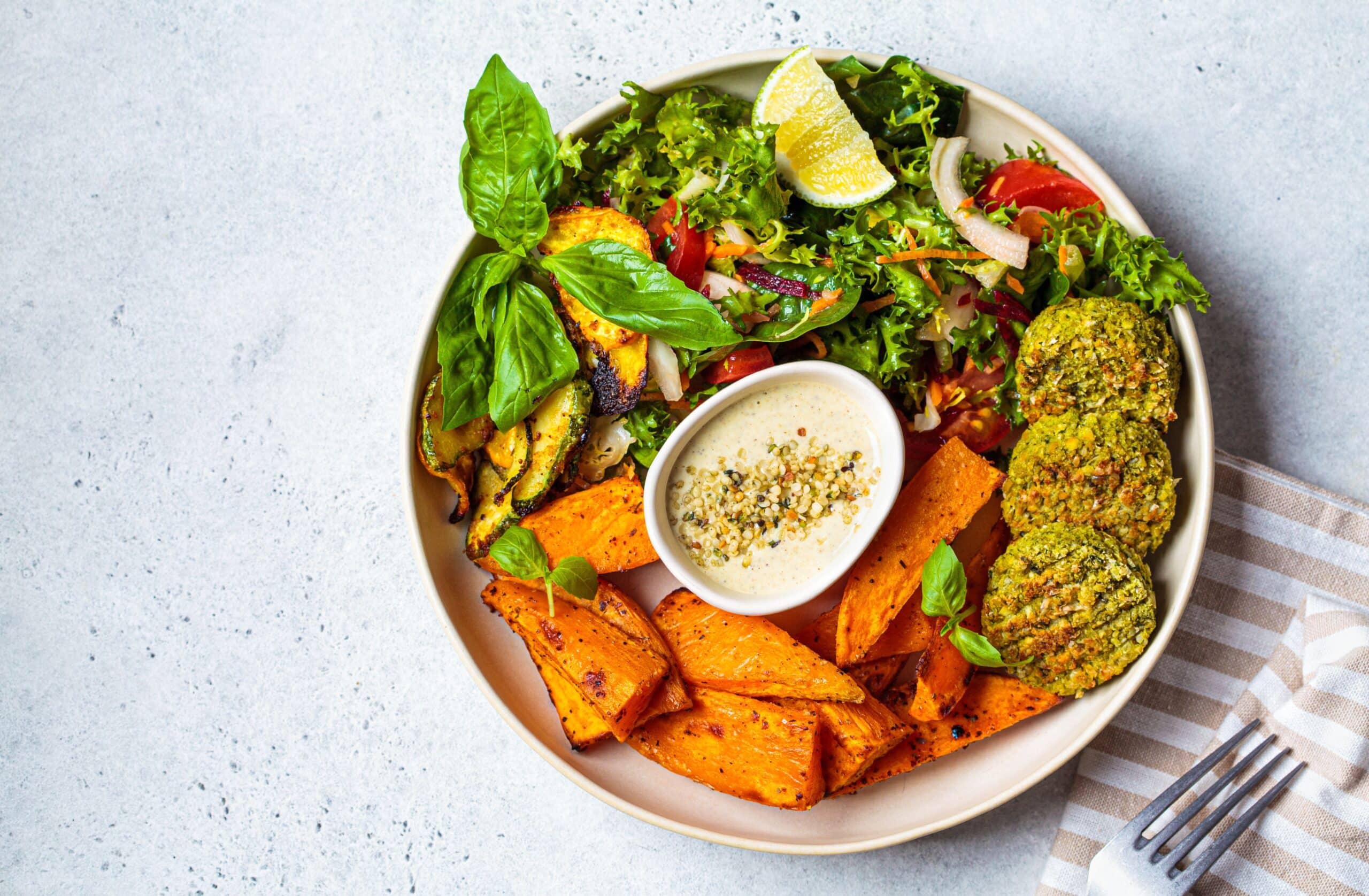
Falafel private label production covers chickpea or fava bean fritters, spiced and formed into balls or patties. These are sold raw-formed frozen for customer frying or baking, par-fried and frozen, or chilled ready-to-eat.
The product has moved from a foodservice staple into branded retail vegan and plant-based ranges. For brands, falafel is a naturally vegan, high-protein product.
Its quality depends on the bean base, spice balance, and texture (crisp outside, moist inside). Sourcing decisions focus on whether the manufacturer uses a proper soaked-bean base instead of flour, and on the frozen or chilled format.
Materials and Formats
Traditional falafel uses soaked, ground raw chickpeas or fava beans (or a blend), providing an authentic texture. Cheaper versions use chickpea flour or rehydrated powder, resulting in a denser, more uniform but less authentic product.
The chosen format determines processing and shelf life:
- Raw-formed frozen: Allows consumers to fry fresh.
- Par-fried frozen: Offers convenience.
- Chilled ready-to-eat: Suits grab-and-go but has a shorter shelf life.
Each format alters the production line and cold-chain requirements.
Manufacturing and MOQs
Falafel contract manufacturing is handled by frozen and chilled prepared-food co-packers, and Middle Eastern and vegetarian-food specialists across Europe. Most retail falafel is frozen, so frozen handling and cold-chain are critical specifications.
Minimum Order Quantities (MOQs) for custom falafel typically start in the mid-thousands of units, determined by the forming and frying line. Lead times range from 6 to 12 weeks. Recipe and spice development can extend lead times if a distinctive blend is desired over a standard one.
Cost and Quality Factors
Cost is primarily driven by the bean base and any added vegetables and herbs; a soaked-bean base is more expensive than a flour-based shortcut. Other cost factors include the spice blend, frying oil and processing for par-fried products, then freezing and frozen-format packaging.
The bean base is a key indicator of both quality and cost. A manufacturer using soaked beans delivers authentic texture but at a higher cost and with more demanding processing than one extruding a flour dough. This difference is discernible to a discerning buyer.
Frequently asked questions
Should falafel be made from soaked beans or chickpea flour?+
How do I get falafel that stays crisp outside and moist inside after freezing?+
Is falafel automatically vegan and gluten-free?+
What formats can private label falafel come in?+
What MOQ and lead time should I expect for custom falafel?+
How should the spice profile be developed and kept consistent?+
Explore adjacent product types
Get a vetted shortlist of falafel suppliers in 48 hours.
Post a brief on Wonnda. Free, no commitment. We match you with vetted manufacturers that fit your MOQ, format and market.