
Best private label face yoga tool manufacturers
Wonnda connects brands with private label face yoga tool manufacturers. When sourcing these beauty accessories, consider the core material, such as natural stone, stainless steel, silicone, or zinc alloy, which dictates the tool's feel and longevity. Key sourcing variables include the quality of the finish, especially for items like gua sha stones where a smooth edge is paramount, and the durability of moving parts on rollers. Certification for materials and manufacturing processes might be relevant depending on the product's intended use and market. Lead-time variations depend on material availability and the complexity of custom branding and packaging.
- Vetted suppliers
- 20,000+
- Brands & buyers
- 25,000+
- EU-made
- 80%
3+ Top private label face yoga tool manufacturers
Wonnda works with the best private label face yoga tool manufacturers. Here is a list of trusted suppliers from our network.
 Private LabelContract Manufacturing
Europe-based manufacturer producing jade facial roller, micro-needling facial roller, gua sha tool, available to brands sourcing face yoga tool.
- Country
- -
- MOQ
- Lead time
 Private LabelContract Manufacturing
Europe-based manufacturer producing blind boxes, labubu plush toys, plush toys, available to brands sourcing face yoga tool.
- Country
- -
- MOQ
- Lead time
 Private LabelContract Manufacturing
Europe-based manufacturer producing jade gua sha stones, stainless steel gua sha tools, gua sha tools with liquid inside, available to brands sourcing face yoga tool.
- Country
- -
- MOQ
- Lead time
Compare MOQs and lead times
Quick side-by-side of the shortlist. Missing values shown as a dash.
| Supplier | Location | Types | MOQ | Lead time |
|---|---|---|---|---|
| Corona Elite | - | PL · CM | ||
| Sukeauto | - | PL · CM | ||
| GuashaCustom | - | PL · CM |
Buyer criteria
- Material authenticity and grade
For natural-stone tools, verify the jade or rose quartz is genuine and of the claimed grade, since dyed stone, cheaper substitute stone and glass passed off as crystal are common. Ask for material documentation and sample inspection, because a stone-authenticity claim is exactly what customers pay a premium for and what a misleading supplier is most likely to fake.
- Edge and surface finish
A gua sha or any skin-contact tool must have smooth, well-polished edges and surfaces that glide without scratching or catching. Inspect samples by hand and against skin, since rough or sharp edges are uncomfortable, unsafe and the clearest sign of cut-corner production. Finish quality is the single most noticeable difference between a premium tool and a cheap one.
- Roller durability and spin
For rollers, the heads must spin freely and quietly on their bearings or pins and stay secure, not rattle, squeak or loosen with use. Test the spin and pull on the heads on production-representative samples. A roller that seizes, squeaks or sheds its head feels cheap and fails quickly, undermining a tool meant to read as a premium accessory.
- Skin-safe materials and finish
Tools that contact the face must be made of skin-safe materials with finishes that do not flake, shed coating or leach, and silicone and metal grades should be appropriate for skin contact. Confirm the material specification and finish, since a tool used directly on the face daily must be safe and durable rather than coated in something that wears off.
- Protective and premium packaging
This category relies on packaging both to protect fragile stone in transit and to present a tool that is often a gift. Confirm the packaging cushions stone pieces against breakage during shipping and matches the premium positioning. Poor packaging means breakage in transit and a weak unboxing, both of which hurt a product that trades heavily on its gift and wellness appeal.
Red flags
- Stone authenticity unverifiable
A supplier that cannot document or substantiate that the jade or rose quartz is genuine and of the claimed grade may be selling dyed, substituted or glass material as premium crystal. Since authenticity is the core of what customers pay for in a stone tool, an unverifiable material claim is both a quality fraud risk and a misleading-claim exposure for the brand.
- Rough or sharp edges
Samples with rough, sharp or poorly polished edges signal cut-corner production and are uncomfortable and unsafe on skin. Because edge finish is the most noticeable mark of quality in a gua sha or stone tool, a supplier that ships rough edges will deliver a product customers immediately judge as cheap, regardless of the material underneath.
- Rattling or seizing rollers
A roller that rattles, squeaks, seizes or whose head pulls loose on a sample is poorly assembled and will fail quickly in use. This is a common defect in low-cost roller production, and a supplier that cannot deliver smooth, secure, quiet spin on production-representative units is offering a tool that will generate returns and feel cheap from first use.
- Flimsy packaging for fragile stone
Natural-stone tools break easily, and packaging that does not cushion them properly leads to breakage in transit and a poor unboxing for a product often bought as a gift. A supplier offering minimal protective packaging is setting up shipping damage and disappointment, which is especially damaging in a category that depends on its premium gift presentation.
Manufacturing process
- 01
Material selection and sourcing
The brand fixes the material, natural stone (jade, rose quartz), stainless steel, silicone or alloy, which defines the tool's story, durability and cost. For natural stone, the grade and authenticity are specified, since lower grades and dyed or substituted stone are common. The material choice drives almost every other sourcing decision in this category.
- 02
Cutting, molding or forming
Stone tools are cut and shaped from raw material, metal tools are formed and machined, and silicone tools are molded. Stone cutting is skilled work, since each piece comes from natural material and the shape must be ergonomic and consistent. Custom shapes require new tooling or cutting patterns, which raises minimums and lead time.
- 03
Edge shaping and polishing
Working edges and surfaces are shaped and polished smooth, which is critical for a gua sha that glides across skin and for any tool used directly on the face. Rough or sharp edges are uncomfortable and unsafe, so polishing quality is a defining mark of a good tool and the step where low-cost production most often cuts corners.
- 04
Assembly
Rollers are assembled with the stone or metal heads mounted on a handle with bearings or pins that must spin freely without rattling or loosening. Massage balls and trainers are assembled to hold together under use. Assembly quality determines whether the tool feels solid and durable or squeaks and falls apart, so fit and fastening are controlled.
- 05
Quality and authenticity inspection
Tools are inspected for edge smoothness, surface finish, roller spin, structural integrity and, for natural stone, authenticity and grade against the specification. Skin-safe materials and the absence of sharp edges are confirmed. This step catches the cracked stone, rough edge or loose roller that would reach the customer as a defect.
- 06
Branding, packaging and packing
Branding is applied and the tool is placed in its retail packaging, which is often premium gift packaging since these tools are frequently bought as gifts. The pack protects fragile stone in transit and presents the tool well. Units are inspected and case-packed with care to prevent breakage of stone pieces during shipping.
Understanding face yoga tool private-label manufacturing
Materials and Finishing
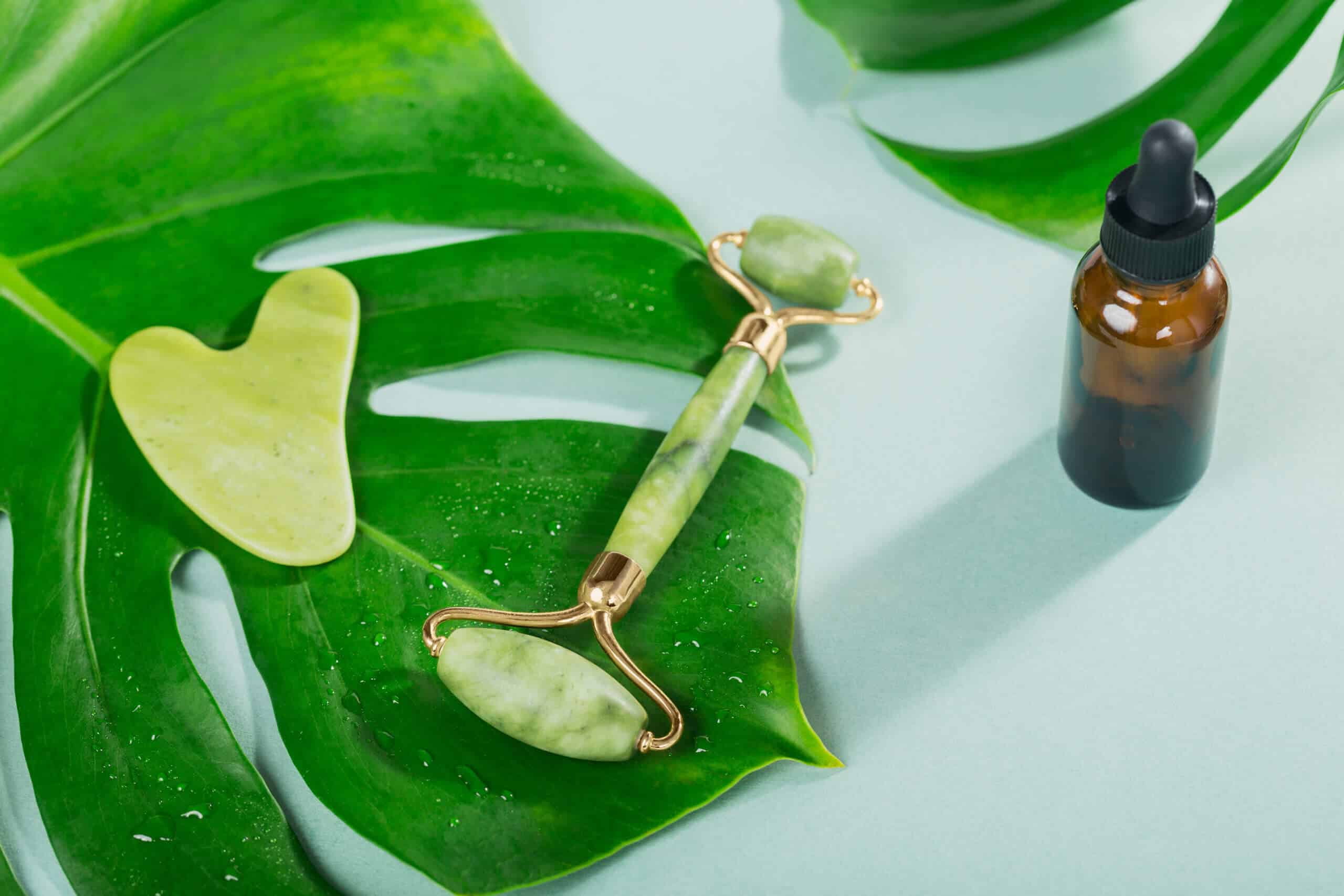
Face yoga tools are hard-goods accessories, including gua sha stones, jade and rose-quartz rollers, facial massage balls, and resistance trainers. Unlike formulated products, sourcing these tools focuses on materials, finishing, durability, and packaging. Key decisions for a private label brand involve the material and finishing quality.
Material significantly defines the category. Natural stones like jade and rose quartz offer traditional and wellness appeal but can vary in quality and may be dyed or substituted. Stainless steel provides a hygienic, durable, and modern option that can be cooled. Silicone is suitable for cleansing and massage tools.
Finishing is crucial for quality. Smooth polished edges on a gua sha, a freely spinning roller without rattling, and a secure handle differentiate a quality tool from a disappointing one. Low-cost production often compromises on these finishing details.
Production and Quality Standards
Production for face yoga tools is concentrated in Asia, with China dominating stone cutting, roller assembly, and metal and silicone tool manufacturing. While not falling under cosmetics GMP, material authenticity, safe edges, and overall quality are important. Tools that contact skin should be made of skin-safe materials.
MOQs and Lead Times
Minimum Order Quantities (MOQs) are typically higher than for filled cosmetics due to tooling and assembly requirements, often starting at 1,000 to 5,000 units for stock designs with custom branding. Custom shapes requiring new molds or stone cutting will have higher MOQs. Lead times generally range from 6 to 12 weeks, with longer periods for custom tooling.
Cost Drivers and Buyers
Cost is primarily driven by the material, with genuine high-grade jade or rose quartz being more expensive than dyed stone, glass, or alloy. Stainless steel falls in between these options. Finishing and assembly quality, premium gift packaging, and branding also significantly impact the final cost.
Buyers in this category include skincare and wellness D2C brands, beauty retail private label, spa and gifting suppliers, and tool-led indie brands. These products are sold through webshops, beauty retail, spas, and gifting channels. Prioritizing material authenticity, edge and finish quality, and roller durability over the lowest unit price is essential for maintaining the premium perception of these tools.
Frequently asked questions
How do I know the jade or rose quartz in my tool is genuine?+
Why does edge finishing matter so much on a gua sha?+
What makes a facial roller durable instead of squeaky and loose?+
Where are face yoga tools manufactured?+
What MOQ should I expect for branded facial tools?+
How important is packaging for a face yoga tool?+
Explore adjacent product types
Get a vetted shortlist of face yoga tool suppliers in 48 hours.
Post a brief on Wonnda. Free, no commitment. We match you with vetted manufacturers that fit your MOQ, format and market.