
Best private label burger bun manufacturers
Shortlist private label burger bun suppliers on Wonnda. Sourcing involves various formats, including brioche, potato, and sesame options, often supplied frozen to maintain freshness and extend shelf life for kitchens. Key considerations include the bun's ability to maintain structural integrity under hot, wet fillings and survive freeze-thaw cycles without becoming soggy or flattening. Look for suppliers with BRCGS certification, indicating adherence to strict food safety standards in their industrial baking processes.
- Vetted suppliers
- 20,000+
- Brands & buyers
- 25,000+
- EU-made
- 80%
5+ Top private label burger bun manufacturers
Wonnda works with the best private label burger bun manufacturers. Here is a list of trusted suppliers from our network.
 Private LabelContract ManufacturingWholesale
United Kingdom-based manufacturer producing bread, cakes, pastries, available to brands sourcing burger bun.
- Country
- United Kingdom
- MOQ
- Lead time
 Private LabelContract ManufacturingWholesale
Denmark-based manufacturer producing freezer-to-oven danish pastries, freezer-to-oven croissants, fully-baked danish pastries, available to brands sourcing burger bun.
- Country
- Denmark
- MOQ
- Lead time
 Private LabelContract Manufacturing
Germany-based manufacturer producing jarred peppers, jarred olives, jarred vegetables, available to brands sourcing burger bun.
- Country
- Germany
- MOQ
- Lead time
 Private LabelContract ManufacturingWholesale
United Kingdom-based manufacturer producing poultry products, frozen foods, beverages, available to brands sourcing burger bun.
- Country
- United Kingdom
- MOQ
- Lead time
 Private LabelContract ManufacturingWholesale
Sweden-based manufacturer producing schulstad artisan breads, schulstad bakery solutions doughs, bonjour croissants, available to brands sourcing burger bun.
- Country
- Sweden
- MOQ
- Lead time
Compare MOQs and lead times
Quick side-by-side of the shortlist. Missing values shown as a dash.
| Supplier | Location | Types | MOQ | Lead time |
|---|---|---|---|---|
| Galeta Wholesale Bakery | United Kingdom | PL · CM · WS | ||
| Schulstad Bakery Solutions | Denmark | PL · CM · WS | ||
| Giuliano’s Specialty Foods | Germany | PL · CM | ||
| Brakes | United Kingdom | PL · CM · WS | ||
| Lantmännen Unibake | Sweden | PL · CM · WS |
Buyer criteria
- Freeze-thaw stability
Most buns ship and store frozen, so confirm the bakery has validated that the bun thaws back soft, intact, and non-soggy rather than crumbling or going gummy. Ask for thawed samples held to your intended use timing. A bun that performs fresh from the oven but fails after a freeze cycle will let you down in every kitchen that relies on frozen stock.
- Crumb structure for wet fillings
A burger bun must hold a hot, juicy patty, sauce, and toppings without collapsing or dissolving. Verify the crumb is resilient and the cut face resists sogginess, ideally with a slightly closed structure or a toasting recommendation. Test the bun with a real loaded burger, since a bun judged dry on its own can still turn to mush under a wet filling.
- Recipe and enrichment match
Confirm the bakery can deliver the exact style you want, brioche, potato, or standard enriched, at scale and not just as a trial bake. Brioche needs butter and egg handling, potato needs flake or flour dosing, and each changes cost and shelf life. A bakery strong on plain buns may not nail a rich brioche crumb consistently.
- HACCP and retail certification
Require HACCP plus BRCGS or IFS certification appropriate to retail and foodservice supply, with the scope covering bakery and frozen products. These cover baking critical control points, metal detection, and allergen management. Confirm the certificate is current and that your product category falls within its audited scope before committing volume.
- Allergen handling for sesame and egg
Burger buns frequently carry sesame topping and egg or dairy enrichment, all major allergens. Verify how the bakery segregates and declares them, especially if you run both topped and plain SKUs on shared lines. Sesame in particular is a strict-labeling allergen, so cross-contact controls and accurate declarations are essential to avoid a recall.
- Consistent dimensions and pack format
Foodservice and retail need every bun to match diameter, height, and weight so it fits the patty, the box, and the planogram. Confirm tolerance on dimensions and that the pack format, bagged, trayed, or sliced, suits your channel. Inconsistent bun size disrupts kitchen assembly and looks poor in a retail multipack.
Red flags
- No validated freeze-thaw data
If the bakery cannot show how the bun performs after freezing and thawing, you are buying blind on the single most important attribute for frozen distribution. A bun that goes soggy or crumbly on thaw fails in the kitchen. Refuse to scale without thawed samples held to your real handling timeline.
- Vague allergen statements
Buns with sesame, egg, or dairy demand precise allergen declarations and cross-contact controls. A bakery that is vague about which lines run sesame, or that cannot guarantee a plain bun is sesame-free, exposes you to mislabeling and recall risk. Sesame is a strict-labeling allergen, so imprecision here is disqualifying.
- Inconsistent bun dimensions
If trial samples vary noticeably in diameter, height, or weight, the dough scaling and proofing are not controlled. Variable buns disrupt assembly lines, mismatch the patty, and look poor in retail packs. A bakery that cannot hold tight dimensional tolerance on a sample run will not hold it across full production.
- Soggy or collapsing crumb under filling
A bun that looks fine dry but turns to paste under a hot, wet patty and sauce has the wrong crumb structure. If loaded-burger testing shows collapse or dissolving at the cut face, the recipe is unsuitable regardless of how it presents on its own. Always test with a real filling, not the bare bun.
Manufacturing process
- 01
Dough mixing and development
Flour, water, yeast, sugar, salt, fat, and any egg or butter for brioche are mixed in high-speed spiral mixers to develop the gluten network. Dough temperature and mixing time are controlled tightly, since over- or under-development changes crumb structure and the bun's ability to hold a wet filling later.
- 02
Bulk fermentation and dividing
The dough rests to ferment and build flavor, then automated dividers and rounders portion it into exact-weight pieces. Consistent piece weight is what gives a uniform bun diameter and height across the run, which matters for foodservice operators who need every bun to match the patty and the clamshell pack.
- 03
Proofing
Shaped dough pieces prove in humidity- and temperature-controlled chambers until they reach the target volume. Proof time sets the final crumb softness and the dome shape. Under-proofed buns bake dense and tight, while over-proofed buns collapse, so the proofer is monitored closely on each batch.
- 04
Topping and baking
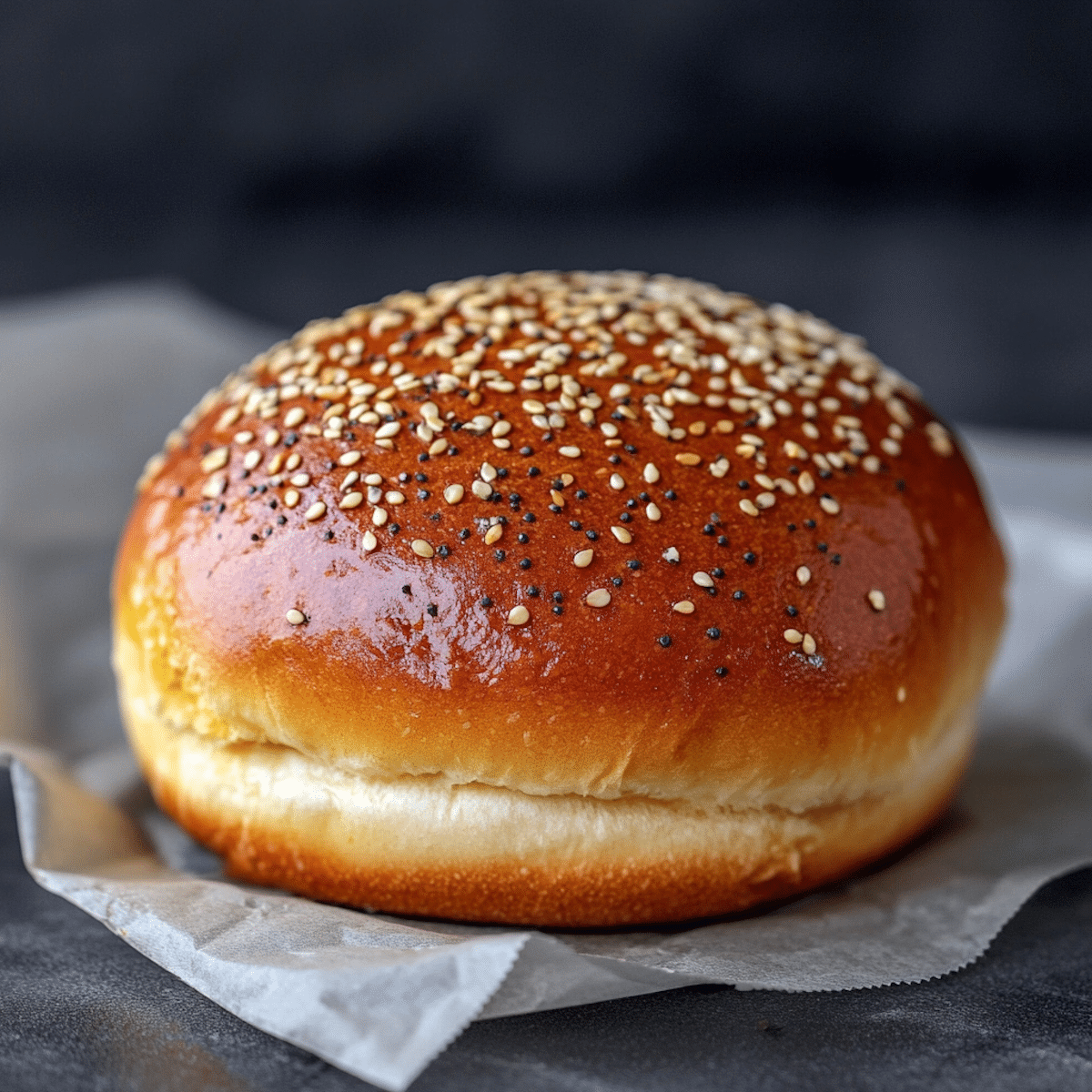
Buns are egg-washed or glazed and topped with sesame, poppy, or left plain, then baked in a tunnel oven where temperature zones set crust color and crumb set. Brioche and potato recipes bake to a deeper gold. The bake locks the structure that determines freeze-thaw resilience.
- 05
Cooling and slicing
Baked buns cool on spiral conveyors to stabilize the crumb before any slicing, since slicing warm bread tears the structure. Most foodservice buns are pre-sliced horizontally to a controlled depth so kitchens can open and toast them fast without re-cutting. Crumb must be set enough to slice cleanly.
- 06
Freezing and packing
Buns pass through a blast or spiral freezer to lock freshness, then are bagged or trayed, sealed, coded, and cased for frozen distribution. Inline freezing speed protects crumb moisture so the bun thaws back soft. Packaging protects against freezer burn and carries lot codes and allergen declarations.
- 07
Quality control and shelf-life verification
QC checks weight, diameter, height, crumb, and color against spec, runs microbiological and allergen testing, and verifies freeze-thaw performance and shelf life. HACCP critical control points cover baking temperature and metal detection. Certificates of analysis and allergen statements travel with each batch.
Understanding burger bun private-label manufacturing
Bun Types and Formulations
Burger buns are designed to hold hot, wet, and heavy fillings without becoming soggy, falling apart, or flattening. A key sourcing challenge for private label brands and foodservice operators is balancing a soft yet resilient crumb with the ability to withstand freeze-thaw cycles.
Different bun recipes offer varied characteristics. A standard enriched bun uses flour, water, yeast, sugar, and a small amount of fat. Brioche-style buns incorporate butter and egg for richness and a golden crumb, affecting cost and shelf life. Potato buns utilize potato flour or flakes for a tender, slightly sweet crumb that retains moisture. Vegan and clean-label formulations remove egg and dairy, relying on plant fats and emulsifiers, which alters dough behavior.
Production and Logistics
European bun production for retail and foodservice is concentrated in Germany, the Netherlands, Belgium, Poland, and France. These regions host large industrial bakeries utilizing continuous lines with spiral mixers, automated dividers, proofers, tunnel ovens, and inline freezing.
Most bun volume ships frozen, allowing kitchens to thaw and toast as needed. Freeze-thaw stability and a clean defrost are critical specifications.
MOQs and Lead Times
Minimum Order Quantities (MOQs) for a custom recipe and pack typically begin at one full production run, which can be tens of thousands of buns. Shorter runs are uneconomical due to changeover, dough scaling, and freezer logistics.
Lead times for a new recipe, including baking trials and shelf-life testing, range from 6 to 12 weeks. Costs are primarily determined by the flour and enrichment levels, followed by freezing and frozen logistics, and then packaging. Labor and energy represent a consistent share of the cost on automated production lines.
Quality and Certifications
Buyers of private label burger buns include retailer chilled and frozen ranges, quick-service and casual-dining chains, food-to-go and meal-kit operators, and foodservice distributors.
Bakeries should be qualified based on their HACCP and BRCGS or IFS certifications. Additionally, their performance in freeze-thaw cycles and their allergen handling for sesame and egg are crucial. A bun that crumbles after thawing or contains an undeclared allergen can lead to failure at the pass and during audits.
Frequently asked questions
Should I choose brioche, potato, or standard enriched buns?+
Do burger buns ship frozen or fresh?+
Why do my buns go soggy when I add the patty?+
What certifications should a burger bun bakery hold?+
Can burger buns be made vegan?+
What MOQ should I expect for custom burger buns?+
Explore adjacent product types
Get a vetted shortlist of burger bun suppliers in 48 hours.
Post a brief on Wonnda. Free, no commitment. We match you with vetted manufacturers that fit your MOQ, format and market.