
Best private label multivitamin gummies manufacturers
Shortlist private label multivitamin gummies suppliers on Wonnda. Sourcing these complex formulations requires careful consideration of active ingredient stability, especially for heat-sensitive vitamins and bulky minerals. Manufacturers must ensure accurate dosage and palatability while managing the inherent challenges of combining multiple nutrients within a single gummy matrix. Key sourcing variables include the gummy base material, flavor profiles, and adherence to specific dietary certifications to meet market demands.
- Vetted suppliers
- 20,000+
- Brands & buyers
- 25,000+
- EU-made
- 80%
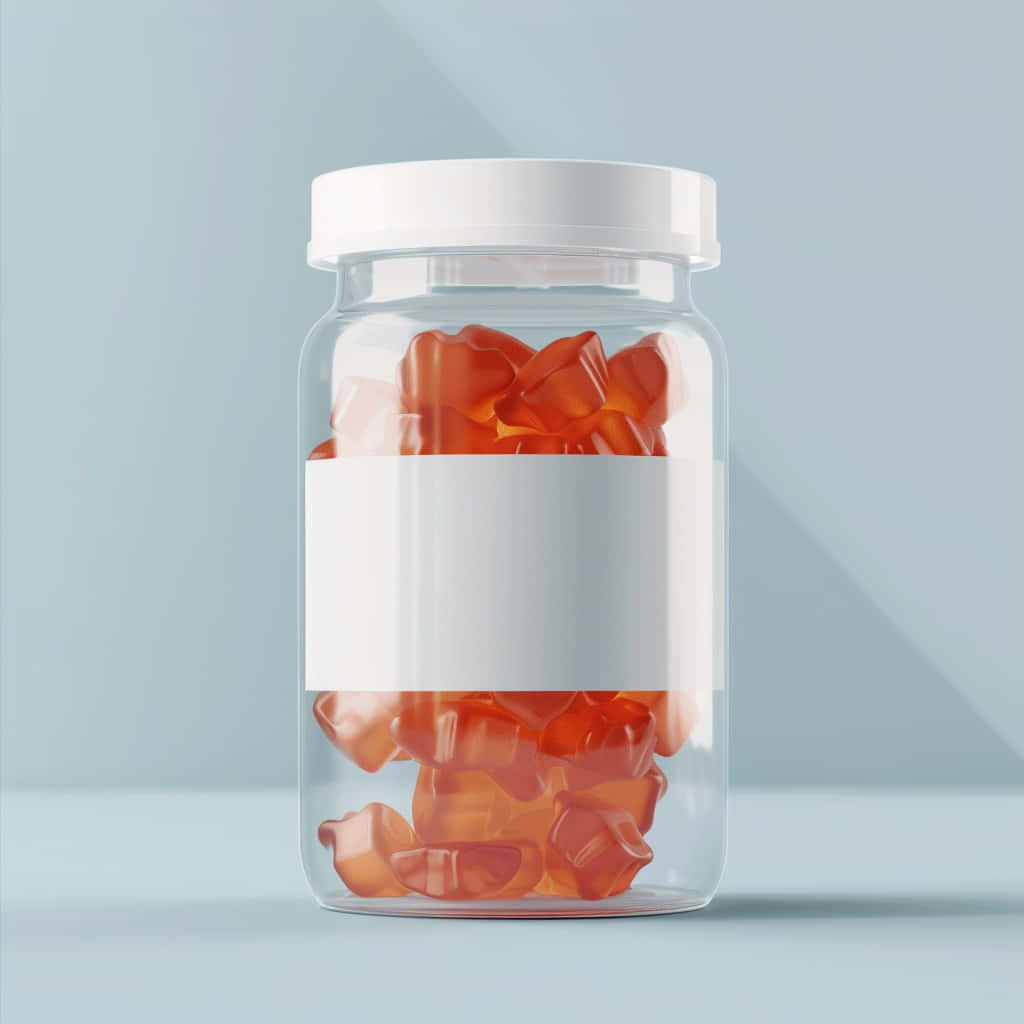
7+ Top private label multivitamin gummies manufacturers
Wonnda works with the best private label multivitamin gummies manufacturers. Here is a list of trusted suppliers from our network.
- Featured
 Private LabelContract Manufacturing
USA-based manufacturer producing capsules, tablets, powders, available to brands sourcing multivitamin gummies.
- Country
- USA
- MOQ
- Lead time
- Featured
 Private LabelContract Manufacturing
Expert Contract Manufacturing for Food and Feed Supplements
- Country
- Slovenia
- MOQ
- Lead time
 Private LabelContract Manufacturing
Europe-based manufacturer producing gummy bears, jelly beans, chews, available to brands sourcing multivitamin gummies.
- Country
- -
- MOQ
- Lead time
 Private LabelContract Manufacturing
Poland-based manufacturer producing classic energy drinks, bcaa beverages, fruit juices, available to brands sourcing multivitamin gummies.
- Country
- Poland
- MOQ
- Lead time
 Private LabelContract Manufacturing
Organ-Based Private Label Supplements
- Country
- USA
- MOQ
- Lead time
 Private LabelContract Manufacturing
Grass-Fed Beef Liver With Multivitamins
- Country
- USA
- MOQ
- Lead time
British VitaTech (BVT Labs Ltd.) specializes in private label and contract manufacturing of pouch-based products. Trusted by FMCG brands for certified, scalable production solutions.
- Country
- United Kingdom
- MOQ
- Lead time
Compare MOQs and lead times
Quick side-by-side of the shortlist. Missing values shown as a dash.
| Supplier | Location | Types | MOQ | Lead time |
|---|---|---|---|---|
| Superior Supplement Manufacturing | USA | PL · CM | ||
| Private Vitamin | Slovenia | PL · CM | ||
| Amapharm GmbH | - | PL · CM | ||
| Brandsparkle | Poland | PL · CM | ||
| SMP Nutra | USA | PL · CM | ||
| Makers Nutrition | USA | PL · CM | ||
| British VitaTech (BVT Labs Ltd.) | United Kingdom | - |
Buyer criteria
- Realistic nutrient levels in a gummy
A gummy cannot match a tablet's full mineral profile, so confirm which nutrients the manufacturer can deliver at meaningful levels and which are token. Ask for the actual amount of each mineral per serving. A multivitamin gummy that lists a long panel but doses minerals far below useful levels misleads customers, so honest, achievable nutrient levels are the first thing to verify.
- Overage and stability across the panel
With many actives, each degrading at its own rate, the manufacturer must set a per-nutrient overage backed by stability data so every claim holds at expiry. Ask how they manage overage across the whole panel and prove late-life potency. A house that applies a blanket overage or none will see some nutrients fall below claim before the dated life ends.
- Masking of a broad active load
A wide panel contributes many off-tastes, especially metallic mineral notes, so masking is harder than for a single-active gummy. Taste production-representative samples and assess whether the flavor stays clean despite the load. A multivitamin gummy that tastes vitaminy or metallic will not be taken daily, so masking capability across the full formula is a core qualification.
- Deposit accuracy for many nutrients
Every nutrient's dose depends on consistent piece weight, so confirm the depositing line holds tight tolerance and that the premix is uniformly distributed. With a broad panel, variance affects many claims at once. Ask how piece weight and premix uniformity are verified, since loose depositing undermines the dose of every vitamin and mineral in the gummy.
- Sugar profile matched to audience
Multivitamin gummies often target families and children, where sugar content is scrutinized, so decide your sugar or sugar-free position and confirm the manufacturer delivers it cleanly. Sugar-free polyol versions cost more and carry a digestive caveat. Match the sugar story to your audience and verify the texture and taste hold, since the sugar profile is a key buying factor for this audience.
Red flags
- Full tablet profile promised in one gummy
A manufacturer that agrees to deliver a complete tablet-level multivitamin, including high mineral doses, in a single gummy is overpromising, because the payload cannot hold it. If they do not flag the mineral limitation, they are either inexperienced or planning to dose minerals at token levels behind an impressive-looking panel, which misleads your customers.
- Blanket or absent overage
Applying one overage to every nutrient, or none at all, ignores that vitamins and minerals degrade at very different rates in a gummy. Some nutrients will fall below claim by expiry while others sit fine. A house without per-nutrient overage backed by stability data across the panel will ship product that fails late-life testing on specific actives.
- Metallic or vitaminy taste in samples
If production-representative samples taste metallic or strongly of vitamins, the masking has not coped with the broad active load. A multivitamin gummy is taken daily, often by children, so an off taste kills the habit. Weak masking on a full panel signals a manufacturer without the flavor capability this harder gummy demands.
- No per-nutrient assay or stability data
If the manufacturer only tests a couple of nutrients or cannot show stability across the panel, you cannot prove the gummy meets its many claims at expiry. In a broad formula, missing assay and stability data means some nutrients are unverified, which is a label-claim and trust risk on a product sold as complete daily support.
Manufacturing process
- 01
Nutrient panel feasibility
The manufacturer reviews the desired vitamin and mineral panel against the limited gummy payload, flagging bulky minerals and heat-sensitive vitamins that cannot reach meaningful levels in one piece. The realistic panel and serving size are set here. This feasibility step is specific to multivitamin gummies, where many nutrients compete for the same small space.
- 02
Premix and overage design
A vitamin and mineral premix is formulated with an overage on each nutrient that loses potency during cooking or over shelf life, calculated against stability data. Mineral forms are chosen to minimize bulk and off-taste. The breadth of the panel makes overage management the central formulation challenge, since each nutrient degrades at a different rate.
- 03
Base, sweetener, and masking
A pectin or gelatin base and a sugar or sugar-free sweetener system are chosen, with flavors and masking tuned to cover the metallic and vitamin notes that a broad panel produces. The masking load is heavier than for a single-active gummy because more actives contribute off-tastes that must be balanced into a pleasant flavor.
- 04
Cooking and slurry preparation
The base, sweeteners, and water are cooked to target solids, then the premix, flavors, colors, and acids are added at controlled temperature to limit degradation of heat-sensitive vitamins. The slurry is held at depositing temperature and viscosity. Timing of addition protects the most fragile nutrients in the panel.
- 05
Depositing into molds
The slurry is deposited into molds by volume so each gummy carries the intended nutrient load. Deposit accuracy controls the dose of every vitamin and mineral in the panel, so tolerance matters more here than for a single-active piece. Mold cavity size is matched to the serving and the payload.
- 06
Curing and finishing
Gummies cure to final texture and moisture, then are demolded and finished with an anti-stick coating. Curing time depends on the base. Finishing also controls clumping in the pack. The broad active load can affect set behavior, so curing is qualified for the specific multivitamin formula rather than assumed from a plain gummy.
- 07
Quality control and packaging
QC tests the key nutrients against claim, microbiological limits, moisture, and texture, with heavy metals where relevant. Stability supports the shelf life and the overage across the panel. Gummies are packed into moisture-controlled bottles with desiccant. Lot codes trace finished units back to the premix and production batch.
Understanding multivitamin gummies private-label manufacturing
Formulation Challenges for Multivitamin Gummies
Multivitamin gummies are more complex to formulate than single-active functional gummies due to the need to incorporate numerous nutrients into one small piece. Each vitamin and mineral presents unique demands regarding stability, taste, and payload. Minerals tend to be bulky and can have metallic tastes, while some vitamins are sensitive to heat. The collective load of these ingredients competes for limited space within the gummy, making the formulation a delicate balancing act.
Key constraints include payload capacity, mineral inclusion, and the stability of multiple active ingredients. Bulky minerals like calcium or magnesium are challenging to include at meaningful levels, which often leads to multivitamin gummies under-delivering on mineral content compared to tablets. Many nutrients require an overage to maintain their efficacy through the cooking process and within the humid gummy matrix until expiry. Interactions between vitamins, minerals, and the gummy base can also impact both texture and the retention of active ingredients.
Sourcing and Manufacturing
Specialized gummy manufacturers, primarily located in Germany, Spain, Italy, the Netherlands, and Poland, are essential for producing multivitamin gummies. These facilities are equipped with depositing and curing lines specifically designed for gummy production.
- MOQs: Typically range from 10,000 to 30,000 units or more.
- Lead Times: Generally span 8 to 14 weeks.
The primary cost drivers, in order of impact, are the vitamin and mineral premix, the base and sweetener system, the flavor and color system, and finally, the depositing and packaging processes. The extensive range of nutrients in a multivitamin gummy increases both the complexity of the formulation and the need for meticulous overage management to ensure all nutrient claims are met.
Target Market and Differentiation
Private label multivitamin gummies are often purchased by family and lifestyle wellness D2C brands, companies offering children's and adult daily-vitamin ranges, and mainstream retailers where gummies are known to drive consumer habit and impulse buys. The appeal of these products lies in their taste, convenience, and the promise of complete daily support.
Differentiation in this category hinges on delivering honest nutrient levels, a clean texture, and a sugar profile that aligns with the target audience. When qualifying a manufacturing partner, it is more critical to assess their ability to credibly deliver specific nutrients in a gummy and ensure stability across the entire nutrient panel, rather than focusing solely on the per-gummy price. A multivitamin gummy that silently under-delivers on minerals or falls below its stated claims by expiry can undermine the core promise of complete support.
Comparing formats first? See the full overview of private label gummy manufacturers for MOQ, gelling systems and EU requirements across every gummy format.
Why a multivitamin is the hardest gummy to formulate
A single-nutrient gummy has one stability problem and one taste problem. A multivitamin has fifteen. Every vitamin and mineral in the blend behaves differently in a cooked, moist, sugar-based matrix: Vitamin C and folate degrade fastest, B vitamins bring their own colour and off-notes, iron and copper catalyse the breakdown of other actives and taste metallic, and fat-soluble vitamins need an emulsified carrier to disperse evenly. The manufacturer has to hold all of that on claim to expiry, in a piece small enough to chew.
That is why most multivitamin gummies use a two-gummy serving, why the mineral list is shorter than a capsule equivalent, and why iron is often left out entirely. None of this is a shortcut. It is what the format allows, and a manufacturer who explains the trade-off before formulating is telling you something useful about how they work.
Overage across fifteen actives at once
Each active needs its own overage, calculated from stability data for that nutrient in a gummy matrix, and the overages are not additive in a simple way because some nutrients accelerate the loss of others. Vitamin C commonly carries the largest excess. Ask for the overage table, ask whether it came from gummy-matrix data or from capsule data, and ask for a finished-batch assay that shows the assayed value against label claim for at least the fastest-degrading actives. A multivitamin quoted without an overage table is not ready to produce.
Reference intake percentages and label design
In the EU the nutrition declaration shows the amount per serving and the percentage of the Nutrient Reference Value, so the label makes your dosing choices visible. Two decisions follow. First, whether you cover a broad list at moderate percentages or a shorter list closer to 100 percent NRV, which is the choice between looking complete and being meaningful. Second, whether the serving is one or two gummies, since every percentage on pack refers to that serving and a two-gummy serving doubles your cost per day. Settle both before artwork, because changing the serving size later changes every number on the panel.
Choosing a manufacturer for a multivitamin gummy
Look for a house that already runs multi-nutrient gummy blends rather than one that runs single-active gummies well. Ask which minerals they will and will not include and why, whether they use emulsified carriers for the fat-soluble vitamins, and how they mask the B vitamin and mineral notes without pushing sugar or acid too high. The gummy manufacturer overview covers MOQ, lead time and certification questions that apply across formats, and single-nutrient vitamin gummies are the simpler starting point if your first launch needs to be fast.
Frequently asked questions
Why can't a multivitamin gummy match a multivitamin tablet?+
How is overage managed across so many nutrients?+
Can I put iron or high-dose minerals in a gummy?+
What MOQ should I expect for multivitamin gummies?+
Are multivitamin gummies suitable for children?+
How do I keep all the nutrients on claim at expiry?+
Explore adjacent product types
Get a vetted shortlist of multivitamin gummies suppliers in 48 hours.
Post a brief on Wonnda. Free, no commitment. We match you with vetted manufacturers that fit your MOQ, format and market.