
Best private label foundation manufacturers
Wonnda connects brands with private label foundation manufacturers. Sourcing foundation requires careful consideration of various formats, including liquid, cushion, and stick applications, each demanding specific formulation expertise. Key variables often revolve around achieving inclusive shade ranges that cater to diverse skin tones, as well as desired finishes like matte, dewy, or natural. Manufacturers need to demonstrate proficiency in color matching and formulation stability to ensure product consistency across large batches.
- Vetted suppliers
- 20,000+
- Brands & buyers
- 25,000+
- EU-made
- 80%
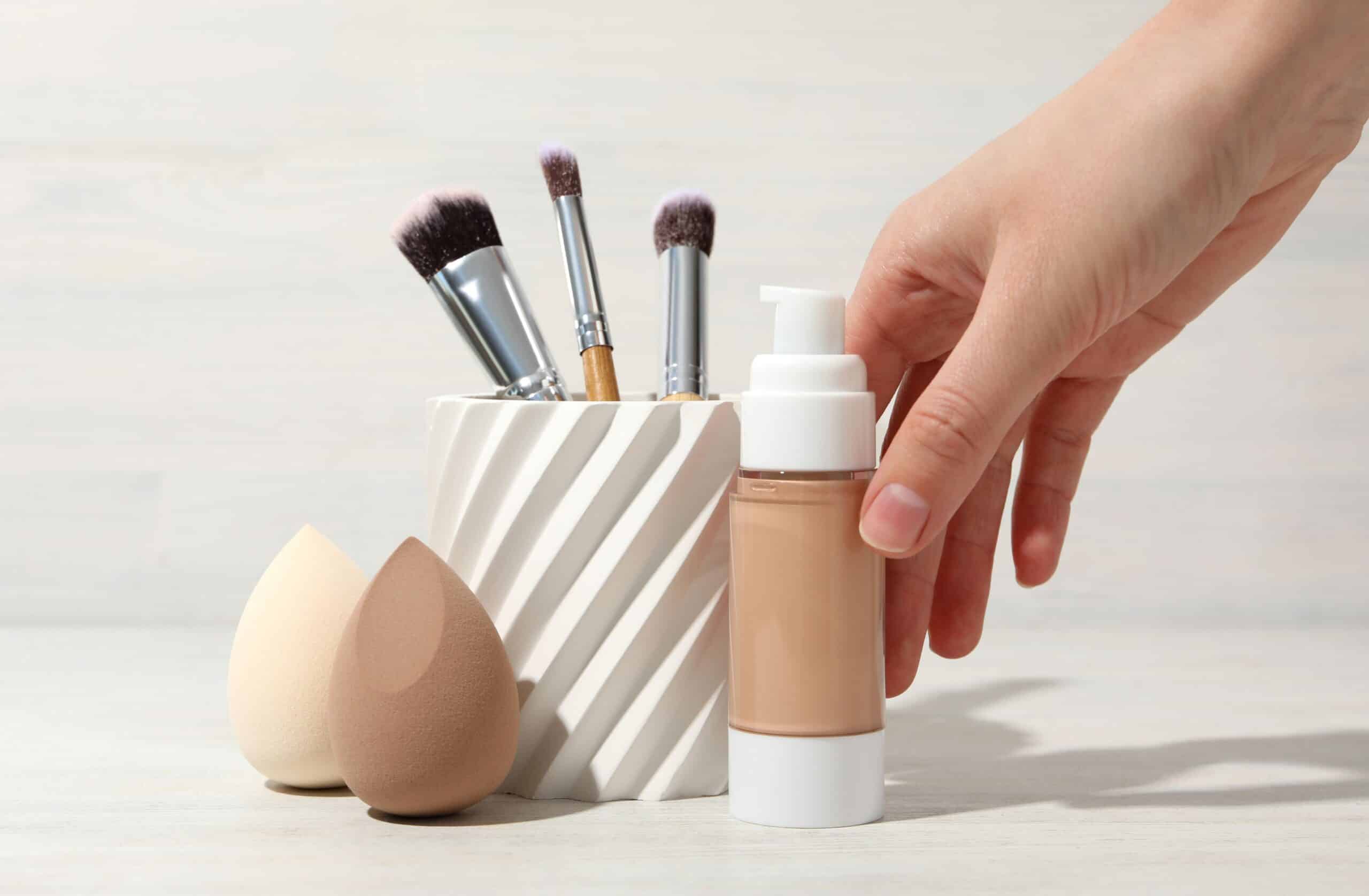
4+ Top private label foundation manufacturers
Wonnda works with the best private label foundation manufacturers. Here is a list of trusted suppliers from our network.
 Private LabelContract Manufacturing
Netherlands-based manufacturer producing refreshing shower gels, shimmering oils, soothing lotions, available to brands sourcing foundation.
- Country
- Netherlands
- MOQ
- Lead time
 Private LabelContract Manufacturing
Europe-based manufacturer producing eyebrow tints, facial creams, serums, available to brands sourcing foundation.
- Country
- -
- MOQ
- Lead time
 Private LabelContract Manufacturing
Europe-based manufacturer producing skincare products, color cosmetics, hair care products, available to brands sourcing foundation.
- Country
- -
- MOQ
- Lead time
 Private LabelContract Manufacturing
Europe-based manufacturer producing otc ethanol-based sanitizers, astringents, hair fixatives, available to brands sourcing foundation.
- Country
- -
- MOQ
- Lead time
Compare MOQs and lead times
Quick side-by-side of the shortlist. Missing values shown as a dash.
| Supplier | Location | Types | MOQ | Lead time |
|---|---|---|---|---|
| Cosmetize | Netherlands | PL · CM | ||
| Delia Cosmetics | - | PL · CM | ||
| Nako Cosmetic | - | PL · CM | ||
| Bell | - | PL · CM |
Buyer criteria
- Shade-range depth and undertone accuracy
Foundation is judged on whether a customer can find their exact tone and undertone, so confirm the maker can produce a deep, inclusive range spanning fair to deep with warm, neutral, and cool undertones at each depth. Ask for matched samples across the range. A narrow or undertone-limited range reads as exclusionary and loses customers, so range capability is the defining foundation criterion.
- Oxidation control across the range
Foundation often shifts color hours after application as it oxidizes, so confirm the maker tests and controls oxidation so each shade stays true all day. Ask for wear-test shade data across the range. An oxidizing foundation that looks matched at application but turns orange or dark by afternoon misrepresents the shades and frustrates customers who chose carefully, so oxidation control is essential.
- Finish consistency between shades
All shades in a range should share the same finish and coverage so the line feels cohesive, so verify the finish, whether dewy, natural, or matte, is consistent from the lightest to the deepest shade. Test across the range. A range where deep shades look different in finish from light ones signals weak formulation control and undermines the inclusive, unified promise of the line.
- SPF substantiation where claimed
If the foundation claims SPF, that claim crosses into sun-protection regulation and must be backed by the required SPF testing, so confirm the maker substantiates the SPF properly rather than implying protection. Ask for the SPF test evidence. An unsubstantiated SPF claim is both non-compliant and misleads customers who may rely on it for sun protection, so it must be genuinely tested.
- Color-cosmetics compliance and pigment safety
Foundation is a cosmetic needing a product information file, CPNP notification, and ISO 22716 GMP, with pigments restricted to those permitted for cosmetic use and any SPF subject to sunscreen rules. Confirm the maker uses approved pigments and supplies the full safety assessment, since a face-wide product worn daily must be safe, correctly labeled, and compliant across its shade range and any SPF claim.
Red flags
- Narrow or undertone-limited shade range
A maker that can only produce a handful of light-to-medium shades or lacks deep tones and varied undertones cannot support an inclusive foundation range, and the category now judges brands harshly on this. A limited range loses every customer whose tone is missing and brands the line as exclusionary. If the supplier's shade capability is shallow, it is a fundamental constraint on the product.
- Foundation that oxidizes off-shade
If wear-test samples shift darker or orange hours after application, the foundation oxidizes and the matched shade is not what the customer wears all day. A maker that does not test oxidation across the range is shipping shades that misrepresent themselves. Since customers choose foundation shades carefully, an oxidizing product that betrays that choice by afternoon is a serious and common fault.
- Inconsistent finish across shades
If the deep shades look noticeably different in finish or coverage from the light ones, the formulation control across the range is weak. A cohesive range needs a consistent finish from fair to deep. Inconsistency signals that the range was not developed as a unified system, which undermines both the inclusive promise and the customer experience of matching within the line.
- SPF claimed without proper testing
An SPF number on a foundation that is not backed by the required sun-protection testing is non-compliant and dangerous, since customers may rely on it for protection it does not deliver. A maker that adds an SPF claim without substantiating it is creating both a regulatory and a safety liability. Treat any unsubstantiated SPF claim as a reason to question the supplier's compliance discipline.
Manufacturing process
- 01
Coverage, finish and format design
The maker fixes the coverage (light to full), finish (dewy, natural, or matte), and format (liquid, cushion, stick, or powder), then builds the base accordingly. Each finish is a different balance of emollients, oils, and powders, so these choices shape the whole formula before shade development across the range begins.
- 02
Shade-range development and undertone mapping
The full shade range is mapped across depth, from fair to deep, and undertone, warm, neutral, and cool, then each shade is matched and dispersed. This is the defining work of foundation, since a credible inclusive range needs many shades, and undertone accuracy at every depth determines whether the brand reads as inclusive.
- 03
SPF and active integration where claimed
If the foundation carries SPF or skincare actives, the sunscreen filters or actives are integrated and the SPF claim is substantiated by required testing, since SPF crosses into sun-protection regulation. This adds cost and testing time, so it is designed in deliberately rather than added as a marketing afterthought.
- 04
Milling and dispersion across shades
Each shade's pigment-and-base mixture is milled to disperse pigment evenly so the foundation applies smoothly and the color is true and consistent. Consistency across the whole range matters, since shades must relate to one another sensibly. Dispersion is checked before filling, as poor milling shows up as patchy or off-tone application.
- 05
Oxidation, finish and wear testing
Samples across the range are wear-tested for oxidation (shade shift after application), finish consistency, coverage, and wear over the day. A foundation that oxidizes darker or whose finish varies between shades undermines the range, so the whole range is verified on relevant skin tones before approval, not just a single shade.
- 06
Filling, format assembly and QC
The foundation is filled into bottles with pumps, cushion compacts, sticks, or powder pans, then decorated and labeled. QC confirms shade accuracy across the range, fill, finish, and any SPF claim, and the product information file, CPNP notification, and ISO 22716 documentation with pigment, SPF, and allergen declarations are completed before release.
Understanding foundation private-label manufacturing
Formulation Challenges and Formats
Foundation is a pigmented complexion product that evens skin tone. Its commercial success depends on an inclusive shade range and a finish that matches across many skin tones. Unlike concealer or eyeliner, foundation must look like skin across the entire face and the full spectrum of human complexions. Shade-range breadth is the defining commercial and formulation challenge in this category. A foundation brand with a narrow shade range may be perceived as exclusionary.
Format and finish decisions are varied. Liquid foundation is the dominant format, with dewy, natural, and matte finishes, and light to full coverage. Cushion foundations, a Korean innovation, involve liquid foundation soaked into a sponge in a compact for buildable, portable application. Stick and cream foundations offer fuller coverage, while powder foundations suit oily skin.
Modern foundations increasingly include skincare actives and SPF, which introduces sun-protection regulation and testing requirements. Coverage, finish, and any SPF claims, in addition to the shade range, define the formulation brief.
Manufacturing and Sourcing
Foundation manufacturing is handled by specialist color-cosmetic contract manufacturers. Italy is the dominant global hub for color cosmetics, along with Germany and France. South Korea has significant manufacturing capability, particularly for cushion formats, as does China.
MOQs and Lead Times
MOQs for a custom foundation typically start at 5,000 to 10,000 units per shade. Due to the need for a credible range with many shades, the total launch commitment is the largest among many product types. Lead times for a full custom range are typically 12 to 18 weeks.
Costs are primarily driven by pigment and shade-matching across the range. Additional costs come from SPF and active systems and their testing, then packaging and applicators. The base accounts for a moderate share. The shade range, not the unit formula, is the dominant cost and planning factor.
Target Buyers and Quality Considerations
Private label foundation buyers include color-cosmetics D2C and indie brands, inclusive-beauty brands developing broad shade ranges, makeup-artist lines, and retailer cosmetics programs. Inclusivity has reshaped the category, with brands now expected to launch with deep, varied shade ranges spanning all undertones.
When qualifying a partner, assess their shade-range depth and undertone accuracy, as well as oxidation and finish consistency across the entire range. If making a sun-protection claim, evaluate SPF testing capabilities. A foundation that oxidizes, offers too few shades, or cannot match across tones will not meet the inclusive, skin-like promise that the category now demands.
Frequently asked questions
Why is the shade range the most important decision for a foundation brand?+
How is foundation different from concealer in formulation?+
What is a cushion foundation and does it need a specialist maker?+
What does adding SPF to a foundation involve?+
What MOQ and lead time should I expect for a private label foundation range?+
How do I make sure shades stay true and consistent across my range?+
Explore adjacent product types
Get a vetted shortlist of foundation suppliers in 48 hours.
Post a brief on Wonnda. Free, no commitment. We match you with vetted manufacturers that fit your MOQ, format and market.