
Private Label Protein Powder Manufacturers & Suppliers
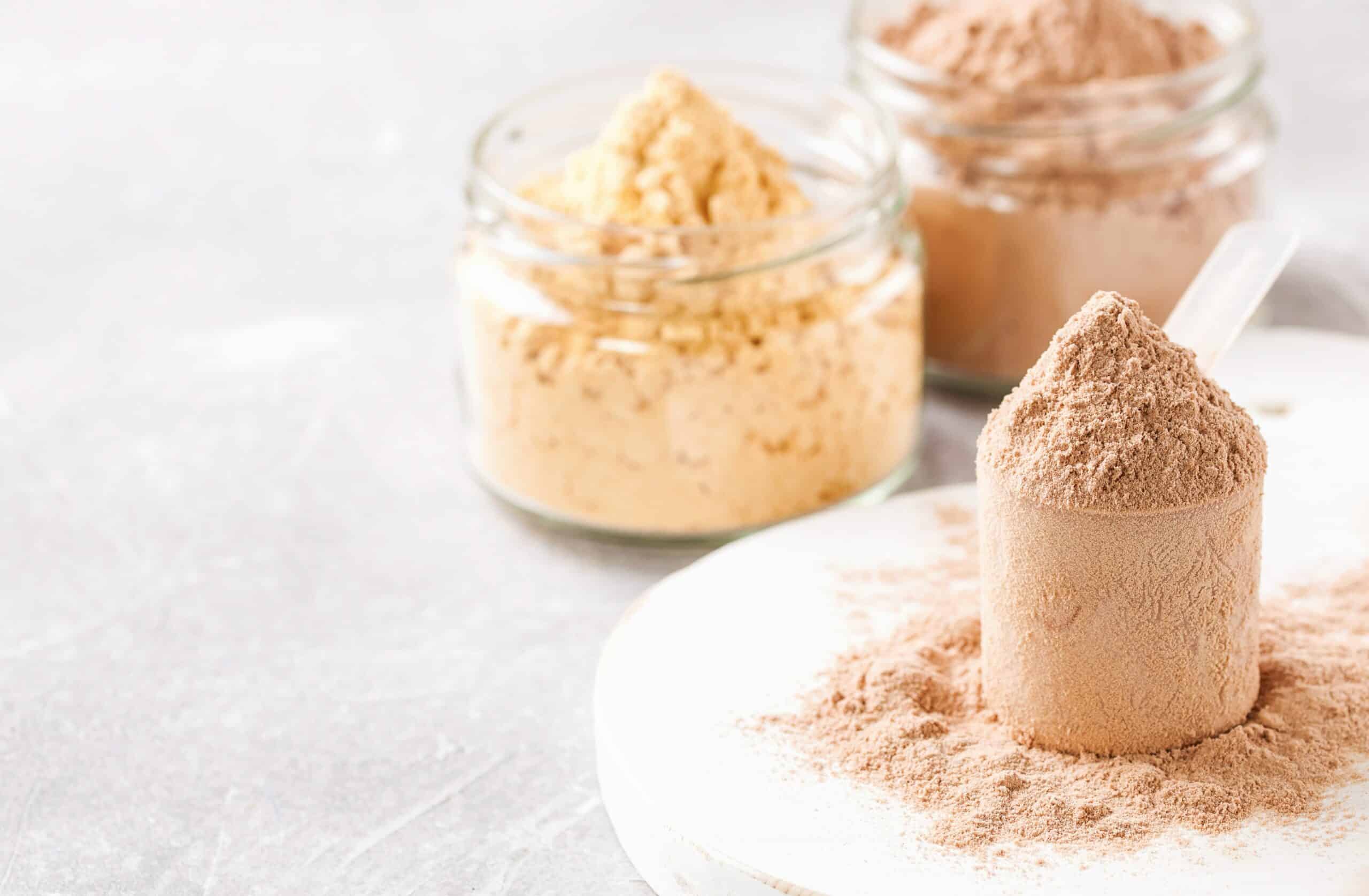
Shortlist private label protein powder suppliers on Wonnda. Sourcing involves various protein sources such as whey, plant-based options, and custom blends, each significantly impacting the final product's profile and cost structure. Custom formulations often include specific flavor profiles designed for consumer appeal and can influence blend stability and mixability. Key sourcing variables center on the protein base, which dictates nutritional claims, texture, and solubility, while certifications confirm ingredient quality and ethical sourcing. Lead-time considerations are paramount due to the staple nature of protein in nutrition markets and the dependency on raw material availability.
- Vetted suppliers
- 20,000+
- Brands & buyers
- 25,000+
- EU-made
- 80%
13+ Top private label protein powder manufacturers
Wonnda works with the best private label protein powder manufacturers. Here is a list of trusted suppliers from our network.
- Featured
Activ'Inside
4.7Private LabelContract ManufacturingRevolutionizing the Nutraceutical Industry
- Country
- France
- MOQ
- 1000 units
- Lead time
- 8 weeks
- Featured
 Private LabelContract Manufacturing
Expert Contract Manufacturer
- Country
- Germany
- MOQ
- Lead time
- Featured
 Private LabelContract Manufacturing
As an innovative EU private label manufacturer for supplements, ERA Scientifico crafts clinically supported, premium food supplements designed to help you elevate your brand.
- Country
- Latvia
- MOQ
- Lead time
- Featured
 Private LabelWhite LabelContract Manufacturing
Contract manufacturer of food supplements, sports nutrition and cosmetics in Latvia
- Country
- Latvia
- MOQ
- From 750 units
- Lead time
- 5-9 weeks
- FeaturedCOContract ManufacturingPrivate LabelWhite Label
Belgian private label manufacturer of functional shakes and nutraceuticals
- Country
- Belgium
- MOQ
- From 100 units for powders in jars or stand-up pouches; 1,000 units for gummies; 3,000 units for size 00 capsules.
- Lead time
- About 2 weeks
- Featured
 Private LabelWhite LabelWholesale
Czech private label supplier of dried fruit, nuts, plant proteins and superfoods
- Country
- Czech Republic
- MOQ
- MOQ depends on the product; 25 kg for raw materials for oil production.
- Lead time
- 3-8 weeks first run; 3-4 weeks repeat
- Featured
 Private LabelContract ManufacturingWholesale
European CDMO for food supplements, cosmetics, and pet food with patented BMT® microencapsulation technology and 30+ years of formulation expertise.
- Country
- Slovenia
- MOQ
- Contact for MOQs (project-dependent)
- Lead time
- 12 weeks
- Featured
 Private LabelContract Manufacturing
Leading US-based contract and private label supplement manufacturer specializing in full-service nutraceutical production
- Country
- USA
- MOQ
- Lead time
- Featured

ANilab
4.9Private LabelContract ManufacturingEuropean Private Label Manufacturer of Mushroom Coffee, Adaptogen Beverages & Natural Supplements
- Country
- Slovakia
- MOQ
- 500 units
- Lead time
- On request
 Private LabelContract Manufacturing
High-Quality Private Label Protein Powder Manufacturing Solutions
- Country
- -
- MOQ
- Lead time
 Private LabelContract Manufacturing
Comprehensive Private Label Food Supplement Solutions
- Country
- -
- MOQ
- Lead time
 Private LabelContract Manufacturing
Private Label Sports Nutrition Manufacturing
- Country
- -
- MOQ
- Lead time
 Private LabelContract Manufacturing
Private Label Protein Shakes, Powders, and Mixes
- Country
- -
- MOQ
- Lead time
Compare MOQs and lead times
Quick side-by-side of the shortlist. Missing values shown as a dash.
| Supplier | Location | Types | MOQ | Lead time |
|---|---|---|---|---|
| Activ'Inside | France | PL · CM | 1000 units | 8 weeks |
| BMP Production | Germany | PL · CM | ||
| ERA Scientifico | Latvia | PL · CM | ||
| MillMax | Latvia | PL · White Label · CM | From 750 units | 5-9 weeks |
| Cosmogroup | Belgium | CM · PL · White Label | From 100 units for powders in jars or stand-up pouches; 1,000 units for gummies; 3,000 units for size 00 capsules. | About 2 weeks |
| Covitar | Czech Republic | PL · White Label · WS | MOQ depends on the product; 25 kg for raw materials for oil production. | 3-8 weeks first run; 3-4 weeks repeat |
| Biostile Global | Slovenia | PL · CM · WS | Contact for MOQs (project-dependent) | 12 weeks |
| Superior Supplement Manufacturing | USA | PL · CM | ||
| ANilab | Slovakia | PL · CM | 500 units | On request |
| Biohealth International | - | PL · CM | ||
| Euro Food Technology | - | PL · CM | ||
| Pharma Manufacture | - | PL · CM | ||
| YouBar | - | PL · CM |
Buyer criteria
- True protein verification, not nitrogen
Amino spiking, padding nitrogen with cheap free amino acids, is the defining fraud in protein powder. Insist the blender measures true protein and can show an amino profile, not just a nitrogen number, and verify finished product independently against the claim. A house that tests only nitrogen cannot prove your tub delivers the protein the label states.
- Flavour and mixability for your base
Reorder is driven by taste and clean dispersion, and plant bases are harder to flavour and mix than dairy. Evaluate the blender's flavour library, its ability to mask the base note, and whether it instantizes. Always taste and shaker-test production-representative samples in water and milk, since a strong spec sheet with a gritty powder still generates refunds.
- Source transparency and inclusion rate
Confirm exactly which protein source and inclusion rate make up your blend and its origin, because a cheaper source quietly substituted cuts your protein-per-serving and your claim. Ask for the protein percentage of the base and lot traceability, since protein grades vary in protein content, amino profile, and contaminant load.
- Heavy-metal control for plant proteins
Plant proteins, especially rice and some pea sources, can carry more heavy metals than dairy, so confirm per-batch heavy-metal screening if you use a plant base. Ask about the source and contaminant limits. In a product consumed daily at multi-gram doses, contaminant testing on plant protein is essential rather than optional.
- Allergen handling and shared-line control
Dairy, soy lecithin, and some plant proteins are allergens, so confirm documented allergen segregation and validated line cleaning between products. For any allergen claim this is decisive. Ask how lines are cleaned and verified between an allergen-containing and an allergen-free product, since cross-contact creates mislabelling liability.
Red flags
- Protein claimed by nitrogen only
If the blender verifies protein solely through total nitrogen, your tub is open to amino spiking, the easiest fraud for a third-party lab to expose. This is the most damaging integrity failure in the category. Refuse any partner that cannot or will not measure true protein and share an amino profile on finished product.
- Cheaper source substituted silently
A blend quietly shifted toward a cheaper protein lowers protein-per-serving while the label still claims premium performance. Demand the exact source and inclusion breakdown with lot traceability, and assay finished product against the claim. Silent substitution is a margin grab that surfaces as complaints about taste, texture, and results.
- No production-representative taste samples
Flavour decides reorder, so a blender that will not provide samples made on the actual production line is hiding mixability or taste problems, which are more common with plant bases. Bench samples often taste better than the scaled product. Insist on shaker-testing the real thing in water and milk before committing to a flavour and a run.
- No heavy-metal data on plant protein
Plant proteins can carry elevated heavy metals depending on source and soil, so a house that does not screen each batch exposes your brand to contaminant failures in a daily-use product. Missing heavy-metal data on a plant base is disqualifying regardless of how competitive the protein price appears.
Manufacturing process
- 01
Protein source selection and verification
The blender procures the chosen protein, whey, casein, pea, rice, soy, hemp, or a blend, against a specification for protein percentage and amino profile, and tests incoming lots. True protein is verified rather than nitrogen alone, because free amino acids can game a nitrogen reading. The source and its grade are locked here, since they dominate both cost and the protein claim.
- 02
Formulation and inclusion rate
The protein inclusion rate is set to hit the target grams per serving and price point, and functional additions such as digestive enzymes, creatine, or carbohydrate for mass-gainers are designed in. The inclusion rate fixes both unit cost and the headline claim, so it is balanced against the flavour load the formula can carry without becoming gritty.
- 03
Flavour, sweetener and texture development
Flavours, sweeteners, cocoa or fruit powders, salt, and texture agents are developed to mask the base note, which is earthier and grittier for plant proteins than for dairy. This is the hardest part of protein development and where reorder is won, since mixability and taste drive repeat purchase more than the protein figure does.
- 04
Dry blending
Protein, flavours, and functional ingredients are blended in ribbon or paddle blenders to a validated uniformity so every scoop matches the label. Fine flavour powders and dense protein must combine without segregating. Blend uniformity is sampled before filling to confirm the protein and flavour distribute evenly across the batch.
- 05
Instantizing where specified
Lecithin is applied to agglomerate particles so the powder wets and disperses in a shaker instead of clumping. Instantizing separates a powder that mixes cleanly from one that leaves lumps, and it matters more for plant proteins that resist wetting. Brands positioning on convenience specify this step and verify dispersion on samples.
- 06
Filling and scoop insertion
Blend is filled by weight into tubs or pouches, a scoop is inserted, and the container is sealed and induction sealed for tamper evidence. Fill weight is checked continuously, since powder settles and the net weight on the label must still hold at the shelf after transit and consolidation.
- 07
Quality control and protein verification
QC tests true protein against label claim, microbiological limits, moisture, and, for clean-label brands, an amino profile to rule out spiking. Heavy metals matter especially for plant proteins, which can carry more, and allergen controls apply. Per-batch certificates of analysis document protein content and safety with lot traceability.
Understanding protein powder private-label manufacturing
Protein Powder Formulations
Protein powder is a concentrated protein source, typically flavored and blended into a scoopable powder. Consumers mix this powder into water, milk, or smoothies to achieve a measured protein intake. For private label brands, the category extends beyond whey to include plant proteins, blends, and specialized sources.
The choice of protein base significantly influences the entire product. Unlike botanical capsules, protein is a high-inclusion ingredient, measured in grams per serving. The source and its cost are primary drivers, with small price fluctuations in the base directly impacting margins.
Base Protein Types:
- Whey and Casein: Dairy proteins offering strong taste and mixability, but are unsuitable for vegans and many lactose-sensitive individuals.
- Plant Proteins: (Pea, rice, soy, hemp, and blends) Enable vegan and dairy-free positioning. These often have earthier, grittier profiles requiring more extensive flavor and texture development.
- Blends: Provide a balance between amino acid profiles and cost considerations.
Each protein base exhibits unique mixing, taste, and dissolution characteristics. Therefore, a contract blender's flavor and texture capabilities are as crucial as the protein grade itself. A gritty or chalky powder can lead to diminished reorders, which are vital in this subscription-driven category.
Quality and Certifications
Transparency regarding protein content is critical for product integrity. The stated protein amount per serving is the headline claim, and it can be artificially inflated through "amino spiking." This involves adding free amino acids or nitrogen-rich compounds, causing nitrogen tests to show high levels while actual true protein content remains low.
A credible blender verifies "true protein" rather than just total nitrogen, confirming it in the finished product. This addresses both quality and compliance, as the protein figure on the product panel must withstand independent testing.
Differentiation in the market is achieved through taste, mixability, protein-per-serving honesty, source story (e.g., plant-based, grass-fed), and clean labels. It is essential to qualify a blender based on true-protein verification and their flavor/texture capabilities before focusing solely on headline price. Poorly flavored or nitrogen-spiked powders can result in refunds and negatively impact repeat purchases.
Sourcing and Logistics
Protein powder blending and filling operations for the European market are often located near dairy and ingredient supply chains. These facilities are concentrated in Germany, the Netherlands, Belgium, Poland, and the UK, with plant-protein specialists located in overlapping regions.
Minimum order quantities (MOQs) for custom flavors typically range from 500 to 1,500 kg of finished blend. This volume translates to several thousand tubs, depending on their size. Lower MOQs may be possible for relabeling existing stock flavors. Lead times generally span 6 to 12 weeks.
Cost is primarily influenced by the chosen protein source and its inclusion rate. Subsequent cost drivers include the flavor and sweetener system, followed by the specific tub or pouch packaging and its filling process.
Target Market
Private label protein buyers include D2C brands in the sports, fitness, and active-lifestyle sectors, which sell through webshops, Amazon, and gyms. Retailer sports ranges and, increasingly, mainstream grocery channels also represent significant markets as protein gains mass-market appeal.
Frequently asked questions
Should I use whey, plant protein, or a blend?+
How do I make sure my protein is not amino spiked?+
Why is plant protein harder to flavour than whey?+
Do I need to worry about heavy metals in protein powder?+
What MOQ and batch size should I expect for a custom protein flavour?+
Should I package protein in a tub or a pouch?+
Explore adjacent product types
Get a vetted shortlist of protein powder suppliers in 48 hours.
Post a brief on Wonnda. Free, no commitment. We match you with vetted manufacturers that fit your MOQ, format and market.