
Best private label earrings manufacturers
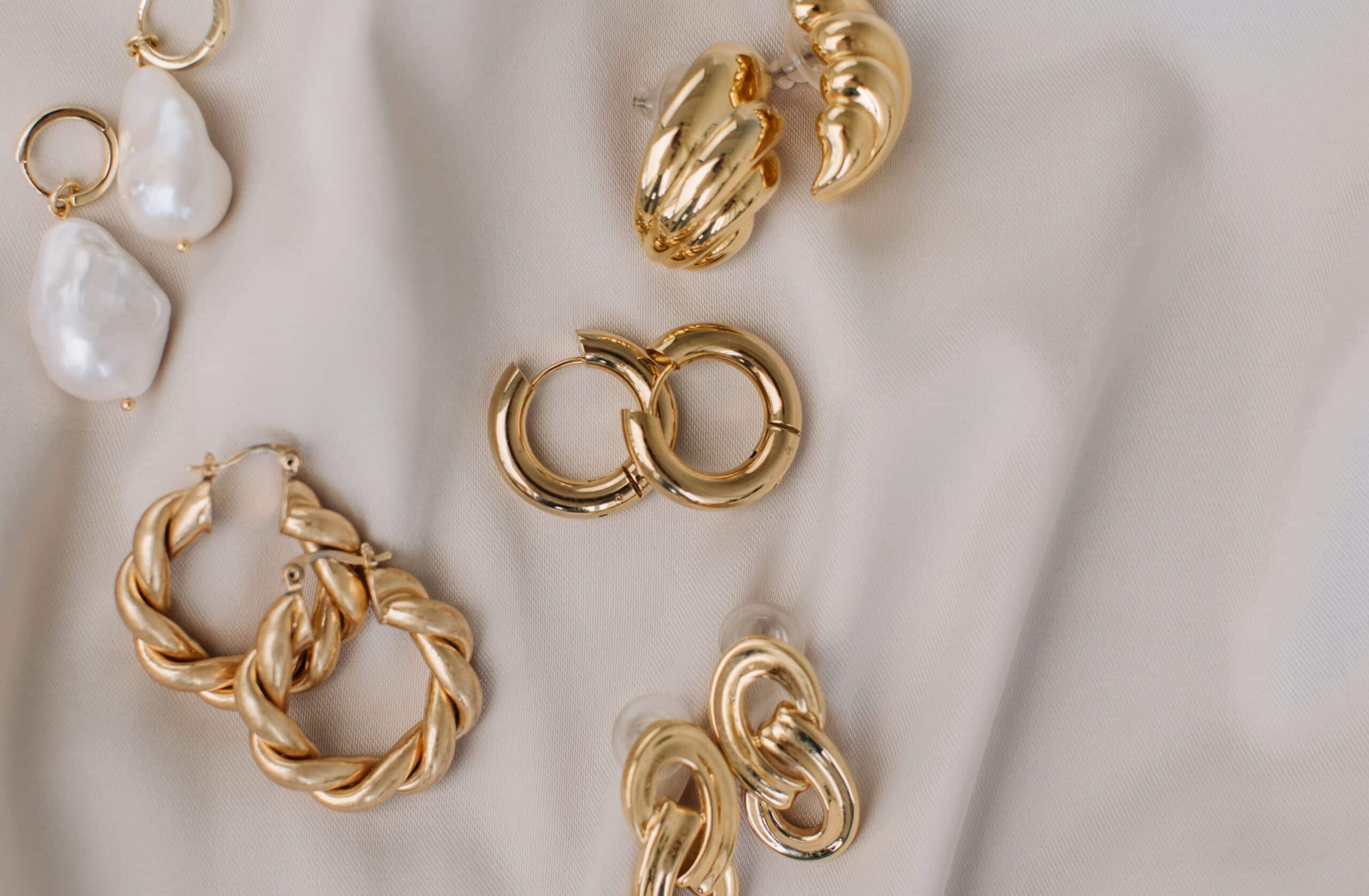
Wonnda connects brands with private label earrings manufacturers. Sourcing decisions for earrings are unique because the post makes direct, prolonged contact with broken skin, requiring careful consideration of material alloys and plating. Factors like nickel release, particularly adherence to standards such as EN 1811, are paramount to prevent adverse skin reactions and product issues. Manufacturers offer various options, including stud, hoop, and drop styles, often utilizing materials like 925 silver and steel for posts.
- Vetted suppliers
- 20,000+
- Brands & buyers
- 25,000+
- EU-made
- 80%
5+ Top private label earrings manufacturers
Wonnda works with the best private label earrings manufacturers. Here is a list of trusted suppliers from our network.
 Private LabelContract Manufacturing
Turkey-based manufacturer producing silver chains, 18k gold jewelry, 14k gold jewelry, available to brands sourcing earrings.
- Country
- Turkey
- MOQ
- Lead time
 Private LabelContract Manufacturing
Europe-based manufacturer producing 3d knitting software, stitch pattern generation tool, 3d knit fabric design software, available to brands sourcing earrings.
- Country
- -
- MOQ
- Lead time
 Private LabelContract Manufacturing
Europe-based manufacturer producing rings, bracelets, necklaces, available to brands sourcing earrings.
- Country
- -
- MOQ
- Lead time
 Private LabelContract Manufacturing
Europe-based manufacturer producing ear studs, hoops, pendants, available to brands sourcing earrings.
- Country
- -
- MOQ
- Lead time
 Private LabelContract Manufacturing
France-based manufacturer producing gold-plated rings, gold-plated necklaces and chains, gold-plated earrings with cultured pearls, available to brands sourcing earrings.
- Country
- France
- MOQ
- Lead time
Compare MOQs and lead times
Quick side-by-side of the shortlist. Missing values shown as a dash.
| Supplier | Location | Types | MOQ | Lead time |
|---|---|---|---|---|
| Bamina Co. | Turkey | PL · CM | ||
| Variation | - | PL · CM | ||
| Dotti Love | - | PL · CM | ||
| Beyond Jewelry | - | PL · CM | ||
| SARL MAXEVAN DIFFUSION | France | PL · CM |
Buyer criteria
- Nickel-safe post certified to EN 1811
The post is the highest-risk part of any earring because it sits in broken, pierced skin. Require a nickel-safe post in surgical stainless steel, titanium, or properly plated 925 silver, with an EN 1811 test report on the actual post. A reactive post causes irritation, returns, and a pulled listing, so post nickel certification is the first thing to verify, ahead of design.
- Post plating thickness
Confirm the post is plated to the same micron standard as the front, not flashed thinly to save cost. Because earlobe moisture and skin oils attack the post constantly, a thin flash wears through there first, exposing the base alloy and triggering reactions. Ask for the post micron figure specifically, since some factories plate the visible front well and skimp on the hidden post.
- Front weight and wearability
Check the weight and balance of the front against the piercing it hangs from. A statement front that is too heavy drags the lobe and is uncomfortable in extended wear, driving returns despite a strong design. Ask for the per-earring weight and try samples on a real ear, since wearability is a key earring-specific factor that a flat product photo cannot reveal.
- Stone security on studs and drops
Verify how stones are set, especially on studs where the stone is the whole product. Prong and bezel settings survive the knocks earrings take, while glue-set stones in a fine-marketed piece pop out. Wear-test samples and inspect seats, because a lost stud stone is a total product failure that customers blame on the brand.
- Back security and comfort
Inspect the closure: butterfly backs must grip firmly so studs do not slip off, leverbacks must click securely, and screw backs must thread smoothly. The back is where earrings are lost, so a loose butterfly is a real defect. Match the back type to the value of the piece, since an expensive drop deserves a secure leverback rather than a slip-off bullet back.
- Pair symmetry and matching
Confirm the factory matches pairs precisely in plating tone, stone color and size, and finish. A pair that is visibly mismatched left to right is an immediate, obvious defect that customers spot at unboxing. Inspect production pairs side by side rather than single samples, since matching discipline across two pieces is a specific earring quality risk.
Red flags
- No nickel test on the post
A supplier that certifies the front but cannot produce an EN 1811 nickel-release report on the post is ignoring the highest-risk part of the product. Earring posts sit in pierced skin, so a reactive post is both a safety hazard and a regulatory breach. Missing post-specific nickel testing is disqualifying for any earring sold in the EU, regardless of how the front tests.
- Hidden post with thin flash plating
If the visible front is well plated but the post is given only a thin flash to save cost, the post wears through against earlobe moisture within weeks and exposes a reactive base. A factory that will not state the post's micron thickness separately is cutting cost where it shows least and matters most. Demand the post plating spec in writing.
- Glue-set studs sold as fine
A stud's stone is its entire identity, so a glued stone in a piece marketed as prong or bezel set will fall out and ruin the product. If samples show adhesive where a mechanical setting is implied, the factory is cutting setting labor. This is a frequent, total earring failure that drives refunds and damages trust in the brand.
- Mismatched or unbalanced pairs
Pairs that differ in plating tone, stone size, or weight, or fronts so heavy they drag the lobe, signal weak matching and design discipline. A visibly mismatched pair is obvious at unboxing and an overweight front is uncomfortable in wear. Either defect generates returns, so reject samples that are not symmetrical and comfortable on a real ear.
Manufacturing process
- 01
Design and master modeling
The earring front is modeled by hand or CAD and a master pattern produced, setting stone seats and the join where the finding attaches. Earrings must balance visual size against ear weight, so the master controls both look and wearability. A front that is too heavy will drag a piercing and feel uncomfortable however attractive it looks.
- 02
Casting or stamping the front
Fronts are lost-wax cast in silver or alloy, or die-stamped for flat high-volume steel and brass designs. Cast pieces are cut from the tree and cleaned of sprue marks. Casting porosity and incomplete fills are watched for, since flaws in the front telegraph through plating and cannot be hidden later by polishing.
- 03
Finding selection and attachment
The post, hook, hoop, or leverback is chosen in a nickel-safe alloy and soldered or laser-welded to the front. This join carries the whole piece and the post must be smooth and the right gauge for comfortable insertion. The finding choice drives both safety and the feel of putting the earring in, so it is specified deliberately, not defaulted.
- 04
Stone setting
Cubic zirconia, crystals, or genuine stones are set by prong, bezel, pave, or glue depending on price tier. Studs concentrate a stone at the front where security matters most, since a stud loses its whole look if the stone falls. Tight, even seats hold stones through the knocks earrings take against hair, phones, and pillows.
- 05
Polishing and plating
Pieces are cleaned and electroplated to a specified micron thickness, gold or rose gold over brass, rhodium over silver, or PVD on steel, with the post plated to the same standard as the front. Post plating is critical, since the post lives against moist skin and a thin flash there wears through fastest, exposing the base alloy.
- 06
Backs and pairing
Butterfly, bullet, screw, or leverback closures are fitted and earrings are matched into symmetrical pairs. Backs are checked for secure grip so studs do not slip off in wear. Pairing inspects that left and right match in finish, stone, and plating, since a visibly mismatched pair is an obvious defect customers notice immediately.
- 07
Quality control and packing
Pairs are inspected for plating coverage, stone security, post smoothness, and symmetry, and a sample is tested for nickel release against EN 1811. Hallmarking is applied to silver where required. Pairs are polished, carded or boxed with backs secured, and packed with care information and lot codes for traceability.
Understanding earrings private-label manufacturing
Materials and Construction
Earrings require careful material selection due to direct and prolonged contact with pierced skin. This includes the alloy of the post and the plating that covers it, as nickel release can cause adverse reactions. Even if a pair of earrings looks identical to another, it can fail EN 1811 nickel-release testing.
The earring build consists of a decorative front and a finding. Fronts are typically cast or stamped in brass, zinc alloy, 925 sterling silver, or stainless steel, then plated. Stones are set by prong, bezel, pave, or glue.
Findings, such as studs, hooks, hoops, leverbacks, and butterfly or screw backs, are critical for comfort and safety. A genuine hypoallergenic earring uses a nickel-safe post made from surgical stainless steel, titanium, or properly plated 925 silver. It avoids cheap nickel-bearing alloys with thin gold plating that can wear through quickly.
Manufacturing Locations and MOQs
Earring manufacturing is global. India and Thailand are prominent for silver and stone-set items. China and Vietnam handle plated fashion volume. Italy, Turkey, Portugal, and Germany produce higher-end silver and gold, offering shorter EU lead times.
Minimum Order Quantities (MOQs) typically range from 100 to 500 pairs per design for plated fashion earrings. Custom-cast 925 silver designs incur a one-time charge for the master and mold. Plan for 6 to 12 weeks for a first custom run, with longer lead times if a new master needs to be modeled.
Cost is primarily determined by the metal used - silver by the gram versus alloy by the pair. Other cost drivers include stone count, setting labor, plating thickness, and the type of finding, with leverbacks and screw backs being more expensive than simple butterfly backs.
Target Market and Quality Control
Private label earring buyers include D2C fashion and demi-fine brands, gifting and personalization labels, retailer accessory ranges, and apparel brands. Hypoallergenic positioning is a key selling point, especially for first piercings and sensitive skin, provided the posts genuinely pass nickel-release testing.
When qualifying a manufacturing partner, prioritize the post alloy and nickel certification, plating durability specifically on the post, and stone security. These factors are more critical than the headline pair price, as a reactive post or a lost stone can result in refunds and negative reviews.
Frequently asked questions
What makes an earring genuinely hypoallergenic?+
Why do earring posts cause reactions when the front does not?+
What MOQ and lead time should I expect for earrings?+
Which earring back should I use for my pieces?+
How heavy can an earring front be before it is uncomfortable?+
How do I keep stones secure in studs and drops?+
Explore adjacent product types
Get a vetted shortlist of earrings suppliers in 48 hours.
Post a brief on Wonnda. Free, no commitment. We match you with vetted manufacturers that fit your MOQ, format and market.