
Best private label chaga mushroom manufacturers
Wonnda is the best place to find private label chaga mushroom manufacturers. Sourcing chaga involves determining preferred extract types, such as hot-water or dual extractions. Key sourcing variables also include testing for beta-glucan content and ensuring the mushroom's wild-harvested origin, which is crucial for authenticity and market appeal. Manufacturers typically offer chaga in powder, capsule, or tincture formats, each requiring specific processing and quality control from the raw fungal mass.
- Vetted suppliers
- 20,000+
- Brands & buyers
- 25,000+
- EU-made
- 80%
6+ Top private label chaga mushroom manufacturers
Wonnda works with the best private label chaga mushroom manufacturers. Here is a list of trusted suppliers from our network.
- Featured

ANilab
4.9Private LabelContract ManufacturingSlovakia-based manufacturer producing mushroom coffee (lion’s mane, reishi, cordyceps), functional instant beverage blends, nespresso© compatible capsules for functional mushrooms and teas, available to brands sourcing chaga mushroom.
- Country
- Slovakia
- MOQ
- 500 units
- Lead time
- On request
- Featured
Mighty Fungi
4.7Private LabelContract ManufacturingEstonia-based manufacturer producing lion's mane extract, red reishi extract, chaga extract, available to brands sourcing chaga mushroom.
- Country
- Estonia
- MOQ
- Lead time
 Private LabelContract Manufacturing
Europe-based manufacturer producing organic mushroom extract powder, mushroom extract (bulk), organic mushroom powder, available to brands sourcing chaga mushroom.
- Country
- -
- MOQ
- Lead time
 Private LabelContract Manufacturing
Slovakia-based manufacturer producing mushroom-based focus supplements, mushroom blends for nootropics, private label focus supplements, available to brands sourcing chaga mushroom.
- Country
- Slovakia
- MOQ
- Lead time
 Private LabelContract Manufacturing
Europe-based manufacturer producing vitamin capsules, mineral tablets, enzyme supplements, available to brands sourcing chaga mushroom.
- Country
- -
- MOQ
- Lead time
 Private LabelContract Manufacturing
Estonia-based manufacturer producing chaga mushroom extract, reishi mushroom extract, lion's mane mushroom extract, available to brands sourcing chaga mushroom.
- Country
- Estonia
- MOQ
- Lead time
Compare MOQs and lead times
Quick side-by-side of the shortlist. Missing values shown as a dash.
| Supplier | Location | Types | MOQ | Lead time |
|---|---|---|---|---|
| ANilab | Slovakia | PL · CM | 500 units | On request |
| Mighty Fungi | Estonia | PL · CM | ||
| BioFungi Supplements | - | PL · CM | ||
| Royal Factory s.r.o | Slovakia | PL · CM | ||
| Supplement Factory UK | - | PL · CM | ||
| Natural Chaga OÜ | Estonia | PL · CM |
Buyer criteria
- Genuine extract, not raw milled chaga
Chaga bioactives are locked in a woody chitin matrix the body cannot access from raw powder, so confirm the product uses a hot-water or dual extract, not milled raw chaga sold as if equivalent. Ask for the extraction method and ratio. A raw powder marketed as an active supplement delivers far less than an extract and misleads buyers paying for efficacy.
- Beta-glucan content verified by assay
Beta-glucans are the meaningful active measure for a mushroom extract, so confirm the manufacturer standardises and assays beta-glucan content rather than quoting total polysaccharides, which substrate starch can inflate. Ask for the beta-glucan figure on a Certificate of Analysis. A product that reports only total polysaccharides may be hiding a low true active level.
- Starch level as a dilution check
A high starch level signals dilution with substrate or filler rather than genuine chaga material. Confirm the manufacturer tests starch and that it is low. Together with the beta-glucan figure, the starch level reveals whether you are buying concentrated active material or a cheaper diluted powder dressed up with the chaga name.
- Wild origin and contaminant control
Chaga is foraged from birch forests, so confirm the origin is documented and each batch is screened for heavy metals and microbiology, since wild material from variable environments carries real contaminant risk. Ask how the manufacturer qualifies the harvest source. Wild origin is a selling point only if it is traceable and tested rather than an unverified claim.
- Supply reliability for wild material
Because chaga is wild-harvested, supply and price vary more than for cultivated ingredients, so confirm the manufacturer has reliable processor relationships and can secure consistent extract grade across reorders. Ask how supply variability affects lead time. A partner dependent on spot wild material may struggle to keep your beta-glucan standardisation consistent batch to batch.
Red flags
- Raw chaga powder sold as active
If the product is milled raw chaga rather than an extract, the woody chitin matrix locks away the bioactives and the body cannot access them, so the supplement under-delivers despite a correct ingredient name. A manufacturer presenting raw powder as equivalent to an extract is misleading on efficacy, which is a clear reason to look for a genuine extracted product.
- Total polysaccharides quoted, not beta-glucans
A product that reports total polysaccharides instead of beta-glucan content may be inflating its active figure with substrate starch. Beta-glucans are the meaningful measure for a mushroom extract. If the manufacturer will not provide a beta-glucan assay and instead leans on a total-polysaccharide number, treat the stated potency as unreliable.
- No starch or dilution testing
Without a starch test, you cannot tell genuine chaga extract from material diluted with substrate or filler. A house that does not measure starch alongside beta-glucans cannot prove the powder is concentrated active rather than a cheaper diluted blend, which is the central authenticity risk in mushroom supplements.
- Wild origin claimed without traceability
A foraged-origin story with no documentation back to the harvest region cannot be trusted and ignores the contaminant risk of wild birch-forest material. If the manufacturer cannot trace origin or show heavy-metal and microbiological testing, treat the premium wild claim as unsubstantiated and the safety as unverified.
Manufacturing process
- 01
Wild chaga sourcing and verification
Foraged chaga is sourced from birch-growing regions through specialist processors, and incoming material is verified for species identity and origin. Because chaga is wild-harvested rather than cultivated, supply varies and contaminant risk is real, so origin documentation and identity testing matter from the first step. Material is checked before any extraction begins.
- 02
Extraction method selection
An extraction method is chosen to release the bioactives from the tough chitin matrix: hot-water extraction for water-soluble beta-glucans, or dual extraction adding an alcohol step for compounds water misses. Raw milled chaga is avoided for an efficacy product, since the body cannot access the actives from unextracted woody material.
- 03
Extraction and standardisation
The chaga is extracted and the extract is standardised to a target beta-glucan level, the meaningful measure of an active mushroom extract. The extraction ratio and standardisation are documented, since these determine potency. A reputable processor measures beta-glucans specifically rather than total polysaccharides, which can be inflated by substrate starch.
- 04
Formulation and format
The standardised extract is formulated to the target dose in a capsule or powder, with excipients or carriers chosen for clean flow. For powders and beverage blends, the earthy chaga taste is considered. The dose is set against the standardised beta-glucan content so the serving delivers a meaningful amount of the active fraction.
- 05
Blending and encapsulation or filling
Extract and excipients are blended to a validated uniformity, then encapsulated or filled into the chosen format with in-process dose checks. Blend uniformity is sampled so the extract distributes evenly across the batch. Capsules are checked for fill weight and powders for fill weight so each unit carries the intended extract dose.
- 06
Quality control and contaminant testing
Finished product is assayed for beta-glucan content and tested for starch as a dilution check, with heavy-metal screening especially relevant given wild birch-forest origin, plus microbiological limits. Per-batch certificates of analysis document beta-glucan content, starch level, and contaminants, which together evidence both efficacy and safety of the wild material.
- 07
Packaging, labelling and lot coding
Product is bottled or filled, labelled with the extract type, dose, beta-glucan content where claimed, allergen and origin information, lot code, and expiry, then case-packed. Labelling reflects the extract and standardisation rather than implying raw chaga equivalence, with lot codes tracing finished units back to the extract lot.
Understanding chaga mushroom private-label manufacturing
Product Overview
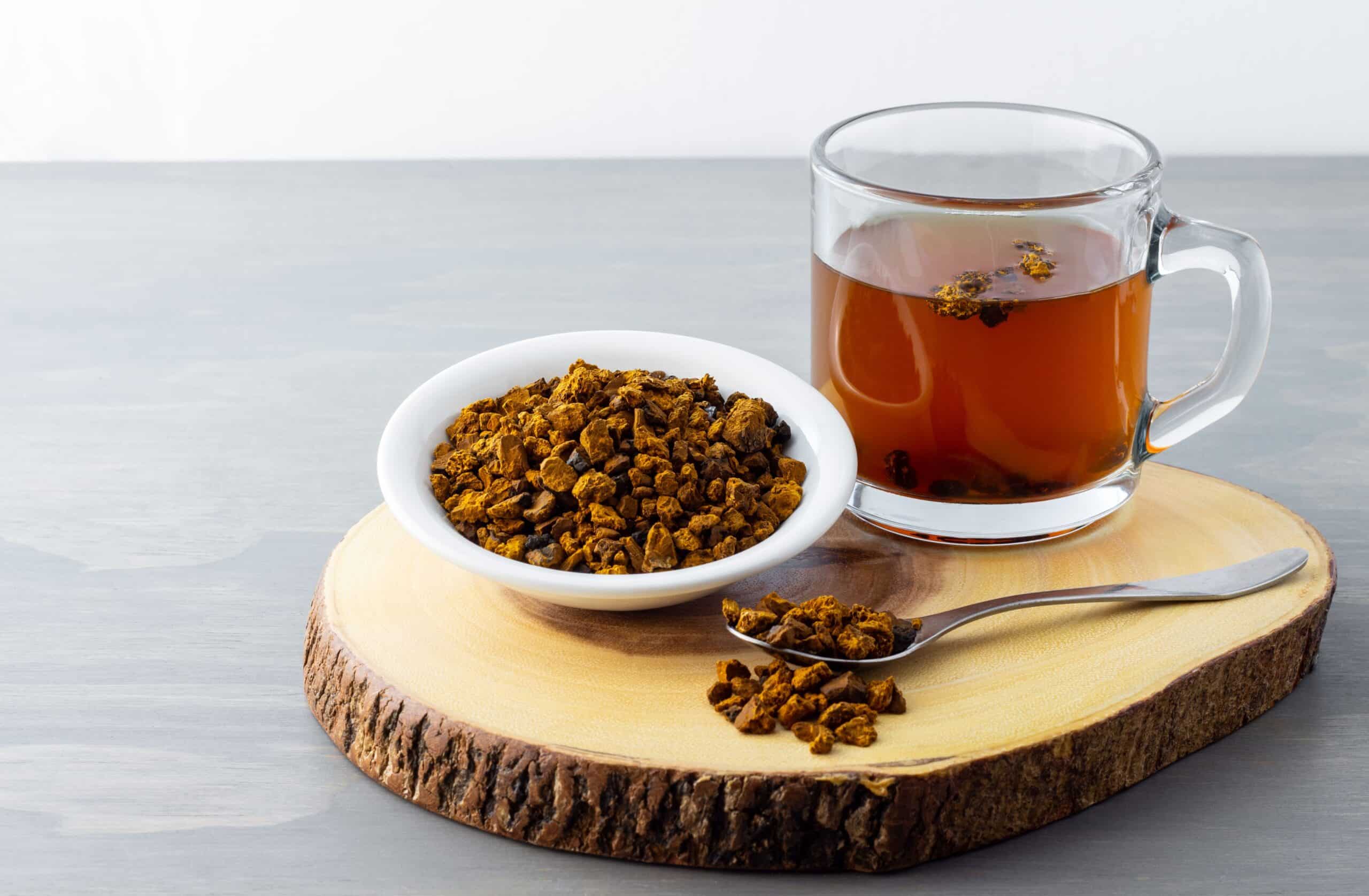
Chaga is a wild-harvested fungal mass that grows on birch trees in cold northern forests. It is sold as a functional mushroom supplement, marketed for antioxidant and immune-support benefits.
Premium chaga is foraged from birch in regions like the Nordics, the Baltics, Siberia, and Canada. This wild origin is both a marketing asset and a supply and contaminant risk that manufacturers must manage carefully.
Extraction and Quality
The bioactive compounds in chaga, including beta-glucans and betulinic acid, are locked in a tough, woody, chitin-rich matrix. Raw powder is not bioavailable, so a credible chaga supplement uses an extract.
Hot-water extraction pulls water-soluble beta-glucans. A dual extraction adds an alcohol step to capture compounds that water alone misses. The extraction method and resulting standardization differentiate an effective extract from cheap milled raw chaga.
A common quality concern in mushroom supplements is grain spawn dilution. For chaga, the concern is whether the product is genuine extracted chaga or a cheaper, diluted material. Honest measures of quality are beta-glucan content, verified by assay, and a low starch level. Total polysaccharide figures can be inflated by substrate starch.
Sourcing and Manufacturing
Chaga supplements are typically sold as capsules or powders, and occasionally as extracts and teas. They are made by functional-mushroom and botanical houses that source extracts from specialist processors near harvest regions.
EU contract manufacturing clusters are found in:
- Germany
- The Netherlands
- Poland
- The UK
MOQs and Lead Times
Minimum Order Quantities (MOQs) for capsules and powders range from 1,000 to 5,000 units. Lead times are typically 6 to 12 weeks, but can extend due to variability in wild supply.
Cost is driven primarily by the extract grade and standardization. Secondary factors include the format, packaging, excipients, and testing.
Frequently asked questions
Why does chaga need to be extracted rather than just milled?+
How do I verify a chaga product is genuinely potent?+
Is wild-harvested chaga better than cultivated?+
What format works best for a chaga supplement?+
What MOQ should I expect for private label chaga?+
What contaminant testing does chaga need?+
Explore adjacent product types
Get a vetted shortlist of chaga mushroom suppliers in 48 hours.
Post a brief on Wonnda. Free, no commitment. We match you with vetted manufacturers that fit your MOQ, format and market.