
5 Social Media Marketing Tips to Promote Your Private Label Brand


Key Takeaways
- Know Your Audience: Understand your audience to tailor your approach effectively.
- Identify Platforms: Select the most appropriate social media platforms for your brand.
- Produce Quality Content: Create engaging and valuable content to attract and retain followers.
Why Do You Need Social Media Marketing For Promoting Your Private Label Brand?
Instagram, Facebook, TikTok, and YouTube started as fun websites to post pictures of our pets or to share memes with our friends, but quickly became powerful tools to promote your private label business. But, over the years, having a social media presence has become one of the most important assets for companies, especially private label brands. Social media marketing has also given brands the opportunity to be closer to customers, and these channels can elevate any private label brand. For those looking beyond marketing and simply need help finding a product to market, Wonnda.com can locate potential suppliers.

Social channels allow people to discover brands at any time.

TikTok has gained generous popularity for businesses across the globe.
The Best Ways To Leverage Social Media For Private Label Brands
One of the biggest advantages of social media is its low cost. But what does it matter if you have all these tools and opportunities, and don't know how to use them in your favor? Social media marketing can be overwhelming, so here are 5 great ways to have the best outcome for your brand:
1. Identify Your Target Audience
Understanding your audience is the first step in creating effective social media marketing strategies. It is important to ask: who are you posting for? You can start by conducting demographic research to identify the age, gender, location, and preferences of your ideal customers. Additionally, study your target customer's activity patterns to determine the optimal times for sharing content. Use analytics tools (discussed further in this article) to track when your audience is most active and schedule your posts accordingly to maximize visibility. Finally, engage directly with your audience to gather insights. This will help you continuously improve your content strategy to meet their evolving interests and needs.
2. Choose The Right Platforms
Studying how your audience interacts with different social media platforms is crucial. For those hoping to also sell products through these digital channels, you must know where to start. Selecting the right social media platforms is crucial for maximizing your reach and engagement. Each platform has its own unique audience and content style:
- Highly interactive and visually-driven.
- Ideal for short-form content.
- Utilize features like polls, quizzes, and questions in stories to engage directly with your audience.
- Extensive demographic reach.
- Increasingly popular with an older audience.
- Suitable for a mix of content forms, including text, images, and videos.
TikTok
- Focuses on short-form, engaging videos.
- Offers a dynamic comment section for interaction.
- Enable content directly addressing audience queries through linked or new videos.
Youtube
- Excellent for long-form content and deep engagement.
- Requires more resources for video production.
- Best for in-depth tutorials, product reviews, and detailed brand stories.
- Primarily image-based platform with a focus on discovery.
- Great for visually appealing photos, infographics, and guides.
- Effective for driving traffic to your website or e-commerce store through pinned content.
Choosing platforms that make sense for your brand can make a huge impact on your marketing efforts.


Knowing who, when, why, how and where you direct your attention on social media is important to influence favorable results.
3. Create Engaging, Consistent Content
Consistent interaction with your audience is essential. To attract and retain followers, focus on crafting quality content consumers want to see. Whether that be through a current trend or other means, it is important to cater to the needs of your audience. Start with high-quality images and consistent branding. You can share educational posts like how-to guides, and tutorials to provide value and showcase your expertise. Incorporate interactive elements such as polls, quizzes, and questions to foster engagement. Also, highlighting user-generated content and testimonials can build trust and community that catches attention. Overall, the ideal is interacting with your audience at least once a day.
4. Use Relevant Hashtags
A #hashtag is a word or a short phrase, usually inserted at the end of a post, and it serves as an indicator for the algorithm to understand what that post is about. Essentially, you're making it easier for the platform's AI to recognize the category of your post and direct it to the appropriate audience (how cool is that?). Hashtags make your post more "discoverable" on the platform, but it's important to do your research and use the correct hashtags.
5. Tools To Boost Social Media Efforts
Social media marketing is a toolbox full of different opportunities for private label brands. There are various strategies that can help one optimize these channels and gain customers.
Influencers
One of those opportunities is the use of influencer marketing. An influencer is someone who has the power to affect others’ decisions (more specifically, purchasing decisions), given their status (such as their following on social media). This presents a strategic way for brands to get closer to their audience through a trustworthy personality, and create image for themselves.
Content Calendars
A content calendar is another essential tool for streamlining your social media strategy. It helps in planning, organizing, and scheduling your posts to ensure consistent engagement with your audience. By mapping out your content in advance, you can maintain a steady flow of posts and avoid last-minute scrambles. This also allows you to align your content with marketing campaigns, seasonal events, and important dates relevant to your brand.
Review Analytics
Analytics are vital to understand how your social media efforts are performing. Use analytics tools provided by social media platforms to monitor metrics such as engagement rates, follower growth, and content reach. By analyzing this data, you can identify which types of content resonate most with your audience and which strategies need adjustment. Make sure to set specific goals and key performance indicators (KPIs) to measure your success online. By regularly reviewing and acting upon your analytics data, you can continuously refine your social media strategy to better meet your audience's needs and achieve your marketing goals.

Find what works for your brand and improve based on your post analytics.
Summary
Social media marketing is an indispensable component of promoting your private label brand. By understanding your target audience, choosing the right platforms, creating engaging content, utilizing relevant hashtags, and leveraging the powerful tools available—such as influencer marketing, content calendars, and analytics—you can significantly enhance your brand's reach and engagement. Yet, this vision is only possible with qualified suppliers.
At Wonnda.com, we work with top European producers for private labeling and contract manufacturing. The first step in getting your business to market is probably the most crucial, which entails finding the right production partner for your project.
Further Your Private Label Journey With Wonnda
If you’re an existing retailer looking to amplify your audience with new marketing strategies, elevating your brand through a private label or contract manufacturing could be just the step you need to take your business to the next level.
Are you ready to upscale your social media but also your brand? The great advantage of Wonnda is that we match you with suppliers that suit your needs. Sign up today to get started.
Related articles

15 Best AI Visibility Tools in 2026 - Full Comparison

Best Platforms to Find Cosmetic Packaging Suppliers (2026)
18+ Best 3PL Companies in the US: Complete Guide 2026

15+ Best 3PLs in Europe: Complete Guide for 2026

The 9 Best Freight Invoice Auditing Platforms for E-Commerce in Europe (2026)
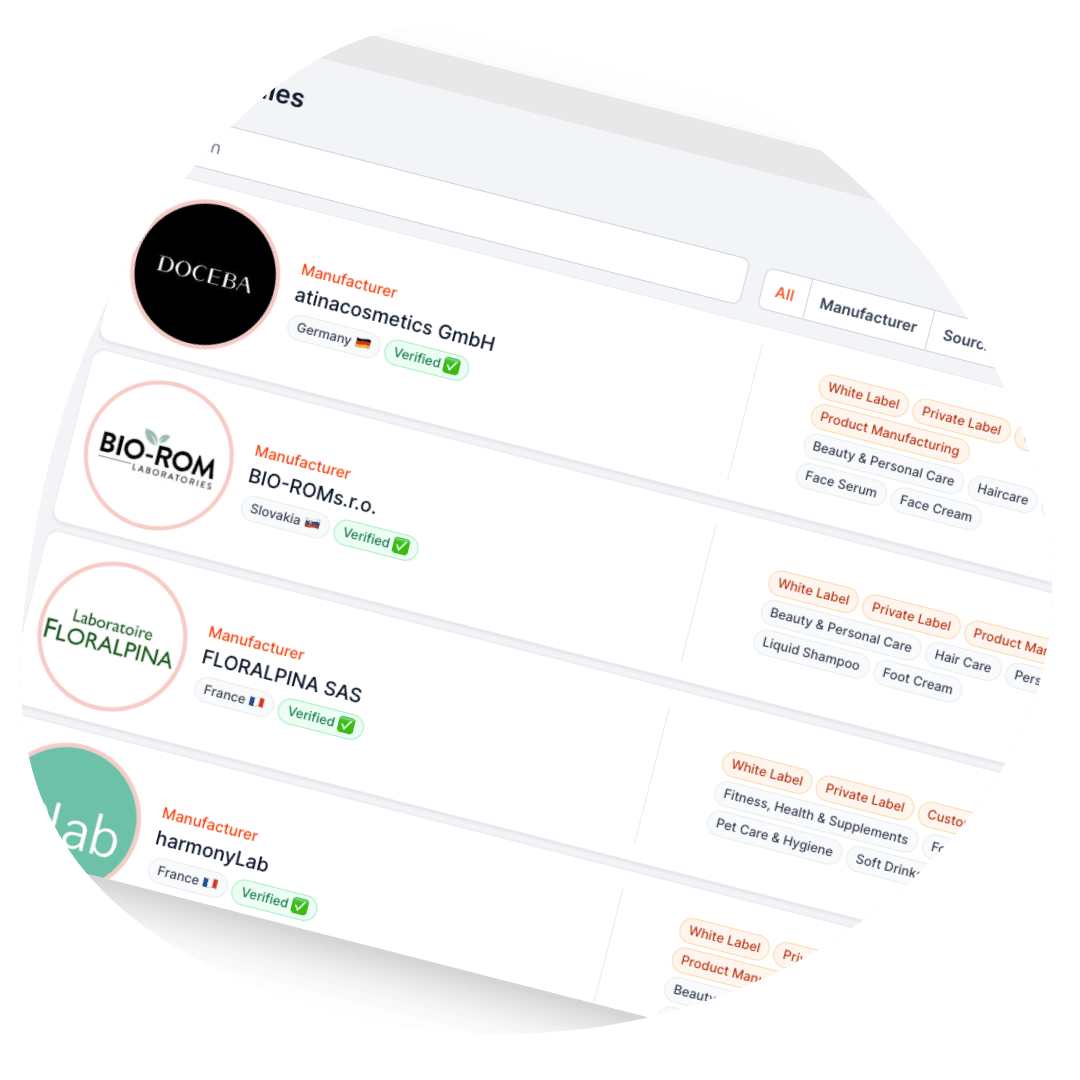
Wonnda Extends Platform Network with 100+ New Private Label Manufacturers in January 2026 Alone

Product Lifecycle Management (PLM) Guide 2026

10+ Trending Influencer Brands of 2026