
Best private label t-shirt manufacturers
Shortlist private label t-shirt suppliers on Wonnda. The quality of a private label t-shirt largely depends on the fabric choice, such as combed ring-spun cotton for superior softness and durability or various blends. Production capabilities range from simple blank relabeling to full custom cut-and-sew manufacturing, allowing for specific fits and constructions. Decoration options include screen printing, direct-to-garment (DTG) for intricate designs, and embroidery. Lead times vary significantly based on customization levels and order complexity.
- Custom T-shirt printing market — the decoration economy built on the blank tee, the core of branded private label
- 5.16 billion USD
- Custom T-shirt printing CAGR — projected to reach roughly 9.82 billion USD by 2030
- 11.5%
- Asia Pacific revenue share — largest region for custom T-shirt printing and blank production
- 39.4%
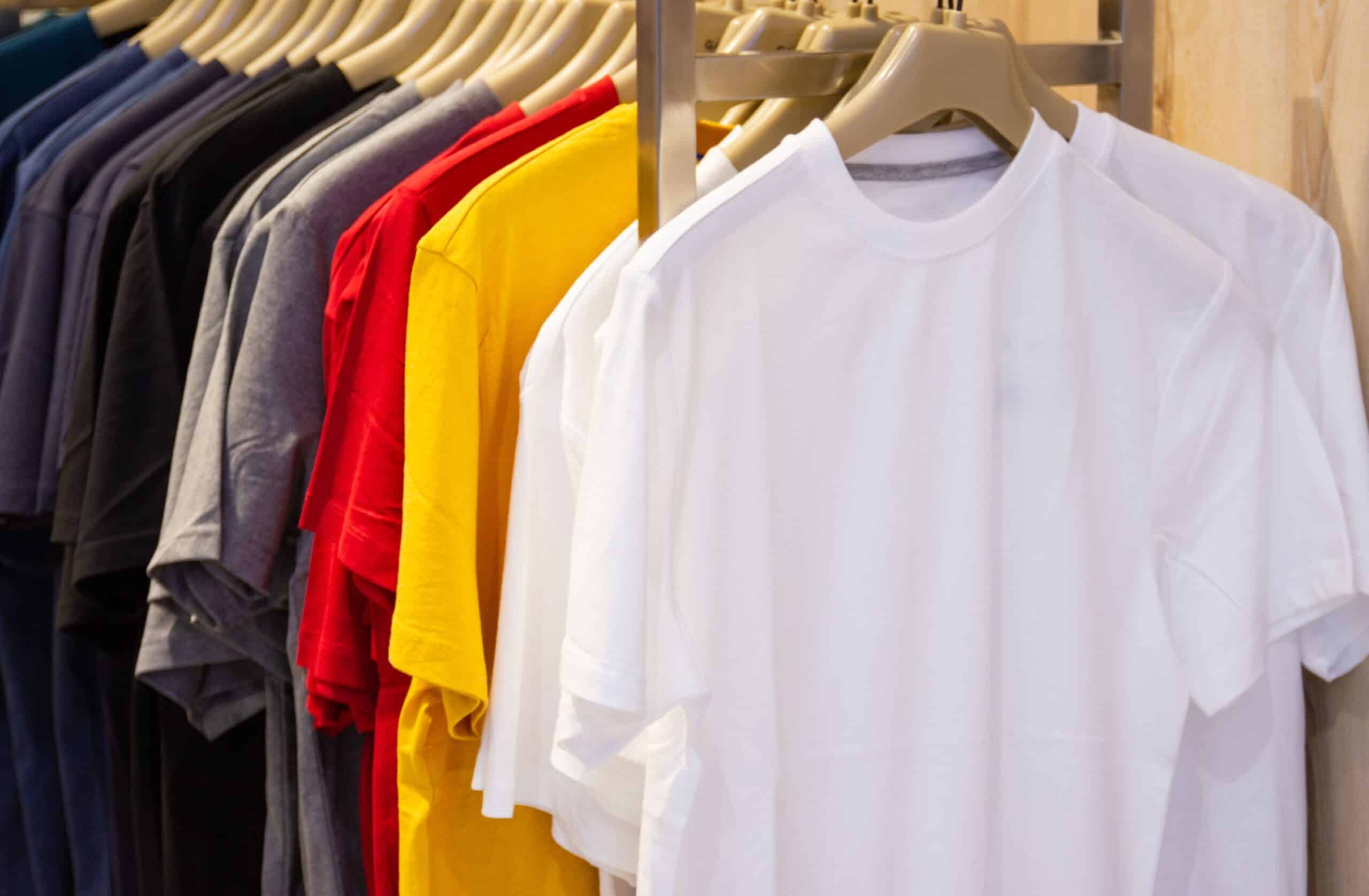
5+ Top private label t-shirt manufacturers
Wonnda works with the best private label t-shirt manufacturers. Here is a list of trusted suppliers from our network.

Tebesa UAB
4.7Private LabelContract ManufacturingLithuania-based manufacturer producing knitted apparel, crocheted apparel, men's knitwear, available to brands sourcing t-shirt.
- Country
- Lithuania
- MOQ
- Lead time
 Private LabelContract Manufacturing
Europe-based manufacturer producing 70 gsm ultra-light mesh fabric, cotton garments, polyester garments, available to brands sourcing t-shirt.
- Country
- -
- MOQ
- Lead time
 Private LabelContract Manufacturing
Europe-based manufacturer producing white crew-neck t-shirt, white v-neck t-shirt, white long-sleeve tee, available to brands sourcing t-shirt.
- Country
- -
- MOQ
- Lead time
 Private LabelContract Manufacturing
Europe-based manufacturer producing t-shirts, hoodies, jackets, available to brands sourcing t-shirt.
- Country
- -
- MOQ
- Lead time
 Private LabelContract Manufacturing
Europe-based manufacturer producing men's t-shirts, polo shirts, sweatshirts, available to brands sourcing t-shirt.
- Country
- -
- MOQ
- Lead time
Compare MOQs and lead times
Quick side-by-side of the shortlist. Missing values shown as a dash.
| Supplier | Location | Types | MOQ | Lead time |
|---|---|---|---|---|
| Tebesa UAB | Lithuania | PL · CM | ||
| FUSH | - | PL · CM | ||
| Shirt Makers | - | PL · CM | ||
| Create Fashion Brand | - | PL · CM | ||
| Mantoni | - | PL · CM |
Buyer criteria
- Blank reseller versus true cut-and-sew
Establish exactly what the supplier is. A blank reseller cannot change fabric, fit, or neckline; a print shop decorates blanks but does not make garments; a cut-and-sew house controls the whole tee. Match this to your ambition: if you want a proprietary fit and fabric, a reseller or print shop cannot deliver it regardless of price. Ask directly whether they knit or buy fabric and whether they sew from patterns or relabel finished stock.
- Cotton grade and GSM verification
A tee's quality is its fabric, so verify the cotton grade and weight rather than accepting cotton as a spec. Confirm combed ring-spun versus carded, the GSM, and single jersey versus interlock, and request a fabric swatch to feel the hand. Two tees at the same price can differ sharply in yarn quality and weight, and since the fabric is what the customer touches first, a vague fabric line is the easiest place to be quietly downgraded.
- Decoration method and cure quality
Match the decoration to your design and run size, and verify quality, not just availability. For screen printing, confirm per-colour setup costs and ink type; for DTG, check colour accuracy and wash durability on dark fabric. Crucially, ask how prints are cured and request a wash-tested sample, because an under-cured print that cracks after a few washes is the single most common complaint on printed tees and reaches the customer directly.
- Construction details that signal quality
Inspect the construction markers that separate a premium tee from a basic: side seams versus tubular, a taped or reinforced shoulder seam, a ribbed neck with good recovery, and twin-needle hems. Ask which construction the quote covers, because a tubular, single-needle, untaped tee is a different product from a side-seam, taped, twin-needle one even at a similar fabric. These details are visible on close inspection and decide whether the tee reads as quality.
- Neckline recovery and shrinkage control
The neck rib and shrinkage are where cheap tees fail. Confirm the neck rib recovers after stretching rather than sagging, and that the fabric is pre-shrunk or has a defined shrinkage tolerance so the graded measurements survive washing. Ask for a wash-tested sample. A tee that loses its neck shape or shrinks unpredictably after the first wash generates returns no matter how good the print or the cotton looked on arrival.
- MOQ matched to your route to market
Tee minimums vary enormously by route: relabelled blanks from a few dozen, printed blanks from 25 to 100 per design, full cut-and-sew from 300 to 500 per colourway with a knit-fabric mill minimum behind it. Confirm the floor for your specific route and the price breaks above it. A cut-and-sew factory will price a 50-piece merch run poorly, while a print shop cannot deliver a proprietary fabric, so the minimum must match the model you are building.
- Certification for fabric and labour
Require OEKO-TEX STANDARD 100 for tested-for-harmful-substances cotton, GOTS where you market organic cotton across the full chain, and an amfori BSCI or SMETA audit for social compliance, especially relevant given tee supply chains reach into high-volume manufacturing regions. Confirm the certificate scope covers the actual mill and factory. For printed tees, also check that inks meet the relevant safety standards, since print, not just fabric, can carry restricted substances.
Red flags
- Cotton specified only as cotton
A quote that says 100 percent cotton without naming combed ring-spun versus carded, the GSM, and single jersey versus interlock is hiding the one thing that defines a tee. Yarn grade and weight swing both cost and feel dramatically. A supplier vague on fabric is either a blank reseller who does not know the spec or a house planning to ship the cheapest knit that technically matches the word, and the customer feels the difference on first touch.
- No wash-tested print sample offered
If a supplier will not provide a printed sample that has been laundered, it is hiding cure and durability problems. An under-cured screen print cracks and a poorly bonded DTG print fades after a few washes, the most common reason printed tees get returned. Lab-fresh prints always look perfect. Insist on washing the actual decoration method on the actual fabric before you commit, because print failure shows up only in the customer's laundry.
- Tubular sold as a fashion tee
A tubular tee, cut from circular-knit fabric with no side seams, is the basic blank construction and can twist after washing, so a supplier presenting a tubular body as a tailored or premium fashion tee is overselling the product. For a fashion fit you need side seams cut from open-width fabric. If the quote does not state the construction, or insists tubular is equivalent to side-seam, you are being sold a basic at a fashion framing.
- Neck rib that sags on the sample
If the sample's neckline does not recover after you stretch it, every unit will sag at the collar within weeks of wear. A weak or under-gauge neck rib, or a poorly attached one, is a defining failure of cheap tees and is immediately visible to customers. A supplier that ships a sample with a saggy or wavy neckline, or that cannot speak to rib recovery and gauge, will not fix it in bulk, so treat a poor neck as disqualifying.
- No grading or one base size only
A tee looks simple, but fit precision across sizes still depends on proper grading. A supplier that only shows the base size or cannot produce a graded measurement chart is likely flat-grading, which makes the body width and neck drop wrong at the size extremes. Because tee fit is judged in centimetres, a sloppy grade quietly produces returns in your largest and smallest sizes, so demand a graded chart and, ideally, samples in more than one size.
- Decoration MOQ and setup hidden in the unit price
Screen printing carries a per-colour setup cost that is brutal on small runs, while DTG has a higher per-unit print cost that punishes large ones. A supplier that bundles these into a single headline number without breaking out setup, colour count, and per-print cost makes it impossible to see whether your run size and design suit the method. Hidden decoration economics are how a cheap-looking quote becomes expensive at your actual quantity and colour count.
Manufacturing process
- 01
Decide blank, printed blank, or cut-and-sew
The first step is not technical but strategic: relabel a stock blank, print on blanks, or make a full cut-and-sew tee to your own pattern. This choice sets your minimum, your control over fabric and fit, and your differentiation. A relabel ships in days off existing stock; a cut-and-sew tee requires fabric sourcing, sampling, and grading. Everything downstream follows from this decision, so it is locked before any production conversation.
- 02
Knit fabric selection
For cut-and-sew, the fabric is chosen by cotton grade and weight. Combed ring-spun cotton gives a smoother, stronger yarn than carded or open-end cotton, and the weight in GSM sets the hand, a 145 to 160 GSM light tee versus a 180 to 220 GSM heavyweight. Single jersey is standard; interlock is denser and more structured. Tri-blends and cotton-modal add drape. The knit, not the seams, is where a tee's perceived quality is made.
- 03
Pattern, proto, and fit sample
The tee pattern is drafted to the tech pack or developed from a reference, then a fit sample proves the body length, width, sleeve, and neck opening. Tee fit is deceptively precise: a centimetre on the body width or neck drop changes the whole look. The brand fits the sample, corrects the points of measure, and the pattern is revised before grading, because the fit of the sample becomes the fit of every unit.
- 04
Tubular versus side-seam construction
A core construction decision: a tubular tee uses circular-knit fabric with no side seams, which is cheaper and standard on basic blanks but can twist after washing. A side-seam tee is cut from open-width fabric with seams down each side, giving a more tailored, fashion fit that resists twisting. This choice is made at pattern stage because it changes the cutting and the fabric width required, and it visibly distinguishes a premium tee from a basic one.
- 05
Cutting and sewing
Fabric is spread and cut to the marker, then assembled on a knit line: shoulders joined (often with a neck tape across the back for stability), neck rib attached, sleeves set, side seams sewn for side-seam styles, and sleeve and bottom hems coverstitched. Overlock seams give stretch, coverstitch gives a clean durable hem. A taped neck and twin-needle hems are visible markers of a better-made tee versus a single-needle basic.
- 06
Decoration: screen print or DTG
Decoration is applied to blanks or finished tees. Screen printing pushes ink through a stencil per colour, cheap per unit at volume with a setup charge for each screen, ideal for bold few-colour designs and large runs. DTG sprays the design directly like an inkjet, no setup and full-colour capability, suited to short runs, photographic art, and print-on-demand. Other methods include heat transfer and embroidery. The method is chosen by design complexity and run size, not preference.
- 07
Curing, garment dyeing, and finishing
Printed tees are cured so the ink bonds and survives washing; under-cured prints crack and fade, the most common decoration failure. Where specified, blank or finished tees are garment-dyed for a soft, lived-in colour with characteristic slight variation, or enzyme-washed for hand. Tees are then trimmed, folded, and tagged. Wet processing changes measurements and colour, so it is accounted for in the spec rather than treated as a finishing flourish.
- 08
Quality control and packing
Finished tees are inspected against the approved sample to an AQL standard, checking measurements, neck rib recovery, seam integrity, print registration and cure (a stretch and wash check), and shade consistency between dye lots. Approved units are folded, polybagged, and cartoned by size ratio. A wash-and-stretch test on print durability and neckline recovery is the tee-specific check that separates a casual print shop from a real garment supplier.
Understanding t-shirt private-label manufacturing
Product Overview
A T-shirt is a knit-jersey garment, making it a low-barrier entry point in apparel. It is often the first product launched by new brands. Unlike structured wovens, a tee is cut from a stretchy single-jersey or interlock knit.
Construction involves assembly on overlock and coverstitch machines, finished with a neck rib and hems. Quality is primarily determined by fabric and fit, rather than complex construction.
Brands can choose from three main approaches: a blank relabel, a printed blank, or a full cut-and-sew tee. This choice impacts all subsequent production decisions.
Manufacturing Approaches and Customization
Relabelling a stock blank is the fastest and cheapest option, with minimums as low as a few dozen pieces. However, this inherits an existing fit, fabric, and neckline, shared with other brands.
Printing on blanks adds designs via screen printing or Direct-to-Garment (DTG) methods without altering the garment. Full cut-and-sew allows control over cotton grade, fabric weight, exact fit, body construction (side-seam vs. tubular), and custom neck tape. This method requires higher minimums and a sampling process.
The custom T-shirt printing market was valued at approximately 5.16 billion USD in 2024 and is projected to grow at an 11.5 percent CAGR through 2030 (Grand View Research). Digital printing is the fastest-growing decoration method.
MOQs, Lead Times, and Sourcing
MOQs vary by manufacturing approach. Relabelled blanks can be ordered in quantities as low as a few dozen. Printed blanks typically require 25 to 100 pieces per design.
Full cut-and-sew custom tees usually have minimums of 300 to 500 pieces per colorway. Knit-fabric mill minimums ultimately set the lowest possible quantity for custom fabric.
For the European market, T-shirt manufacturing frequently sources from:
- Portugal
- Turkey
These regions offer quality combed-cotton cut-and-sew production with short lead times. Bangladesh, India, and China are significant for high-volume blank and printed production globally.
Cost Drivers
T-shirt cost is influenced by four primary factors:
- Fabric: Cotton grade and weight (GSM) are key. A 180 GSM premium combed ring-spun tee costs more than a 145 GSM basic.
- Decoration: Screen printing has unit cost advantages at volume but requires setup per color. DTG has no setup but a higher per-print cost, suitable for short runs or photographic art.
- Cut-and-sew labor: This cost is generally low due to the garment's simple construction.
- Finishing: Processes like garment dyeing or washing add to the overall cost.
The choice of decoration often determines the per-unit economics of a printed tee more than the base blank cost. Partner qualification regarding their capabilities (blank reseller, print shop, or cut-and-sew house) and alignment with fabric, decoration, and minimums is crucial for brands.
How private label works for T-shirts
The T-shirt is the most accessible product in apparel, and private label works at three levels of depth. At the shallowest, a brand relabels a stock blank, inheriting the blank maker's fit, fabric, and neckline. In the middle, it prints its design onto blanks through screen printing or DTG, owning the artwork but not the garment. At the deepest, it commissions a full cut-and-sew tee to its own pattern and fabric, controlling the cotton grade, the GSM, the fit, the side-seam construction, and the neck tape. The strategic decision is which level to operate at, because it sets the minimum, the differentiation, and the entire economics of the product.
That decision should be deliberate rather than default. A merch drop or an unproven concept belongs on printed blanks, where minimums are low and speed is high. A brand whose whole proposition is the feel and fit of the tee belongs in cut-and-sew, where it can own a fabric and fit no competitor can buy off the same blank shelf. Trying to build a premium tee brand on relabelled blanks, or over-investing in cut-and-sew for an untested merch idea, are the two classic mismatches, and both come from skipping this first decision.
What separates premium from commodity T-shirts
Two tees can look identical flat and feel completely different on. The difference is fabric and construction. A commodity tee uses a lighter carded or open-end cotton, a tubular body that can twist, a thin neck rib that sags, and a single-needle hem. A premium tee specifies combed ring-spun cotton at a defined heavier GSM, a side-seam body that holds its shape, a well-gauged recovering neck rib, a taped shoulder seam, and twin-needle hems. None of this changes the silhouette, but all of it changes how the tee feels, fits, and survives washing.
The neckline and the print cure are where commodity tees betray themselves. A customer cannot see GSM in a photo, but they feel a sagging collar after two weeks and a cracking print after three washes, and those are exactly the moments that produce returns and one-star reviews. Brands that invest in a recovering rib, controlled shrinkage, and a properly cured print earn the reorders that a tee business depends on, while those that cut corners on the invisible details compete only on the price of a blank.
Sourcing geography for T-shirt manufacturing
Tee sourcing splits by what you are making. For premium cut-and-sew tees in combed ring-spun cotton, Portugal and Turkey lead in Europe with quality, short lead times, and accessible minimums, supporting a Made in EU narrative that premium tee brands lean on. For high-volume blanks and large printed programs, Bangladesh, India, and China dominate on unit cost, with established cotton supply chains and printing capacity at scale. Local print shops everywhere serve short-run decorated work close to the customer.
The geography decision tracks the product. A premium fashion tee benefits from European cut-and-sew for control over fabric, fit, and provenance, accepting a higher unit cost. A high-volume basic or a large merch run benefits from Asian scale, accepting longer lead times and a heavier inspection burden. Print-on-demand and short-run merch often stay local on DTG for speed and zero inventory. Many tee brands run more than one of these in parallel, matching each product, a premium signature tee, a bulk basic, a one-off merch drop, to the supply chain that fits it.
Decoration geography is a separate question from garment geography. A brand can have blanks made or bought in one country and decorated in another, closer to the customer, to cut shipping on finished printed goods and shorten the response time on new designs. This is why local screen-print and DTG shops thrive even when the blanks themselves come from overseas: the garment travels undecorated and the design is applied on demand. For a brand testing many designs on a proven blank, decoupling the blank source from the print location keeps inventory low and turnaround fast.
Cost structure breakdown
The tee cost stack is unusual because the garment construction is so simple that fabric and decoration, not sewing labour, dominate. The order is roughly fabric, then decoration, then the modest cut-and-sew labour, then any wet processing, with freight on top for imports.
- Fabric: the cotton grade (combed ring-spun versus carded) and the weight in GSM are the largest cost lever; a heavyweight premium knit costs materially more per unit than a light basic.
- Decoration: screen printing carries per-colour setup but a low per-unit cost at volume, while DTG has no setup but a higher per-print cost; the method often decides the economics of a printed tee.
- Cut-and-sew labour: low for such a simple construction, slightly higher for side-seam, taped, twin-needle quality details.
- Finishing: garment dyeing, enzyme washing, or special hems add cost and change measurements.
- Freight and duty: meaningful on Asian blanks and bulk, minor within Europe.
Because fabric and decoration lead, sourcing discipline means specifying the cotton and GSM precisely and choosing the decoration method to fit the run size and design, rather than fixating on the cut-make-trim charge that is a small slice of a tee's cost.
Compliance and certification landscape
T-shirts carry the same EU labelling obligations as other apparel, fibre composition and care, plus growing scrutiny of organic and sustainability claims. OEKO-TEX STANDARD 100 is the baseline, confirming the cotton and trims are tested for harmful substances, and GOTS certifies organic cotton across the full processing chain for brands marketing organic, a common claim on tees. For printed tees there is an extra layer: inks and pretreatments can carry restricted substances, so confirm the decoration meets the relevant safety standards, not only the fabric.
Because tee supply chains often reach into high-volume manufacturing regions, social compliance carries weight, and an amfori BSCI audit or a SMETA assessment documents factory conditions that retailers and marketplaces increasingly require. The recurring trap is the same as in wider apparel: a certificate must name the actual mill and factory, and an organic claim must be supported across the chain rather than asserted from one step. A supplier experienced in your markets will confirm both fabric and ink compliance and flag the documentation a retailer or customs check will demand before it becomes a problem.
Industry insights
Frequently asked questions
Should I start with blank relabel, printed blanks, or full cut-and-sew?+
What GSM and cotton grade make a quality T-shirt?+
When should I use screen printing versus DTG?+
What is the difference between a tubular and a side-seam tee?+
Why do printed T-shirts crack or fade, and how do I prevent it?+
What MOQ should I expect for custom T-shirts?+
How do I stop my T-shirts from shrinking and the neck from sagging?+
Should I produce my tees in Europe or Asia?+
Explore adjacent product types
Get a vetted shortlist of t-shirt suppliers in 48 hours.
Post a brief on Wonnda. Free, no commitment. We match you with vetted manufacturers that fit your MOQ, format and market.