
Best private label energy pouches manufacturers
Find vetted private label energy pouches manufacturers on Wonnda. These oral fleece pouches combine caffeine with supporting actives like B-vitamins, taurine, or amino acids, providing a quick, drink-free energy release directly through buccal absorption. Key sourcing considerations revolve around the formulation's complexity; sourcing managers need to consider the purity and verifiable dosage of each active ingredient. Certifications for dietary supplements and quality control for ingredient integrity are important for building a credible product.
- Vetted suppliers
- 20,000+
- Brands & buyers
- 25,000+
- EU-made
- 80%
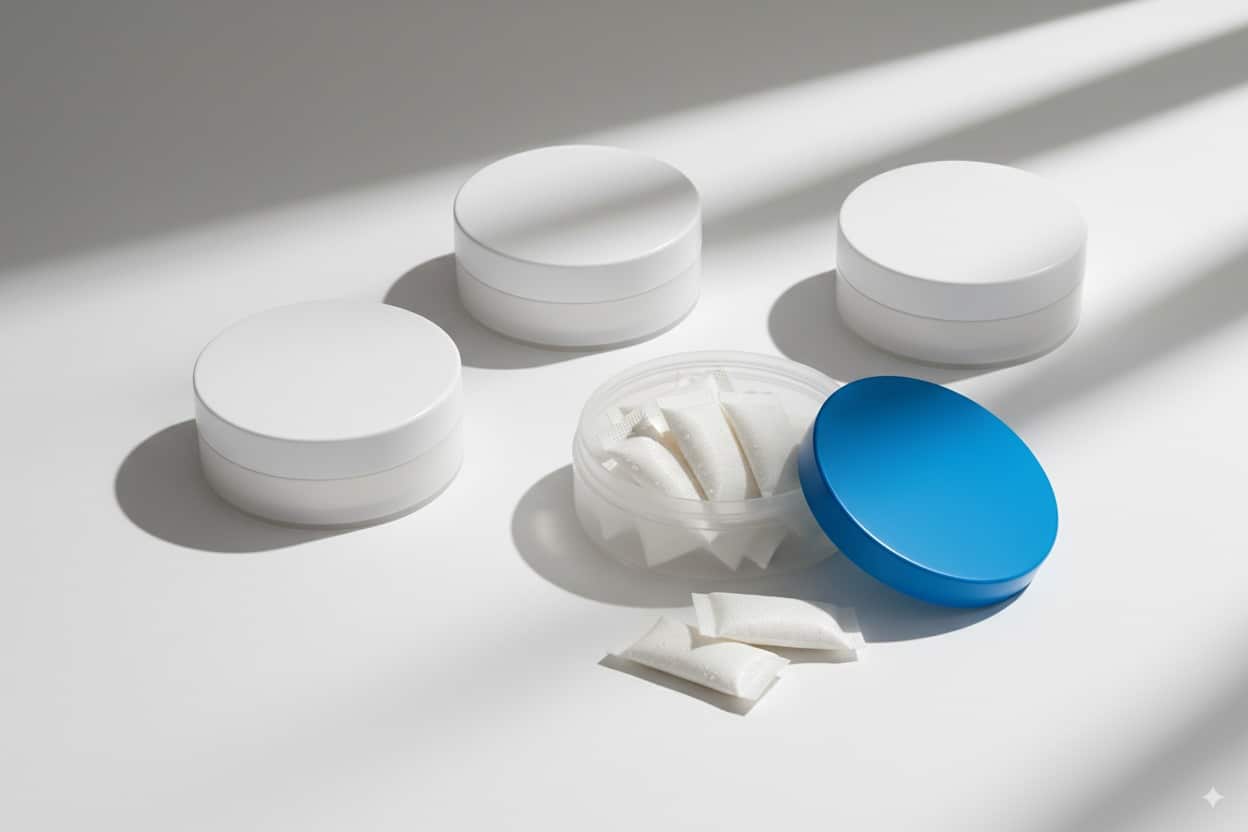
7+ Top private label energy pouches manufacturers
Wonnda works with the best private label energy pouches manufacturers. Here is a list of trusted suppliers from our network.
 Private LabelContract Manufacturing
Denmark-based manufacturer producing nicotine replacement gum, functional and nutraceutical chewing gum, lozenges and compressed tablets, available to brands sourcing energy pouches.
- Country
- Denmark
- MOQ
- Lead time
Poland-based manufacturer producing nicotine pouches, energy nicotine pouches, white label nicotine pouches, available to brands sourcing energy pouches.
- Country
- Poland
- MOQ
- Lead time
Netherlands-based manufacturer producing nicotine pouches, snus, chewing tobacco, available to brands sourcing energy pouches.
- Country
- Netherlands
- MOQ
- Lead time
Poland-based manufacturer producing nicotine pouches, energy pouches, coffee pouches, available to brands sourcing energy pouches.
- Country
- Poland
- MOQ
- Lead time
Lithuania-based manufacturer producing nicotine pouches, all-white nicotine pouches, tobacco pouches, available to brands sourcing energy pouches.
- Country
- Lithuania
- MOQ
- Lead time
United Kingdom-based manufacturer producing tobacco-free nicotine pouches, mint nicotine pouches, mango nicotine pouches, available to brands sourcing energy pouches.
- Country
- United Kingdom
- MOQ
- Lead time
USA-based manufacturer producing oral pouch products, caffeine pouch products, cbd pouch products, available to brands sourcing energy pouches.
- Country
- USA
- MOQ
- Lead time
Compare MOQs and lead times
Quick side-by-side of the shortlist. Missing values shown as a dash.
| Supplier | Location | Types | MOQ | Lead time |
|---|---|---|---|---|
| Fertin | Denmark | PL · CM | ||
| Kylmakorpi | Poland | - | ||
| Europouches | Netherlands | - | ||
| Luna Corporate | Poland | - | ||
| MB IP Factory (brand: FLIQ) | Lithuania | - | ||
| hiit Pouches | United Kingdom | - | ||
| JD Quality Pouches LLC | USA | - |
Buyer criteria
- Multi-active formulation capability
An energy pouch stacks several actives, so confirm the manufacturer can source, blend and evenly distribute caffeine, vitamins and taurine in one pouch. Ask how blend uniformity is verified for the lowest-inclusion actives. A producer geared only for single-active pouches may struggle to deliver a consistent multi-ingredient stack across the can.
- Honest dosing across the stack
The defining risk in a stack product is fairy-dusting, listing supporting actives at token levels. Confirm each ingredient is dosed to a defensible amount and ask for the per-pouch levels of every active, not just caffeine. An energy pouch whose B-vitamins and taurine are present only as a label garnish is just a caffeine pouch with a busier panel.
- Caffeine accuracy and buccal onset
Caffeine is the engine, so it must be accurately dosed and assayed per batch, and the pouch must release it buccally for the fast onset the energy positioning promises. Confirm caffeine assay and that moisture and pH are tuned for mouth absorption. A stack that does not deliver the caffeine quickly fails the core energy claim.
- Bold, masking flavor system
Energy pouches need a bold flavor that matches the positioning and masks the bitterness of caffeine and any vitamin notes. Evaluate the flavor library and taste production-representative samples. A flavor that fails to cover the actives or that does not match the energetic positioning weakens a product where taste carries much of the experience.
- Caffeine and vitamin compliance
The product falls under food-supplement rules, requiring caffeine content declarations, high-caffeine warnings and correct vitamin labeling, with Novel Food checks for any novel ingredient. Confirm the manufacturer applies the right panel and warnings per market. A producer unfamiliar with multi-ingredient supplement labeling can leave you with non-compliant packaging.
Red flags
- Fairy-dusted supporting actives
If the B-vitamins, taurine or amino acids are present only at token levels too low to matter, the energy stack is a label illusion. Ask for the actual per-pouch dose of every active. A stack dosed for the panel rather than for function misleads customers and gives the product no real advantage over a plain caffeine pouch with a longer ingredient list.
- Only caffeine actually assayed
A manufacturer that assays only caffeine and not the supporting actives cannot prove the rest of the stack is present as claimed. In a multi-ingredient product, verifying just the engine leaves the supporting panel unconfirmed. Insist that key actives across the stack are assayed, since the energy positioning rests on more than caffeine alone.
- No buccal-release design
If the pouch is not formulated for buccal release, the caffeine and soluble actives are mostly swallowed, removing the fast-onset advantage the energy positioning promises. A generic base undermines the core claim, since an energy pouch that works no faster than a swallowed supplement has lost its reason to exist as a pouch.
- Incomplete supplement labeling
A multi-active energy pouch needs a full supplement panel, caffeine declaration, high-caffeine warning and correct vitamin labeling, plus Novel Food checks for any novel ingredient. A manufacturer that produces an incomplete or non-compliant panel has mishandled the labeling, which forces costly relabels and exposes the brand to enforcement in markets that check.
Manufacturing process
- 01
Stack design and dose setting
The brand designs the active stack, caffeine as the engine plus supporting actives such as B-vitamins, taurine or amino acids, and sets each ingredient's dose to a defensible level. Caffeine content and the supporting panel are specified for both efficacy and labeling. The stack is the product's core, so dosing each active meaningfully is the central decision.
- 02
Active sourcing and verification
Each active is sourced to specification and tested on receipt, since a multi-ingredient stack requires several inputs to be verified. Caffeine, vitamins and taurine are procured against identity and potency specs. Any novel ingredient is checked for Novel Food status before it enters the formula.
- 03
Base and buccal release formulation
A cellulose or plant-fiber fleece base is formulated with moisture and pH tuned for buccal release, so caffeine and soluble actives become available in the mouth for fast onset matching the energy positioning. The base must carry several actives evenly while supporting absorption rather than swallowing.
- 04
Flavor integration and blending
A bold flavor, often fruit or energy-drink-style, is blended in with sweeteners to mask the bitterness of caffeine and any vitamin notes. All actives are dispersed evenly through the base so each pouch delivers the full stack. Blend uniformity is verified for the lowest-inclusion actives such as B-vitamins.
- 05
Filling, portioning and dose checks
The filling is dosed into fleece pouches and sealed, with fill weight and active content checked per pouch so the full stack and the caffeine dose hold across the can. Consistent portioning ensures every pouch delivers the labeled caffeine and the supporting actives, not just the caffeine.
- 06
QC, canning and food-supplement labeling
QC assays caffeine and key actives against label claim and checks microbiology, moisture and pH. Pouches are canned and labeled with the supplement panel, caffeine content, high-caffeine warning and ingredient declarations per target market. Vitamin and caffeine labeling rules are applied per destination.
Understanding energy pouches private-label manufacturing
Formulation and Ingredients
Energy pouches deliver caffeine alongside supporting energy actives such as B-vitamins, taurine, and sometimes amino acids or guarana. These are administered buccally under the lip for a quick, drink-free energy hit. The distinction for a private label brand lies in the formulation: an energy pouch offers a broader stack with an energy-drink-style narrative.
This approach requires sourcing, dosing, and verifying more ingredients, leading to a fuller supplement panel. The focus is on building a credible, honestly dosed stack, making the manufacturer's formulation capability crucial. The stack design is a core decision, with caffeine serving as the primary active, requiring accurate dosing and high-caffeine warnings.
B-vitamins (B6, B12, niacin) support energy metabolism, while taurine aligns with consumer recognition of energy drinks. To avoid "fairy-dusting," where token amounts of actives are included, each ingredient should be dosed to a defensible level. The product adheres to food-supplement regulations, including caffeine warnings and vitamin labeling obligations. Any novel ingredient may prompt Novel Food questions.
Manufacturing and Release
Production is handled by functional-pouch contract manufacturers in the Nordics and wider EU. These manufacturers possess the capability to source and blend multiple actives, sharing equipment with caffeine and nicotine-free pouches. The multi-ingredient formulation demands enhanced capability.
The buccal delivery route ensures fast onset, aligning with the energy positioning. Moisture and pH levels are precisely tuned for release in the mouth. Flavor, often a bold fruit or energy-drink-style profile, enhances the user experience.
MOQs, Lead Times, and Costs
Custom energy pouch runs typically begin at 5,000 to 25,000 cans. Relabeling stock recipes is an accessible option. Sourcing multiple actives can increase the practical minimum order quantity and lead time compared to single-active pouches. Lead times range from 8 to 14 weeks.
The main cost drivers, in order, are:
- The active stack (due to multiple ingredients)
- The flavor system
- The can and components
- Food-supplement compliance
The economics are reasonable, with the multi-ingredient stack and energy-drink-style flavor being key contributors to both cost and differentiation.
Target Markets and Differentiation
Buyers include energy-drink and sports brands seeking portable formats, gaming and esports D2C brands, and lifestyle brands offering on-the-go energy rituals. Differentiation is achieved through a well-balanced, honestly dosed stack, fast buccal onset, a bold flavor matching the energy positioning, and clean food-supplement compliance.
Qualifying a manufacturer involves assessing their ability to source and evenly distribute multiple actives, ensure honest dosing (not fairy-dusting), and provide compliant caffeine and vitamin labeling. These factors are more critical than the headline can price, as an energy pouch with token amounts of actives is essentially just a caffeine pouch with a more complex label.
Frequently asked questions
How is an energy pouch different from a caffeine pouch?+
What should go in an energy pouch stack?+
Does buccal absorption matter for an energy pouch?+
How do I avoid a fairy-dusted energy stack?+
What MOQ and lead time should I expect for energy pouches?+
What labeling does an energy pouch need?+
Explore adjacent product types
Get a vetted shortlist of energy pouches suppliers in 48 hours.
Post a brief on Wonnda. Free, no commitment. We match you with vetted manufacturers that fit your MOQ, format and market.