
Best private label caffeine pouches manufacturers
Source private label caffeine pouches suppliers through Wonnda. These oral pouches provide a precise caffeine dose for rapid buccal absorption. Key sourcing considerations include the desired caffeine strength per pouch, whether the caffeine is synthetic or naturally derived from sources like green coffee or guarana, and the specific release profile. Product variations can also involve different flavor systems, pouch materials, and packaging formats, all influencing lead times and production choices.
- Vetted suppliers
- 20,000+
- Brands & buyers
- 25,000+
- EU-made
- 80%
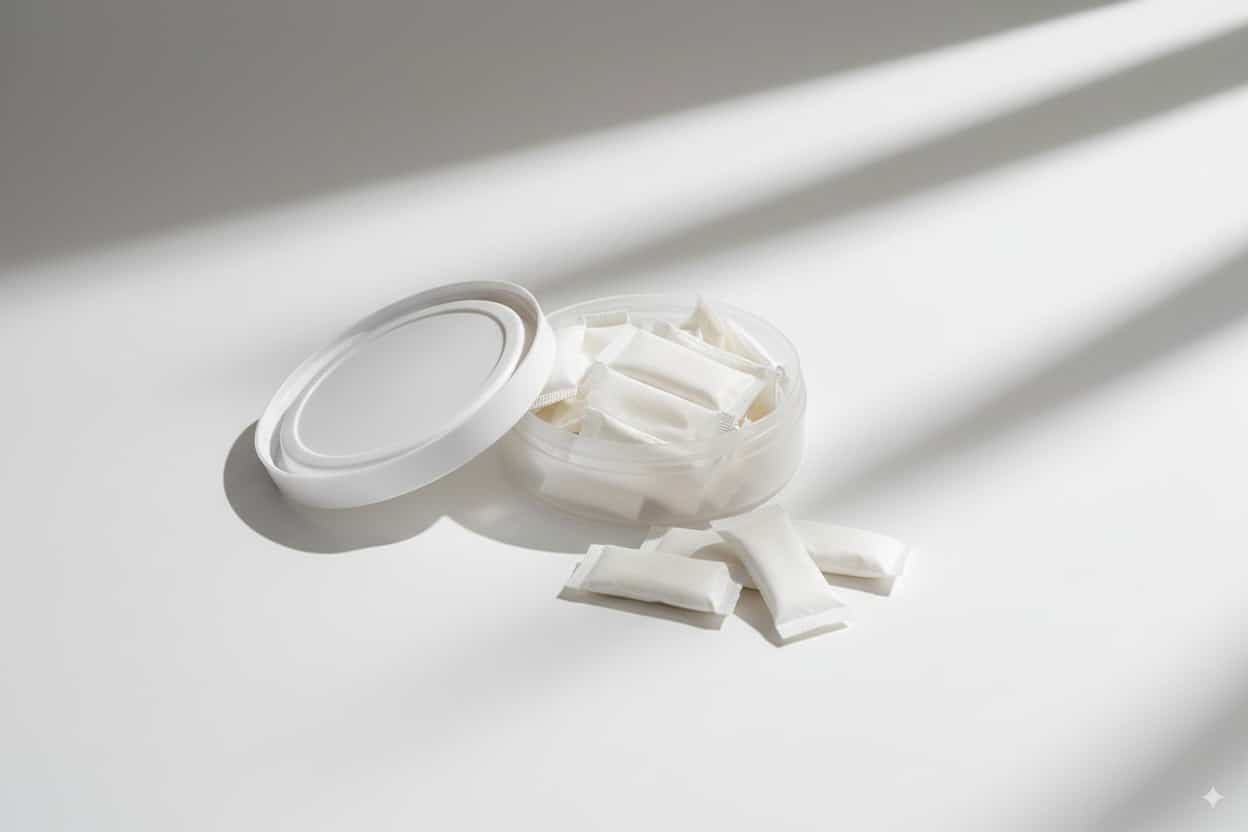
9+ Top private label caffeine pouches manufacturers
Wonnda works with the best private label caffeine pouches manufacturers. Here is a list of trusted suppliers from our network.
 Private LabelContract Manufacturing
Denmark-based manufacturer producing nicotine replacement gum, functional and nutraceutical chewing gum, lozenges and compressed tablets, available to brands sourcing caffeine pouches.
- Country
- Denmark
- MOQ
- Lead time
Poland-based manufacturer producing nicotine pouches, energy pouches, coffee pouches, available to brands sourcing caffeine pouches.
- Country
- Poland
- MOQ
- Lead time
Denmark-based manufacturer producing tobacco-free oral pouches, caffeine-containing oral pouches, cannabinoid-containing oral pouches, available to brands sourcing caffeine pouches.
- Country
- Denmark
- MOQ
- Lead time
Lithuania-based manufacturer producing nicotine pouches, caffeine pouches, cbd/cbn/cbg pouches, available to brands sourcing caffeine pouches.
- Country
- Lithuania
- MOQ
- Lead time
Lithuania-based manufacturer producing nicotine pouches, all-white nicotine pouches, tobacco pouches, available to brands sourcing caffeine pouches.
- Country
- Lithuania
- MOQ
- Lead time
USA-based manufacturer producing oral pouch products, caffeine pouch products, cbd pouch products, available to brands sourcing caffeine pouches.
- Country
- USA
- MOQ
- Lead time
United Kingdom-based manufacturer producing tobacco-free nicotine pouches, mint nicotine pouches, mango nicotine pouches, available to brands sourcing caffeine pouches.
- Country
- United Kingdom
- MOQ
- Lead time
Poland-based manufacturer producing nicotine pouches, energy nicotine pouches, white label nicotine pouches, available to brands sourcing caffeine pouches.
- Country
- Poland
- MOQ
- Lead time
- FE
Poland-based manufacturer producing fedrs ice cool nicotine pouches, fedrs stripe nicotine pouches, fedrs energy nicotine pouches, available to brands sourcing caffeine pouches.
- Country
- Poland
- MOQ
- Lead time
Compare MOQs and lead times
Quick side-by-side of the shortlist. Missing values shown as a dash.
| Supplier | Location | Types | MOQ | Lead time |
|---|---|---|---|---|
| Fertin | Denmark | PL · CM | ||
| Luna Corporate | Poland | - | ||
| House of Pouches | Denmark | - | ||
| Global Snus | Lithuania | - | ||
| MB IP Factory (brand: FLIQ) | Lithuania | - | ||
| JD Quality Pouches LLC | USA | - | ||
| hiit Pouches | United Kingdom | - | ||
| Kylmakorpi | Poland | - | ||
| FEDRS | Poland | - |
Buyer criteria
- Caffeine-dose accuracy per pouch
Because caffeine has clear effects and intake guidance, each pouch must deliver its labeled milligrams consistently. Require per-pouch caffeine assay against label claim and ask about dose tolerance across the can and across strength tiers. A manufacturer that cannot prove dose accuracy risks both an underwhelming product and over-delivery that causes jitters or worse.
- Buccal-release formulation
The point of a caffeine pouch is fast onset through the buccal membrane, so confirm the manufacturer tunes moisture and pH for buccal release rather than treating it as a swallowed product. Ask how onset is supported. A pouch where the caffeine is mostly swallowed offers no speed advantage over a tablet, defeating the format's purpose.
- Clean flavor over a bitter active
Caffeine is bitter, so the flavor system must mask it and stay pleasant over the time the pouch is held. Evaluate the flavor library and taste production-representative samples. With a single active and no nicotine, flavor carries much of the experience, so a poorly masked bitter pouch will struggle to win repeat purchase.
- Compliant high-caffeine labeling
Caffeine pouches fall under food-supplement rules, which include caffeine content declarations and high-caffeine warnings above certain levels. Confirm the manufacturer applies the correct labeling and warnings for each target market. A producer unfamiliar with caffeine labeling requirements can leave you with non-compliant packaging that must be reworked.
- Strength-tier consistency
Many brands offer a regular and a strong tier so users self-select. Confirm the manufacturer can produce each tier accurately and that the difference between them is real and consistent. Ask how dosing is controlled across tiers, since a strong pouch that under-delivers or a regular that over-delivers blurs the ladder and confuses users.
Red flags
- Caffeine not assayed per batch
If caffeine content is not assayed per pouch each batch, you cannot guarantee the dose on the can. Given caffeine's clear physiological effects and intake guidance, inaccurate dosing is both an experience failure and a safety concern, since over-delivery can cause jitters, palpitations or worse. Refuse a manufacturer that treats caffeine assay as optional.
- No buccal-release design
A producer that fills caffeine into a generic pouch base without tuning for buccal release is delivering a product with no onset advantage over a swallowed tablet. Since fast buccal onset is the entire rationale of a caffeine pouch, a generic base undermines the proposition and leaves nothing to justify choosing the format.
- Unmasked bitter taste
Caffeine is bitter, and a flavor system that fails to mask it leaves an unpleasant pouch. A manufacturer offering generic flavors with no evidence they cover the caffeine note is likely shipping a product that tastes harsh, which kills reorder in a category where flavor carries much of the experience.
- Missing high-caffeine warnings
A manufacturer that omits required caffeine content declarations and high-caffeine warnings has not handled the food-supplement labeling correctly. This is both a compliance failure that can force a relabel and a safety omission, since users need to know the dose. Labeling competence on caffeine is a basic qualification, not an extra.
Manufacturing process
- 01
Caffeine source and dose setting
The brand fixes the caffeine source (synthetic or natural from green coffee or guarana) and the milligrams per pouch across any strength tiers. Caffeine is a well-understood, unrestricted ingredient, but dose accuracy is critical given its clear effects, so the target per-pouch amount is specified precisely for labeling and safety.
- 02
Base and buccal release formulation
A cellulose or plant-fiber fleece base is formulated with moisture and pH tuned so the caffeine releases and absorbs across the buccal membrane rather than mostly being swallowed. Buccal onset is the product's reason to exist, so the base is designed to make caffeine available in the mouth during use.
- 03
Flavor integration
Flavors and sweeteners, commonly mint or citrus, are blended in to mask the bitter note of caffeine and carry the experience. The pH is balanced for mouth comfort and release. Flavor is developed to be clean and lasting, since with a single functional active the taste carries much of the perceived quality.
- 04
Pouch filling and dose verification
The filling is dosed into fleece pouches and sealed, with fill weight and caffeine content checked per pouch so each delivers the labeled milligrams. Dose accuracy is verified across the can, since caffeine's effects and intake guidance make consistent dosing a safety as well as a quality requirement.
- 05
Quality control and caffeine assay
QC assays caffeine content per pouch against label claim and checks microbiology, moisture, pH and seal integrity. Strength accuracy is confirmed across tiers. Per-batch certificates document caffeine content and safety, which underpin the dose claim and any high-caffeine warning on the can.
- 06
Canning and food-supplement labeling
Pouches are filled into cans and labeled with caffeine content per pouch, any high-caffeine warnings, ingredients and supplement-style information per the target market. Caffeine pouches fall under food-supplement rules, so labeling follows those requirements and is configured for each destination before release.
Understanding caffeine pouches private-label manufacturing
Product Overview and Core Decisions
Caffeine pouches deliver a measured dose of caffeine orally through a fleece pouch held under the lip. The caffeine absorbs across the buccal membrane for a faster onset than a swallowed pill. For a private label brand, the product is built around one clear active, caffeine, making the brief simpler than a multi-ingredient functional pouch but exacting on dose accuracy and onset.
The core decisions for caffeine pouches include the caffeine milligrams per pouch and the source of the caffeine, which can be synthetic, or natural from green coffee or guarana. Another critical decision is the release profile, as buccal delivery is the primary reason a user chooses a pouch over a coffee or a tablet.
Dose is the defining variable, with a typical caffeine pouch carrying the equivalent of an espresso's worth of caffeine. Brands often offer a couple of strength tiers. Because caffeine has clear physiological effects and upper intake guidance, the dose must be accurate and clearly labeled, and the product falls under food-supplement rules with associated labeling and high-caffeine warnings.
The fleece base, moisture, and pH are tuned to ensure caffeine releases and absorbs in the mouth rather than being swallowed. This is the formulation craft specific to this product. Flavor, typically mint or citrus, contributes to the user experience.
Manufacturing and Sourcing
Production for caffeine pouches is handled by functional-pouch and nicotine-free-pouch contract manufacturers in the Nordics and wider EU. This is due to shared portioning and canning equipment, and caffeine being an unrestricted, well-understood ingredient. This results in a broad supplier base and accessible category entry, as caffeine is one of the simplest functional actives to source and dose consistently.
Typical custom caffeine pouch runs start around 5,000 to 25,000 cans. Stock-recipe relabels are available for initial launches. Lead times generally run 8 to 12 weeks, which is shorter than CBD or nicotine pouches because there is no Novel Food or controlled-substance hurdle.
Cost drivers, in order, are the flavor system, the can and components, the caffeine input (a small share since caffeine is inexpensive), and food-supplement labeling. The economics are favorable, but the low barrier means differentiation depends on dose clarity, onset, and flavor, rather than solely on the active itself.
Target Buyers and Differentiation
Target buyers include energy and sports-nutrition brands looking to add an oral format, productivity and gaming-focused D2C brands, and lifestyle brands offering a discreet coffee alternative. Differentiation in the market is achieved through honest, clearly labeled dose, fast buccal onset, clean flavor, and strength options.
Qualifying a manufacturer on caffeine-dose accuracy per pouch, on its buccal-release formulation, and on compliant high-caffeine labeling is crucial. This matters more than the headline can price, as an inconsistently dosed caffeine pouch presents both a user-experience failure and a safety concern due to caffeine's clear effects.
Frequently asked questions
How much caffeine should each pouch contain?+
Why choose a caffeine pouch over a coffee or a caffeine pill?+
Is caffeine harder or easier to source than other pouch actives?+
What MOQ and lead time apply to caffeine pouches?+
How is a caffeine pouch different from an energy pouch?+
Do I need warnings on a caffeine pouch?+
Explore adjacent product types
Get a vetted shortlist of caffeine pouches suppliers in 48 hours.
Post a brief on Wonnda. Free, no commitment. We match you with vetted manufacturers that fit your MOQ, format and market.