
Best private label linen sheets manufacturers
Wonnda connects brands with private label linen sheets manufacturers. Sourcing involves distinctions between flat and fitted sheets, with pocket depth and elastic quality being crucial for the latter. The desired drape and dimensions of flat sheets also influence manufacturing. Material decisions center around genuine flax properties, affecting breathability and the soft, stonewashed hand feel that defines this premium product. Certifications for textile processing or material origin often play a significant role in ethical and quality assurance.
- Vetted suppliers
- 20,000+
- Brands & buyers
- 25,000+
- EU-made
- 80%
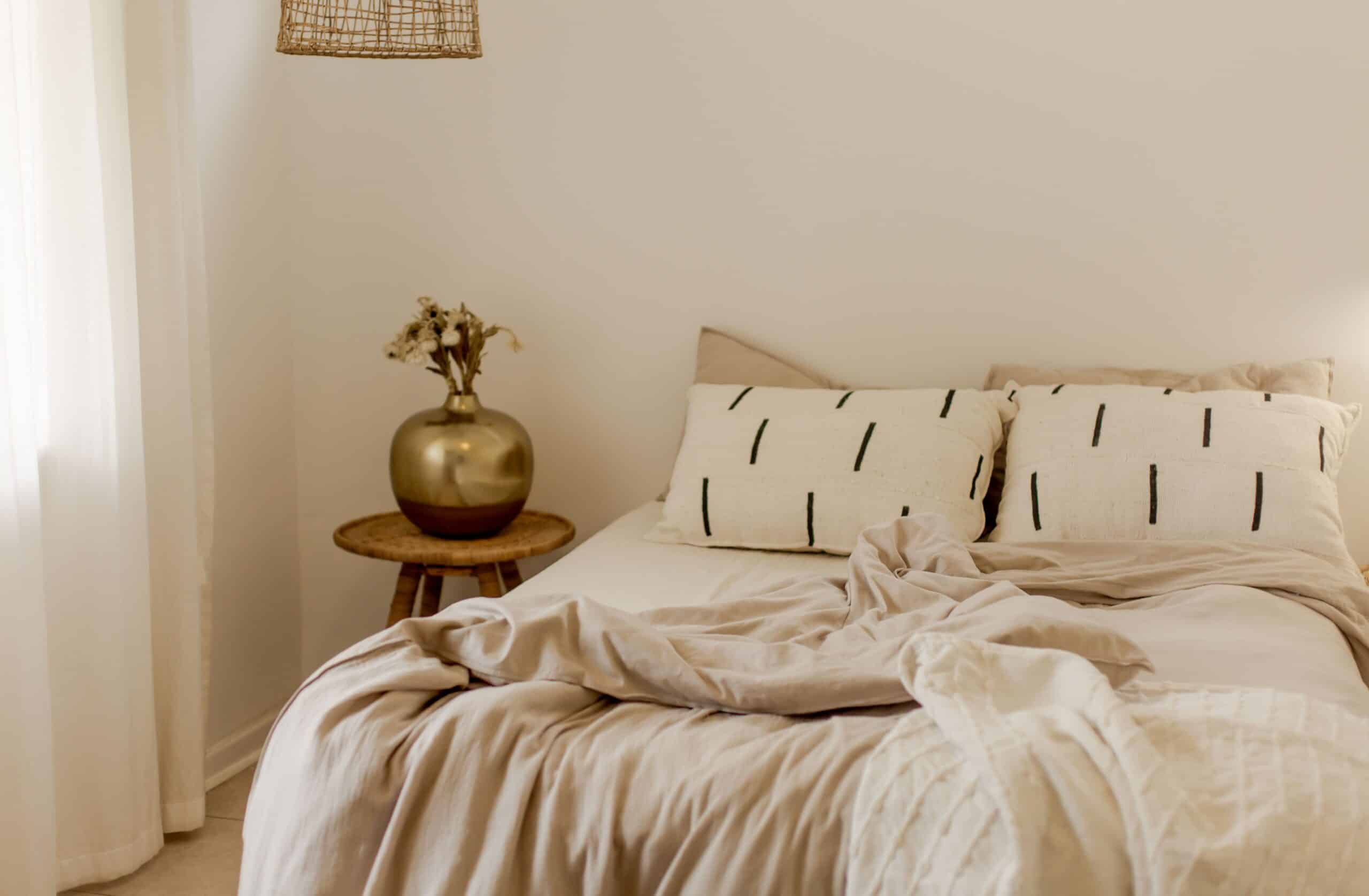
4+ Top private label linen sheets manufacturers
Wonnda works with the best private label linen sheets manufacturers. Here is a list of trusted suppliers from our network.
 Private LabelContract Manufacturing
Lithuania-based manufacturer producing linen bedding sets, linen tablecloths, linen towels, available to brands sourcing linen sheets.
- Country
- Lithuania
- MOQ
- Lead time
 Private LabelContract Manufacturing
France-based manufacturer producing bed sheets, bedding duvets, bath towels, available to brands sourcing linen sheets.
- Country
- France
- MOQ
- Lead time
 Private LabelContract Manufacturing
Lithuania-based manufacturer producing linen pants (men's classic), stonewashed linen bedding sets, gauze linen fabric, available to brands sourcing linen sheets.
- Country
- Lithuania
- MOQ
- Lead time
 Private LabelContract Manufacturing
Austria-based manufacturer producing tablecloths, napkins, kitchen towels, available to brands sourcing linen sheets.
- Country
- Austria
- MOQ
- Lead time
Compare MOQs and lead times
Quick side-by-side of the shortlist. Missing values shown as a dash.
| Supplier | Location | Types | MOQ | Lead time |
|---|---|---|---|---|
| Linomeda | Lithuania | PL · CM | ||
| VanVino | France | PL · CM | ||
| Epic Linen | Lithuania | PL · CM | ||
| Leitner Leinen | Austria | PL · CM |
Buyer criteria
- Genuine flax for skin contact
Sheets are felt directly against the skin all night, so the breathability and soft hand of real flax matter more here than in any other bedding piece. Verify 100 percent linen versus a blend or linen-look, since a sleeper feels the difference directly. Confirm fiber content with documentation and judge the against-the-skin feel on washed samples, since the whole premium rests on authentic linen comfort.
- Washed softness
Crisp raw linen is uncomfortable directly against the skin, so the stonewashing must achieve a genuinely soft, broken-in hand. Verify softness on production-representative samples rather than accepting a claim, since for sheets the washed softness is the dominant comfort factor a sleeper experiences every night. Stiff sheets at a premium price fail the most direct and important comfort test customers apply.
- Fitted-sheet pocket depth
Modern mattresses vary widely in depth, and a fitted sheet must have the right pocket depth to fit, with deep or pillow-top mattresses needing a deep pocket. Confirm the pocket depth matches the mattresses your customers use, and consider offering deep-pocket versions. A fitted sheet that will not stay on a deep mattress fails at its basic job, a common and frustrating complaint.
- Elastic durability
The fitted sheet's elastic takes repeated stress from fitting to the mattress and frequent washing, so verify the elastic is durable and retains its stretch over time. Inspect the elasticated edge construction on samples. Elastic that loses stretch leaves the fitted sheet loose and prone to popping off the mattress, a frequent failure point that quality elastic and construction prevent.
- Pre-shrinking and sizing
Confirm the linen is pre-shrunk through washing and sheets are sized accurately for standard mattress dimensions in the target markets, since mattress and sheet sizes vary by region. Unshrunk linen loses size and a fitted sheet can shrink out of fit. Verify sizing against the relevant market standards and dimensional stability on washed samples, so the fit holds across the sheet's life.
- Colorfastness and skin-safe dyes
Sheets are washed frequently and in constant skin contact, so verify the dyes are colorfast under repeated laundering and safe against the skin, with OEKO-TEX certification underpinning the safe-textile claim. A fading sheet looks tired and an unsafe dye is a real concern given the direct, prolonged skin contact. Confirm colorfastness on washed samples and OEKO-TEX coverage of the actual product.
Red flags
- Blend or linen-look presented as pure linen
Since linen sheets command a premium on the strength of flax's against-the-skin breathability, a linen-cotton blend or a linen-look fabric sold as 100 percent linen misrepresents the product, and a sleeper feels the difference directly every night. Demand fiber content documentation and judge the hand on washed samples, since the comfort and the premium both depend on the sheet being genuine flax linen.
- Crisp, stiff fabric against the skin
If samples feel stiff and crisp, the washing is inadequate, and for a sheet, which is felt directly all night, this is a more serious failure than for any other bedding piece. Washed softness is the dominant comfort factor for sheets. A manufacturer delivering crisp fabric with a softness claim has not done the washing the product's comfort depends on.
- Fitted sheet that does not fit the mattress
A fitted sheet with the wrong pocket depth, too shallow for modern or deep mattresses, will not stay on the bed, popping off at the corners. This is one of the most common and frustrating bedding complaints. If the pocket depth does not match the mattresses customers use, or no deep-pocket option exists, the fitted sheet fails at its basic job regardless of fabric quality.
- Weak elastic that loses stretch
If the fitted sheet's elastic is flimsy or loses its stretch after washing, the sheet goes loose and slips off the mattress in use. The elasticated edge takes repeated stress from fitting and laundering, so weak elastic is a direct durability failure. Inspect the elastic construction on samples, since a fitted sheet that will not stay taut frustrates customers every time they make the bed.
Manufacturing process
- 01
Flax and sheet-weight specification
The brand fixes 100 percent flax linen versus a blend and the sheet-specific weight, chosen to be durable and well-draping but still breathable and soft next to the skin. Sheet weight differs from heavier homeware linen because the sheet is felt directly by the sleeper. Content and weight are locked first since they determine the against-the-skin feel and temperature regulation sheets are bought for.
- 02
Weaving
Flax yarn is woven into sheeting-weight linen, with the weave judged for a smooth-enough surface against the skin while retaining linen's natural texture. The fabric must be durable for frequent washing yet soft for direct sleeping contact. Weave evenness matters more for sheets than for decorative linen, since irregularities are felt directly by the sleeper through the night.
- 03
Stonewashing and softening
Crisp raw linen is stonewashed or garment-washed to the soft, broken-in hand a sheet needs for comfortable direct contact, and the washing pre-shrinks the fabric so sheets hold size and fitted sheets keep their fit. Washing quality is critical for sheets specifically, since the sleeper feels the fabric against the skin all night, making softness the dominant comfort factor.
- 04
Dyeing
Linen is dyed to the brand palette with colorfast dyes suited to frequent laundering, or left natural and undyed. Color palette is a key differentiator in premium sheets, and linen takes dye with a subtle lived-in variation. Colorfastness matters because sheets are washed regularly and in direct skin contact, so the color must hold and the dye must be safe against the skin.
- 05
Cutting and fitted-sheet construction
Pieces are cut and the fitted sheet constructed with elastic and the specified pocket depth to fit the target mattresses, including deep-pocket versions for thick or pillow-top mattresses. The elastic must be durable enough to survive repeated washing without losing stretch. The flat sheet is cut generously to tuck in. Pocket depth and elastic quality are the defining fitted-sheet construction details.
- 06
Sewing and finishing
Sheets are sewn with durable seams and finished hems suited to frequent washing and the stretching a fitted sheet undergoes when fitted to a mattress. Seam strength around the fitted sheet's elasticated edge is checked, since this area takes repeated stress. Flat sheets get a clean top hem, sometimes a wider decorative hem, finished to the brand's standard.
- 07
Quality control, pressing, and packing
Finished sheets are inspected for sizing accuracy, washed softness, colorfastness, seam and elastic quality, and, for fitted sheets, pocket depth and fit on a representative mattress. Sizing is verified against standard mattress dimensions for the target markets. Sheets are pressed, packed, and labeled with size, pocket depth, composition, and care instructions for the linen.
Understanding linen sheets private-label manufacturing
Materials and Construction
Linen sheets are flat and fitted bed sheets woven from flax, designed to be in direct contact with the sleeper. They are sourced distinctly from wider linen bedding sets due to specific construction requirements for the fitted sheet's elastic and pocket depth, and the flat sheet's drape and size.
The core material decision involves genuine flax and the appropriate weight for a sheet. Confirming 100 percent flax linen versus a linen-cotton blend or a "linen-look" fabric is foundational, as sleepers directly feel the difference. Sheet-weight linen balances durability and drape with breathability and softness, with the GSM chosen specifically for sheeting. Both flat and fitted sheets must be stonewashed for a soft hand and pre-shrunk to maintain size and fit. Colorfastness and OEKO-TEX certification are also important.
A fitted sheet requires accurate elastic, sufficient pocket depth to fit various modern mattress depths (including deep or pillow-top mattresses), and elastic that retains stretch after repeated washing. A flat sheet is simpler but must be generously sized for tucking.
MOQs and Lead Times
MOQs for custom linen sheets typically range from 300 to 1,000 pieces per size and color. Lead times are approximately 8 to 14 weeks, accounting for washing and, for fitted sheets, elastic and pocket construction.
Where It's Made
Linen sheet manufacturing for the European market is concentrated in the Baltic flax region. Other producing countries include Portugal, Poland, and India.
Cost Drivers and Differentiation
Key cost drivers, in order, are the linen grade and pure-versus-blend status, fabric weight, washing and fitted-sheet construction, and order volume. Differentiation for private label brands, boutique hotels, and retailers focuses on linen authenticity, washed softness, color palette, and the fit and durability of the fitted sheet.
Qualifying a manufacturer based on genuine flax content, washing quality, and fitted-sheet pocket depth and elastic durability is more critical than headline price. This is because a sheet is experienced directly by the sleeper every night, and issues like stiff fabric or a poorly fitting fitted sheet significantly impact the user experience.
Frequently asked questions
How do I choose the right pocket depth for fitted linen sheets?+
Why source linen sheets separately from a full bedding set?+
What weight of linen is best for sheets?+
Do linen sheets keep you cool?+
What MOQ and lead time should I expect for linen sheets?+
How do I keep a fitted linen sheet from coming off the mattress?+
Explore adjacent product types
Get a vetted shortlist of linen sheets suppliers in 48 hours.
Post a brief on Wonnda. Free, no commitment. We match you with vetted manufacturers that fit your MOQ, format and market.