
Best private label dairy alternatives manufacturers
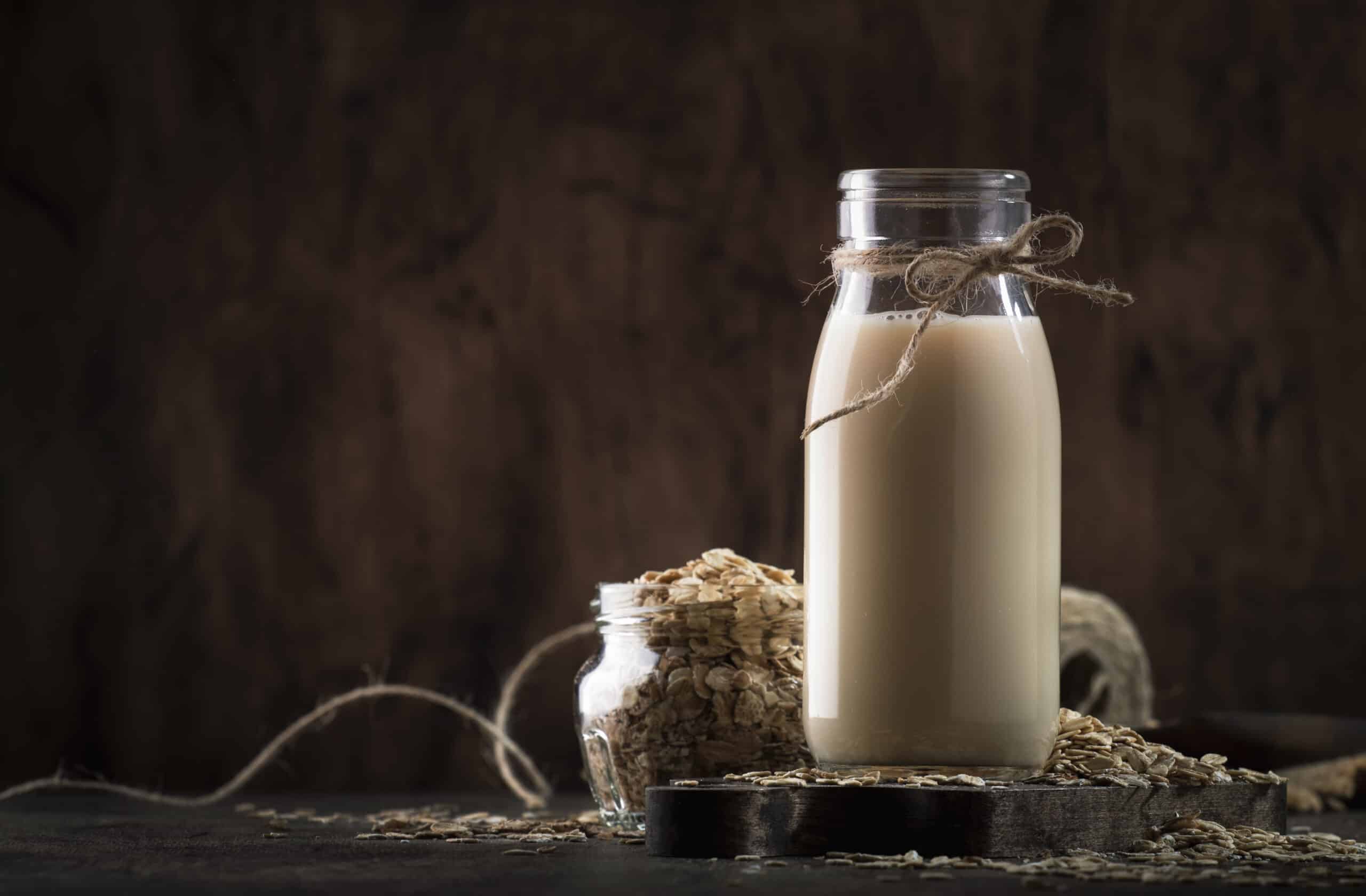
Source private label dairy alternatives suppliers through Wonnda. These products encompass plant-based drinks and dairy-replacement items, formulated from oat, soy, almond, coconut, or pea bases. Key considerations include emulsion stability and homogenization processes to ensure consistent texture and shelf life. Suppliers offer various formats, whether aseptic plant drinks or UHT cartons, catering to diverse product applications like barista lines or retail milk alternatives.
- Vetted suppliers
- 20,000+
- Brands & buyers
- 25,000+
- EU-made
- 80%
1+ Top private label dairy alternatives manufacturers
Wonnda works with the best private label dairy alternatives manufacturers. Here is a list of trusted suppliers from our network.
DMC Food
4.7Private LabelContract ManufacturingWholesaleIreland-based manufacturer producing chicken curry with brown rice, cheeseburger with fries and gherkins, sweet chilli chicken with wholewheat noodles, available to brands sourcing dairy alternatives.
- Country
- Ireland
- MOQ
- Lead time
Compare MOQs and lead times
Quick side-by-side of the shortlist. Missing values shown as a dash.
| Supplier | Location | Types | MOQ | Lead time |
|---|---|---|---|---|
| DMC Food | Ireland | PL · CM · WS |
Buyer criteria
- Emulsion stability through shelf life
A plant drink naturally wants to separate, so confirm the co-packer can hold the emulsion smooth and white without sedimentation or a fat ring across the full ambient shelf life. Ask for stability data on production-representative cartons, since separation that looks fine at filling can develop over months and is exactly what a customer sees when they open the pack.
- Barista performance where claimed
If you want a barista edition, confirm the co-packer has a proven foaming and acid-tolerant formulation, not just a standard recipe relabeled. The milk must steam to a stable microfoam and not curdle when it hits hot espresso. Test it in real coffee on production samples, because barista performance is a specialist formulation that many plant drinks fail.
- Aseptic capability and format
Most plant milks are sold shelf-stable, so verify the plant runs UHT and aseptic carton filling and offers the carton size and closure you need. Aseptic minimums are high because the lines run large volumes. Confirm the format early, since carton tooling, not your brand, sets the available pack sizes and the MOQ.
- Fortification and nutrition match
Consumers expect a milk replacement to carry calcium and vitamins D and B12. Confirm the co-packer can fortify to the levels your nutrition panel claims and that the fortification stays stable and evenly distributed through processing and shelf life. Ask how they verify the added micronutrients survive UHT and remain at the labeled level.
- Clean-label and base provenance
If you position on a short ingredient deck or a specific base origin, confirm the co-packer can deliver stability with minimal additives and can document where the oat, soy, or almond comes from. Achieving smoothness and shelf life with fewer stabilizers is harder, so ask how they balance a clean deck against the separation risk inherent in plant drinks.
Red flags
- Separation or sediment on samples
If production-representative cartons show a fat ring, sedimentation, or a watery layer, the emulsion is unstable and it will only worsen over shelf life. A co-packer that cannot deliver a smooth, stable drink at the trial stage will ship the same fault to every customer, who judges the product the moment they open and pour it. Treat visible separation as disqualifying.
- Barista claim without coffee testing
A barista edition asserted without a demonstration in real espresso is a warning. Many plant milks curdle on contact with hot acidic coffee or fail to foam into stable microfoam. If the co-packer cannot show the milk steaming and holding in actual coffee, the barista claim is unproven and will fail in the cafe, which is precisely where the product is judged.
- Fortification not verified post-process
Calcium and vitamins D and B12 can be degraded or unevenly distributed by UHT and processing. A co-packer that adds fortification but cannot verify it survives at the labeled level through to the finished carton exposes you to a nutrition panel that does not match the product, which is both a quality and a compliance failure in a milk replacement.
- Heavy stabilizer load on a clean-label brand
If a co-packer can only achieve stability by loading the drink with multiple gums, emulsifiers, and oils, the ingredient deck will read poorly against clean-label competitors. A long additive list on a product positioned as natural undermines the brand. Ask for the function of every additive, since unnecessary stabilizers signal a plant relying on chemistry to mask a weak base recipe.
Manufacturing process
- 01
Base preparation and extraction
The chosen base, oat, soy, almond, or pea, is milled or soaked and the soluble fraction extracted into water, often with enzymes that break starch into natural sweetness for oat. The extraction sets the drink's body and flavor. Insoluble fiber and solids are separated out to leave a smooth base liquid for blending.
- 02
Blending and fortification
Oils, stabilizers, emulsifiers, salt, and the fortification package of calcium and vitamins D and B12 are blended into the base. Fortification is added because a milk replacement is expected to match dairy's nutrition. The emulsifier and stabilizer system is dosed here to hold oil, protein, and water together through shelf life.
- 03
Homogenization
The blend is forced through a high-pressure homogenizer that shears the oil into tiny droplets so it stays suspended rather than rising as a cream layer. Homogenization is what gives plant milk its smooth, white, dairy-like appearance and prevents separation. Pressure and stages are tuned to the base, since oat and almond behave differently.
- 04
UHT or pasteurization
The drink is heated to ultra-high temperature for a few seconds to sterilize it for an ambient shelf life, then rapidly cooled, or pasteurized for a chilled product. UHT enables the long shelf-stable life most plant milks rely on. The heat profile is controlled to sterilize without scorching the base, which would dull flavor and color.
- 05
Aseptic filling
The sterile drink is filled into pre-sterilized multilayer cartons in an aseptic environment so no microbes enter, sealing in the long ambient shelf life without preservatives. Aseptic lines run high volumes, which sets the high MOQ. Fill accuracy and seal integrity are monitored continuously to protect both shelf life and net content.
- 06
Shelf-life and stability QC
QC confirms sterility, fill weight, fortification levels, and seal integrity, and the recipe is held through a stability study watching for sedimentation, fat separation, and flavor change. For barista editions, foam and acid tolerance are tested against espresso. Per-batch records document the safety-critical UHT process and the stability result.
Understanding dairy alternatives private-label manufacturing
Product Overview
Dairy alternative private label includes plant-based drinks and dairy-replacement products such as milk, cream, and yogurt. These products are built on bases of oat, soy, almond, coconut, pea, or a blend. The core technical challenges in this category involve emulsion and stability, as plant drinks are suspensions of protein, oil, and water that tend to separate. Formulation and homogenization are critical to maintaining a smooth, white, and pourable product throughout its shelf life.
The category is segmented by base ingredient and application. Oat is the volume leader due to its neutral taste and barista performance. Soy offers high protein content and a proven technical track record. Almond and coconut are chosen for flavor and positioning, while pea protein caters to allergen-free and high-protein product lines. Different formulations are required for drinking milk, barista editions, cooking creams, and fermented yogurt-style products.
Barista versions are specialized formulations, requiring particular attention to foam stability and acid tolerance against espresso.
Manufacturing and Logistics
Plant-drink contract manufacturing in Europe is concentrated in Germany, Belgium, the Netherlands, Sweden, and Italy, which possess strong UHT and aseptic capabilities. Most plant milks are sold shelf-stable in aseptic cartons.
- MOQs for custom plant drinks typically start around 10,000 to 30,000 liters or the carton equivalent per SKU.
- Lead times for custom recipes range from 10 to 16 weeks.
- Recipe stabilization and aseptic process validation account for most of the lead time.
Cost Drivers
Cost is primarily driven by the base ingredient and its inclusion rate, with variations between oat base, pea protein, and high almond content. Fortification with additives like calcium, vitamins D and B12 also contributes significantly to cost, as consumers expect these in milk replacements.
The aseptic carton, a sophisticated multilayer pack, represents a larger share of the cost than many new brands anticipate. Its format and minimums are determined by the filling-line tooling. Processing costs also contribute to the overall price.
Market and Differentiation
Buyers of private label dairy alternatives include D2C plant-based and wellness brands, retailer own-brand vegan ranges, and coffee-shop chains seeking house barista milks. These products are sold through grocery stores, cafes, and online channels. Differentiation in the market is achieved through taste, barista performance, clean ingredient decks, base provenance, and fortification.
Qualifying a co-packer based on their ability to maintain emulsion stability throughout shelf life, deliver foaming and acid tolerance for barista lines, and run the required aseptic format is crucial. This is often more important than the headline price, as a plant milk that separates in the carton or splits in coffee will fail at the point of customer judgment.
Frequently asked questions
Which plant base should I choose: oat, soy, almond, pea, or coconut?+
Why is a barista version harder to make than regular plant milk?+
Why are the MOQs for plant milk so high?+
How is plant milk kept from separating in the carton?+
Do I need to fortify my plant milk with calcium and vitamins?+
What MOQ and shelf life come with an aseptic carton plant milk?+
Explore adjacent product types
Get a vetted shortlist of dairy alternatives suppliers in 48 hours.
Post a brief on Wonnda. Free, no commitment. We match you with vetted manufacturers that fit your MOQ, format and market.