
Best private label cbd capsules manufacturers
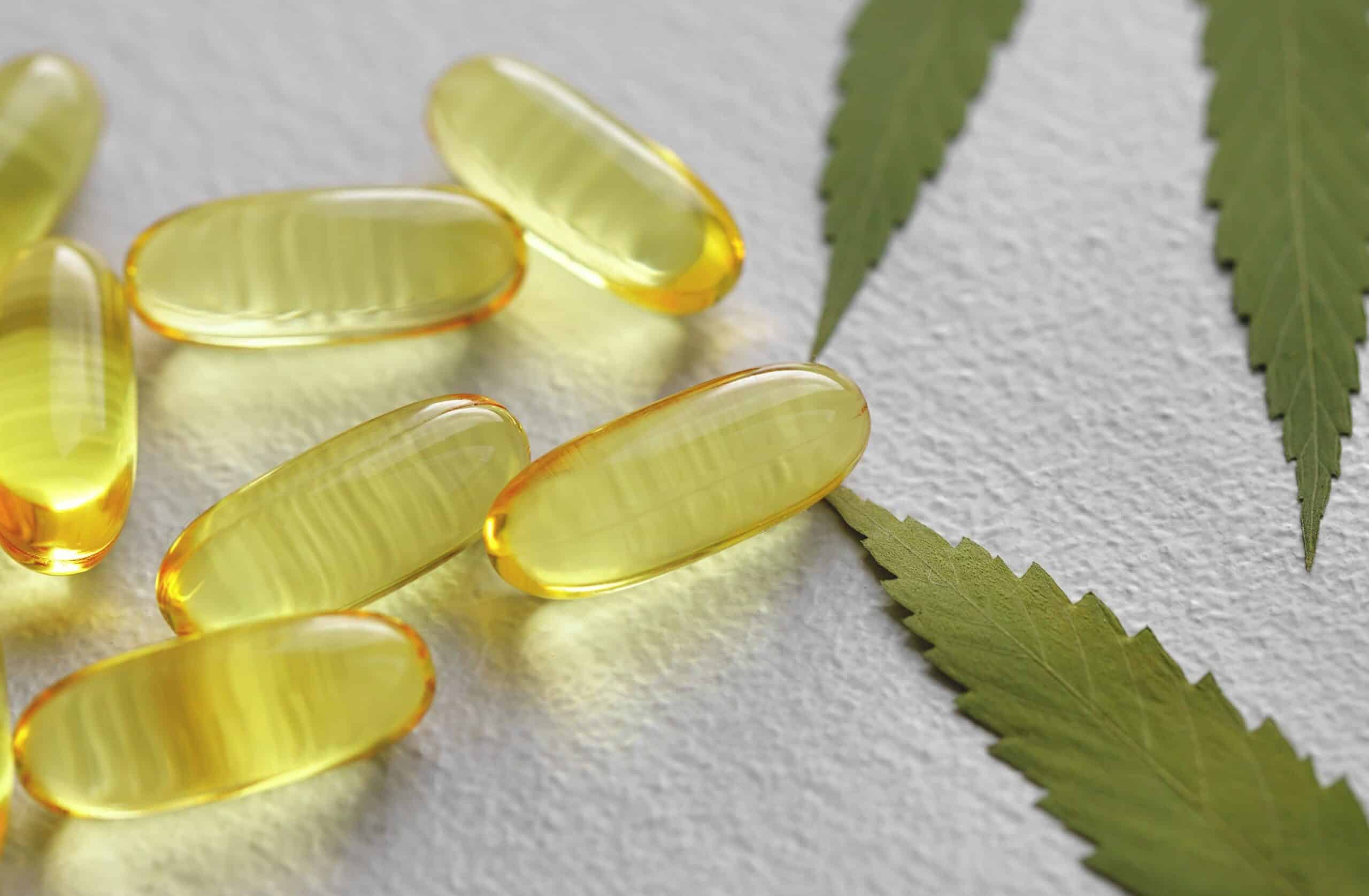
Wonnda is where brands find private label cbd capsules manufacturers. CBD capsules offer a consistent dosage, making them a reliable format for cannabidiol delivery. Key sourcing considerations include the choice between isolate and broad-spectrum formulations, as well as the capsule type: hardshell or softgel. Rigorous documentation, such as Novel Food dossiers, is essential for compliance and market access.
- Vetted suppliers
- 20,000+
- Brands & buyers
- 25,000+
- EU-made
- 80%
2+ Top private label cbd capsules manufacturers
Wonnda works with the best private label cbd capsules manufacturers. Here is a list of trusted suppliers from our network.
 Private LabelContract Manufacturing
Slovenia-based manufacturer producing full-spectrum cbd oil, cbd extracts (bulk ingredients), cbd skincare topicals, available to brands sourcing cbd capsules.
- Country
- Slovenia
- MOQ
- Lead time
 Private LabelContract Manufacturing
Netherlands-based manufacturer producing cbd gummies, cbd oils, cbd capsules, available to brands sourcing cbd capsules.
- Country
- Netherlands
- MOQ
- Lead time
Compare MOQs and lead times
Quick side-by-side of the shortlist. Missing values shown as a dash.
| Supplier | Location | Types | MOQ | Lead time |
|---|---|---|---|---|
| Essentia Pura d.o.o. | Slovenia | PL · CM | ||
| CBD Oil Europe | Netherlands | PL · CM |
Buyer criteria
- Market-specific Novel Food and THC compliance
Confirm the manufacturer can supply and document for your exact target markets, since CBD ingestibles need a Novel Food route and THC limits differ by country. Ask which national markets they currently ship to and what dossier their extract sits behind. A partner vague on Novel Food status is a partner whose product you cannot legally sell.
- Per-batch cannabinoid and THC assay
Require a Certificate of Analysis from an accredited lab for every finished batch, showing CBD content against label claim and THC below the relevant limit. Mislabelled potency is the defining problem in CBD, so a house that assays only the incoming extract and not the finished capsule cannot prove what is in the bottle.
- Isolate versus spectrum capability
Verify the manufacturer runs the exact fill you need at scale. A hardshell isolate house quoting a full-spectrum softgel may subcontract the oil line. Confirm whether they handle powder, oil, or both, and ask for a sample of the same fill type and dose you intend to sell before committing to a run.
- Overage and stability for claimed dose
Cannabinoids degrade, so the milligrams on the label must still be present at expiry. Ask how the manufacturer calculates overage and whether they hold stability data supporting the printed shelf life for your fill type. A dose assigned without stability backing risks under-potency complaints once product sits in distribution.
- Hemp contaminant screening
Hemp can carry pesticides, heavy metals, and residual solvents from extraction. Confirm each batch is screened for these alongside microbiology, and that the extract supplier is qualified. In a daily-dose ingestible, contaminant testing is not optional, and a low extract price that skips it is a false economy.
Red flags
- No finished-product cannabinoid assay
If the manufacturer cannot show CBD content and THC level on the finished capsule, only on the incoming extract, you cannot prove the bottle matches its label. CBD is the category most associated with potency mislabelling and regulatory seizure, so missing finished-product assay is disqualifying regardless of the quote.
- Vague Novel Food position
A quote that promises CBD capsules without naming the Novel Food route or the markets it covers is hiding the central compliance risk. Authorisation status differs by country and is still evolving. A manufacturer who cannot explain where your product is legal to sell is selling you inventory you may not be able to ship.
- THC limit treated loosely
If the partner cannot state the THC limit for your target market and prove the batch sits below it, the product can be pulled as a controlled substance. THC tolerances are tight and country-specific. Any looseness about which limit applies and how it is verified is a reason to walk away.
- No contaminant screening on hemp
Hemp concentrates pesticides and heavy metals, and extraction can leave solvent residue. A house that does not screen each batch exposes your brand to contaminant failures in a product consumed daily. Skipping this testing to hit a price point is the kind of shortcut that surfaces in an independent lab result.
Manufacturing process
- 01
Extract selection and cannabinoid verification
The manufacturer selects CBD isolate, broad spectrum, or full spectrum extract and tests each incoming lot for cannabinoid content and THC level against specification. THC control is the gate, since exceeding a national limit makes the batch non-compliant. A Certificate of Analysis from an accredited lab travels with every extract lot.
- 02
Dose and excipient formulation
The target CBD milligram dose per capsule is fixed, then carriers and excipients are chosen so the fill flows cleanly for powder isolate or stays stable for oil-based spectrum extract. Overage is calculated to ensure label-claim dose holds across shelf life, because cannabinoids degrade over time and the printed milligrams must survive to expiry.
- 03
Shell selection
Isolate powder runs into a two-piece HPMC or gelatin hardshell, while broad or full spectrum oil needs a softgel or a liquid-filled banded hardshell on a different line. Shell choice locks the encapsulation tooling and the moisture barrier, which matters because oxidised extract loses potency and shifts colour.
- 04
Blending or oil preparation
For isolate, the cannabinoid powder is blended with carriers to a validated uniformity so each capsule carries the same dose. For oil fills, the extract is warmed and combined with a carrier oil to a target concentration. Uniformity is verified before encapsulation so dose does not vary across the batch.
- 05
Encapsulation
Hardshell powder is dosed by tamping pins or dosator and the capsule is locked, while softgels are formed and filled on a rotary die. In-process fill-weight or fill-volume checks confirm each unit carries the labelled CBD dose. Underfilled units are rejected, since dose accuracy is the core claim of a CBD capsule.
- 06
Quality control and cannabinoid assay
Finished capsules are assayed for CBD content against label claim and for THC against the relevant national limit, alongside microbiological, heavy-metal, and pesticide screening that hemp material warrants. Per-batch CoAs document cannabinoid content and contaminants, and many brands publish them to build trust in a category dogged by mislabelling.
- 07
Bottling, sealing and lot coding
Capsules are counted into bottles or blistered, fitted with a desiccant where needed, induction sealed for tamper evidence, capped, labelled, and lot coded. Labelling must match the assayed dose and carry the declarations each target market requires, with lot codes tracing finished units back to the extract lot for any compliance query.
Understanding cbd capsules private-label manufacturing
Product Overview
CBD capsules provide a fixed dose of cannabidiol within a swallowable hardshell or softgel. This eliminates dosing uncertainty and the hemp taste often associated with oils and tinctures. For private label brands, capsules offer a credible CBD format, allowing for precise milligram dosage statements per unit, unlike the variability of dropper-based oils. This format also positions the product as a supplement, suitable for pharmacy and practitioner channels.
Regulatory and Sourcing Constraints
The primary sourcing constraint for CBD ingestibles is regulatory, particularly regarding Novel Food authorisation in the EU and Great Britain. Contract manufacturers must use CBD isolate or distillate with a credible Novel Food dossier and adhere to strict national THC limits, which vary by market. A capsule legal in one country may be non-compliant in another, making market supply capability and documentation crucial over per-unit price.
CBD isolate is an odorless crystalline powder suitable for encapsulation in two-piece hardshells, often blended with a carrier and excipients. Broad or full-spectrum extracts are oils that require softgels or liquid-filled hardshells and dedicated manufacturing lines. Isolate offers precise dosing and zero THC, ensuring the safest compliance. Spectrum oils offer "entourage effect" marketing but introduce THC management, taste, and stability challenges. The choice between isolate and spectrum must be made prior to briefing manufacturers, as it determines which manufacturers can provide quotes.
Manufacturing and Logistics
CBD capsule contract manufacturing in Europe is concentrated in the Netherlands, Germany, Poland, and the UK. Most manufacturers source extract from specialist hemp processors. MOQs for custom doses typically range from 1,000 to 5,000 units due to extract cost and GMP changeover. Relabeling of stock doses may be possible at lower MOQs. Lead times are typically 6 to 12 weeks, extending when Certificates of Analysis or Novel Food documentation require refreshing. Cost is primarily driven by the CBD itself (isolate versus distillate, and milligram dose), followed by the shell type and then excipients and the bottle.
Target Buyers and Quality Control
Private label CBD capsule buyers include wellness and sleep-focused D2C brands, pharmacy and drugstore private-label ranges, and practitioner and CBD-specialist retailers. Channel selection is important; pharmacy buyers require full Novel Food and CoA documentation, while D2C buyers may accept more risk. Qualifying a partner on documentation depth, per-batch cannabinoid assay, and THC control is paramount before considering flavor or shell aesthetics, as a capsule exceeding national THC limits can quickly become unsellable inventory.
Frequently asked questions
Should I use CBD isolate or a full-spectrum extract in my capsules?+
Are CBD capsules legal to sell across the EU?+
How is the CBD dose per capsule kept accurate over shelf life?+
What MOQ should I expect for private label CBD capsules?+
Why do I need a Certificate of Analysis for every batch?+
Can I sell CBD capsules through pharmacies?+
Explore adjacent product types
Get a vetted shortlist of cbd capsules suppliers in 48 hours.
Post a brief on Wonnda. Free, no commitment. We match you with vetted manufacturers that fit your MOQ, format and market.