
Best private label fitness accessories manufacturers
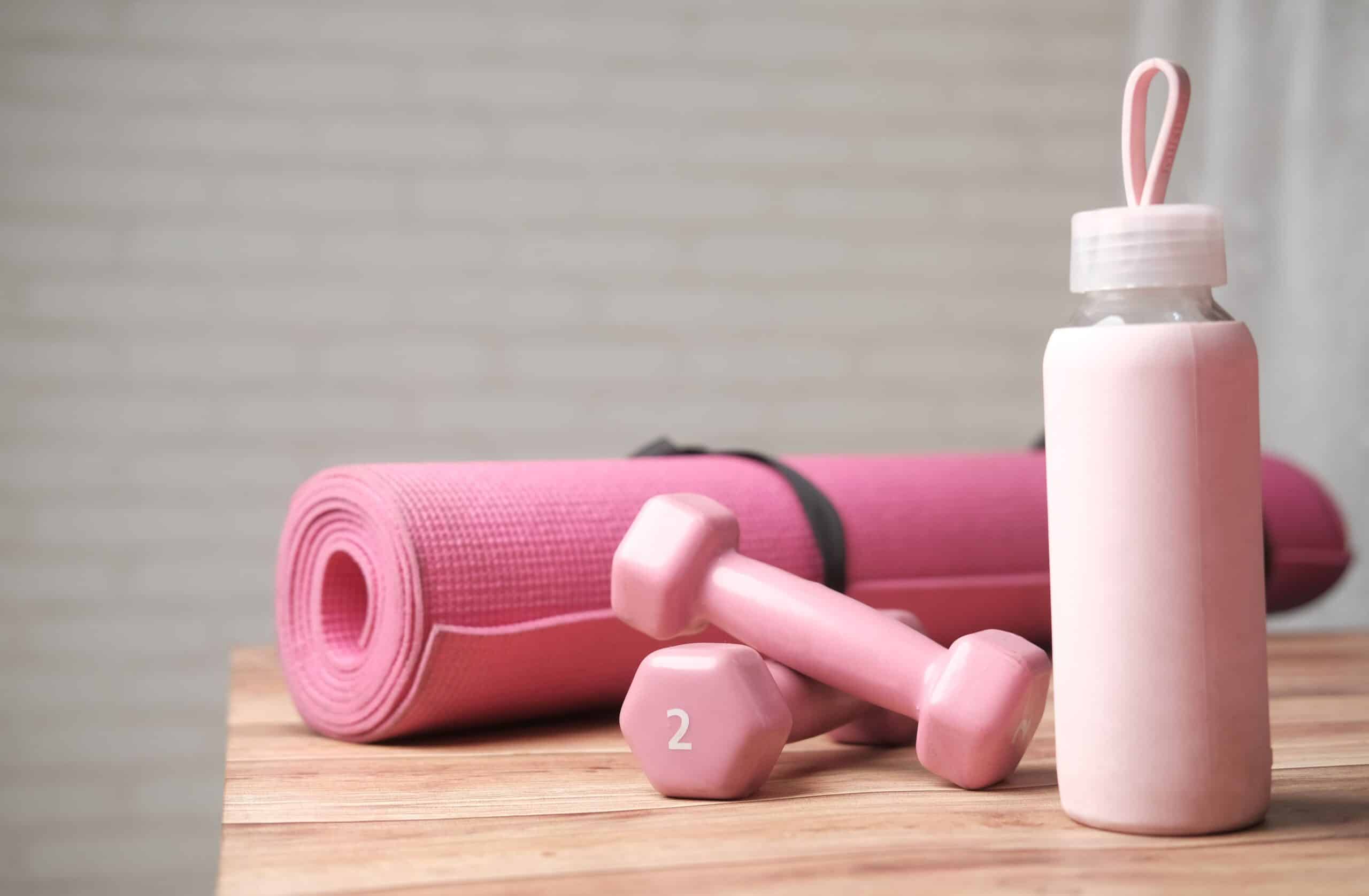
Wonnda is the best place to find private label fitness accessories manufacturers. This category encompasses items such as resistance bands, lifting straps, gym towels, water bottles, and foam rollers, often requiring sourcing from various specialized suppliers. Materials range from latex and fabric for bands and wraps, to stainless steel or BPA-free plastics for bottles, and microfibers for towels. Quality considerations include material durability, ergonomic design, and colorfastness, with specific certifications like OEKO-TEX for textiles or food-grade standards for bottles being important. Lead times can vary significantly depending on the complexity of the accessory and material availability.
- Vetted suppliers
- 20,000+
- Brands & buyers
- 25,000+
- EU-made
- 80%
2+ Top private label fitness accessories manufacturers
Wonnda works with the best private label fitness accessories manufacturers. Here is a list of trusted suppliers from our network.
 Private LabelContract Manufacturing
Poland-based manufacturer producing woven labels, printed labels, embroidered patches, available to brands sourcing fitness accessories.
- Country
- Poland
- MOQ
- Lead time
 Private LabelContract Manufacturing
Spain-based manufacturer producing personalized water cartons (goddess of water), custom cookies and snacks packaging, paper cups for events, available to brands sourcing fitness accessories.
- Country
- Spain
- MOQ
- Lead time
Compare MOQs and lead times
Quick side-by-side of the shortlist. Missing values shown as a dash.
| Supplier | Location | Types | MOQ | Lead time |
|---|---|---|---|---|
| Isbilir Promosyon - Istanbul Promotions | Poland | PL · CM | ||
| The Brand Company, S.L. | Spain | PL · CM |
Buyer criteria
- In-house production versus trading
Much of this category is sold by trading companies that subcontract to unseen factories. Confirm your supplier actually makes the specific item, by asking which items they produce in-house and which they buy. A trader has no control over the band gauge or stitch quality and cannot fix a defect at source, which surfaces as inconsistent quality batch to batch.
- Material grade and safety compliance
Latex bands need defined gauge and migration safety, bottles need food-contact certification, and microfiber towels need a stated GSM. Verify the actual material spec and the relevant test reports rather than accepting a generic safe claim. A band made from reclaimed rubber or a bottle that fails food-contact limits is both a quality and a liability problem.
- Functional testing data
Ask for pull-test results on bands, stitch-strength data on straps, and leak testing on bottles. These items are used under load and stress, so functional failure is the main complaint driver. A supplier that tests only appearance and not function cannot prove the product survives real gym use, which is exactly where it gets judged.
- Decoration durability
Branding on accessories takes abuse: sweat, stretching, washing, and impact. Confirm the decoration method suits the material and survives use, ideally with a wash or rub-test sample. A screen print that flakes off a band or a label that peels after washing turns a branded product into an unbranded one within weeks.
- Consolidation and MOQ realism
Because a line spans several suppliers, check whether the partner can consolidate the basket or whether you must manage multiple shipments. Match MOQs to your launch volume per item, since molded goods carry tooling minimums that small brands underestimate. Clarify whether MOQ is per item or per color, which changes the working capital a launch ties up.
Red flags
- One factory claiming every item
A single supplier offering bands, bottles, towels, and straps all made in-house is almost always a trader. These goods use entirely different processes and equipment, so genuine in-house breadth across all of them is rare. Treat a one-stop claim as a prompt to ask exactly which items they manufacture versus source elsewhere.
- No material certificates
Latex and food-contact plastics carry real safety obligations. A supplier that cannot produce migration or food-contact test reports for bottles and bands is selling on price and hoping the question never comes. In regulated markets this exposes the brand to recall and liability, so missing material documentation is disqualifying for ingestible-contact and skin-contact goods.
- Appearance-only quality control
If a supplier inspects only for color and cosmetic defects and runs no functional testing, the items that fail in use, snapped bands and leaking bottles, will reach customers. Load-bearing and liquid-holding accessories must be tested for function, not just looks, so the absence of pull and leak testing signals a quality program built for the showroom, not the gym.
- Vague resistance or GSM specs
A band sold as medium with no pull rating, or a towel sold as premium with no GSM, leaves the actual performance undefined and inconsistent between batches. Resistance levels and GSM are the measurable specs that make these items reorderable, so a supplier that will not commit to numbers cannot deliver consistency you can build a brand on.
Manufacturing process
- 01
Component scoping and tech pack
The brand defines each accessory separately with its own spec: material, dimensions, color, decoration, and packaging. A resistance band tech pack states latex grade, length, and pull rating; a strap pack states webbing width and stitch pattern. Mixed baskets need one document per item, not one shared sheet.
- 02
Material sourcing per item
Each supplier procures to spec: medical-grade latex or TPE for bands, cotton or nylon webbing and leather for straps, microfiber cloth at the chosen GSM for towels, food-grade stainless or Tritan for bottles. Material grade is locked here because it drives both cost and the safety compliance the finished item must pass.
- 03
Tooling and sampling
Molded hard goods need a tool cut before sampling, which adds cost and time. Textile and rubber goods sample faster. The factory produces a proto sample for fit and finish, then a pre-production sample matching final materials and branding. Each item is approved on its own sample, since a basket ships only when every component passes.
- 04
Production and decoration
Items are produced on their respective lines, then branded by the chosen method: woven or printed labels on textiles, screen print or pad print on rubber and plastic, laser etch on metal bottles. Decoration is matched to material because a print that holds on a towel will rub off a stretching band.
- 05
Quality control and safety checks
Bands are pull-tested for breakage and checked for latex defects, straps for stitch strength, bottles for leak resistance and food-contact compliance. AQL sampling covers cosmetic defects across the lot. Functional testing matters here because a band that snaps or a bottle that leaks generates returns and safety claims.
- 06
Kitting, packaging and consolidation
Individual items are packed in branded retail or polybag packaging, then bundles are kitted where the brand sells sets. Goods from different suppliers are often consolidated at a freight forwarder before shipping, so the brand receives one delivery rather than several. Lot codes support traceability per component.
Understanding fitness accessories private-label manufacturing
Product Overview
Fitness accessories encompass soft and small goods that complement activewear, including resistance bands, lifting straps, wrist and knee wraps, gym towels, water bottles, foam rollers, gloves, and carrying pouches. For private label brands, this category represents a collection of components, each produced by a specialized manufacturer.
Building a branded accessory line typically involves qualifying three or four suppliers and consolidating orders, rather than relying on a single partner for all items. For example, a latex resistance band and a stainless steel bottle originate from different factories due to their distinct material and manufacturing processes.
Materials and Manufacturing Processes
The category is segmented by material and production method.
- Textile accessories - such as wraps, straps, towels, and microfiber goods - are manufactured using cut-and-sew or weaving techniques, originating from the same garment and webbing factories as activewear.
- Rubber and latex goods - including bands and tubes - are produced by molding and extrusion specialists.
- Hard goods - like bottles, shakers, and rollers - are made in injection molding or metal-forming plants.
Each material type has unique tooling, minimum order quantities, and quality specifications. Consequently, a technical pack for a webbing strap differs significantly from the specifications for an injection-molded shaker.
Manufacturing Locations and MOQs
Manufacturing for these goods is concentrated in China and Pakistan. Pakistan specializes in woven and leather lifting straps and gloves, while China excels in rubber, plastics, and microfiber products. Portugal and Turkey offer nearer-shore production and faster reorder options for textile items.
MOQs vary by item:
- Printed microfiber towels - 500 to 1,000 units.
- Resistance bands - 1,000 to 3,000 units per resistance level.
- Custom-molded hard goods - 3,000 to 5,000 units, due to tooling requirements.
Lead times range from 30 to 60 days for stock items with custom branding. They are longer when new molds or custom Pantone color matching are required.
Cost Drivers and Certifications
Cost is determined by several factors, including:
- Material and gauge - e.g., medical-grade latex versus standard rubber, the GSM of a microfiber towel, or leather grade for a strap.
- Decoration method - such as woven labels, screen printing, or laser etching.
- Tooling amortization - for molded items.
- Packaging.
Certifications are crucial: latex bands sold in the EU and US must meet relevant safety and migration limits, and bottles require food-contact compliance.
Frequently asked questions
Can one supplier make my entire fitness accessory line?+
What MOQ should I expect for resistance bands?+
Where are gym lifting straps and gloves usually made?+
Do branded water bottles need food-contact certification?+
How is logo decoration done on different accessory materials?+
What is the realistic way to launch a branded accessory bundle?+
Explore adjacent product types
Get a vetted shortlist of fitness accessories suppliers in 48 hours.
Post a brief on Wonnda. Free, no commitment. We match you with vetted manufacturers that fit your MOQ, format and market.