
Best private label bath bomb manufacturers
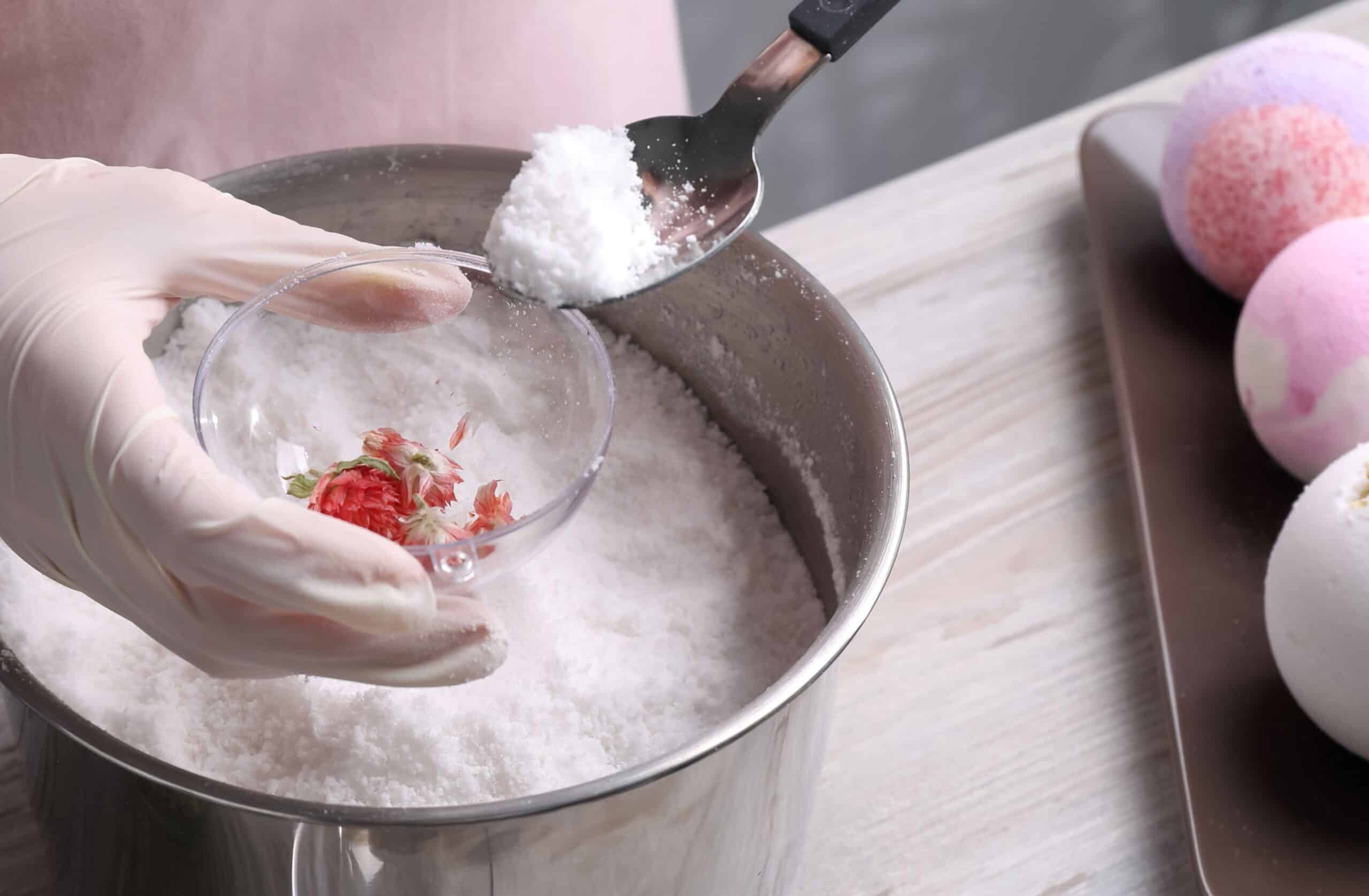
Source private label bath bomb suppliers through Wonnda. These effervescent spheres or shapes blend sodium bicarbonate and citric acid, releasing fragrance and color upon contact with water. Key sourcing variables include the base formulation for optimal fizz and stability, moisture control during manufacturing, and precise compression to prevent crumbling or early activation. These giftable items frequently serve as staples in bath and body care lines, requiring careful consideration of scent profiles and colorants.
- Vetted suppliers
- 20,000+
- Brands & buyers
- 25,000+
- EU-made
- 80%
6+ Top private label bath bomb manufacturers
Wonnda works with the best private label bath bomb manufacturers. Here is a list of trusted suppliers from our network.
- Featured
 Private LabelContract Manufacturing
Latvia-based manufacturer producing natural soaps, bath bombs, face moisturizers, available to brands sourcing bath bomb.
- Country
- Latvia
- MOQ
- Lead time
- Featured

Bio2you
4.7Private LabelContract ManufacturingLatvia-based manufacturer producing sea buckthorn facial serum, sea buckthorn mask, sea buckthorn cream, available to brands sourcing bath bomb.
- Country
- Latvia
- MOQ
- Lead time
 Private LabelContract Manufacturing
Poland-based manufacturer producing rainbow bath cloud bath bomb, crackling bath salt, foaming and coloured bath salt, available to brands sourcing bath bomb.
- Country
- Poland
- MOQ
- Lead time
 Private LabelContract Manufacturing
Europe-based manufacturer producing standard bath bombs, surprise bath bombs with sponge toys, surprise sponge capsules, available to brands sourcing bath bomb.
- Country
- -
- MOQ
- Lead time
 Private LabelContract Manufacturing
Europe-based manufacturer producing bath bombs, bath fizzers, soaps, available to brands sourcing bath bomb.
- Country
- -
- MOQ
- Lead time
 Private LabelContract Manufacturing
Europe-based manufacturer producing handmade luxury soap, bath bombs, body wash, available to brands sourcing bath bomb.
- Country
- -
- MOQ
- Lead time
Compare MOQs and lead times
Quick side-by-side of the shortlist. Missing values shown as a dash.
| Supplier | Location | Types | MOQ | Lead time |
|---|---|---|---|---|
| Cita Lieta Ltd. | Latvia | PL · CM | ||
| Bio2you | Latvia | PL · CM | ||
| FormulaNova | Poland | PL · CM | ||
| Bath Bomb Factory SA | - | PL · CM | ||
| Made Natural | - | PL · CM | ||
| Ceano Cosmetics | - | PL · CM |
Buyer criteria
- Moisture control to prevent premature fizzing
The effervescent reaction is triggered by moisture, so confirm the manufacturer controls humidity through blending, molding, curing, and packing. Ask how they keep bombs from fizzing or expanding in storage. A producer without proper humidity control delivers bombs that activate early, crumble, or crack, which is the single most common failure in this category, so verify it directly.
- Hardness and shape integrity
A bath bomb must hold its shape through handling, shipping, and shelf life without crumbling or losing detail. Confirm the compression and curing produce a bomb hard enough to survive transit. Request samples and handle them, since a bomb that arrives broken or sheds powder looks defective. Hardness must balance against the need to still fizz vigorously in water.
- Tub-safe and skin-safe colorants
Colorants must color the bathwater attractively without staining the tub, grout, or skin, and must be safe for bathing. Confirm the manufacturer uses cosmetic-grade, tub-safe colorants and ask about staining behavior, especially for deep or multi-color bombs. A bomb that leaves a colored ring around the tub generates complaints regardless of how dramatic it looks in the water.
- Fizz performance and conditioning feel
The fizz is the experience, so confirm the bomb fizzes vigorously and lasts in the water, and that the conditioning oils leave skin feeling cared for rather than greasy or leaving a slippery hazard. Test samples in real bathwater. A bomb that fizzles weakly or makes the tub dangerously slippery fails on the core promise of the format.
- Moisture-protective wrapping
Because ambient humidity degrades bath bombs, confirm the manufacturer wraps each bomb in shrink film or moisture-protective packaging suited to your distribution. Ask how the wrapping holds up through transit and shelf life. Wrapping that does not seal against moisture lets bombs fizz or soften in the package, so it is a functional requirement, not just a presentation choice.
Red flags
- Bombs that crumble or arrive broken
If samples shed powder, crumble when handled, or arrive cracked, the compression, curing, or moisture control is inadequate. Crumbling is the most common bath bomb defect and reflects poor process control. Reject a producer whose bombs cannot survive normal handling and transit intact, since broken bombs are unsellable and the problem worsens at scale and over shelf life.
- Premature fizzing in the package
If bombs show signs of activation, expansion, or a powdery bloom in the package, ambient moisture has triggered the reaction during production or storage. This points to weak humidity control or inadequate wrapping. A bomb that fizzes before it reaches the bath is a failed product, so treat any sign of in-package activation as a disqualifying process problem.
- Colorants that stain the tub
If a bomb leaves a colored ring or stains grout and skin, the colorants are not tub-safe and will generate complaints despite a dramatic in-water effect. Deep and multi-color bombs are the highest risk. Reject colorants the manufacturer cannot confirm are tub-safe, since a product that damages the customer's bathroom is worse than a less dramatic but clean one.
- Slippery or greasy oil residue
If the conditioning oils leave the tub dangerously slippery or the skin unpleasantly greasy, the oil load or selection is wrong. A slippery tub is a safety hazard and a greasy residue undermines the pampering promise. Reject a formula whose oil behavior creates a hazard or an unpleasant after-feel, since both turn a relaxing product into a complaint.
Manufacturing process
- 01
Dry base blending
Sodium bicarbonate, citric acid, and any dry fillers such as cornstarch or SLSA are blended to a uniform effervescent base. The ratio controls the vigor and duration of the fizz. Blending happens in a controlled-humidity environment because even ambient moisture can start the reaction prematurely and degrade the base before molding.
- 02
Color and fragrance addition
Colorants and fragrance or essential oils are dispersed evenly through the dry blend, with colorant choice managed so the bomb colors the water attractively without staining the tub or skin. Fragrance is dosed within safe limits for a bath product. Even distribution matters so every bomb looks and smells consistent across the batch.
- 03
Binder and oil incorporation
Skin-conditioning oils, butters, and a small amount of binder are worked into the blend to bring it to a moldable consistency that holds together without triggering significant effervescence. This is the delicate moisture-control step, since too little binder crumbles and too much starts the reaction and expands the bomb in storage.
- 04
Molding and pressing
The mixture is pressed into spheres or shapes, either hand-packed for an artisanal look or compressed in automated molds for consistency at volume. Compression pressure controls hardness and how the bomb holds together. Any inclusions like dried flowers or embedded surprises are placed during molding. Pressed bombs are released carefully to avoid cracking.
- 05
Curing and drying
Molded bombs are cured in a controlled low-humidity environment so they harden and set without absorbing moisture that would trigger fizzing or cause expansion. Curing time and conditions determine the final hardness and shelf stability. This step is essential because an under-cured bomb stays soft and crumbles, while a damp one fizzes in the package.
- 06
Wrapping and packing
Cured bombs are individually wrapped in shrink film or moisture-protective packaging to shield them from ambient humidity through storage and transit, then packed and batch coded. Wrapping is functional as well as decorative because exposure to moisture is the main cause of in-package fizzing and crumbling. Appearance and integrity are checked before packing.
Understanding bath bomb private-label manufacturing
Product Overview
A bath bomb is a compressed effervescent sphere or shape made from a dry blend of sodium bicarbonate and citric acid. It fizzes when it hits water, releasing fragrance, color, and skin-conditioning oils into the bath. For a private label brand, the bath bomb requires careful control of the effervescent base chemistry, moisture during production, and compression.
This ensures the bomb fizzes vigorously and holds its shape, rather than crumbling or activating early. It is a fun, giftable format that can anchor many bath and self-care ranges.
Formula and Manufacturing Considerations
The core of a bath bomb is the bicarbonate-and-citric-acid reaction. Brands choose the fragrance, colorants (and whether they stain the tub), skin-conditioning oils or butters, and inclusions such as dried flowers, glitter, or a hidden surprise.
Moisture control is a central technical challenge. The effervescent reaction is triggered by water, so the entire formula and production environment must control humidity. This prevents the bomb from fizzing prematurely or expanding and cracking in storage.
Bath bomb contract manufacturing ranges from small artisanal makers to larger automated producers. Capacity is available across Europe in the UK, Germany, Poland, and elsewhere, as well as in Asia for volume.
MOQs and Lead Times
MOQs for custom bath bombs are driven by molding and fragrance changeover, typically starting around 1,000 to 5,000 units per scent. Stock shapes and scents may be available at lower MOQs.
Lead times run 4 to 10 weeks, which is shorter than most cosmetics due to the straightforward production process. However, humidity-sensitive production and individual wrapping can extend lead times. Wrapping or shrink film is important for protecting the bomb from ambient moisture.
Cost Drivers and Differentiation
Cost is primarily driven by the fragrance load and quality, then by colorants and premium inclusions like dried botanicals or embedded surprises. Skin-conditioning oils and butters, molding method (hand-pressed versus automated), and individual wrapping also impact cost. Larger, more elaborate, or multi-color bombs cost more to mold and handle.
The base effervescent ingredients are inexpensive, so the experience elements dominate the cost. Brands differentiate on fragrance, color drama and tub-safety, conditioning feel, and visual or novelty appeal. Qualifying a manufacturer based on their control of moisture to prevent crumbling and premature fizzing, and on whether their colorants are tub-safe and skin-safe, is more critical than the lowest unit price.
Private label bath bomb buyers typically include bath and body, self-care, and gifting brands. They sell through D2C, Amazon, gift retail, seasonal ranges, subscription boxes, and spa and hotel amenity programs. Children's and novelty bombs with surprises inside represent a distinct sub-segment.
Frequently asked questions
Why do bath bombs crumble or fizz before use, and how is it prevented?+
Are bath bomb colorants safe for the tub and skin?+
What MOQ and lead time should I expect for bath bombs?+
Can I add surprises or inclusions inside bath bombs?+
How do I make sure the bath bomb fizzes well and conditions the skin?+
What packaging protects bath bombs best?+
Get a vetted shortlist of bath bomb suppliers in 48 hours.
Post a brief on Wonnda. Free, no commitment. We match you with vetted manufacturers that fit your MOQ, format and market.