
Trump Tariffs Impact: What It Means for Businesses, Consumers, and Global Trade


On April 2, 2025, President Donald Trump announced a sweeping set of new tariffs that could reshape the global economy. The Trump tariffs 2025 impact is already sending shockwaves through the FMCG industry, automotive sector, retail, and beyond.
With 25% tariffs on foreign-made cars and new “reciprocal tariffs” targeting trading partners, businesses and consumers alike are bracing for change. At Wonnda.com, where we connect FMCG brands with manufacturers, we’re already seeing demand shift.
Let’s break down the details and how they’ll impact you.
What Are the Trump Tariffs 2025?
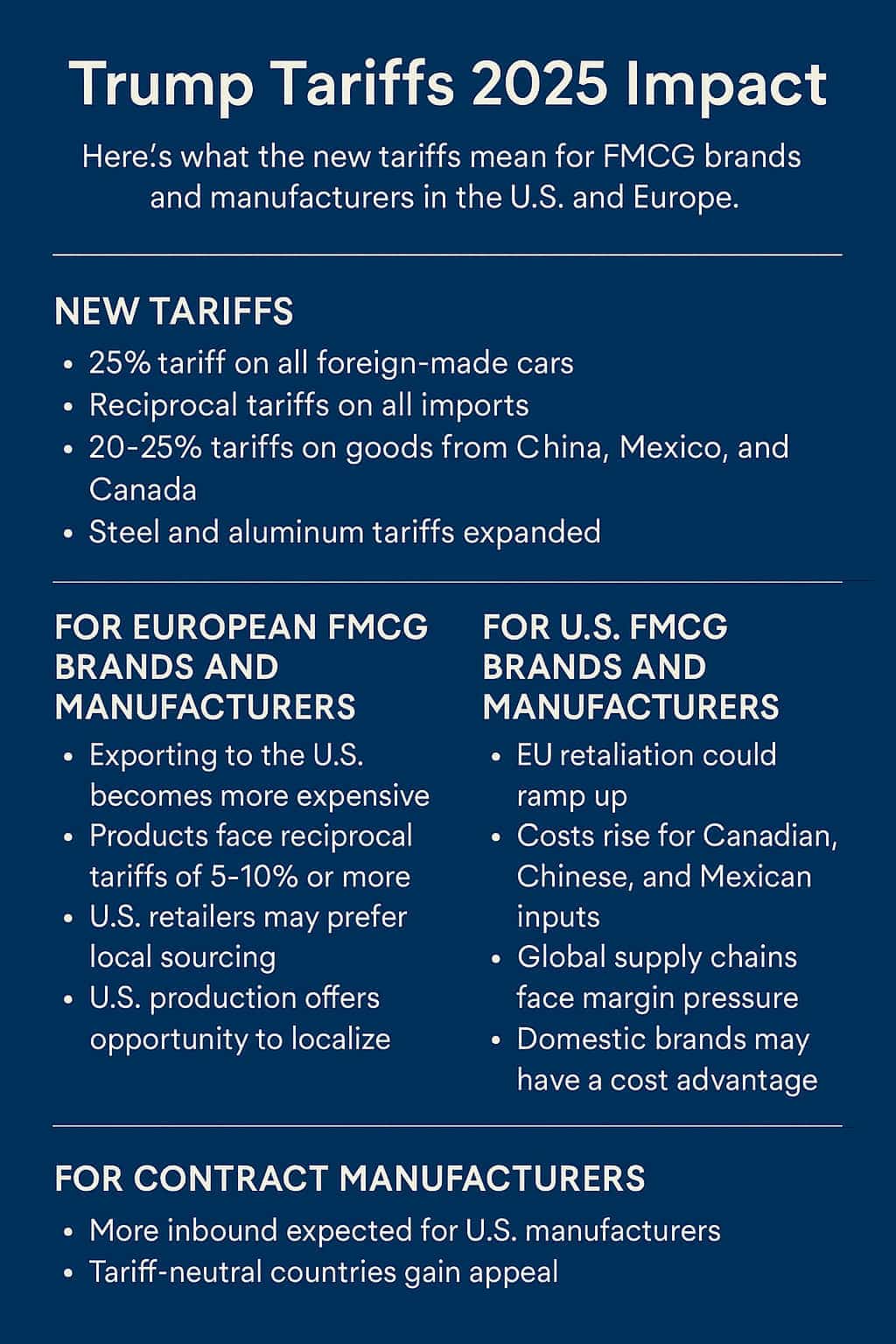
The Trump tariffs 2025 include a series of new import taxes and trade policies aimed at reshaping U.S. manufacturing and reducing the trade deficit. Here's a breakdown of the latest actions:
- March 4 tariffs - 25% on goods from Canada and Mexico (10% on Canadian energy), and 20% on Chinese imports
- April 2 auto tariffs - 25% on all foreign-made vehicles, effective April 3
- Reciprocal tariffs - Matching tariffs based on what each country charges the U.S., starting at 5–10% and expected to rise
- Steel and aluminum tariffs - Expanded 25% duties effective March 12
Trump calls this a move toward economic independence. The Trump tariffs 2025 impact, however, is triggering cost increases, supply chain shifts, and new global tensions.
Trump Tariffs 2025 Impact on FMCG and Manufacturing Businesses
American FMCG brands
- Export pressure - The EU plans to impose retaliatory tariffs on $27.5B worth of U.S. goods. U.S. soda, snacks, and cosmetics will get more expensive in Europe.
- Higher input costs - Relying on Canadian sugar or Chinese packaging? Expect 20–25% cost hikes, putting pressure on pricing and margins.
European FMCG brands
- U.S. market access gets tougher - Reciprocal tariffs could raise prices by 5–10% or more on imported goods. A €10 product might retail for $12 in the U.S.
- Local production opportunity - Manufacturing in the U.S. helps avoid tariffs. Wonnda.com is helping brands set up American production.
Contract manufacturers
- Geographic reshuffling - Manufacturers in Canada, Mexico, and China are losing ground. U.S. and neutral players like Vietnam are gaining.
- Wonnda’s insight - We’re seeing a surge in sourcing requests for U.S.-based factories and tariff-exempt production hubs.
Retailers and e-commerce players
- Cost pressure - Retailers like Walmart and Amazon face higher import costs, which may lead to price increases or tighter supplier margins.
- De minimis rule changes - Imports under $800 are no longer duty-free. DTC brands relying on international shipments are now exposed.
Trump Tariffs 2025 Impact on Consumers
The Trump tariffs 2025 impact doesn’t stop at the business level. It hits consumers directly:
- Price hikes - Imported goods, like avocados from Mexico or German electronics, will cost more.
- Rising U.S. product costs - Even domestic products that rely on tariffed inputs (like oats or packaging) may become more expensive.
- Global retaliation - Tariffs on U.S. goods abroad could lead to job losses or price hikes in export-driven industries.
- Annual household impact - Experts estimate $1,000 to $4,200 in additional annual costs for American households.
Trump argues these tariffs will lead to more U.S. jobs and lower long-term prices. But in the near term, grocery bills and retail prices are likely to rise.
Global Trade Disruption from the Trump Tariffs 2025
- Canada and Mexico - Canada announced $29.8B in retaliatory tariffs. Mexico is targeting key U.S. agricultural exports.
- European Union - Plans to retaliate against $27.5B worth of U.S. goods including bourbon, peanut butter, and personal care products.
- China’s response - Filed a WTO complaint and is restricting access to 15 U.S. companies.
The Trump tariffs 2025 impact has launched what many are calling Trade War 2.0. If escalation continues, global trade volumes may shrink while inflation rises.
How FMCG Brands Can Respond to the Trump Tariffs 2025 Impact
1. Shift production locations
- U.S. brands should bring manufacturing home to avoid foreign retaliation
- European brands should consider U.S. production to avoid reciprocal tariffs
- Wonnda.com connects brands to local production partners
2. Source from tariff-neutral countries
- Countries like Vietnam, Turkey, or Serbia currently offer tariff-free alternatives
3. Adjust pricing strategy
- Consider absorbing part of the costs or repositioning products as premium offerings
4. Diversify markets
- If the U.S. or EU becomes too costly, explore Latin America or Southeast Asia for growth
5. Use digital sourcing platforms
- Wonnda helps brands manage their supply chains and adapt fast, with access to manufacturers in the U.S., Europe, and neutral markets
What’s Next in Trump’s 2025 Trade Policy?
There’s more to come. Trump has floated 25% tariffs on semiconductors, pharmaceuticals, and additional consumer goods.
- The “reciprocal tariff” structure is still being defined
- Retaliation from trade partners is escalating
- Over $1.4 trillion in goods are now covered by tariffs
- Estimated $600 billion in annual revenue makes this the largest peacetime tariff hike in U.S. history
Wonnda is actively monitoring developments and helping brands respond in real time.
Conclusion
The Trump tariffs 2025 impact is forcing a global rethink of supply chains, manufacturing, and sourcing strategies. Costs are rising, but opportunity still exists for brands that act fast.
At Wonnda.com, we help FMCG brands adapt to this new trade environment by offering flexible sourcing solutions, especially in the U.S. and tariff-neutral markets.
Need to shift your supply chain? Want to reduce exposure to trade risks?
Explore your options on Wonnda.com and stay ahead of the next policy shift.
Related articles

15+ Best Longevity Supplements - 2026 List

10+ Best Products to Sell from Home in 2026

Best Products to Sell on Instagram in 2026

10 Innovative Creator Economy Startups to Watch in 2026

The 10 Best Brain-Boosting Focus Supplements in 2026

How to Start a Skincare Line: 2026 Guide

Cannabis Benefits, Regulations, and CBD Ideas in 2026
The Top 5 Natural Ingredients for Your Supplement Brand in 2026