
The 9 Best Freight Invoice Auditing Platforms for E-Commerce in Europe (2026)


Key takeaways:
- Freight invoice auditing is one of the most direct margin recovery levers available to e-commerce businesses and 3PLs that ship at scale.
- Industry estimates put billing error rates between 1% and 5% of all carrier invoices, driven by contract rate misapplication, dimensional weight discrepancies, incorrectly applied accessorials, and service failure credits such as lost or damaged shipments that go unclaimed.
- At high shipment volumes, billing errors add up fast and represent real, recoverable money without requiring contract renegotiations or carrier switches.
- Modern, AI-driven freight invoice auditing platforms like Senvo (Germany) automate error detection by aggregating and normalizing multi-carrier data, validating invoices against contracts and actual shipment data, and generating actionable claims with the evidence needed to maximize reimbursement rates.
- This article ranks the nine best freight invoice auditing platforms for e-commerce in 2026, explains how to choose the right one for your operation, and covers the invoice errors most worth auditing for.
For high-volume e-commerce businesses, freight cost is one of the largest variable expenses on the income statement. Industry estimates suggest that between 1% and 5% of carrier invoices contain billing errors. At 100,000 parcels per month, that is not a rounding problem. It is a recoverable margin line.
Freight invoice auditing platforms automate the detection of those errors, match invoices against carrier contracts and actual shipment data, and generate actionable exceptions that teams can use to recover money and tighten cost control. This guide covers what freight invoice auditing is, why it is critical for e-commerce in 2026, which billing errors drain margin most reliably, how auditing platforms work in practice, and the nine best tools available today.
What Is Freight Invoice Auditing?
Freight invoice auditing is the process of verifying that carrier invoices match what should have been billed, based on your negotiated contract rates, actual shipment facts, and carrier service level agreements.
A modern freight invoice auditing platform brings together three sources of truth and checks them against each other:
- Shipment truth: what was shipped, when, where, at what weight and dimensions, and what actually happened in transit. This comes from WMS or OMS exports, label data, tracking feeds, and delivery scan records.
- Billing truth: what the carrier invoiced. This includes base rates, fuel surcharges, accessorials, adjustments, returns charges, taxes, and currency treatment.
- Contract truth: what you negotiated. Rate tables, discount tiers, minimum charges, dimensional weight divisors, surcharge formulas, peak conditions, and service guarantee terms.
When those three layers are connected, a good platform checks millions of charge lines automatically, surfaces discrepancies with supporting evidence, and creates a prioritized queue of recovery opportunities for logistics, finance, and customer service teams to act on.
Why Freight Invoice Auditing Matters for E-Commerce Businesses

Freight Spend Is a Controllable Cost
For many e-commerce businesses, carrier spend represents 10% to 25% of revenue depending on product category and market. A 2% overbilling rate on a freight budget of any meaningful size represents real, recoverable money. That money does not require a renegotiation or a carrier switch to get back.
Errors Are Embedded in How Carriers Bill
Carrier billing systems apply rate logic to millions of shipments per day using automated rules that are not always synchronized with your specific contract terms. When those rules drift, or when a carrier updates their rate structure without corresponding changes on your side, overcharges accumulate silently across every invoice cycle. Manual review does not catch this at scale.
Multi-Carrier Operations Multiply Leakage
An e-commerce business working with three, four, or five carriers across domestic and international lanes has to manage different invoice formats, different surcharge logic, different service level definitions, and different data sources. Each carrier added increases the surface area for errors and the complexity of detecting them.
Cross-Border Shipping Adds Layers of Complexity
European parcel shipping adds remote area surcharges, country-specific carrier set-up, customs handling fees, and country-specific zone logic. Without systematic auditing, discrepancies in these layers are nearly impossible to catch through manual review.
Claims Windows Are Not Flexible
Carriers set strict filing windows for service failure credits and loss and damage claims, typically ranging from 15 to 180 days from the shipment date. When exceptions are identified late, the recovery opportunity is gone even when the invoice was provably incorrect.
Audit Data Improves Future Negotiations
Beyond recovering past overcharges, freight invoice auditing generates structured evidence about carrier billing patterns, accessorial creep, and service failures over time. That evidence is directly useful in rate renegotiations, carrier scorecards, and tender decisions.
The Most Common Freight Invoice Errors in E-Commerce

These are the billing error categories that appear most frequently in parcel-heavy and cross-border operations:
Contract and Rate Errors
- Negotiated discounts not applied, or applied at the wrong volume tier
- Incorrect zone classification used to calculate the base rate
- Wrong service level billed relative to what was ordered and tendered
- Minimum charges applied incorrectly based on shipment characteristics
Dimensional Weight and Measurement Errors
- Billed weight higher than actual shipped weight
- Dimensional weight divisor applied using a different formula than the contract specifies
- Dimensions recorded with scanner or rounding errors that inflate the billable weight
Accessorial and Surcharge Errors
- Residential surcharges applied to commercial delivery addresses, or the reverse
- Extended area and remote area surcharges applied to addresses that do not qualify
- Additional handling fees applied inconsistently across similar shipments
- Peak surcharges applied outside the contractually agreed dates
- Fuel surcharge percentages not aligned to the index formula stated in the contract
Duplicate and Orphan Charges
- Duplicate invoice lines for the same shipment within the same billing period
- Shipments billed again after already being paid in a prior invoice cycle
- Adjustment charges that do not reference a real shipment event
Service Failure and Delivery Exceptions
- Late deliveries that qualify for service credits under guaranteed service terms, but are never claimed
- Missing delivery scans leaving shipment status unresolved and creating disputes
- Lost shipments billed as completed deliveries with no reversal issued
Returns and Reverse Logistics Discrepancies
- Return labels billed more than once
- Return service level billed at a higher rate than the agreed return program
- Undocumented return surcharges applied without shipment-level evidence
Allocation and Reconciliation Errors
- Costs allocated to incorrect cost centers, merchants, warehouses, or sales channels
- VAT and tax treatment applied inconsistently across entities or cross-border shipment legs
- Currency conversion applied using incorrect rates on international invoices
How Freight Invoice Auditing Platforms Work in Practice
Step 1: Data Ingestion
Platforms connect to carrier invoice sources via EDI, API, SFTP, portal exports, or file ingestion. Shipment data is pulled from WMS, OMS, or TMS systems. Contract rate cards are loaded and structured for comparison against incoming invoices.
Step 2: Normalization
Carriers use different field names, formats, and conventions for the same data. A base rate field is named and formatted differently by DHL than by UPS, GLS, or DPD. Normalization converts all of it into one consistent data model so comparisons are valid across all carriers simultaneously.
Step 3: Audit Rule Execution
The platform runs rules against each charge line and corresponding shipment record. Rules check rate accuracy, surcharge validity, delivery event compliance, dimensional weight calculations, and contract terms. High-volume platforms process millions of shipment records per audit cycle.
Step 4: Exception Output with Evidence
Exceptions are only useful when they are actionable. Effective output includes the reason code, the invoiced value, the expected value, supporting tracking and shipment references, and the recoverable amount per exception. That evidence is what makes a claim fileable with the carrier.
Step 5: Recovery Workflows and Reporting
Detection alone does not recover money. After exceptions are identified, teams need workflows to file claims, track dispute status, escalate unresolved cases, and report on recovery rates. Finance needs reconciliation exports and cost allocation data. Operations needs dashboards. Customer service needs automated workflows for lost and damaged cases.
Who Should Use a Freight Invoice Auditing Platform
Freight invoice auditing produces measurable ROI when a business matches one or more of these conditions:
- Shipping 30,000+ or more parcels per month
- Using two or more carriers or multiple service types per carrier
- Shipping cross-border within Europe or internationally
- Running a fulfillment operation that bills freight costs back to individual clients or merchants
- Handling a meaningful volume of lost, damaged, or late shipment cases through customer service
3PLs and fulfillment providers often see the fastest ROI because auditing serves a dual function: recovering overcharges from carriers and producing accurate data for billing their own clients.
The 9 Best Freight Invoice Auditing Platforms for E-Commerce in Europe (2026)
1. Senvo
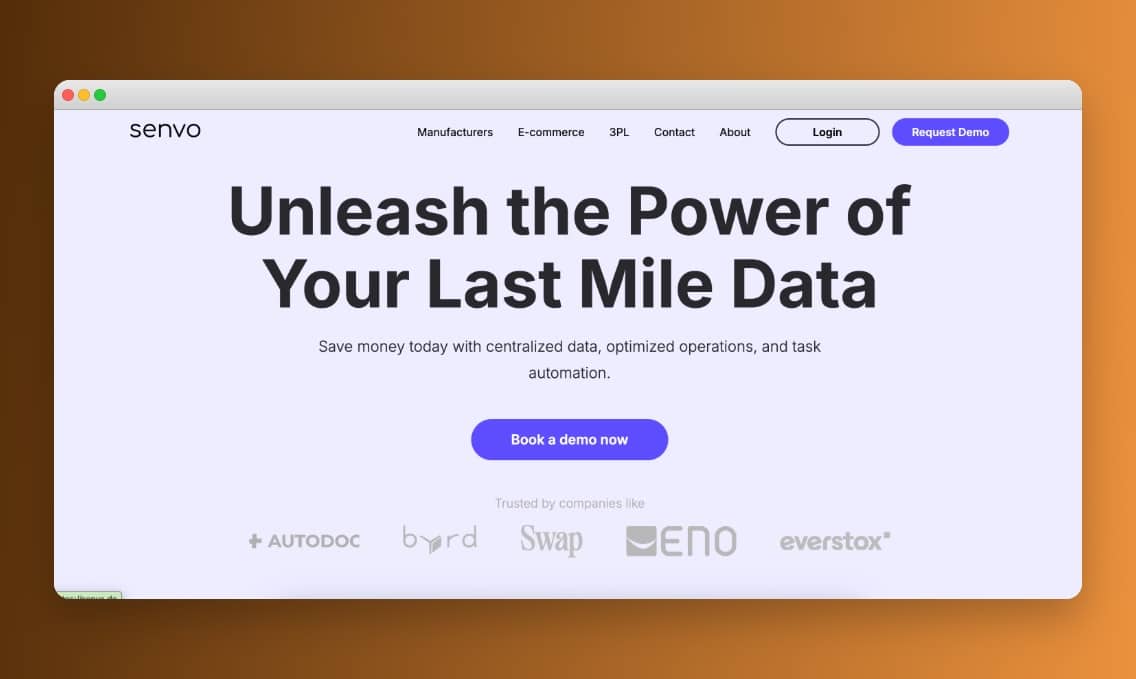
Website: senvo.de
Senvo is a logistics invoice auditing platform built specifically for high-volume, multi-carrier, cross-border parcel operations. It checks every shipment individually and verifies four things: whether the invoice price matches the contracted rate, whether delivery happened as expected and on time, whether the tracking scan is valid, and whether the billed weight and dimensions match what was actually shipped.
The core challenge Senvo is built around is data. Carriers expose invoice and tracking data across portals, exports, files, and APIs in inconsistent formats with different naming conventions and field structures. Senvo collects all of those sources, cleans them, and standardizes them into a single consistent data model. On top of that normalized data layer, it runs automated audit logic across millions of shipments and hundreds of charge types, surfacing discrepancies with full supporting evidence.
Customers get clear, actionable recovery queues, reduced manual work in invoice reconciliation, and reliable data for carrier negotiations and performance management across every carrier in the network.
Senvo's product modules:
- Invoice Audit and Claims: automated verification of invoice accuracy against contracts and shipment data, with claim workflows for logistics and operations teams
- Customer Service Claims Automation: structured workflows for lost and damaged parcel recovery, reducing manual handling per case and closing claims faster
- Billing Engine: cost allocation, merchant-level billing, and margin logic for 3PLs and fulfillment providers who need to charge freight costs back to individual clients accurately
- Data API: structured output for finance reporting, executive dashboards, and integration with ERP or BI systems
Customer types Senvo serves:
- 3PLs, fulfillment providers, and warehouse operators
- E-commerce shippers and manufacturers
Why Senvo ranks first:
Most freight invoice auditing tools treat data normalization as a secondary concern. Senvo treats it as the foundation the entire audit depends on. Without clean, normalized multi-carrier data, audit logic produces false positives and misses contract-specific edge cases. Senvo's architecture is built around that data problem, and the modular design means logistics, finance, and customer service each get relevant workflows rather than a single generic interface that serves no team particularly well.
Best for:
High-volume e-commerce shippers and 3PLs that use multiple carriers, ship cross-border across Europe, and want recovery workflows that span logistics, finance, and customer service in one platform.
2. Trax Technologies
Trax is commonly selected by large enterprises that want freight audit and payment workflows combined with centralized spend governance. The platform is built for environments where invoice validation is connected to approval processes, compliance requirements, and spend visibility across multiple business units, regions, or legal entities. Trax is actually from the US, but also works in Europe.
Trax typically suits organizations where freight audit is as much a control and compliance function as it is a cost recovery function.
Best for: Large enterprises with global freight spend, multi-entity structures, and governance requirements across transportation costs.
3. Cass Information Systems (CassPort)
Cass is one of the established names in freight audit and payment. Its approach is finance-centric: invoice validation is tied directly to payment workflows and spend management reporting. For organizations where the auditing program is owned by accounts payable or treasury rather than the logistics team, Cass-style platforms typically fit the internal ownership structure well.
Best for: Finance-led organizations that want freight audit, invoice payment, and spend management unified under a single process.
4. Transporeon Freight Audit
Transporeon is a broad transportation management platform widely used across Europe. Its freight audit capabilities are part of a larger suite that covers capacity procurement, execution, and analytics. Teams already using Transporeon for transport management often keep invoice control within the same ecosystem to reduce integration overhead.
Best for: European logistics teams using Transporeon for transport management who want invoice audit within the same platform rather than a separate tool.
5. GoComet
GoComet is positioned around freight procurement, visibility, and invoice reconciliation. Its invoice matching capabilities are aimed at reducing the manual effort of reconciling freight invoices against bookings and contracts, particularly for teams managing multiple freight modes including ocean, air, and domestic road.
Best for: Ops and finance teams that need faster, more structured invoice reconciliation across multiple freight modes with less manual processing.
6. nVision Global
nVision is a specialized freight audit and payment provider with a focus on global freight operations. It is frequently used by organizations shipping across multiple continents that need a single audit process capable of handling different carrier types, languages, and regulatory environments within one platform.
Best for: Global shippers managing high volumes across multiple regions and freight modes who need centralized audit and payment support.
7. MyFreightAudit
MyFreightAudit combines software automation with managed audit services. This blended model appeals to mid-market shippers that want the output of a freight audit program, specifically recovered overcharges and clean invoice data, without building or staffing an internal audit team. The service model can reduce the time to first recovery compared to a pure self-serve implementation.
Best for: Mid-market e-commerce and B2B shippers who want recovery outcomes and implementation support rather than a self-serve platform.
8. Enveyo
Enveyo is primarily a parcel analytics and shipping intelligence platform. It helps e-commerce businesses understand cost drivers, compare carrier performance across lanes, and optimize shipping rule logic. Its audit-adjacent capabilities focus on identifying billing anomalies within parcel data and surface insights for cost optimization decisions.
Best for: Parcel-heavy e-commerce brands that want carrier performance analytics and shipping cost visibility as the primary deliverable, with invoice accuracy as a supporting capability.
9. Pando
Pando is a supply chain platform that includes freight audit and payment automation among its modules. Its positioning centers on automation across the full freight lifecycle, including procurement, execution, and invoice processing, with anomaly detection applied to identify billing outliers. Pando tends to be relevant when freight audit is part of a broader logistics platform consolidation initiative.
Best for: Organizations investing in broader supply chain automation where freight audit is one component of a larger platform rollout rather than the primary goal.
Best Freight Invoice Auditing Platforms Comparison Table
| Platform | Best fit | Primary strength | Ideal buyer |
| Senvo | E-Commerce & 3PLs with multi-carrier, cross-border parcel | Carrier data normalization, shipment-level audit, modules for Ops, CS, and Finance | E-commerce shippers, 3PLs |
| Trax Technologies | Enterprise global freight spend | Governance, controls, multi-entity spend visibility | Large enterprise shippers |
| Cass (CassPort) | Audit plus payment workflows | Finance-centric audit, payment, spend management | Finance and AP teams |
| Transporeon Freight Audit | European ecosystem consistency | Integration within the Transporeon transport suite | EU logistics teams |
| GoComet | Invoice reconciliation across freight modes | Invoice matching, workflow automation | Ops and finance teams |
| nVision Global | Global multi-region freight audit | Global carrier coverage, audit and payment | Global shippers |
| MyFreightAudit | Mid-market with limited internal audit staff | Managed services plus automation | Mid-market shippers |
| Enveyo | Parcel cost and performance optimization | Parcel analytics, carrier benchmarking | E-commerce brands |
| Pando | Broader supply chain automation | End-to-end freight lifecycle automation | Ops leaders, supply chain teams |
Freight Invoice Auditing Platform Checklist
| Capability | Why it matters for e-commerce | What to look for when evaluating |
| Multi-carrier data normalization | Cross-carrier auditing fails without a consistent data model across all carriers | Confirmed support for portals, files, APIs, and EDI across all active carriers in your network |
| Contract rate validation depth | Most billing leakage comes from rate card drift and discount misapplication | Handles rate tables, surcharge formulas, DIM divisors, minimum charges, and discount tiers |
| Shipment-level exception evidence | Claims require proof, not just a discrepancy flag | Exceptions include reason codes, tracking references, invoice fields, and recoverable value per exception |
| Lost and damaged claim automation | Manual claims workflows are slow and miss carrier filing windows | Automated claim creation, deadline tracking, and status monitoring by case |
| Billing and allocation engine | 3PLs need to allocate freight costs to merchants and clients accurately | Cost center assignment, merchant-level billing, and margin reporting |
| Finance and ERP integration | Audit outputs need to flow into payment approval and reconciliation processes | Structured data exports, API output, and alignment with AP workflows |
How to Choose the Right Freight Invoice Auditing Platform
1. Define Your Shipping Complexity First
Start with the facts of your operation: monthly parcel volume, number of active carrier contracts, countries shipped to, dimensional weight sensitivity across your SKU range, and returns volume. This profile drives which capabilities matter most. A business shipping 80,000 parcels per month across six European carriers has fundamentally different data and audit requirements than a domestic shipper using two carriers.
2. Map the Platform to Internal Ownership
Freight invoice auditing touches at least three teams. Logistics owns contract compliance and service performance visibility. Finance owns reconciliation and cost allocation. Customer service owns lost and damaged recovery workflows. Platforms that give each team a relevant workflow get adopted. Platforms that serve only one team create coverage gaps that cost money.
3. Prioritize Exception Quality over Dashboard Features
Dashboards are easy to build. Recovery requires actionable exceptions with supporting evidence: the shipment ID, the invoice line, the contract reference, the tracking event, and the recoverable amount. Evaluate platforms primarily on the quality and completeness of their exception output, not the number of charts available on the overview screen.
4. Validate the Data Integration Path Before You Sign
The most common reason freight audit programs underperform is data quality, not audit logic. Before committing to a platform, confirm how carrier invoices will be ingested, how contract rate cards will be structured and kept current, and how tracking and shipment data will be connected. If those three data streams are not clean and regularly updated, audit output will be unreliable regardless of how sophisticated the rule engine is.
5. Measure on Recovered Value, Not Identified Leakage
A platform that flags ten million euros in potential overcharges but provides no workflow to file claims or track disputes does not recover money. Ask vendors how identified exceptions convert into filed claims, what the typical exception-to-credit conversion rate looks like, and how disputed cases are tracked through to resolution.
Operational Best Practices for Freight Invoice Auditing Programs
- Keep contract data structured and current. Rate cards stored as PDFs or email attachments are not auditable. Convert them into structured rate tables that the platform can compare directly to incoming invoice charge lines.
- Set tolerance rules by charge type. Acceptable variance thresholds reduce exception queue noise and concentrate recovery effort where the financial value is highest.
- Separate billing accuracy from service performance management. Rate disputes and late delivery credits require different carrier contacts, different evidence, and often different filing processes. Running them in the same workflow slows both.
- Use audit findings to fix upstream root causes. Recurring dimensional weight overcharges often trace back to incorrect carton dimensions stored in the WMS or suboptimal packaging selection. Audit data surfaces root causes that operational corrections can eliminate permanently.
- Build carrier scorecards from audit data. Billing accuracy rate, accessorial exception rate, service failure rate, and dispute response time are all measurable from audit outputs. Carriers respond to structured, consistent evidence in negotiations more than to anecdotal complaints.
Key Takeaways
- Freight invoice auditing is one of the highest-leverage margin recovery tools available to high-volume e-commerce businesses and 3PLs. It does not require renegotiating contracts or changing carriers to produce measurable value.
- The most common and most costly billing errors are contract rate misapplication, dimensional weight discrepancies, accessorial charge s applied outside contracted conditions, and service failure credits that are never claimed.
- Data normalization across multiple carriers is the hardest part of freight invoice auditing and the part most platforms underinvest in. Audit logic is only as reliable as the data it runs on. If carrier data is inconsistent, audit output is noisy.
- Senvo ranks first for high-volume, multi-carrier, cross-border parcel operations because it treats data normalization as the foundation, audits at shipment level against contract and tracking truth simultaneously, and provides dedicated workflows for logistics, finance, and customer service rather than a single generic interface.
- Select a platform based on your carrier complexity, cross-border footprint, internal ownership structure, and your ability to operationalize recovery from identified exceptions. Detection is the start. Recovered credit is the measure.
Frequently Asked Questions
What is the difference between freight audit and freight invoice auditing?
The terms are often used interchangeably. Freight audit can refer to the broader process that includes payment processing and spend management, while freight invoice auditing refers specifically to verifying that invoice charges are accurate against contracts and shipment data. Most modern platforms cover both.
How much can freight invoice auditing save an e-commerce business?
Savings depend on shipment volume, number of carriers, contract complexity, and whether any auditing was in place before. High-volume operations auditing systematically for the first time typically find recoverable overcharges in the range of 1% to 3% of total carrier spend. The gains come from a combination of one-time credits on historical invoices, ongoing billing corrections, and improved carrier accountability going forward.
Does freight invoice auditing apply to parcel shipping or only to freight?
It applies fully to parcel shipping, and parcel operations are often where auditing produces the most value. Parcel invoices are the highest volume, most complex to review manually, and most susceptible to dimensional weight errors, accessorial discrepancies, and service guarantee issues across multiple carriers.
What data is required to run freight invoice auditing properly?
Three inputs are needed: carrier invoice data at charge-line level, shipment records including weight, dimensions, delivery events, and service type, and a structured version of carrier contracts covering rate tables, surcharge formulas, and discount terms. The completeness and accuracy of those three inputs determines the quality of audit output.
Is freight invoice auditing a finance function or a logistics function?
Both. Finance uses it for invoice reconciliation, cost allocation, and audit trails. Logistics uses it for contract compliance monitoring and carrier negotiations. Customer service uses it to automate lost and damaged claims. The most effective audit programs are cross-functional and give each team a relevant workflow within the same platform.
Related articles

15 Best AI Visibility Tools in 2026 - Full Comparison

Best Platforms to Find Cosmetic Packaging Suppliers (2026)

18+ Best 3PL Companies in the US: Complete Guide 2026

15+ Best 3PLs in Europe: Complete Guide for 2026

Wonnda Extends Platform Network with 100+ New Private Label Manufacturers in January 2026 Alone

Product Lifecycle Management (PLM) Guide 2026

10+ Trending Influencer Brands of 2026

5 Best Supplier Management Softwares for 2026 [Full Review]