
Best private label softgel supplements manufacturers
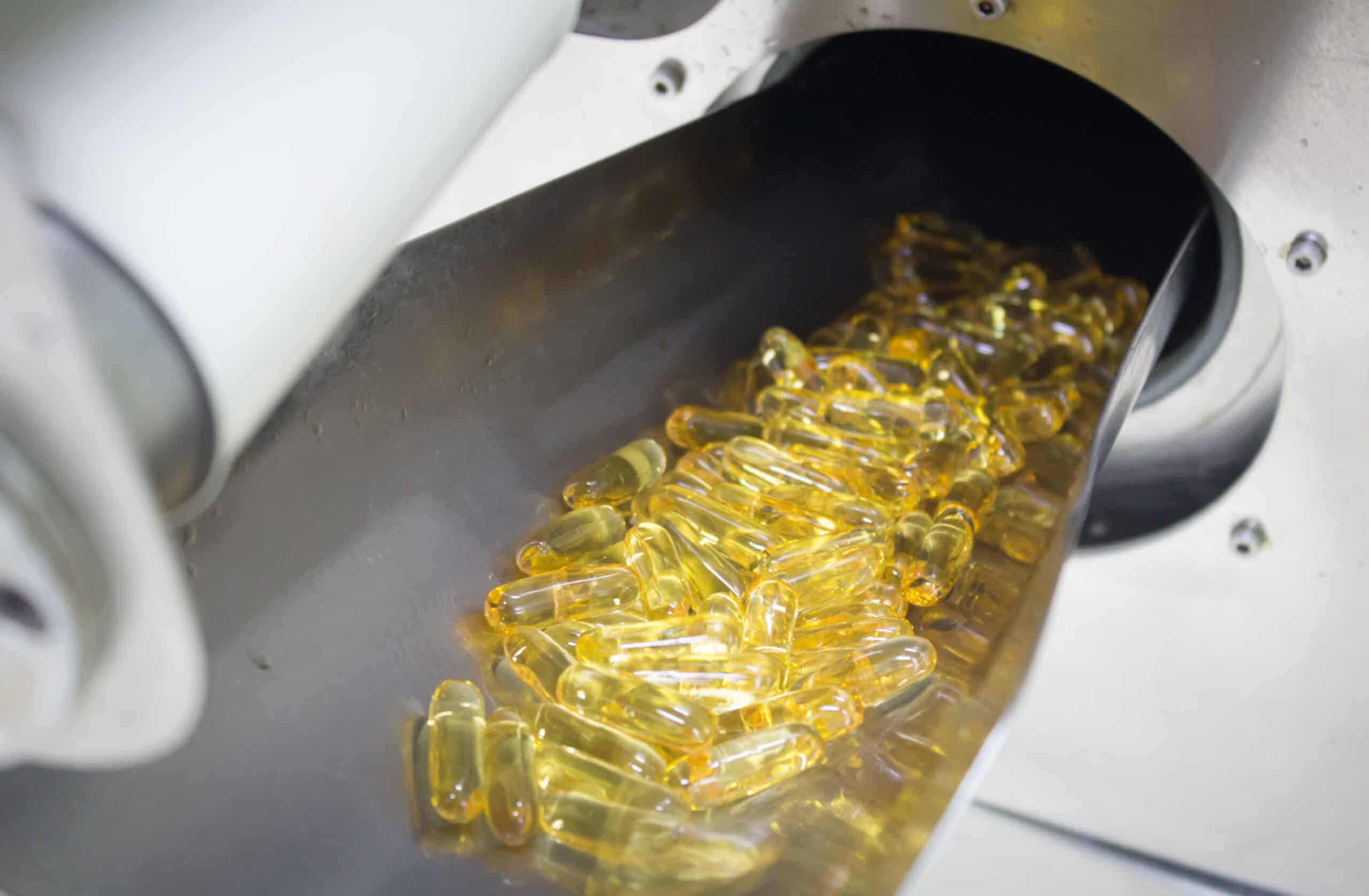
Find vetted private label softgel supplements manufacturers on Wonnda. Softgels encase liquid or oil formulations within a single gelatin or plant-based shell, a common format for fat-soluble vitamins, omega-3s, and CoQ10. This specialized manufacturing process unites the shell and fill through rotary-die encapsulation, requiring distinct equipment and shell chemistry. Sourcing considerations include shell material, liquid or oil fill type, active ingredients, and specific dietary certifications.
- Vetted suppliers
- 20,000+
- Brands & buyers
- 25,000+
- EU-made
- 80%
9+ Top private label softgel supplements manufacturers
Wonnda works with the best private label softgel supplements manufacturers. Here is a list of trusted suppliers from our network.
- Featured
 Private LabelContract Manufacturing
Latvia-based manufacturer producing b-complex vitamin blends, mineral and vitamin blends, magnesium formulations, available to brands sourcing softgel supplements.
- Country
- Latvia
- MOQ
- Lead time
- Featured
 Private LabelWhite LabelContract Manufacturing
Private label supplement manufacturer in Hungary with in-house packaging
- Country
- Hungary
- MOQ
- From 500 units for selected ready capsule formulas; 1,000 units for capsules, softgels and collagen products
- Lead time
 Private LabelContract Manufacturing
Slovenia-based manufacturer producing vitamin c capsules, vitamin d3 capsules, multivitamin tablets, available to brands sourcing softgel supplements.
- Country
- Slovenia
- MOQ
- Lead time

Suplement.io
4.7Private LabelContract ManufacturingPoland-based manufacturer producing plant-based dietary supplements, herbal extract supplements, fruit juice-based supplements, available to brands sourcing softgel supplements.
- Country
- Poland
- MOQ
- Lead time
 Private LabelContract Manufacturing
Netherlands-based manufacturer producing choolate bodypaint, anal lubricants, bull power delay gel, available to brands sourcing softgel supplements.
- Country
- Netherlands
- MOQ
- Lead time
 Private LabelContract Manufacturing
USA-based manufacturer producing dietary supplements, pet supplements, pet grooming products, available to brands sourcing softgel supplements.
- Country
- USA
- MOQ
- Lead time
 Private LabelContract Manufacturing
Europe-based manufacturer producing gummy bears, jelly beans, chews, available to brands sourcing softgel supplements.
- Country
- -
- MOQ
- Lead time
 Private LabelContract Manufacturing
France-based manufacturer producing sleep gummies, urisanol flash capsules, elixir du suédois herb kit, available to brands sourcing softgel supplements.
- Country
- France
- MOQ
- Lead time
 Private LabelContract Manufacturing
Poland-based manufacturer producing classic energy drinks, bcaa beverages, fruit juices, available to brands sourcing softgel supplements.
- Country
- Poland
- MOQ
- Lead time
Compare MOQs and lead times
Quick side-by-side of the shortlist. Missing values shown as a dash.
| Supplier | Location | Types | MOQ | Lead time |
|---|---|---|---|---|
| ERA Scientifico | Latvia | PL · CM | ||
| AYS Ltd. (All Your Solution) | Hungary | PL · White Label · CM · Packaging | From 500 units for selected ready capsule formulas; 1,000 units for capsules, softgels and collagen products | |
| Private Vitamin | Slovenia | PL · CM | ||
| Suplement.io | Poland | PL · CM | ||
| Cobeco Pharma | Netherlands | PL · CM | ||
| GP Labs | USA | PL · CM | ||
| Amapharm GmbH | - | PL · CM | ||
| FLORALPINA SAS | France | PL · CM | ||
| Brandsparkle | Poland | PL · CM |
Buyer criteria
- Fill-to-shell compatibility and sealing
The fill and shell must be matched so the softgel seals reliably and does not leak, crack, or react over shelf life. Confirm the manufacturer has run your fill type in their shell and request samples stored for a period to check for leakage. A mismatched fill and shell is the most common softgel failure, so proven compatibility is the first thing to verify.
- Oxidation control for oils
Oxidation-prone fills like fish oil go rancid without antioxidant protection and oxygen control, so for oil softgels require oxidation testing, such as the omega-3 oxidation value, on incoming oil and finished product. Ask how oxygen exposure is minimized in production. A rancid oil smells and tastes off and undermines any purity or freshness claim the brand makes.
- Active grade and concentration
Softgel cost and efficacy are driven by the fill active, such as the EPA and DHA concentration of a fish oil or the grade of a branded CoQ10. Specify the exact grade and concentration and verify it on the certificate of analysis. Two fish oils of the same volume can differ greatly in omega-3 content, so confirm the actual active level, not just the oil type.
- Plant-based shell capability where needed
If you need a vegan softgel, confirm the manufacturer runs plant-based starch or carrageenan shells in-house, since these use different tooling and chemistry from gelatin and are a specialist capability. Ask for samples of the same fill in the plant shell. A gelatin house claiming plant softgels may subcontract or produce poorly sealing trial lots.
- Purity and contaminant testing for marine sources
Marine oils carry heavy-metal and contaminant risk, so for fish and algae oils require per-batch heavy-metal and contaminant testing alongside the oxidation panel. Ask about the oil's source and refinement. In a daily oil supplement, missing purity data is a safety and trust gap, so full marine-source screening should be standard rather than optional.
Red flags
- Leaking or cracking softgels
Samples that leak fill, crack, or fuse reveal a fill-to-shell mismatch or poor drying control, which is the defining softgel failure. A leaking softgel is visibly and immediately defective to the consumer. If the manufacturer cannot show stored samples that stay intact, the encapsulation is not under control and the product will fail in the bottle.
- No oxidation testing on oil fills
An oil softgel without oxidation testing risks shipping rancid product, since fish and other oils oxidize readily without protection. A manufacturer that does not measure the oxidation value on incoming and finished oil cannot guarantee freshness, and a rancid omega-3 that smells and tastes off destroys the purity story the category depends on.
- Vague active concentration
A fill described only as fish oil or CoQ10 without the EPA and DHA figures or the active grade hides how much you are actually buying. Two oils of the same volume can carry very different omega-3 levels. If the manufacturer cannot specify and verify the concentration, you may be paying for a low-grade fill behind a standard-sounding name.
- Plant softgel claim without in-house capability
A gelatin-focused house quoting plant-based softgels may subcontract or run poorly sealing trial lots, since plant shells need different tooling and chemistry. If they cannot show in-house plant-shell production and stored samples of your fill in that shell, treat the vegan claim as unproven, because a badly sealed plant softgel leaks and fails.
Manufacturing process
- 01
Fill formulation and compatibility
The liquid or oil fill is formulated with the active, a carrier oil, and any antioxidants, and checked for compatibility with the intended shell so it will not leak, migrate, or react. Oils, suspensions, and self-emulsifying systems each behave differently. This fill-to-shell matching is the defining technical step of softgel manufacturing.
- 02
Shell preparation
A gelatin shell, or a plant-based starch or carrageenan shell for vegan positioning, is prepared with plasticizers, colors, and opacifiers to the right elasticity and thickness. Plant shells run on different tooling and are a specialist capability. The shell formula is tuned to seal reliably around the specific fill without becoming brittle.
- 03
Active grade and oxidation control
For oils like fish oil, the active grade and concentration are specified and antioxidants are added, with oxygen exposure minimized to protect against rancidity. Oxidation markers such as the omega-3 oxidation value are targeted. Incoming oil is tested for potency and freshness, since an already-oxidized oil cannot be saved by encapsulation.
- 04
Encapsulation on rotary die
The fill is injected between two ribbons of shell material as they pass through a rotary die, which forms, fills, and seals each softgel in one continuous step. Fill volume and seal integrity are controlled so each softgel carries the labeled dose and does not leak. This single-step forming is unique to the softgel format.
- 05
Drying and tumbling
Freshly formed softgels are tumble-dried over hours to days to reach final shell hardness and moisture, since they leave the die soft. Drying is controlled to avoid cracking or sticking. Properly dried shells resist deformation in the bottle, while under-dried softgels can leak or fuse and over-dried ones can crack.
- 06
Quality control and purity testing
QC tests fill content against claim, seal integrity and leakage, disintegration, and microbiological limits, plus oxidation value and contaminant screening for fish and marine oils. Heavy metals matter for marine sources. Per-batch certificates document potency, oxidation, and purity, which are central to credibility for oil-based softgels.
- 07
Polishing, bottling, and labeling
Softgels are polished for a clean appearance, then bottled with a desiccant where needed, induction-sealed, and labeled with dose, source, lot code, and expiry. Light and oxygen protection is managed for oxidation-prone fills. Lot codes trace finished bottles to the fill and shell batches for any quality investigation.
Understanding softgel supplements private-label manufacturing
Manufacturing Process and Materials
Softgel supplements encapsulate a liquid or oil fill within a single-piece gelatin or plant-based shell, a standard for actives like fish oil, vitamin D, and CoQ10. This manufacturing route is distinct from hardshell capsules because the shell and fill are formed together using dedicated rotary-die equipment. The technical core involves matching the fill to the shell, as oils, suspensions, and self-emulsifying systems interact differently.
The shell must reliably seal without leaking, cracking, or interacting with the fill. Fat-soluble actives benefit from the oil carrier for absorption, but oxidation-prone oils like fish oil require antioxidant protection and strict oxygen control. Plant-based softgels, made from starch or carrageenan shells, require different tooling from gelatin and are a specialist capability.
Minimum Order Quantities and Lead Times
Softgel specialists are necessary due to the dedicated encapsulation lines required for this format. These lines are primarily located in Germany, Italy, the Netherlands, and Poland in Europe, with significant global capacity in Asia.
Minimum Order Quantities (MOQs) for custom softgels typically range from 10,000 to 50,000 units. This is higher than hardshell capsules due to the complexities of die setup and shell preparation. Lead times for softgel production are typically 8 to 14 weeks.
Cost Drivers and Market Focus
The primary cost drivers for softgels, in order, are the fill actives (e.g., concentrated omega-3 or branded CoQ10), the shell type (especially if plant-based), the encapsulation process, and packaging. The grade of the fill dominates the cost, particularly for high-concentration fish oils.
Private label softgel buyers often include supplement D2C brands focusing on omega-3, vitamin D, and joint or heart formulas, as well as practitioner ranges and retail health lines. The category differentiates itself based on the suitability of the format for oily actives and the purity of fish oil.
Quality and Supplier Qualification
Differentiation in the softgel market is driven by oil grade, oxidation control, and shell quality. Qualifying a manufacturing partner on fill-to-shell compatibility, oxidation and purity testing for oils, and reliable sealing is crucial. This is more important than unit price because a leaking softgel, rancid fish oil, or a cracked shell indicates an immediate quality failure that customers can perceive.
Frequently asked questions
What is the difference between a softgel and a hardshell capsule?+
How do I stop fish oil softgels from going rancid?+
Can softgels be made vegan?+
Why does the EPA and DHA concentration matter for omega-3 softgels?+
What MOQ should I expect for softgel supplements?+
How do I know softgels are sealed properly and will not leak?+
Get a vetted shortlist of softgel supplements suppliers in 48 hours.
Post a brief on Wonnda. Free, no commitment. We match you with vetted manufacturers that fit your MOQ, format and market.