
Best private label menstrual cup manufacturers
Find vetted private label menstrual cup manufacturers on Wonnda. Sourcing involves working with molders specializing in body-contact medical-grade silicone or TPE. Key considerations include achieving specific sizes and firmnesses for the bell-shaped device. Manufacturers must demonstrate material biocompatibility and possess documentation for this medical device classification, distinguishing their capabilities from typical cosmetic producers. Lead times are influenced by the precision molding requirements and regulatory adherence.
- Vetted suppliers
- 20,000+
- Brands & buyers
- 25,000+
- EU-made
- 80%
4+ Top private label menstrual cup manufacturers
Wonnda works with the best private label menstrual cup manufacturers. Here is a list of trusted suppliers from our network.
 Private LabelContract Manufacturing
Spain-based manufacturer producing knitted fabrics, hosiery (socks), underwear, available to brands sourcing menstrual cup.
- Country
- Spain
- MOQ
- Lead time
 Private LabelContract Manufacturing
Europe-based manufacturer producing tissue paper, wet wipes, cosmetics, available to brands sourcing menstrual cup.
- Country
- -
- MOQ
- Lead time
 Private LabelContract Manufacturing
Europe-based manufacturer producing reusable menstrual cups, menstrual discs, pacii-branded merchandise pins, available to brands sourcing menstrual cup.
- Country
- -
- MOQ
- Lead time
 Private LabelContract Manufacturing
Europe-based manufacturer producing sterilization trays, instrument handles, sleep apnea cpap components, available to brands sourcing menstrual cup.
- Country
- -
- MOQ
- Lead time
Compare MOQs and lead times
Quick side-by-side of the shortlist. Missing values shown as a dash.
| Supplier | Location | Types | MOQ | Lead time |
|---|---|---|---|---|
| Sucesores De Géneros De Punto Francés SL | Spain | PL · CM | ||
| Papilion | - | PL · CM | ||
| Put A Cup In It | - | PL · CM | ||
| Casco Bay Molding | - | PL · CM |
Buyer criteria
- Certified medical-grade silicone
Confirm the cup is platinum-cured medical-grade silicone with biocompatibility documentation, not generic or peroxide-cured silicone. Ask for the material certificate and the curing method. The silicone grade is the core safety claim for a device reused internally for years, and it is invisible to the consumer until a residue problem appears.
- Flash-free finishing
Inspect for residual flash at the mold parting line and smoothness of the rim and stem. Sharp flash on an inserted device causes discomfort and is a common defect at cost-led factories. Request production-representative samples and feel the rim yourself, since finishing quality varies far more than a spec sheet suggests.
- Firmness and size range
Verify the molder offers the firmness options and sizes your audience needs, since one cup rarely fits all. Firmness is set by silicone hardness and wall design and affects how reliably the cup opens internally. Ask which geometries are stock versus custom, because custom firmness or shape requires its own mold.
- Mold tooling terms
Clarify whether you use the molder's existing cup geometry or commission a custom mold, the one-time tooling cost, who owns the mold, and the tooling lead time. Mold ownership matters if you ever move suppliers. A custom mold differentiates your cup but adds cost and time that a stock geometry avoids.
- Device documentation
As an EU medical device, the cup needs a technical file, classification, and conformity documentation for your markets. Confirm the molder can produce these rather than treating the cup as a generic silicone part. Missing device documentation blocks import and listing regardless of how good the molding looks.
- Post-cure and residue control
Ask whether cups are post-cured and how residue is controlled, since under-cured silicone can leave volatiles unsuitable for long internal contact. A molder who skips or shortcuts post-curing is prioritizing cycle time over safety on a product worn inside the body for hours at a time.
Red flags
- Unspecified silicone grade
A quote that says silicone without naming platinum-cured medical grade and providing a biocompatibility certificate is hiding the most important attribute of the product. Peroxide-cured or industrial silicone is cheaper and unsuitable for years of internal reuse. Vague material claims are disqualifying here.
- Visible flash on samples
If sample cups show flash or rough edges at the parting line, the finishing process is inadequate for an inserted device. This is a comfort and safety defect, and a factory that ships flashed cups is competing purely on cycle cost.
- No device file
A molder who cannot produce the medical-device technical file and conformity documentation is treating a regulated body-contact device like a generic part. You cannot legally list or import it, so this ends the conversation regardless of price.
- No mold ownership clarity
If the supplier will not clarify who owns a custom mold or insists on locking you in without terms, you risk being unable to move production or being charged again for tooling. Opaque tooling terms signal a partner optimizing for lock-in over a fair relationship.
Manufacturing process
- 01
Silicone grade selection
Platinum-cured medical-grade silicone is specified against a biocompatibility standard suitable for body contact. The grade is documented because it underpins the safety claim and distinguishes the product from cheaper peroxide-cured silicone. Material certificates are verified before any molding begins.
- 02
Mold tooling and cup geometry
A steel mold is cut to the cup shape, stem, rim, and air holes, either using the molder's existing geometry or a custom design carrying its own tooling cost. The mold determines fit, firmness behaviour, and how cleanly the cup releases. Tooling quality drives flash and dimensional consistency.
- 03
Injection or compression molding
Silicone is molded under heat and pressure into the cup, with cycle time and temperature controlled to fully cure the material. Under-curing leaves residues and affects firmness. Each shot is keyed to a size and firmness, so changeovers between variants are managed to avoid mixing.
- 04
Post-curing
Molded cups are post-cured in an oven to drive off volatile residues and stabilize the silicone for long body contact. This step is what makes platinum silicone safe for repeated internal use and is a common shortcut at cheap factories. Post-cure time is specified per grade.
- 05
Deflashing and finishing
Excess silicone flash at the mold parting line is trimmed and rims and stems are smoothed, since any sharp edge is a comfort and safety defect on an inserted device. Finishing is labour-intensive and a key quality differentiator. Each cup is inspected for flash and surface defects.
- 06
Cleaning and safety testing
Cups are cleaned and tested for dimensional accuracy, firmness, seal integrity, and material safety against the device file. Biocompatibility and residue checks support the body-contact claim. Results are documented per lot so the medical-device classification holds.
- 07
Packaging and lot coding
Each cup is packed with its instructions, usually a cotton storage pouch, and the retail box, then lot-coded. Material and care documentation travels with the lot. Traceability links finished units back to the silicone lot and mold for any quality investigation.
Understanding menstrual cup private-label manufacturing
Materials and Manufacturing
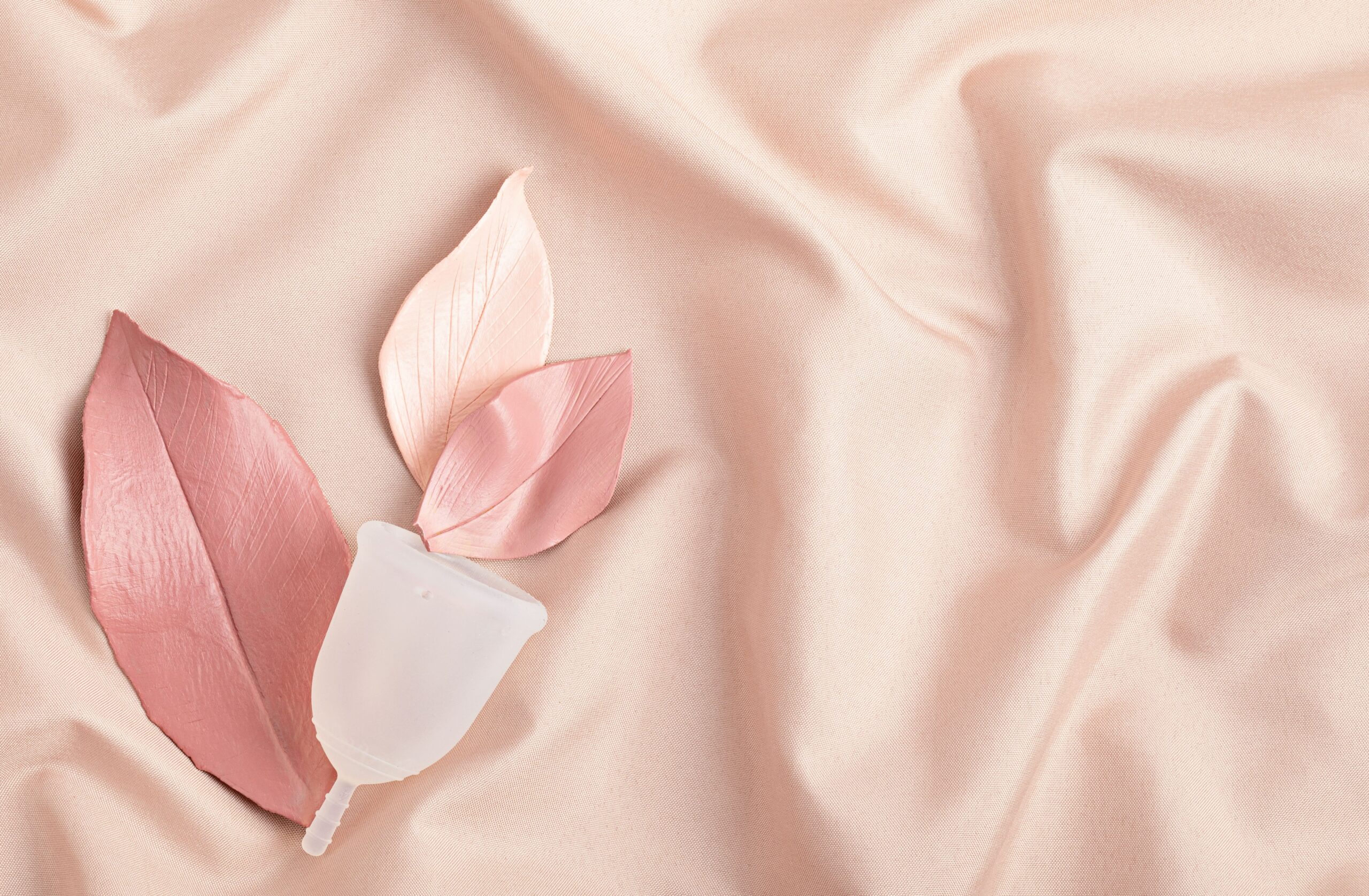
A menstrual cup is a bell-shaped, reusable device primarily molded from medical-grade silicone, or occasionally TPE. It functions by collecting menstrual fluid rather than absorbing it and can be reused for years after cleaning.
In the EU, menstrual cups are classified as medical devices. This requires sourcing an injection or compression molder experienced in body-contact silicone, possessing device documentation, and able to prove material biocompatibility. This places menstrual cup manufacturing closer to precision molding than to cosmetic production, necessitating a partner different from typical body-care or oral-care manufacturers.
Key decisions in manufacturing involve material grade, firmness, and size range. Platinum-cured medical-grade silicone is the industry standard and customer expectation, differing from cheaper peroxide-cured silicone which can leave residues. Firmness, determined by silicone shore hardness and cup wall design, impacts comfort and the cup's internal deployment. Most brands offer both softer and firmer options.
Sizing typically involves two options, correlated with menstrual flow and whether the user has given birth. Smaller engineering considerations, such as stem shape, rim design, and air holes, influence removal and seal.
MOQs and Lead Times
Manufacturing is concentrated in Germany and other EU silicone-molding regions for high-documentation work. Significant capacity also exists in China for cost-driven programs, though these still require careful audits due to the product's body-contact nature.
Minimum Order Quantities (MOQs) are dictated by mold tooling and molding setup. Expect 5,000 to 20,000 units per size once a mold is established. A custom cup shape necessitates a dedicated mold, incurring a one-time tooling cost in the thousands and its own lead time. Many brands opt to launch with a molder's existing cup geometry to avoid tooling costs, accepting less product differentiation. Production lead times are typically 8 to 14 weeks once the mold is ready.
Cost, Quality, and Certifications
Cost is primarily influenced by the one-time mold tooling (amortized across volume), silicone grade, molding cycle and finishing labor (trimming flash and quality inspection), and packaging. Premium reusable products often include a cotton pouch and a printed box.
Private-label menstrual cup buyers include D2C period and sustainability brands, natural and pharmacy retailers expanding reusable product lines, and zero-waste specialists. Since the product is reused for years, differentiation is based on fit, firmness options, and verified material safety, rather than consumable economics.
Qualifying a molder based on silicone certification, flash-free finishing, and device documentation is more critical than unit price. A cup with sharp flash or unverified silicone can lead to comfort and safety issues.
Frequently asked questions
What silicone should a menstrual cup be made from?+
Do I need a custom mold or can I use a stock cup shape?+
Why are menstrual cups regulated as medical devices?+
What MOQ and tooling cost should I expect?+
How do firmness and size affect the product I should order?+
What quality defects are specific to menstrual cups?+
Explore adjacent product types
Get a vetted shortlist of menstrual cup suppliers in 48 hours.
Post a brief on Wonnda. Free, no commitment. We match you with vetted manufacturers that fit your MOQ, format and market.