
Best private label baby products manufacturers
Wonnda connects brands with private label baby products manufacturers. Sourcing within this category encompasses skincare and toiletries, feeding items, accessories, and textiles, each requiring specific manufacturing expertise. Products can range from lotions and wipes to soft goods and weaning tools, catering to diverse needs for infant care. Manufacturers often specialize in formulations meeting paediatric and dermatological safety standards, or in materials suitable for sensitive skin and food contact. Safety certifications, such as EN 71 for toys, are crucial considerations during the sourcing process.
- Vetted suppliers
- 20,000+
- Brands & buyers
- 25,000+
- EU-made
- 80%
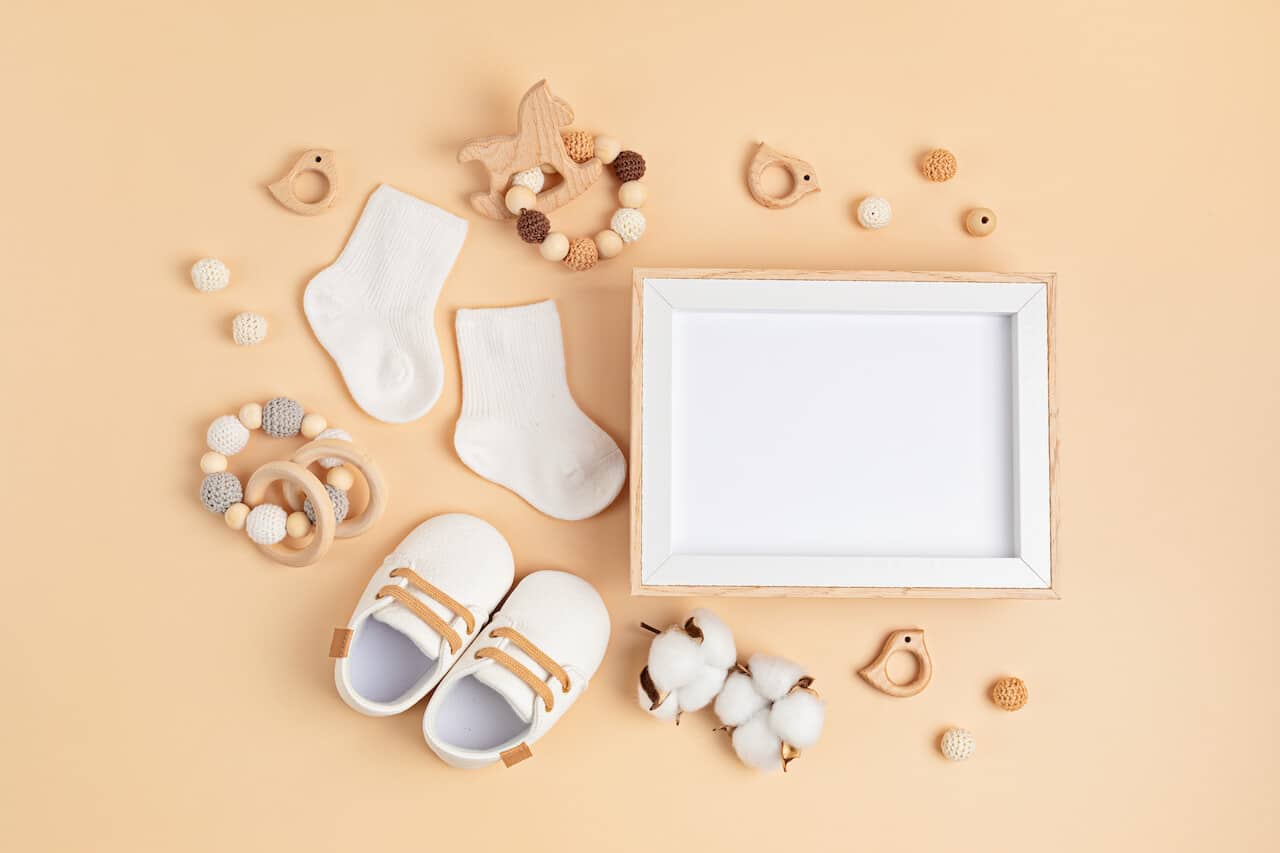
1+ Top private label baby products manufacturers
Wonnda works with the best private label baby products manufacturers. Here is a list of trusted suppliers from our network.
 Private LabelContract Manufacturing
Europe-based manufacturer producing t-shirts, denim jeans, women's blouses, available to brands sourcing baby products.
- Country
- -
- MOQ
- Lead time
Compare MOQs and lead times
Quick side-by-side of the shortlist. Missing values shown as a dash.
| Supplier | Location | Types | MOQ | Lead time |
|---|---|---|---|---|
| MPY Textile | - | PL · CM |
Buyer criteria
- Correct safety framework per item
Verify each product is made and tested under the right regime: cosmetic rules for skincare, toy safety (EN 71) for toys and many accessories, food-contact rules for feeding items. A manufacturer must demonstrate competence in the specific framework for your product, since baby products span several and the wrong framework means the wrong testing.
- Paediatric and dermatological testing
For baby skincare, require dermatological and ideally paediatric testing demonstrating mildness and tolerability on infant skin. This testing underpins hypoallergenic and gentle claims and is expected by retailers and parents. Confirm the testing exists and supports the specific claims, since infant skin tolerance cannot be assumed from adult data.
- Restricted-substance compliance
Confirm products meet restricted-substance requirements and avoid known irritants and hazardous materials, with documentation. Baby products face stricter substance scrutiny than adult equivalents, so verify the formula or material composition against the relevant limits, because a restricted substance in a baby product is a serious safety and compliance failure.
- Certification and documentation completeness
Require complete documentation for the product type: cosmetic safety assessment and CPNP for cosmetics, technical files and EN 71 reports for toys, food-contact declarations for feeding items. Retailers demand this paperwork for baby ranges, so verify it is complete and current for your target markets before listing.
- Material and edge safety for accessories
For physical baby products, verify mechanical safety: no small parts that pose choking hazards where age-inappropriate, no sharp edges, secure components, and non-toxic materials. Confirm the relevant mechanical and chemical safety testing, since physical hazards are a leading cause of baby product recalls and must be designed and tested out.
Red flags
- One framework applied to all baby items
A manufacturer treating skincare, toys and feeding items under a single approach has not grasped that each falls under a different safety regime. This signals they lack the specific competence and testing your product needs, risking a compliance gap in a category where gaps mean recalls.
- Skincare without paediatric or dermatological testing
Baby skincare offered without dermatological and paediatric testing cannot support gentle or hypoallergenic claims and may not be adequately proven safe for infant skin. In a trust-critical category, missing this testing is a serious risk to both safety and credibility, and disqualifying for retail.
- No EN 71 or mechanical safety reports for accessories
Toys and accessories without EN 71 or equivalent mechanical and chemical safety testing are unproven against the hazards that cause baby product recalls. A supplier unable to provide these reports is offering an untested product into the most safety-sensitive category, which cannot be accepted.
- Incomplete compliance documentation
Missing cosmetic safety assessments, CPNP notification, toy technical files or food-contact declarations leaves you unable to demonstrate compliance to retailers and regulators. In baby products this paperwork is mandatory and scrutinized, so gaps signal a supplier not equipped for the category's requirements.
Manufacturing process
- 01
Product type and regulatory routing
Each item is routed to its correct framework: baby cosmetics under cosmetic regulation, toys and many accessories under toy safety standards, food-contact items under food-contact rules. This routing determines the manufacturer, testing and documentation, since baby products span several regimes rather than one.
- 02
Gentle material and formula selection
Materials and formulas are chosen for safety and mildness: fragrance-free or very mild cosmetic formulas avoiding known irritants, and physically safe, non-toxic materials for accessories. The selection prioritizes the heightened sensitivity and vulnerability of infants over cost or sensory flourish.
- 03
Manufacturing under the right GMP
Cosmetic items are made under ISO 22716 cosmetic GMP; accessories and textiles under their relevant quality systems. Production follows the standards appropriate to the product type, with the controls and hygiene baby products demand, since the manufacturing standard must match both the item and its safety stakes.
- 04
Safety testing
Products undergo the testing their type requires: dermatological and often paediatric testing for skincare, mechanical and chemical safety testing such as EN 71 for toys and accessories, and migration testing for food-contact items. This testing is the core of a baby product's credibility and is not optional.
- 05
Restricted-substance and compliance check
Products are checked against restricted-substance lists and the relevant regulations, with documentation assembled (cosmetic safety assessment and CPNP for cosmetics, technical files for toys). Compliance documentation is verified for the target markets, since baby products face strict scrutiny and retailer requirements.
- 06
Packaging, labeling and traceability
Products are packaged with child-appropriate, safe packaging and labeled with the required warnings, age guidance and declarations, then lot-coded for traceability. Labeling must carry the safety information each product type requires, and traceability supports any quality or safety investigation.
Understanding baby products private-label manufacturing
Safety and Certifications
Baby products demand a higher sourcing standard due to the vulnerability of the end-user. Products cannot have irritation, sharp edges, or chemical exposure that might be acceptable in adult products. The defining requirement across all baby products is demonstrated safety.
This includes dermatological and often pediatric testing for skincare, and mechanical and chemical safety testing (EN 71 in the EU) for toys and many accessories. It also requires restricted-substance compliance and rigorous material selection that avoids known irritants and hazards. Baby skincare utilizes minimal, fragrance-free, or very mild formulations, hypoallergenic positioning, and ISO 22716 cosmetic GMP.
Product Types and Regulations
The baby product label encompasses several product types, each under a different regulatory regime:
- Baby cosmetics: Lotions, washes, creams, and wipes fall under cosmetic rules with extra safety scrutiny.
- Toys and many accessories: These fall under toy safety standards.
- Items that contact food: These fall under food-contact rules.
For brands, sourcing baby products means matching each item to the right manufacturer and safety framework, rather than treating "baby" as one vertical. The decisive sourcing discipline is verifying that each product carries the correct safety testing and certification for its type.
Manufacturing and Cost Drivers
Production spans EU cosmetic manufacturers, toy and accessory makers, and textile producers. Safety documentation is the common thread that integrates an otherwise fragmented supplier base. Cost drivers vary by sub-type but share the premium of testing and safety compliance, higher-grade gentle materials, and the certification buyers and retailers demand.
Testing and documentation are largely fixed upfront costs that weigh heaviest on small first runs. Unit economics improve with scale. A single failure travels fast among parents, so the documentation that proves safety is not paperwork to be minimized but the core of the product itself.
MOQs and Lead Times
MOQs and lead times depend on the product type.
- Cosmetic batch minimums are in the low thousands.
- Tooling-driven minimums and longer development timelines apply to molded accessories.
Safety testing and approvals can add weeks before a first order can ship. Buyers include dedicated baby brands, parenting and lifestyle brands extending into baby, and retailers' own baby ranges. Sales channels include pharmacy, specialty baby retail, grocery, and D2C, where parent reviews and trust signals heavily drive repeat purchase.
Frequently asked questions
Why can't I source all my baby products from one manufacturer?+
What testing does baby skincare need beyond a normal cosmetic?+
What does EN 71 cover for baby toys and accessories?+
How do I handle fragrance and ingredients in baby cosmetics?+
What documentation do retailers expect for a baby product range?+
What MOQ and lead time should I expect across baby products?+
Get a vetted shortlist of baby products suppliers in 48 hours.
Post a brief on Wonnda. Free, no commitment. We match you with vetted manufacturers that fit your MOQ, format and market.