How to Start a Premium Private Label Cookware Brand: The Complete Guide

The Private Label Cookware Opportunity
The cookware market is fragmented. Big box retailers dominate with generic brands, while direct-to-consumer founders, chefs launching their own lines, and next-gen brands building product ecosystems have discovered a gap: customers want cookware with personality, backstory, and purpose. Private label cookware lets you compete without owning a foundry. You design the product, choose the supplier, and own the customer relationship.
This guide walks you through launching your own private label cookware brand, from first sketch to first order.
Key Takeaways
- Private label cookware eliminates R&D and tooling risk by using existing manufacturing patterns and dies.
- Material choice (stainless steel, cast iron, nonstick, ceramic) determines price, durability, and your target customer.
- Ply construction directly impacts heat distribution and perceived quality; 3-ply works for most D2C brands launching at $50–$100 retail.
- Customization (coatings, logos, packaging) is where you differentiate
- Brands often underestimate lead time (8–16 weeks) and packaging costs; both can derail your launch.
Why Private Label Cookware Is a Real Growth Opportunity
D2C founders and private label retailers are moving beyond apparel and supplements into hard goods. Cookware is durable, has a high price point, and creates repeat purchasing through complementary products (knife sets, bakeware, kitchen tools).
Chefs are building direct relationships with their audiences. Instead of selling through restaurants or publishing books, they launch branded cookware that embodies their cooking philosophy. A celebrity chef's 10-inch nonstick pan or a sous vide cookware set carries real authority.
Influencers in food, wellness, and lifestyle verticals are bundling cookware into their ecosystem. An influencer with 500,000 followers can move hundreds of units in a drop.
Retailers are launching private label brands to capture margin and differentiation. A regional grocery chain or specialty kitchen retailer can white label a stainless steel cookware set under their own brand.
The barrier to entry has fallen. Manufacturers with tooling libraries let you skip the huge upfront cost of dies and tooling. You pay per unit, not upfront engineering. That's the private label advantage.
Step 1: Define Your Product and Target Customer
Before contacting a single manufacturer, nail down three things: product type, price point, and customer profile.
Are you launching a single hero product (a 10-inch nonstick pan) or a full cookware set (3-piece, 5-piece, 10-piece)? Sets sell better for D2C but require higher unit volumes to hit profitability. A single hero piece lets you test the market with lower volumes.
What's your retail price? If you're targeting $39–$69, you'll likely use 3-ply stainless or traditional nonstick. If you're going premium ($100–$150+), consider 5-ply, ceramic nonstick with upgraded handles, or cast iron with enamel.
Who's your customer? Home cooks on a budget buy based on price and function. Food enthusiasts care about performance and brand story. Professional or aspiring chefs value heat distribution and handle design. Your answer shapes everything downstream: material choice, packaging design, marketing spend, and supplier selection.
Document this in a one-page brief. You'll send it to manufacturers and it keeps you honest.
Step 2: Choose Your Core Material
This is the biggest decision. It determines cost, performance, and positioning.
Stainless Steel
Stainless steel is the workhorse of cookware. It's versatile, durable, and affordable at scale. Customers expect it to perform well and last 10+ years. Price point: $25–$60 per piece at retail.
Downsides: stainless steel has lower thermal conductivity than aluminum or copper, so heat distributes unevenly without engineered ply construction. If you use 1-ply stainless, customers will complain about hot spots.
Best for: D2C brands launching at $45–$70 retail. Chefs building all-purpose cookware sets. Retailers building house brands.
Cast Iron
Cast iron is fashionable again. Customers love the heritage story, the ability to cook in it forever, and the performance. Price point: $30–$80 per piece depending on finish and handle.
Downsides: high shipping weight (customers notice), requires seasoning education, and takes longer to heat. Not ideal for busy home cooks. Tooling and production time are longer than stainless.
Best for: Influencers in outdoor cooking, heritage-focused brands, chefs with a strong narrative around tradition.
Nonstick (Traditional)
Traditional nonstick (PTFE-based coatings) is still the fastest-growing category. Customers want easy cleanup and no-oil cooking. Price point: $20–$50 per piece.
Downsides: coatings degrade with high heat and metal utensil use. Customers replace nonstick pans every 3–5 years. Perception of cheapness if not executed well. Environmental concerns about PFOA legacy (though modern coatings are PFOA-free).
Best for: Budget-conscious D2C brands, influencers selling to younger audiences, retailers competing on value.
Ceramic Nonstick
Ceramic is marketed as safer and more eco-conscious. Coatings are PFOA-free and feel premium. Price point: $30–$75 per piece.
Downsides: coatings are more fragile than PTFE. Performance degrades faster with metal utensils. Premium perception doesn't always justify the price difference for customers.
Best for: Wellness-focused brands, eco-conscious influencers, premium D2C founders targeting $60+.
Material Comparison Table
| Material | Price Range (Retail) | Heat Distribution | Durability | Best For | Customization |
|---|---|---|---|---|---|
| Stainless Steel (3-ply) | $45–$70 | Good with multi-ply | Excellent (10+ years) | D2C brands, chefs, retailers | High |
| Stainless Steel (5-ply) | $80–$150 | Excellent | Excellent (10+ years) | Premium D2C, professional chefs | High |
| Cast Iron | $30–$80 | Excellent (once seasoned) | Excellent (lifetime) | Heritage brands, outdoor cooking | Medium |
| Nonstick (Traditional) | $20–$50 | Fair to good | Fair (3–5 years) | Budget D2C, influencers, mass retail | Medium |
| Ceramic Nonstick | $30–$75 | Good | Fair to good (4–6 years) | Wellness brands, eco-conscious | Medium |
Step 3: Understand Ply Construction
If you're choosing stainless steel, you need to understand ply construction. It directly impacts heat distribution, price, and how customers perceive your brand.
3-ply construction means three bonded layers: stainless steel on the inside and outside, with an aluminum core in the middle. Aluminum conducts heat incredibly well, so it distributes heat across the pan bottom faster. 3-ply is the sweet spot for D2C cookware brands. It costs $8–$12 per unit at 1,000+ volumes and retails well at $45–$70.
5-ply construction adds more layers: typically stainless, aluminum, stainless, aluminum, stainless. More aluminum means even better heat distribution and faster cooking. It's pricier (unit cost $12–$18) but justifies a $80–$150 retail price. Professional chefs and premium brands use 5-ply.
1-ply (pure stainless) is rare and honestly, not great. Heat distributes unevenly, so you get hot spots and cold zones.
For your first launch, 3-ply is the smart choice. It performs well, costs reasonably, and doesn't oversell features you don't need yet. Once you prove demand, you can add a 5-ply premium line.
Step 4: Find Your Manufacturer
This is where Wonnda makes a difference. Post your requirements and get matched with suitable manufacturers.
You have two paths:
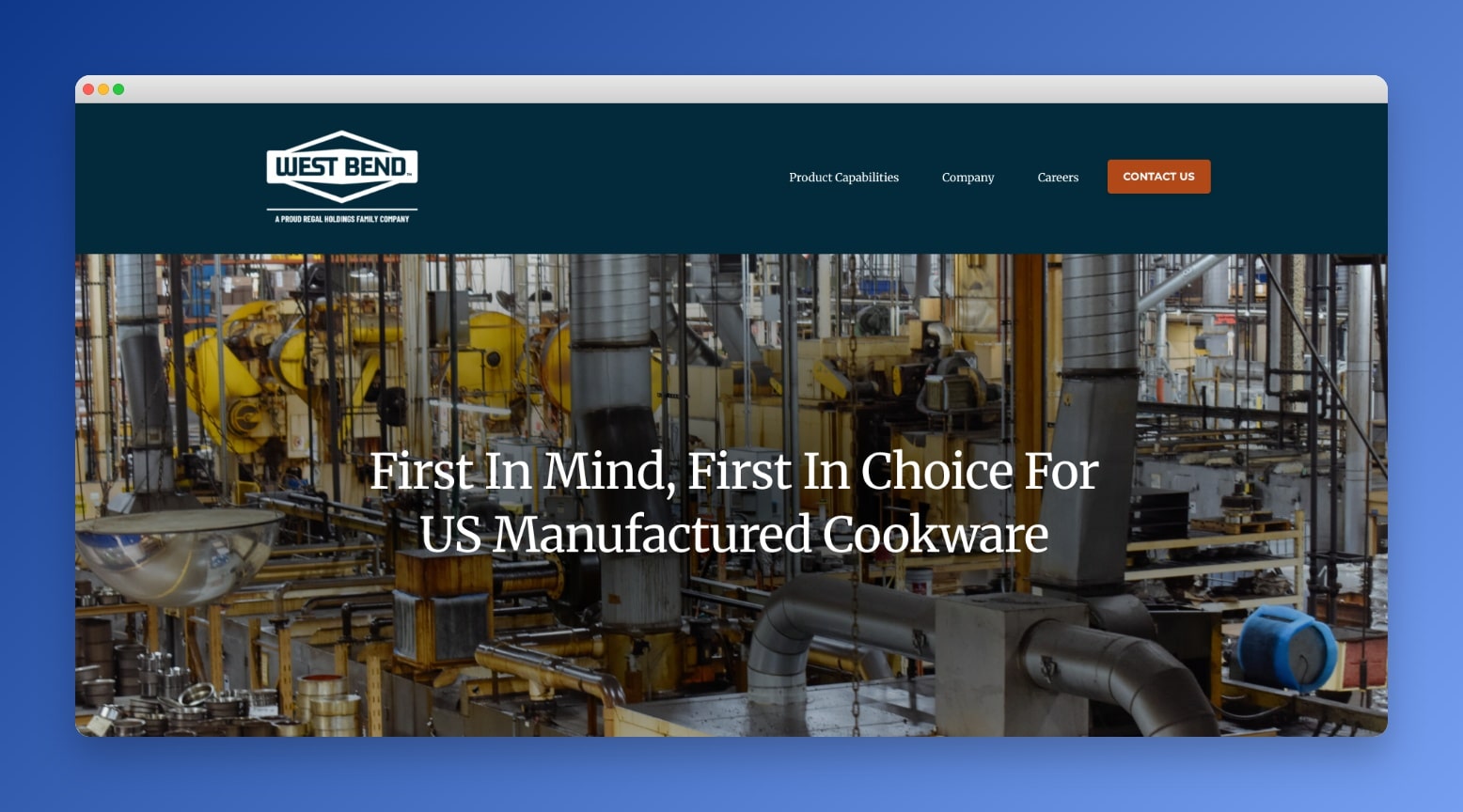
Path A: Work with a supplier with existing tooling. Manufacturers like West Bend Company, a US-based cookware maker with 110+ years of history, maintain a library of existing dies and tooling. They've built 3-ply stainless cookware, traditional nonstick, and ceramic nonstick for decades. Existing tooling means zero upfront tooling costs, low MOQs, and faster time to market (10–12 weeks vs 16–20 weeks). And everything fully made in the US.
Path B: Work with a custom manufacturer. Custom manufacturers will design and tool your product from scratch. You get full control over dimensions, handle design, and material composition. Upside: complete differentiation. Downside: high upfront tooling costs ($15,000–$50,000+), higher MOQs (2,000–5,000 units), and longer lead times (16–24 weeks).
For most brands that start a new product line, Path A is smarter. Reduce risk, reduce capital, reduce lead time. Once you've sold 5,000+ units and proven demand, invest in custom tooling for your next generation.
Evaluate manufacturers on these criteria:
- ISO 9001:2015 certification shows they have quality systems in place. Non-negotiable for food-contact products.
- US-based or nearshoring means shorter lead times and easier quality control. Made in USA is a powerful marketing angle.
- Capacity alignment. Can they handle your MOQ now and scale to 5,000–10,000 units next year? Confirm this in writing.
- Reference customers. Ask for three references of brands they've worked with. Call them and ask about lead time adherence, quality, communication, and customization flexibility.
- Unit cost transparency. Get a tiered pricing sheet. Cost at 1,000 units, 2,500 units, 5,000 units. This helps you model profitability at different volumes.
Step 5: Nail Down Your MOQ (Minimum Order Quantity)
MOQ is the smallest batch size a manufacturer will produce. For cookware, this is where private label gets interesting.
With big factories in Asia (Vietnam, China, India), MOQs are often 5,000–10,000 units per SKU. That's risky for a first product. You're committing to 5,000 pans before you've sold a single one.
Manufacturers with existing tooling reduce MOQ significantly. West Bend Company, for example, offers low MOQs for stainless steel cookware because they're not building new dies. The tooling cost is already sunk into their existing product library.
Here's how to negotiate:
- Ask what their standard MOQ is.
- Explain you're launching a new brand and offer to commit to a larger order if they move the MOQ. (Example: "Can you do 500 units if I commit to 1,500 in Year One?")
- Ask if they have a stock or "off-the-shelf" line of tooling. Many manufacturers won't advertise this unless asked.
- Request a trial or pilot run at a lower volume to test the product before you go all-in.
Your goal: secure lower MOQs. This lets you test the market and scale based on actual customer demand.
Step 6: Plan Your Customization
Customization is how you differentiate your private label cookware from the commodity stuff.
Coating options. If you're doing nonstick, you can often choose the color of the coating (black, white, copper, or proprietary finishes). This is low-cost customization and makes a visual difference.
Handle design. Handles are highly visible. Some manufacturers let you choose from a palette: silicone-wrapped, stainless steel riveted, bakelite, soft-touch coating.
Logo and branding. Etching your logo onto the pan bottom or printing it on the lid is standard. Cost: $0.50–$1.50 per unit depending on complexity.
Packaging. This is where customization shines and costs add up. Stock packaging (plain cardboard box, generic inserts) costs $1–$2 per unit. Custom printed packaging with your logo, custom insert design, and branded tape costs $3–$6 per unit. For a 1,000-unit order, that's the difference between $1,000 and $6,000.
Budget $3,000–$8,000 for packaging design, printing setup, and first production run. This is not optional. Unboxing is part of your brand experience.
Summary: Customize ruthlessly where it's cheap and visible (coating, logo, handle choice). Invest heavily in packaging. Skip expensive one-offs that only benefit 5% of customers.
Step 7: Cost Breakdown and Profitability Math
Let's map a real scenario. You're launching a 3-piece stainless steel cookware set (10-inch fry pan with nonstick coating, 8-inch fry pan with nonstick coating, 12-inch sauté pan with lid) with custom branding and packaging, produced by a US contract manufacturer. Target retail price: $149.
Here's what the landed cost might look like at 1,000 units:
| Cost Component | Per Unit |
|---|---|
| Stainless steel 3-ply cookware set, US-manufactured | $48.00 |
| Custom packaging (printed box, inserts, branded tape) | $4.50 |
| Inbound freight (palletized, domestic LTL) | $2.00 |
| Tariffs/duties | $0.00 |
| Brokerage/customs clearance | $0.00 |
| Total Landed Cost per Set | $54.50 |
| Retail Price | $149.00 |
| Gross Margin Before Operating Costs | 63.4% |
A common pitfall worth flagging here. If you receive a quote around $10 FOB for a 3-piece stainless cookware set, that is mass-market discount product from Asia, not US-manufactured cookware. That class of product realistically retails at $29 to $39, not $149. Your cost and your retail price need to live in the same quality league, otherwise the unit economics break the moment a sophisticated retailer or DTC buyer looks at the math. The numbers above reflect what a credible US-made cookware product priced at $149 retail actually costs to land.
That margin looks healthy, but remember the operating cost stack:
- Fulfillment (picking, packing, label printing): $2 to $4 per order
- Merchant fees (payment processing): 2.9% + $0.30 per order, roughly $4.60 per order
- Returns and refunds: budget 3 to 5% of revenue
- Customer service, photography, content creation: fixed costs
- Facebook, Google, SEO: marketing budget is typically 15 to 25% of revenue for D2C
Real contribution margin after fulfillment, returns, and payment fees: roughly $80 to $85 per set. Net profit after marketing and overhead depends on your customer acquisition cost, your operational efficiency, and your repeat purchase rate.
Unit cost ranges you'll encounter from US and European manufacturers (per unit wholesale):
- Small cookware (single 8-inch fry pan): $15 to $30
- Cookware sets (3 to 5 pieces): $40 to $90
- Large sets (10+ pieces): $90 to $200
- Premium 5-ply sets: $80 to $180
- Cast iron (enameled): $20 to $50
For comparison, Asian sourcing benchmarks (per unit wholesale, FOB):
- Small cookware (single 8-inch fry pan): $4 to $10
- Cookware sets (3 to 5 pieces): $8 to $25
- Large sets (10+ pieces): $20 to $50
- Premium 5-ply sets: $25 to $60
- Cast iron (enameled): $8 to $20
Lead times typically run 10 to 16 weeks from order confirmation to warehouse delivery for US-manufactured cookware using existing tooling. Custom tooling or new mold development adds another 12 to 24 weeks. Asian sourcing runs 14 to 20 weeks including ocean freight, longer if new tooling is required.
Step 8: The West Bend Company Advantage (Supplier Highlight)
West Bend Company (West Bend, Wisconsin) is a vertically integrated cookware manufacturer with 110+ years of history. West Bend Company They're relevant to private label founders because they've inverted the traditional model.
Instead of requiring custom tooling upfront, West Bend maintains a tooling library of tried-and-tested cookware patterns. They've manufactured multi-ply stainless sets, traditional nonstick cookware, and ceramic nonstick for household brands for decades. Their patterns are proven in the market.
Here's the advantage for you:
No tooling costs. You skip $15,000–$50,000 in upfront investment. With existing tooling, you move directly to production.
Lower MOQs. West Bend Company typically offers minimums of 1,000, on-par or lower than other manufacturers.
Faster time to market. Because tooling is ready for most shapes, production starts much faster.
Customization within reason. You choose the cladded material and ply, coating color (for nonstick), handle style, etched logos, and branded packaging. You don't design the pan from scratch, but you own the brand presentation.
ISO 9001:2015 certified. Quality is audited and documented.
Made in USA. West Bend Company is fourth-generation family owned and based in West Bend, Wisconsin, USA since 1911. Their sustainability efforts are a powerful marketing angle.
Scalability. West Bend Company is capable of scaling with your brand as it grows.
This is the private label playbook: find a manufacturer with existing capacity and tooling, validate your brand and customer base with low risk, and then decide if you want to invest in custom tooling for differentiation.
Step 9: Lead Time and Logistics
Lead time is the hidden killer in cookware launches. Most founders underestimate it.
From order to your warehouse door: 12–16 weeks is typical.
Breakdown:
- Production: 6–8 weeks
- Quality inspection and packaging: 1–2 weeks
- Shipping (ocean freight): 2–3 weeks
- Customs clearance and port dwell: 1 week
If you order in January, you'll receive in mid-April or May. Plan your marketing launch around this. Don't build hype in March for a product arriving in May. You'll lose momentum and customer patience.
Pro tip: Order conservatively for your first batch. It's better to sell out and reorder quickly than to be stuck with inventory. Reorders are faster (8–10 weeks) because tooling is proven and production prioritized.
Ocean freight costs are volatile but typically $2,000–$5,000 per container (20,000 lbs). For 1,000 units of cookware, you'll fill roughly 20% of a container. Work with your manufacturer on consolidation with other shipments to reduce costs, or split a container with another brand.
For faster fulfillment after arrival, partner with a 3PL (third-party logistics provider). Storing 1,000 units of cookware in your garage is possible but operationally inefficient.
Step 10: Common Mistakes First-Time Founders Make
- Underestimating packaging costs. You think packaging is $1–$2. It's often $4–$6 for quality custom printing. Budget $4,000–$8,000 for first production.
- Choosing the wrong material. You love cast iron, but your customer is a busy parent who wants 5-minute dinners. Market research before tooling decisions saves six figures.
- MOQ reality check failure. You commit to 3,000 units without a pre-sales strategy. You'll be the proud owner of 2,800 unsold pans.
- Ignoring lead time. You order cookware in February expecting it in March. It arrives in June, and your launch window has closed.
- Overcomplicating customization. You want a unique handle design, proprietary coating color, custom rivets, and bespoke packaging. That's custom tooling, which defeats the private label advantage. Stick to off-the-shelf patterns with light customization.
- No supplier due diligence. You pick a manufacturer based on the lowest unit cost. They deliver scratched pans, wrong colors, or miss your deadline. Vet suppliers through reference calls and small test orders.
- Forgetting about returns. You launch and ship 500 units. 8% have manufacturing defects or customer returns. Do you have a process for handling this? Talk to your manufacturer about warranty and return protocols upfront.
- Missing food safety documentation. Cookware sold in the US must meet FDA and CPSIA standards. Your manufacturer should handle this, but confirm in writing. You need certificates of compliance for your legal protection.
FAQs
How long does it take from idea to first sale?
Typically 6–8 months if you move quickly. Four months of supplier research, MOQ negotiation, and product finalization. Two months of lead time and logistics. One month to set up e-commerce and run paid ads. If you slow down on any step, you're looking at 10–12 months.
Can I start a private label cookware brand with a smaller MOQ like 100–200 units?
Unlikely with traditional manufacturers. Tooling and setup costs don't make sense below 500 units. Suppliers with existing tooling (like West Bend) can sometimes do 300–500, but you'll pay a small premium per unit. Ask if they offer sample or pilot runs at lower volumes to test the product first.
What's the difference between private label and white label cookware?
White label is a manufacturer's existing product with your label slapped on. You have zero customization. Private label is a customized product made for your brand. With private label, you can change coatings, handles, logos, and packaging. For cookware, the distinction often blurs because most manufacturers offer light customization on existing patterns.
Do I need my own website to sell private label cookware?
Not necessarily. You can sell on Etsy, Amazon, or Shopify. You can wholesale to retailers. You can sell direct through a social media following. For D2C cookware brands, Shopify + email marketing is the most profitable path. Wholesale to retailers is slower capital but lower customer acquisition cost if you have relationships.
What about made-to-order vs. made-to-stock?
Made-to-order means you take customer orders first, then manufacture. It's lower risk (no inventory risk) but longer customer wait times (12+ weeks from order to delivery). Made-to-stock means you manufacture upfront and ship quickly (3–5 days). Most D2C cookware brands do made-to-stock because customers expect fast shipping. Inventory risk is higher but customer experience is better.
How do I compete with Amazon/Walmart cookware?
You can't compete on price. Compete on brand story, customer service, and experience. A 10-inch nonstick pan from a celebrity chef or wellness brand carries premium value even if the pan costs $3 more to manufacture. Your brand, community, and content differentiate you from commodity cookware aisles.
Ready to Launch Your Private Label Cookware Brand?
You now understand the mechanics: choose your material, find a manufacturer with existing tooling to reduce risk and cost, negotiate your MOQ, customize where it matters (packaging, logos, handle style), and plan for 12–16 week lead time.
The next step is connecting with the right manufacturer. Post your cookware project on Wonnda and get matched with verified manufacturers who have proven experience in private label cookware. Whether you're launching a hero 10-inch nonstick pan or a full 5-piece stainless steel set, the right supplier makes all the difference.
Related articles
Best Clothing Manufacturers in Europe - 2026 Guide by Wonnda
10+ Best Beauty Manufacturers in the US (2026 List)

How to Find a Manufacturer for Your Product (2026 Guide)
European Suppliers: How to find the best EU suppliers in 2026

10 Best European Sourcing Agencies To Find Suppliers & Launch Your Product
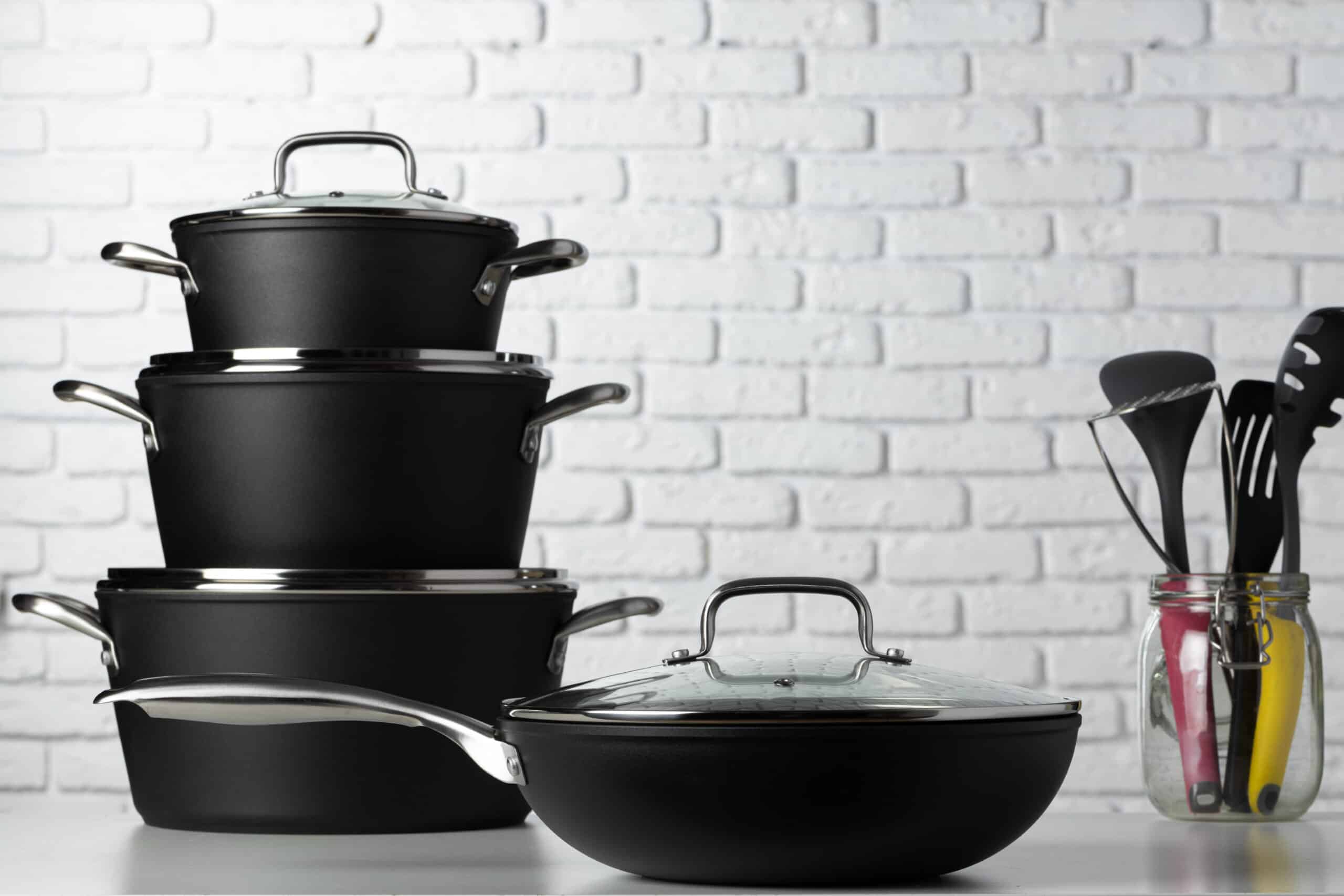
5+ Best Private Label Nonstick Cookware Manufacturers
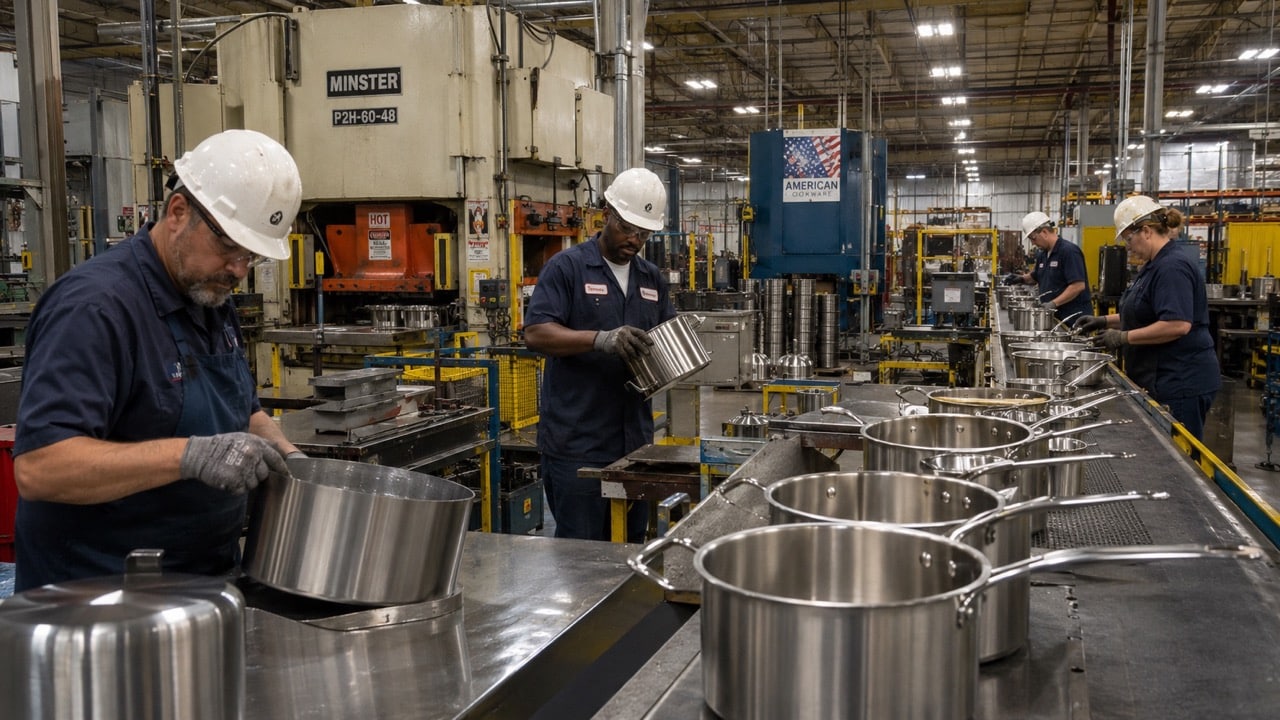
5+ Best Private Label Cookware Manufacturers in the USA (2026)
Best Private Label Beef Tallow Manufacturers in Europe (2026 Guide)